
 Source:
 Sibirica (Cornus alba ‘Sibirica’) short overview
Cornus alba 'Sibirica' is a fast-growing, suckering deciduous shrub grown chiefly for its vivid red young stems, which become most striking after leaf fall. In late spring, small yellowish-white flower clusters appear above green foliage, followed by bluish-white drupes that birds use. It suits full sun or partial shade, tolerates clay and periodically wet soil, and responds well to renewal pruning that keeps the winter display bright.
Taxonomic classification
Sibirica (Cornus alba ‘Sibirica’) care guide
Light and placement
Give full sun for the strongest red winter stems, especially an east-, south-, or west-facing position with at least 6 hours of direct light. Partial afternoon shade is useful in hot, dry regions and can reduce summer stress. Weak color, sparse growth, and excessive arching suggest insufficient light; scorched foliage or drought stress suggests too much exposure without water.
Watering and humidity
Water deeply when the upper few inches of soil begin to dry during the first growing season, then maintain even moisture during heat and drought. Established plants tolerate occasional dry soil but perform best with consistent moisture and can tolerate periodic wetness. Apply mulch to moderate root-zone temperature and reduce evaporation; do not keep container roots waterlogged.
Soil and growing medium
Use fertile, moisture-retentive soil that still drains reasonably well. Loam, clay, and sandy loam can work when amended with organic matter. The plant tolerates a broad pH range, with best performance generally in slightly acidic to neutral conditions. Avoid permanently stagnant, anaerobic soil unless the site is naturally suited to wetland shrubs.
Feeding
Apply compost or a balanced, slow-release shrub fertilizer in early spring as growth begins, following the product label. Avoid heavy nitrogen feeding, which can produce lush growth with weaker stems and may reduce the value of the winter display. Do not fertilize drought-stressed or newly transplanted plants until they are established.
Growth and habit
Growth is rapid, upright, and multi-stemmed when young, becoming looser and more arching with age. Suckering can create a colony, which is useful for naturalistic screens but may be unwanted in small beds. Renewal pruning keeps the shrub productive and improves the proportion of brightly colored young stems.
Planting and repotting
Plant in spring or fall, setting the root ball level with the surrounding soil. Water deeply after planting and mulch over the root zone without touching the stems. Allow room for suckering and use approximately 4–6 feet between plants for a loose screen; closer spacing creates a faster hedge effect but increases crowding.
Container-grown plants can be moved in early spring or fall. Choose a large container with drainage and refresh the outer root zone when root-bound. Because this shrub suckers and becomes substantial, in-ground planting is usually more suitable than long-term container culture.
Propagation and pruning
Propagation
Hardwood cuttings are the most practical method and are taken during dormancy, before spring growth begins. Division, layering, and seed are also documented for the species, though seedlings may not reproduce the selected stem color or other cultivar traits. Root suckers can be separated when dormant.
Pruning
For the strongest winter color, remove about 20–25% of the oldest stems at the base in early spring each year. In overgrown plantings, cut a larger proportion of stems back near the ground, but avoid removing every stem from a newly established shrub. Remove unwanted suckers with a sharp spade.
Overwintering
No routine winter protection is needed in USDA Zones 3–7. The shrub is deciduous and naturally displays its colored stems after leaf fall. In colder areas, mulch newly planted roots after the ground cools, and protect young plants from browsing if deer or rabbits are active.
Uses
Useful for winter gardens, shrub borders, informal hedges, screens, rain gardens, erosion-control plantings, wildlife gardens, and naturalistic massing. Its fruit supports birds, while dense stems provide cover and nesting structure. It is not profiled here as an edible or medicinal plant.
Appearance
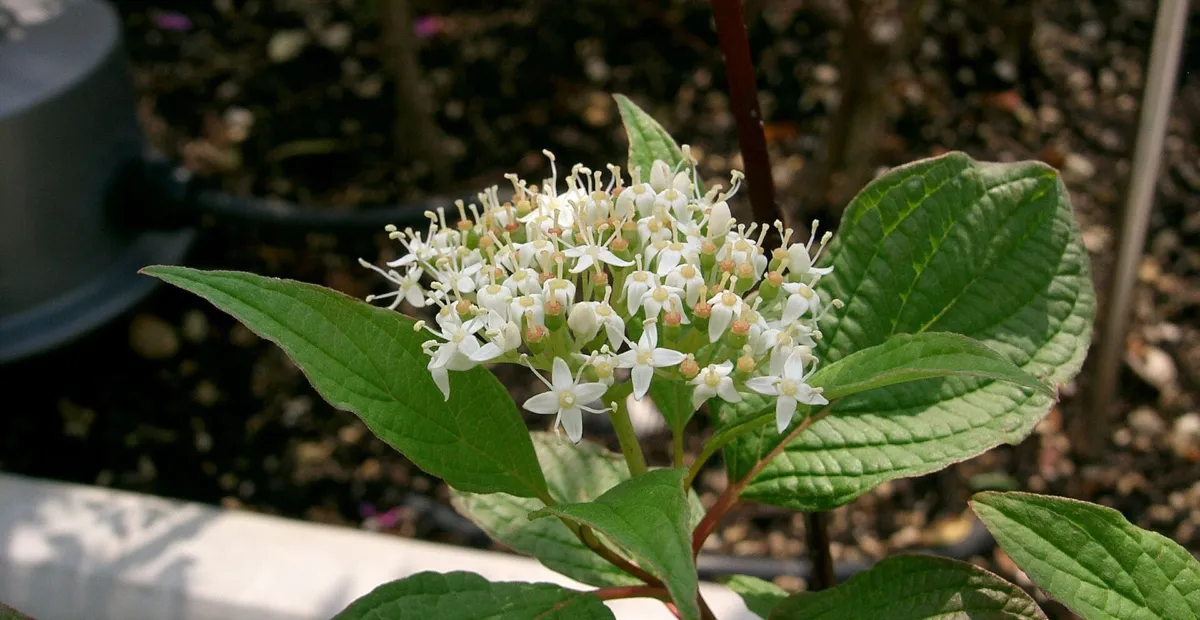
This shrub has opposite, ovate to elliptic green leaves with entire margins and noticeable veins. Young stems are greenish red during the growing season and turn vivid coral to red in fall and winter, with prominent lenticels. The open, multi-stemmed habit becomes more arching with age, and suckers may form a thicket.
Flowering
Small, perfect yellowish-white flowers are borne in flat-topped clusters in late spring, usually May and June in much of the United States. Flowering can be sparse and may continue intermittently into summer. The flowers are ornamental but less visually important than the red winter stems and bluish-white fruit.
Pollination and visitors
The small flowers are visited by bees, butterflies, and other pollinating insects. Cornus species also support documented specialist bee associations, although a specific specialist-bee record for this cultivar was not established. The fruit is primarily a bird resource rather than a pollination feature.
Cornus alba 'Sibirica' photos
Click any photo for a larger view. Source, author and license are shown separately.
Diseases and pests
Diseases
Watch for leaf spot, twig blight, canker, anthracnose, and honey fungus. Improve air circulation, avoid repeated overhead irrigation, remove diseased wood during dry weather, and dispose of infected debris. Severe stem problems may require renewal pruning or replacement; susceptibility varies with site and plant material.
Pests
Occasional scale, leaf miner, and borer damage may occur. Inspect stems and foliage regularly, keep shrubs vigorous, and prune out affected wood when practical. Avoid unnecessary broad-spectrum insecticides so flower visitors and other beneficial insects are protected.
Related diseases and pests
Only Plant Doctor profiles whose host data indicate this plant may be affected are shown here.
 DiseaseCoral Spot CankerNectria cinnabarina
 DiseasePhytophthora plurivora Root and Collar RotPhytophthora plurivora
 PestEuropean Fruit Lecanium ScaleParthenolecanium corni
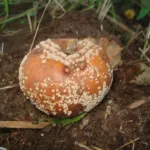 DiseaseEuropean brown rotMonilinia fructigena
 DiseasePhytophthora cactorum crown, collar, root and fruit rotPhytophthora cactorum
 DiseaseAnthracnoseColletotrichum gloeosporioides
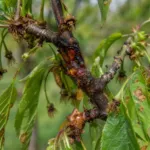 DiseaseBacterial blight and cankerPseudomonas syringae pv. syringae
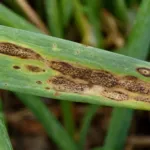 DiseaseStemphylium Leaf BlightStemphylium vesicarium (Wallr.) E.G. Simmons
Toxicity and pollen
Reliable, cultivar-specific toxicity evidence is limited. Major U.S. pet-poison databases do not provide a clear listing for this exact cultivar, so safety should not be assumed from the absence of a listing. Prevent children and pets from chewing plant material, and contact a poison center or veterinarian after a substantial ingestion or if symptoms occur.
- Typical season
- Typically May–June during flowering
- Pollination / pollen
- Heavier, insect-carried pollen; not typically wind-dispersed
This is an insect-pollinated shrub with small flowers, so its pollen is generally less readily dispersed through the air than pollen from wind-pollinated trees, grasses, and weeds. Individual sensitivity is still possible during bloom, and no cultivar-specific U.S. pollen-count or allergen profile was found.
Native habitat
The species is native to cooler temperate parts of central and eastern Asia, including Siberia, Manchuria, northern China, Mongolia, and Korea. It occurs in moist woodland edges, river margins, thickets, and disturbed sites, explaining its tolerance of wet soils, clay, cold winters, and periodic flooding.
Interesting fact
The brightest winter color develops on young stems, not old wood. The cultivar is often sold under names associated with Westonbirt, and modern references warn that plants labeled 'Sibirica' may not be clonally uniform. Blue-white fruit can be as ornamental as the flowers and is used by birds.
Frequently asked questions (FAQ)
The most relevant questions about this plant, with short and direct answers.
🌱Quick care
How do you care for Cornus alba 'Sibirica'?⌄
Grow Cornus alba 'Sibirica' in full sun to partial shade, fertile moist soil, and provide regular water while it establishes. Prune older stems periodically to maintain its brightest winter color.
How big does Cornus alba 'Sibirica' get?⌄
Cornus alba 'Sibirica' typically grows about 4 to 7 feet tall and 3 to 5 feet wide in U.S. gardens. Its size can increase through suckering if new shoots are not removed.
Is Cornus alba 'Sibirica' evergreen or deciduous?⌄
Cornus alba 'Sibirica' is a deciduous shrub that drops its leaves in fall. Its main winter feature is the vivid red color of its young stems.
How fast does Cornus alba 'Sibirica' grow?⌄
Cornus alba 'Sibirica' is a rapid-growing, multistemmed shrub. Regular renewal pruning encourages the vigorous young shoots that provide the best winter display.
🌤️Environment and placement
What USDA hardiness zones are suitable for Cornus alba 'Sibirica'?⌄
Cornus alba 'Sibirica' is generally suitable for USDA Zones 3 through 7. In hot summer climates, especially south of Zone 7, heat stress can increase disease problems.
Does Cornus alba 'Sibirica' need full sun?⌄
Cornus alba 'Sibirica' grows in full sun to partial shade, but full sun produces the strongest red winter stem color. Partial shade is tolerated, although stems may be less intensely colored.
Can Cornus alba 'Sibirica' grow in shade?⌄
Cornus alba 'Sibirica' can grow in partial shade, but it is not the best choice for dense shade. More sunlight generally improves stem color and encourages compact, vigorous growth.
What soil is best for Cornus alba 'Sibirica'?⌄
Plant Cornus alba 'Sibirica' in fertile, moist, well-drained loam or clay. It tolerates a broad range of soils, including occasionally wet or somewhat dry conditions once established.
Can Cornus alba 'Sibirica' grow in wet soil?⌄
Cornus alba 'Sibirica' tolerates moist soil and occasional standing water once established. Avoid permanently waterlogged ground with poor drainage, which can weaken the roots.
Is Cornus alba 'Sibirica' drought tolerant?⌄
Cornus alba 'Sibirica' has moderate drought tolerance after establishment, but it performs best with consistent moisture. Water deeply during prolonged heat or dry weather, particularly when young.
Is Cornus alba 'Sibirica' suitable for a rain garden?⌄
Cornus alba 'Sibirica' can be used in a rain garden or other moist landscape because it tolerates wet soil and occasional standing water. Choose a site that still drains reasonably well between wet periods.
Does Cornus alba 'Sibirica' spread by suckers?⌄
Yes, Cornus alba 'Sibirica' produces root suckers and can gradually form a thicket. Remove unwanted suckers with a sharp spade if you need to contain its spread.
💧Care and problems
When should you prune Cornus alba 'Sibirica'?⌄
Prune Cornus alba 'Sibirica' in late winter or early spring before vigorous new growth begins. This timing renews the stems while minimizing the practical loss of its relatively small spring flowers.
How do you prune Cornus alba 'Sibirica' for red stems?⌄
Remove about 20 to 25 percent of the oldest stems at the base each year to stimulate colorful young growth. Alternatively, cut the entire shrub back to roughly 8 inches every two or three years.
Can Cornus alba 'Sibirica' be cut back hard?⌄
Yes, Cornus alba 'Sibirica' tolerates hard coppicing to approximately 8 inches in late winter or early spring. The resulting shoots will be highly vigorous, but the shrub may look sparse until regrowth develops.
Why are my Cornus alba 'Sibirica' stems losing their red color?⌄
Older stems naturally fade from bright red to darker, duller tones as they age. Remove the oldest wood regularly because the strongest color occurs on young stems, especially those grown in full sun.
What diseases affect Cornus alba 'Sibirica'?⌄
Cornus alba 'Sibirica' can be affected by leaf spot, twig or leaf blights, and canker. Good air circulation, suitable watering, and avoiding heat-stressed sites can help reduce disease pressure.
What pests attack Cornus alba 'Sibirica'?⌄
Scale insects, leaf miners, and borers may occasionally affect Cornus alba 'Sibirica'. Inspect stems and foliage regularly and address infestations early if damage becomes significant.
Does Cornus alba 'Sibirica' tolerate deer and rabbits?⌄
Cornus alba 'Sibirica' is generally considered tolerant of deer and rabbits, although browsing pressure can vary by location and food availability. Young plants may still benefit from temporary protection.
🪴Planting and repotting
When is the best time to plant Cornus alba 'Sibirica'?⌄
Plant Cornus alba 'Sibirica' in spring or fall when temperatures are moderate and soil moisture is reliable. Water thoroughly after planting and keep the root zone consistently moist during the first growing season.
How far apart should Cornus alba 'Sibirica' be planted?⌄
Space Cornus alba 'Sibirica' about 3 to 5 feet apart for a dense mass or informal screen, allowing additional room if natural suckering is desired. Use wider spacing for individual specimens.
Can Cornus alba 'Sibirica' be grown in a container?⌄
Cornus alba 'Sibirica' can be grown temporarily in a large container, but it is usually better planted in the ground. Its vigorous growth and suckering habit require substantial root space and regular watering in containers.
How do you transplant Cornus alba 'Sibirica'?⌄
Transplant Cornus alba 'Sibirica' during dormancy in late fall or early spring, lifting as much of the root system as practical. Replant promptly, water deeply, and keep the soil evenly moist while roots reestablish.
✂️Propagation and pruning
How do you propagate Cornus alba 'Sibirica'?⌄
Propagate Cornus alba 'Sibirica' most reliably from hardwood cuttings or rooted suckers. Vegetative propagation is preferred because seedlings may not retain the cultivar's characteristic red stems.
Can Cornus alba 'Sibirica' be propagated from hardwood cuttings?⌄
Yes, Cornus alba 'Sibirica' is commonly propagated from hardwood cuttings taken during dormancy. Use healthy mature wood, keep the cuttings evenly moist, and transplant rooted plants after they develop a strong root system.
Can you grow Cornus alba 'Sibirica' from seed?⌄
Cornus alba 'Sibirica' can produce viable seed, but seedlings may differ from the named cultivar. Seeds generally require a period of cold, moist stratification, so cuttings or suckers are usually more dependable for identical plants.
⚠️Toxicity and safety
Is Cornus alba 'Sibirica' poisonous to people or pets?⌄
The toxicity of Cornus alba 'Sibirica' is uncertain because cultivar-specific safety evidence is insufficient. Avoid eating any part of the plant and contact a poison-control or veterinary professional if ingestion occurs.
🌸Flowering and special interest
When does Cornus alba 'Sibirica' bloom?⌄
Cornus alba 'Sibirica' usually blooms in late spring, around May to June, with small yellowish-white flowers in flat-topped clusters. Sparse additional flowering may continue into early summer.
What do the flowers of Cornus alba 'Sibirica' look like?⌄
The flowers of Cornus alba 'Sibirica' are small, yellowish-white to creamy clusters rather than large showy bracts. The cultivar is valued more for its red winter stems, fall foliage, and pale summer fruit.
Does Cornus alba 'Sibirica' produce berries?⌄
Yes, Cornus alba 'Sibirica' produces clusters of bluish-white drupes after flowering. The fruits can add ornamental interest and are attractive to birds.
What is the best feature of Cornus alba 'Sibirica' in winter?⌄
The best winter feature of Cornus alba 'Sibirica' is its bright red to coral-red young stems. The color is most vivid on recently produced shoots grown in sunny conditions.
Similar plants
 Flowering dogwood (Cornus florida) care guideCornus florida
 Bentham’s cornel (Cornus capitata) care guideCornus capitata
 White Dogwood (Cornus alba) care guideCornus alba
 Cornus ‘Celestial Shadow’Cornus 'Celestial Shadow'
 Quatre-temps (Cornus canadensis) care guideCornus canadensis
 Common dogwood (Cornus sanguinea) care guideCornus sanguinea