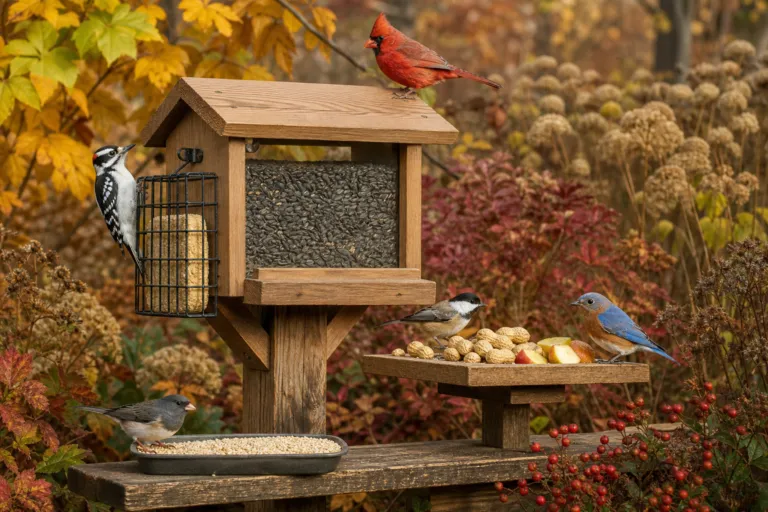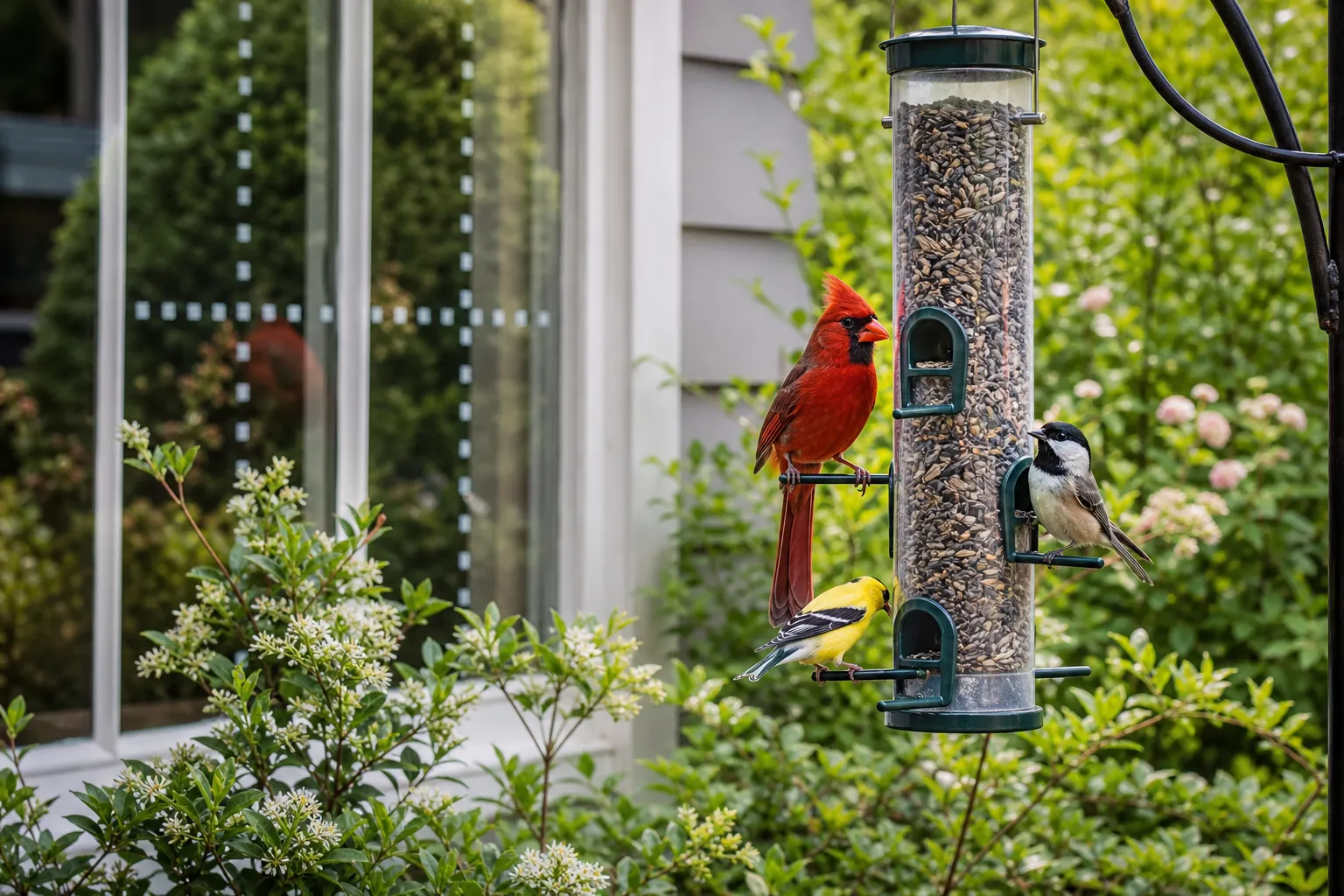
Bird feeders can bring chickadees, cardinals, finches, woodpeckers, and hummingbirds close enough to enjoy from the kitchen window. But a feeder is not automatically bird-friendly. If you place it beside reflective glass, let seed spoil, attract cats, or allow many birds to crowd around one dirty feeding station, you may increase the very risks you hoped to avoid.
The good news is that safer feeding does not require an elaborate setup. A few thoughtful choices—fresh food, regular cleaning, sensible placement, and protection from predators—can make your garden a healthier stopover for wild birds.
1. Hanging a feeder in the wrong place
One of the most common mistakes is treating feeder placement as a purely decorative decision. A sunny spot beside a picture window may give you a beautiful view, but nearby glass can become dangerous when a startled bird flies toward a reflection of trees or open sky.
Windows roughly 15 to 30 feet from a feeder can be especially hazardous because birds have enough room to build up speed before they reach the glass. A practical alternative is to place the feeder either very close to the window—within about 3 feet—or well away from it, ideally more than 30 feet. The close placement seems counterintuitive, but it gives a bird little space to gain momentum if it takes off suddenly.
Make the surrounding garden safer
- Use exterior window screens, bird-safety film, closely spaced exterior markers, or vertical cords to break up reflections.
- Prioritize windows that reflect trees, shrubs, or bright sky.
- Look for feather marks or stunned birds beneath glass; collisions are often undercounted because a bird may fly away and die later from its injuries.
- Keep dense shrubs or evergreen branches nearby for shelter, but avoid creating a narrow flight path directly toward a window.
If you already have a feeder in a risky location, moving it is often the simplest first improvement. You do not need to redesign the whole garden; shifting it a few feet or moving it to the far side of the yard can make a meaningful difference.
2. Letting old or wet seed build up
Birdseed is food, not garden décor. When it sits in rain, snow, humidity, or spilled hulls, it can become damp, moldy, or decomposed. Birds may continue eating it even when it no longer looks fresh, and the ground beneath the feeder can become a concentrated layer of droppings and waste.
Wet weather deserves special attention in the Pacific Northwest, the Southeast, and other humid regions, but winter thawing can create the same problem anywhere in the United States. During periods of frequent rain or heavy use, inspect the feeder every few days rather than waiting until it is empty.
Use the “small portions, often refreshed” approach
- Fill the feeder with only enough seed to last a few days.
- Discard seed that smells musty, feels damp, or shows visible mold.
- Rake or sweep spilled seed and hulls from beneath the feeder.
- Choose a feeder with drainage holes and a roof that keeps food dry.
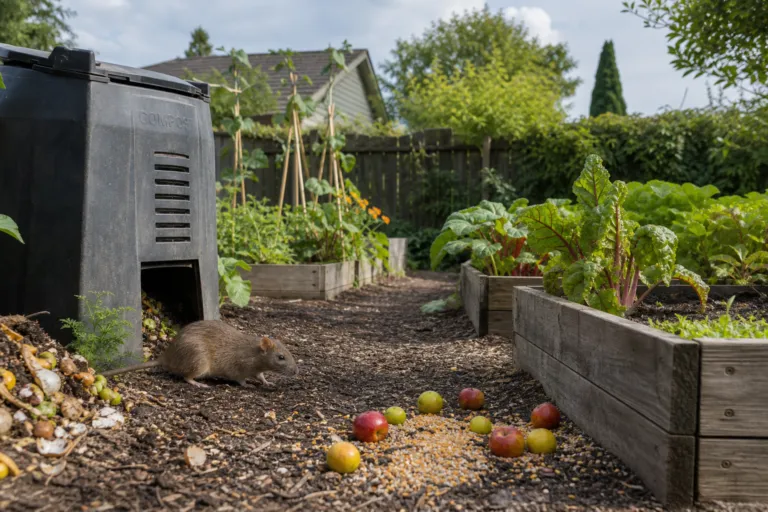
- Store seed in a cool, dry place, preferably in a tightly closed metal container that excludes mice and squirrels.
A no-waste blend can also help. Black oil sunflower seed is widely attractive to many common backyard birds, while specialized feeders can offer nyjer seed to finches or suet to woodpeckers and nuthatches. Compare blends carefully: inexpensive mixes may contain fillers that birds toss aside, leaving a messy layer below the feeder.
3. Cleaning only when the feeder looks dirty
By the time a feeder looks visibly grimy, it may already contain old food, droppings, and contamination around perches and feeding ports. Shared feeding surfaces bring birds into close contact, which can help infectious diseases spread—especially when many finches gather at one station.
For a regularly used seed feeder, cleaning about every two weeks is a sensible routine. Clean more often during wet weather, heavy use, or whenever food and droppings accumulate. Hummingbird feeders need even closer attention because sugar solution can spoil quickly in warm conditions; inspect them every day and wash them every few days, or sooner if the solution becomes cloudy or dirty.
A simple cleaning routine
- Empty the feeder and throw away damp, spoiled, or questionable seed.
- Take the feeder apart as far as the manufacturer allows.
- Scrub away food residue and droppings with hot, soapy water.
- Disinfect with a dilute bleach solution of 1 part household bleach to 9 parts water when appropriate for the feeder material.
- Rinse thoroughly and let every part dry completely before refilling.
- Wash your hands afterward.
Clean feeders outdoors when possible, or use a laundry sink rather than a kitchen sink. Never pour dirty rinse water into an area where children or pets play. If the feeder cannot be opened and scrubbed properly, replace it with a simpler model that has smooth surfaces and removable parts.
4. Continuing to feed when sick birds appear
It can be difficult to take down a feeder when birds are visiting, but feeding should pause if you notice a visibly sick or dead bird near the station. Warning signs may include birds sitting puffed up for long periods, showing crusted eyes, struggling to fly, or behaving unusually. Do not handle a sick or dead bird with bare hands.
Remove feeders and birdbaths, clean the equipment, and contact your state wildlife agency or a licensed wildlife rehabilitator for local guidance. A temporary break of at least two weeks is commonly recommended after sick or dead birds appear, though regional advice may differ during a documented disease event.
Reduce crowding before problems start
- Use several small feeders rather than one large platform that concentrates birds.
- Spread feeding stations around the yard instead of clustering them together.
- Choose tube feeders or covered hopper feeders that keep food more protected from droppings.
- Keep the area beneath feeders clean, since discarded hulls and feces can attract birds, rodents, and pets to the same small space.
A pause does not mean you have failed as a bird-friendly gardener. Wild birds still have access to natural food, insects, berries, buds, and seeds. In fact, native plants often provide a more dispersed and sustainable food supply than a single feeder.
5. Ignoring cats and other predators
A feeder can turn your garden into a predictable meeting place. That makes it easier for a free-roaming cat—or a hunting hawk—to find birds that are focused on feeding rather than watching for danger. Ground-feeding birds and fledglings are particularly vulnerable around low feeders and spilled seed.
The most effective protection is to keep pet cats indoors or provide a secure outdoor enclosure. Bells and brightly colored collars should not be treated as reliable substitutes for confinement. Indoor cats also face fewer risks from traffic, fights, parasites, and other outdoor hazards.
Design a feeder area with escape routes
- Place feeders near thorny shrubs or dense branches where small birds can retreat quickly.
- Keep low vegetation trimmed enough that cats cannot hide immediately beneath the feeder.
- Do not place a feeder beside a fence, shed, or shrub line that offers a predator a concealed ambush point.
- Clean up spilled seed that attracts birds to open ground.
- Keep dogs and cats away from birdbaths, fallen birds, and the area under feeders.
Predators are part of a healthy ecosystem, so the goal is not to eliminate every hawk or owl. The goal is to avoid creating a feeding setup where birds have no cover, no visibility, and no safe direction to flee.
6. Offering the wrong food—or too much of it
Not every bird eats the same food, and a feeder cannot replace a varied habitat. Robins, waxwings, and many other fruit-eating birds usually have little interest in ordinary seed. Meanwhile, blends filled with cracked corn or millet may attract grackles, starlings, doves, squirrels, or rodents in places where those visitors are not welcome.
Choose food according to the birds you hope to support and the conditions in your yard. Sunflower seed suits many seed-eating songbirds. Nyjer seed can attract finches when offered in a suitable finch feeder. Suet is useful for insect-eating and bark-foraging species, particularly during cool weather, but it can melt or spoil in hot weather. Hummingbirds need a properly prepared sugar solution—not red dye—and a feeder that you can clean thoroughly.
Build a feeding plan around habitat, not just seed
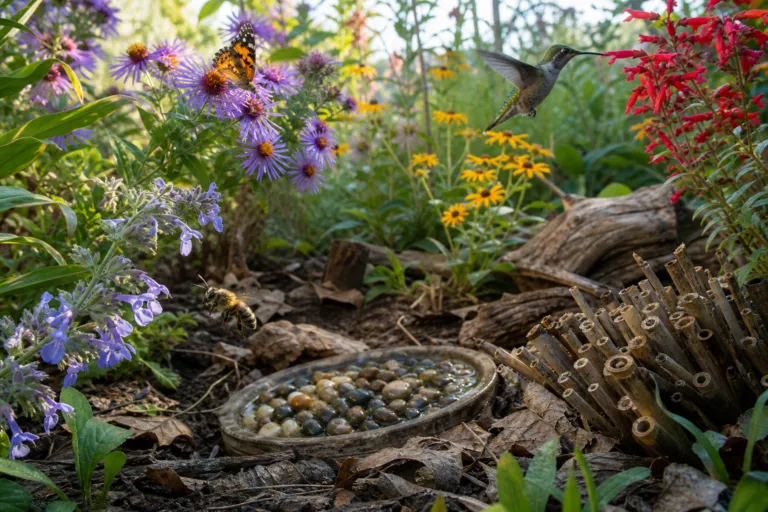
- Plant native berry-producing shrubs and seed-bearing flowers.
- Leave some leaf litter and small sheltered areas for insects.
- Provide clean water in a shallow birdbath, changing it regularly.
- Use more than one feeder type if you want to support different species.
- Adjust the amount of food seasonally instead of keeping every feeder full year-round.
Birds also need shelter and nesting habitat. A yard with native plants, mature trees, brushy edges, and safe water can support wildlife even when feeders are temporarily removed for cleaning or disease prevention.
A safer bird-feeder checklist
Before you refill the feeder, take one minute to check the whole setup:
- Is the feeder within 3 feet of a window or more than 30 feet away?
- Is the food dry, fresh, and appropriate for the birds in your region?
- Has the feeder been scrubbed recently?
- Is the ground below free of old seed, hulls, and droppings?
- Can birds reach dense cover without flying toward glass?
- Are cats and dogs unable to reach the feeding area?
- Have you noticed any sick or dead birds that call for a temporary feeding pause?
Enjoy the visitors—and keep improving the habitat
Responsible bird feeding is less about buying the biggest feeder and more about managing a small, clean, well-planned habitat. Keep food fresh, disinfect equipment, protect birds from glass and cats, and pause feeding when disease concerns arise. Then add native plants and natural shelter so birds are not dependent on one crowded feeding station.
Start with one improvement this week: move a feeder, replace an unsuitable seed mix, rake beneath the feeding area, or create a simple cleaning schedule. Those modest changes can turn a convenient backyard buffet into a safer and more welcoming part of your garden.