Hanging baskets give houseplants a whole new stage. Instead of crowding a windowsill or taking up valuable floor space, trailing stems can spill gracefully over the edge, soften a room, and draw the eye upward. Even a small apartment, home office, or covered porch can feel greener with one well-placed basket.
The best candidates combine attractive foliage with a naturally cascading or vining habit. Some grow quickly and forgive missed waterings, while others develop slowly but reward you with unusual leaves or flowers. Before you choose, take a close look at your space: light, temperature, airflow, and how often you realistically want to water will matter more than the appearance of the plant at the garden center.
Before you hang a basket: three choices that make the difference
Match the plant to the light
Most trailing houseplants prefer bright, indirect light. That usually means a spot near an east- or west-facing window, or a little back from a bright south-facing window where hot direct rays will not scorch the leaves. Lower-light rooms can work for pothos and heartleaf philodendron, but growth may become thinner and variegated leaves may lose some of their pattern.
Remember that “low light” does not mean no light. If you cannot comfortably read a newspaper in the area during the day, the plant may need to move closer to a window or receive help from a grow light.
Use a light container with drainage
A hanging basket becomes surprisingly heavy after you add a pot, damp potting mix, and a mature plant. Choose a sturdy hook and hardware rated for more weight than you expect to hang. A plastic nursery pot placed inside a decorative basket is often easier to lift down for watering than a permanently planted, heavy container.
- Always use a container with drainage holes.
- Choose a loose, well-draining indoor potting mix rather than garden soil.
- Place a saucer or removable liner beneath the pot if dripping could damage floors or furniture.
- Leave enough space above the basket to lift it down safely for watering and pruning.
Water the soil, not the calendar
Hanging baskets dry out faster than many tabletop plants because they have less soil volume and more exposure to warm, moving air. Check the mix with your finger before watering. For many foliage plants, wait until the top inch feels dry, then water thoroughly until a little excess drains from the bottom. Empty the saucer or cachepot afterward.
To make your routine more accurate, try a simple watering experiment. For one week, check the soil every morning and record whether the top inch is dry. You may find that a basket needs water every five to seven days in spring, but every two or three days near a sunny window during summer. In winter, slower growth and lower indoor light may stretch the interval to a week or more. Treat those numbers as a starting point, not a fixed schedule.
1. Pothos: the dependable cascade
Epipremnum aureum
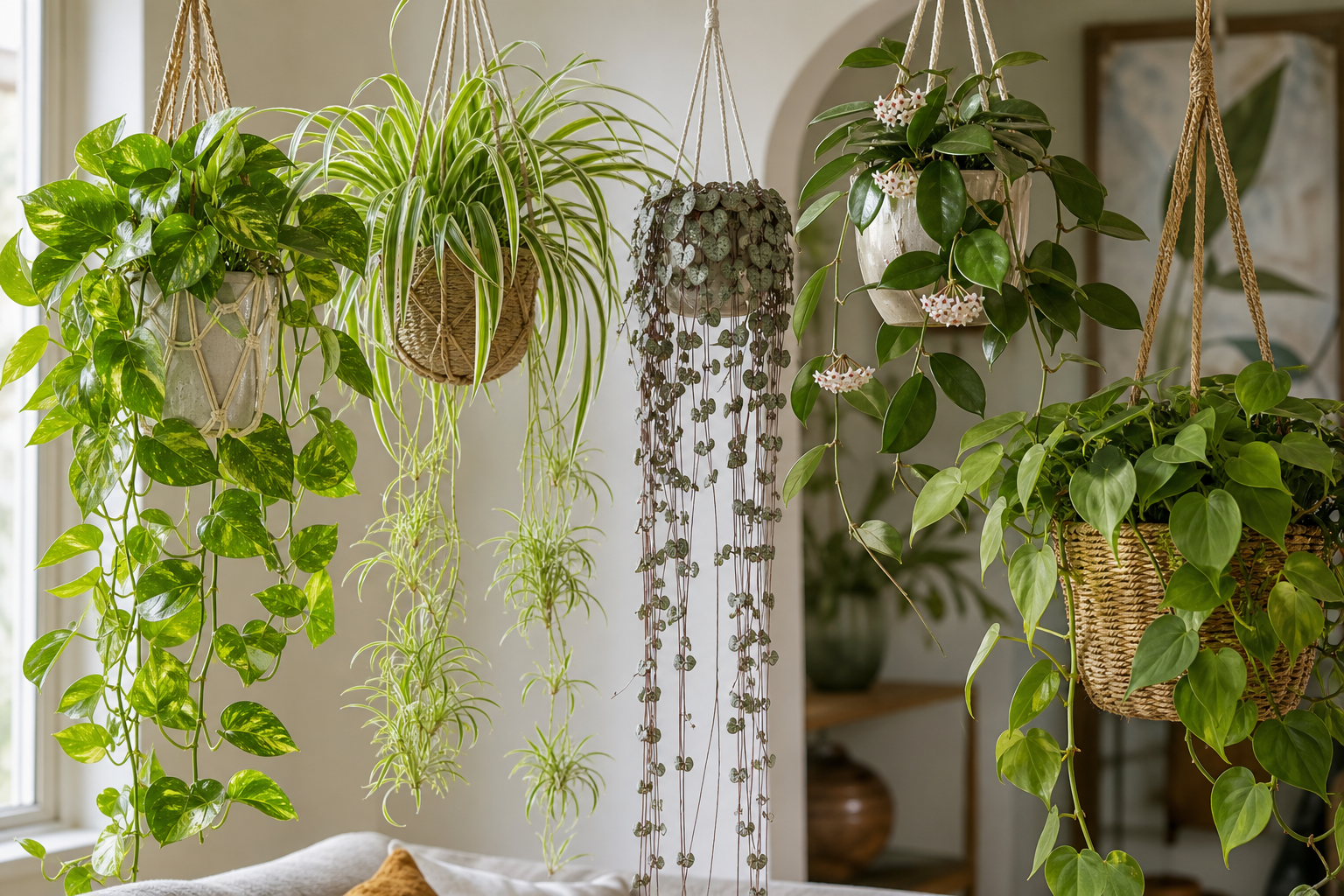
If you want a trailing plant that looks good almost immediately and tolerates beginner mistakes, start with pothos. Its heart-shaped leaves come in a wide range of colors, including deep green, golden yellow, chartreuse, and green-and-white variegation. Long stems can trail several feet, or you can trim them back to encourage a fuller, bushier plant.
Why it looks stunning
Pothos creates a lush curtain of foliage without demanding complicated care. A golden cultivar brightens a darker room, while a solid-green type often handles lower light better. In a hanging basket, the leaves overlap attractively and create a relaxed, leafy silhouette.
Care that works
- Give it moderate to bright indirect light; protect it from intense direct sun.
- Let the soil dry somewhat between waterings. Pothos generally copes better with slight dryness than constantly wet soil.
- Turn the basket every week or two so growth develops more evenly.
- Trim stems just above a leaf node – the small joint where a leaf emerges – to encourage branching.
In a home growing trial, compare two pothos cultivars in the same room: a bright variegated type and a solid-green type. After four to six weeks, the greener plant may maintain denser growth in a slightly dimmer position, while the variegated plant may show its best pattern closer to the window. That simple comparison can help you choose the right cultivar for your own space.
2. Spider plant: a fountain of striped leaves
Chlorophytum comosum
Spider plants bring movement and personality to a hanging basket. Their narrow, arching leaves form a fountain, then produce long stems carrying small plantlets – often called spider babies – that dangle around the parent plant. The effect is especially charming when the basket is viewed from below.
Why it looks stunning
The striped foliage adds a crisp, graphic contrast to round leaves and soft textiles. As the plant matures, its offsets make the display look fuller and more layered. Spider plants are also easy to share: once a plantlet has roots, you can pot it up as a new plant.
Care that works
- Place it in bright, indirect light for strong growth and good variegation.
- It can tolerate lower light, but growth may slow and striped leaves may become less pronounced.
- Water regularly, allowing excess moisture to drain completely.
- Do not leave the roots sitting in water, especially in a decorative cachepot.
If the leaf tips turn brown, check several possible causes rather than assuming the plant needs more water. Dry soil, fluctuating moisture, low humidity, mineral buildup, or strong direct sun can all contribute. Water thoroughly when needed, avoid repeated shallow sips, and move the basket away from harsh afternoon rays.
3. String of hearts: delicate vines with a jewelry-like effect
Ceropegia woodii
String of hearts is one of the most distinctive plants for a hanging basket. Its slender stems carry pairs of small, heart-shaped leaves that may be green, silver-flecked, or lightly purplish beneath. The vines create a fine, beaded silhouette rather than a dense curtain, making this plant ideal when you want an airy, elegant display.
Why it looks stunning
Few houseplants offer such a delicate combination of pattern, shape, and movement. The long stems look beautiful against a pale wall, over a bookshelf, or in a simple ceramic planter where the foliage – not the container – takes center stage.
Care that works
- Give it bright, indirect light; a little gentle morning sun can help maintain compact growth.
- Use a fast-draining mix and allow the soil to dry between waterings.
- Water less often than you would a soft-leaved tropical plant.
- Keep it away from cold drafts and sudden temperature changes.
The easiest mistake with string of hearts is watering by appearance. Its thin leaves can look delicate, but the plant stores moisture in its fleshy leaves and underground structures. Check the soil several inches down before watering. If the mix still feels damp, wait. A small, well-drained basket is often safer than a large container that stays wet for too long.
4. Hoya: trailing foliage with the promise of flowers
Hoya species and cultivars
Hoyas are slow-growing vines with thick, waxy leaves and an impressive range of forms. Some have broad green leaves, others carry silver splashes or twisted foliage, and certain cultivars develop clusters of star-shaped flowers when conditions are right. A hanging basket allows the stems to spill naturally while keeping the plant at eye level for closer inspection.
Why it looks stunning
Hoya offers a more sculptural look than many leafy trailers. The leaves often feel substantial and polished, and mature plants can become wonderfully architectural. When a plant flowers, the small clusters can seem almost too detailed to be real.
Care that works
- Choose bright, indirect light, preferably near an east-, south-, or west-facing window.
- Use a well-drained mix and let the soil dry between waterings.
- Do not rush to repot; many hoyas grow well when slightly root-bound.
- Give flower buds time to develop, and avoid repeatedly moving the plant once it begins forming them.
Patience is part of hoya care. A healthy plant may spend a long time producing leaves and vines before it flowers, particularly after a move or repotting. Instead of treating the lack of blooms as failure, focus first on steady light, careful watering, and healthy new growth.
5. Heartleaf philodendron: soft, leafy, and wonderfully forgiving
Philodendron hederaceum
Heartleaf philodendron has smooth, heart-shaped leaves and flexible vines that drape easily over a basket. It is a classic choice for a north-facing window, office, or room where bright light is limited. Compared with many more delicate trailers, it gives you a generous margin for error while still looking polished.
Why it looks stunning
The foliage is usually a rich, even green, creating a calm and cohesive look. Its stems can be trained upward around a support or allowed to trail freely. For a fuller arrangement, plant several rooted cuttings around the edge of one basket so new growth emerges in every direction.
Care that works
- Provide low to medium indirect light, with brighter filtered light for faster, denser growth.
- Allow the surface of the potting mix to begin drying before watering again.
- Trim long, bare stems above a node and root the cuttings in water or moist potting mix.
- Keep the plant away from cold windows and heating vents.
When a philodendron becomes leggy, do not discard it. First move it slightly closer to a suitable light source, then prune the longest stems. Replanting the cuttings around the original root ball can gradually turn a sparse basket into a fuller display.
How to keep a hanging basket full and attractive
A beautiful basket depends as much on maintenance as on plant choice. Trailing plants naturally grow toward the brightest side of a room, so rotate them regularly. Remove yellow or damaged leaves promptly, and wipe dusty foliage with a soft, damp cloth when needed.
- Prune for shape: Shorten overly long stems just above a leaf node.
- Feed during active growth: In spring and summer, use a balanced houseplant fertilizer according to the product label. Reduce feeding when growth slows.
- Check the hanging hardware: Look for loose hooks, stretched chains, or water damage around the mounting point.
- Watch the basket’s microclimate: Plants near ceiling vents, radiators, or sunny glass may dry out faster than plants elsewhere in the room.
- Inspect regularly: Look beneath leaves and along stems for signs of pests, sticky residue, or unusual discoloration.
Which trailing houseplant should you choose?
For the easiest start, choose pothos or heartleaf philodendron. If you love cascading offsets and striped foliage, pick a spider plant. For a delicate, high-light display, string of hearts is hard to beat. And if you enjoy watching a plant mature slowly and may eventually want flowers, hoya offers a rewarding long-term project.
You do not need a large collection to make an impact. Begin with one basket, measure how quickly the soil dries, and observe how the plant responds to its location over the next month. With the right match between plant and room, even a beginner can create a lush, living cascade that keeps getting better with time.