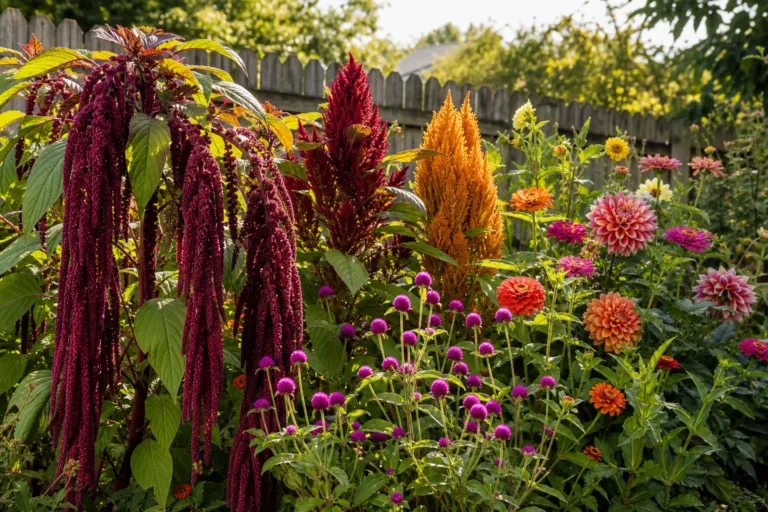
You spot a volunteer seedling in a flower bed, a shrub with unfamiliar leaves, or a vine climbing through the fence. Is it a welcome native, a garden escapee, a weed, or something that deserves a little caution? Identifying it correctly starts with curiosity—but reliable identification takes more than matching one leaf to a picture.
The good news is that you do not need to be a botanist. With a few careful observations, clear photographs, local information, and a habit of checking more than one source, you can usually narrow an unknown plant from “some kind of weed” to a likely genus, species, or useful group such as oak, mint, sedge, or squash.
Think of plant identification as detective work. Every clue matters, but the strongest answer comes from several clues agreeing with one another.
Start with the whole plant, not a single leaf
A single leaf can be surprisingly misleading. Many unrelated plants have similar oval, heart-shaped, lobed, or lance-shaped leaves. Young plants can also look very different from mature plants, and drought, shade, mowing, or insect damage may distort their usual appearance.
Before picking anything, step back and record the plant’s overall structure. Ask yourself:
- Is it a tree, shrub, herbaceous plant, grass, sedge, fern, succulent, or vine?
- Does it grow upright, form a rosette, trail along the ground, or climb?
- Is it woody or soft-stemmed?
- Does it appear to be one plant or a colony connected by runners, rhizomes, or suckers?
- How tall and wide is it, approximately?
- Is it growing alone, in a lawn, beside water, in disturbed soil, or among planted ornamentals?
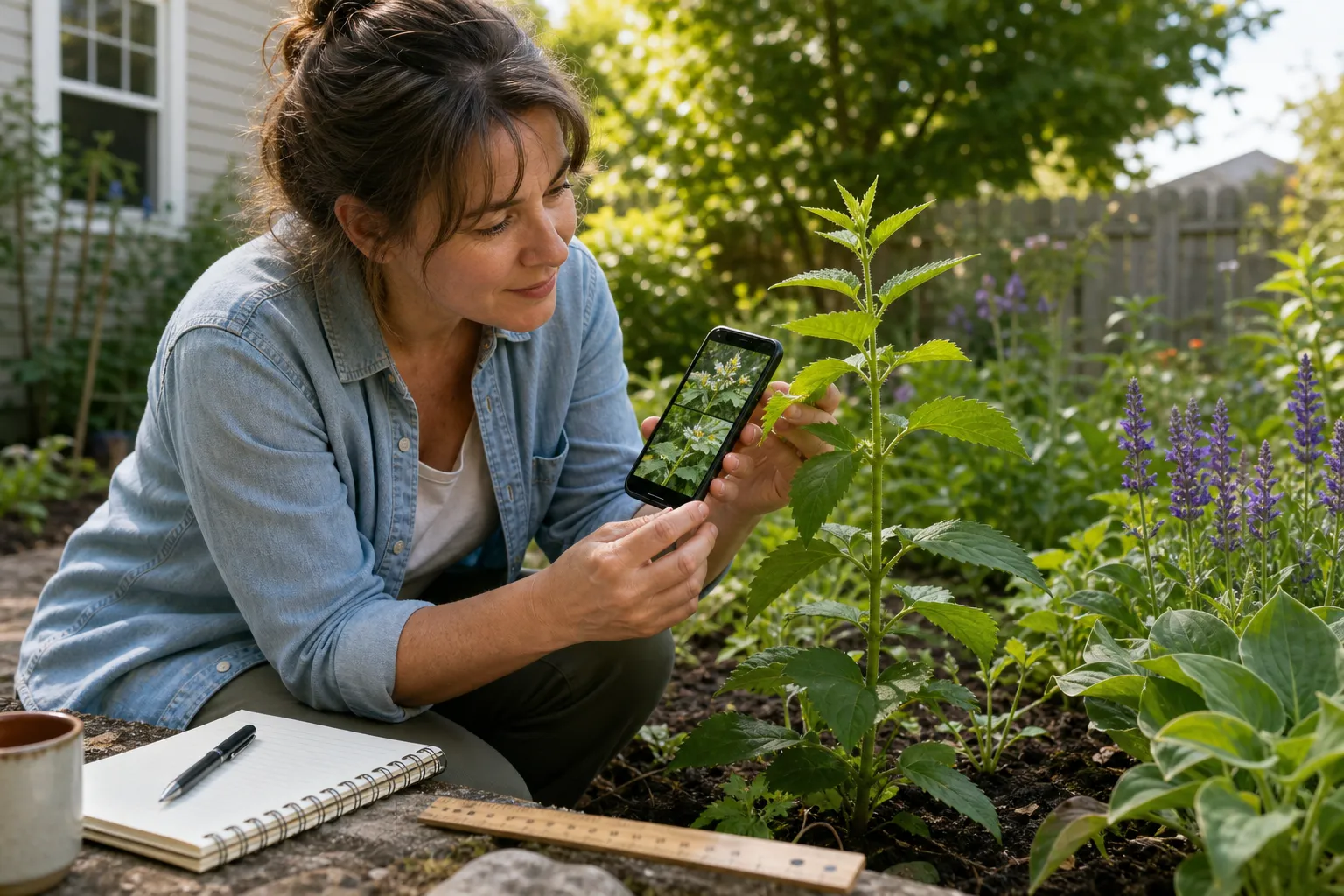
Use a ruler, tape measure, or familiar object for scale. A plant that is 4 inches tall is telling you a different story from one that is 4 feet tall, even if the leaves look similar.
The most useful identification clues
Leaves: arrangement matters as much as shape
Look at where leaves attach to the stem. Leaves may grow one at a time on alternating sides, in opposite pairs, or in groups of three or more around the stem. This arrangement is often more useful than a general description such as “green and pointed.”
Also examine:
- Leaf edges: smooth, toothed, lobed, wavy, or deeply divided
- Leaf texture: thin, leathery, succulent, rough, glossy, or fuzzy
- Leaf attachment: on a stalk, nearly stalkless, clasping, or surrounding the stem
- Upper and lower surfaces: different colors, hairs, veins, or glands
- Simple versus compound leaves: one continuous blade or several leaflets attached to a central stalk
Be careful with compound leaves. A leaflet is not the same thing as a complete leaf. Look for a bud where the leaf stalk meets the stem; a true leaf usually has a bud at that junction, while individual leaflets do not.
Stems, bark, and sap
Stems can provide excellent clues. Note whether they are round, square, ridged, hollow, jointed, thorny, hairy, or covered with a waxy coating. On woody plants, examine bark color, texture, lenticels—small horizontal or vertical marks—and whether young branches differ from older ones.
Do not taste an unknown plant or deliberately handle sap with bare hands. If you need to inspect a broken stem, use gloves and wash your hands afterward. You do not need to damage the plant to identify it; a close photograph is usually enough.
Flowers, fruits, and seed heads
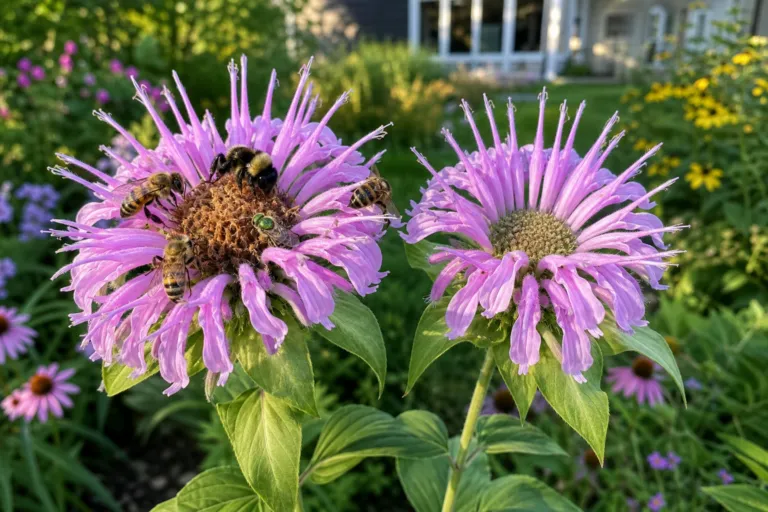
Flowers often provide the decisive clue. Record color, size, scent, number of petals, flower shape, and how the flowers are arranged. Are they solitary, clustered on a spike, gathered in a rounded head, or arranged in a branched spray?
Photograph the flower from the side as well as from above. The side view may reveal a tubular corolla, a flower cup, or a distinctive spur. If the plant has fruits or seed heads, photograph those too. Many plants that look alike when young become much easier to separate once they produce fruit.
Take a complete set of photographs
Good photographs can turn a vague question into a solvable one. Take several images rather than relying on one close-up.
- Habitat view: show where the plant grows and what surrounds it.
- Whole-plant view: include the complete shape and a scale object.
- Stem view: show branching, hairs, ridges, thorns, and leaf attachment.
- Leaf close-up: photograph both sides when possible.
- Flower or fruit view: include an open flower, bud, seed head, or fruit.
- Detail with scale: place a ruler or coin nearby without covering important features.
Take photos in natural light and tap the screen to focus on the plant. Avoid heavy filters, extreme close-ups, and images where the background is sharper than the subject. If the plant changes through the season, photograph it again later.
Use location and timing as evidence
Geography can eliminate many incorrect possibilities. A plant found in a wet Maryland meadow has a different likely candidate list from one growing in an Arizona gravel bed. Your USDA hardiness zone is useful for cultivated plants, but it does not prove that a wild plant can or cannot grow in your area. Annuals, tender perennials, houseplants, and plants growing in protected microclimates may survive outside their usual range.
Record the state, county or nearest city, elevation if known, and habitat. Note whether the soil stays wet, whether the site receives full sun or shade, and whether the plant appears to have been intentionally planted.
Season also matters. A spring rosette may be unrecognizable by midsummer. A tree may be easiest to identify during flowering or fall color, while a grass may be easier to separate when seed heads are present.
Compare several candidates instead of choosing the first match
Image-search results and identification apps are useful for generating possibilities, but the first result is not automatically correct. A reliable identification should explain several features at once: the leaf arrangement, stem, flower structure, habitat, season, and geographic range.
Make a short comparison table in a notebook or phone:
- Candidate A: matches opposite leaves and square stems, but the flower color and habitat do not fit.
- Candidate B: matches the flower and location, but has alternate leaves rather than opposite ones.
- Candidate C: matches the full combination and remains plausible after checking mature photographs.
This method prevents “confirmation by resemblance,” where you notice only the features that support your favorite guess.
Compare varieties and cultivars carefully
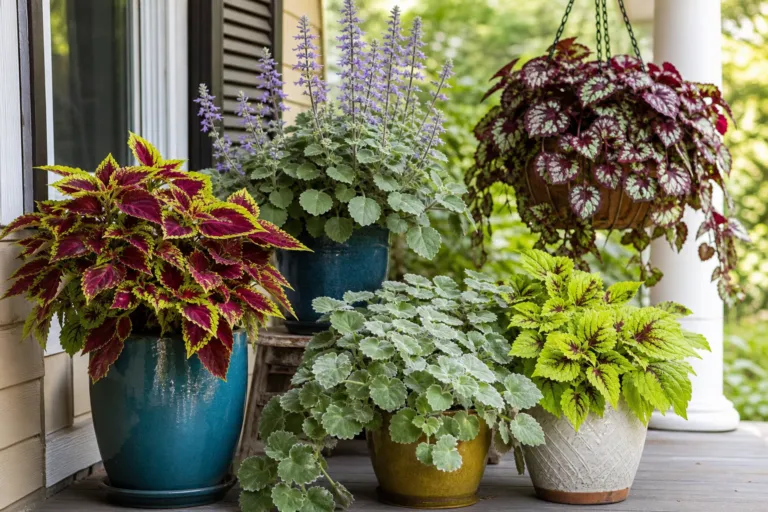
Garden plants often have many cultivars. Two forms of the same species may differ in flower color, leaf markings, mature size, or growth habit. Conversely, plants from unrelated genera may be sold under similar common names, such as “daisy,” “lily,” or “mint.”
When comparing cultivated plants, check whether the candidate is a species, a cultivar, or a hybrid. Cultivar names are usually written in single quotation marks, while the scientific name identifies the broader plant. If your plant came from a nursery, look for an old plant tag, receipt, landscape plan, or nearby planting that may reveal its origin.
Try a small observation experiment
If identification is not urgent, observe the plant for a week or two rather than pulling it immediately. Mark its location with a small flag and take a photo from the same position every few days. This can reveal whether it is a fast-growing annual, a spreading perennial, a woody seedling, or a plant responding to rain.
You can also compare it with two likely garden plants. For example, measure height and width every three days, note the number of new leaves, and record whether the soil remains damp after watering. Keep the test fair: use the same measuring method and observe plants growing in similar light.
For a simple watering record, check the soil about 2 inches below the surface with a finger or moisture meter. Record the result before watering and again the next morning. Instead of writing “watered a lot,” note the amount and timing—for example, “1 gallon applied slowly over 10 minutes to a 3-by-3-foot bed; soil damp at 2 inches the next morning.” These observations will not identify a plant by themselves, but they help explain its growth habit and prevent you from mistaking drought stress for a natural feature.
Use digital tools—but treat them as assistants
Plant-identification apps can suggest names quickly from photographs. They work best when you photograph the entire plant and several diagnostic details, and when you include your location. Use the suggestions as a shortlist, not as a final verdict.
Community science platforms can be especially helpful because other observers may confirm or correct an identification. A plant may receive agreement only at the genus or family level, and that is perfectly useful when the species cannot be separated from photographs alone.
For U.S. plants, compare suggestions with authoritative databases that provide standardized names, distribution information, images, plant characteristics, and state-level records. Search by both the common name and the scientific name, because common names vary widely from one region to another.
Know when a professional opinion is worthwhile
Ask for help when the plant may be invasive, legally protected, unusually rare, part of a grazing area, or important to a landscape decision. Your county extension office, state herbarium, native plant society, botanical garden, or experienced local naturalist may be able to review photographs.
Send a complete information package:
- Several clear photographs
- Exact location or nearest town
- Date and season
- Plant height and approximate spread
- Sun exposure and soil moisture
- Whether it is planted, wild, or recently introduced
- Any flowers, fruits, scent, thorns, hairs, or unusual sap
If someone asks for a physical sample, follow their collection instructions. Never collect from protected land, remove a rare plant, or transport a potentially invasive plant without checking local rules.
Do not rush into removal or use
Wait for a reasonably confident identification before applying herbicide, composting a suspicious weed, moving a volunteer plant, or using any part of it for food, tea, decoration, or animal feed. A common name or image match is not enough to establish safe use.
If the plant is growing near pets, children, livestock, or a vegetable garden, limit access while you investigate. Avoid burning unknown plant material, since smoke and ash can create additional hazards. When treatment is appropriate, identify the plant first and follow the product label and local regulations.
A reliable plant-identification checklist
- Photograph the whole plant in its habitat.
- Record location, date, light, soil moisture, and approximate size.
- Check leaf arrangement, leaf type, stem shape, and texture.
- Look for flowers, fruits, seed heads, or distinctive buds.
- Compare upper and lower leaf surfaces.
- Generate several possible matches using apps or image searches.
- Verify candidates in a trusted botanical or regional database.
- Compare the plant with local distribution and seasonal information.
- Ask a local expert when the decision involves safety, removal, conservation, or treatment.
- Save your photographs and final identification for future reference.
Confidence grows with observation
You do not have to name every plant instantly. Sometimes the most accurate answer is “a young plant in the daisy family” or “a sedge-like grass that needs flowers or seed heads for confirmation.” That is not failure; it is good botanical practice.
Start with the whole plant, collect multiple clues, and check your conclusion against reliable information. With each mystery plant, you will become faster at noticing leaf arrangement, growth habit, season, and habitat. Before long, “What plant is this?” will feel less like a guessing game and more like an enjoyable garden investigation.