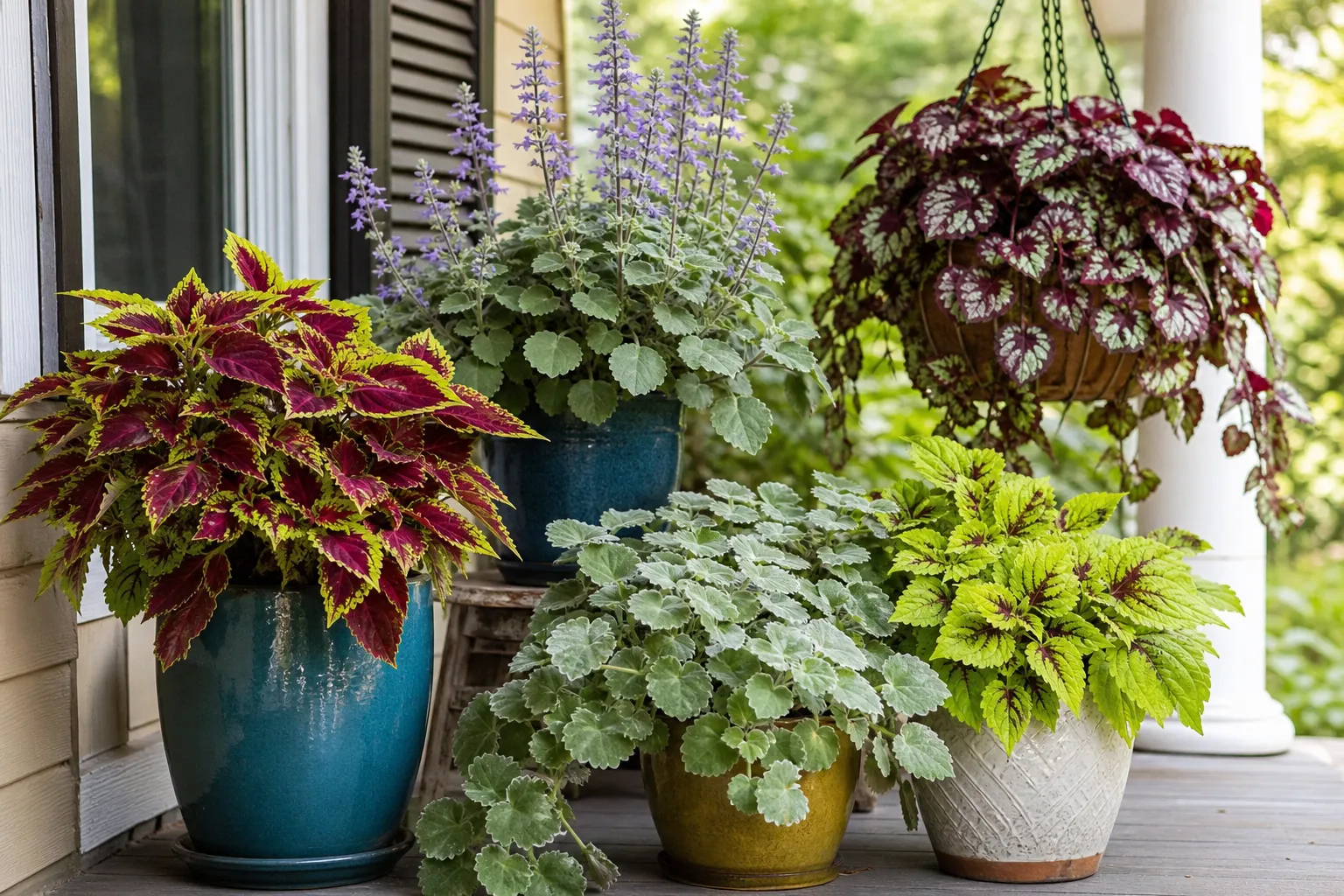
With colorful leaves, soft stems, and a wonderfully forgiving nature, Plectranthus can bring energy to a shaded porch, patio container, hanging basket, or sunny indoor windowsill. The name can be confusing, though. Some plants once sold as Plectranthus are now classified under Coleus, while others remain in the Plectranthus group and may look completely different.
Fortunately, you do not need a botany degree to grow them well. Learn to read the stems, leaves, and growth habit, then match the plant to the right light and watering routine. With a little preparation in fall, many tender types can also spend winter indoors and return to the garden the following year.
What does Plectranthus look like?
Plectranthus is a broad group in the mint family. Plants sold under this name may be upright, trailing, compact, or shrub-like, and their foliage can be green, silver, purple, chartreuse, or richly variegated. Many have aromatic leaves when rubbed, although scent varies by species and cultivar.
Start your identification with the stems and leaves:
- Square stems: Like many members of the mint family, Plectranthus often has four-sided stems that are easy to feel between your fingers.
- Opposite leaves: Leaves usually emerge in pairs, with one leaf directly across from the other at each node.
- Soft, succulent growth: The stems and leaves often feel fleshy rather than woody. This helps the plant handle brief dryness, but it does not mean the plant wants to remain bone-dry.
- Trailing or upright form: Swedish ivy types tend to spill from baskets, while silver spurflower and some ornamental cultivars make fuller, upright mounds.
- Small tubular flowers: Depending on the plant, flowers may appear on upright spikes in shades of lavender, pink, white, or purple.
One important labeling wrinkle: many plants commonly called coleus were formerly listed as Plectranthus scutellarioides. Modern classifications generally place them in Coleus. You may still see older Plectranthus names on nursery labels, plant tags, and online listings, so compare the foliage and growth habit rather than relying on the genus name alone.
Common types you may encounter
- Colorful coleus: Grown mainly for vivid foliage in combinations of red, pink, burgundy, lime, yellow, orange, and cream. Some cultivars tolerate more sun than traditional forms, but most appreciate protection from intense afternoon heat.
- ‘Mona Lavender’: A compact, upright plant with dark green leaves, purple undersides, and lavender flowers. It is often grown in containers or as a houseplant.
- Silver spurflower: Frequently sold as Plectranthus argentatus, this type has soft, silvery foliage and a spreading to upright habit. It is especially useful in bright shade.
- Swedish ivy types: Usually trailing plants with rounded, slightly glossy leaves. They work well in hanging baskets and containers.
- Cuban oregano: A thick-leaved, aromatic Plectranthus relative that is sometimes grown in containers. Give it brighter light and allow the potting mix to dry somewhat more between waterings than you would for a thin-leaved foliage cultivar.
Choose the right light
Light is the biggest factor separating a compact, colorful Plectranthus from a weak, stretched plant. Indoors, aim for bright light, ideally near an east- or west-facing window. A south-facing window can work, but protect sensitive foliage from harsh summer sun with a sheer curtain or by moving the pot a few feet from the glass.
Outdoors, many Plectranthus and coleus cultivars perform best in bright filtered light or part shade. Morning sun is usually gentler than hot afternoon exposure. A covered porch, spot beneath a high tree canopy, or location receiving several hours of morning light can provide a good balance.
Let the leaves tell you
- Long spaces between leaves and pale color: The plant probably needs more light. Move it gradually rather than placing it immediately in intense sun.
- Bleached patches, crisp edges, or scorched spots: The plant may be receiving too much direct sun, especially after moving outdoors.
- Small leaves and weak, floppy growth: Light may be inadequate, or the plant may need pinching to encourage branching.
- Strong color but slow growth: This can be normal in bright shade or during short winter days.
When moving a plant from indoors to a patio, begin with two or three hours in bright shade. Increase outdoor exposure over seven to 14 days. This simple transition helps prevent leaf scorch and wind damage.
Water thoroughly, then check before watering again
Plectranthus generally likes evenly moist but well-drained potting mix during active growth. The goal is not to keep the soil permanently wet. Waterlogged roots can decline quickly, especially in a container that lacks a drainage hole or is much larger than the root ball.
Use your finger as a moisture meter. Push it about 1 inch into the potting mix. If that upper layer feels dry and the plant is not a particularly drought-tolerant, thick-leaved type, water thoroughly. Pour slowly over the soil until a little water drains from the bottom, then empty the saucer after several minutes.
A practical watering measurement
Instead of guessing, try a one-week watering experiment. Choose a healthy plant in a 6-inch pot with a drainage hole and weigh it immediately after a thorough watering. A kitchen scale may work for a small plant; for a larger pot, simply note the pot’s weight by lifting it.
- Water until the drainage hole produces a small, steady trickle.
- Let the pot drain fully for 10 to 15 minutes.
- Record the weight or note how heavy the container feels.
- Check the pot every day at the same time.
- Water again when the top inch is dry and the container feels noticeably lighter, not merely because a certain number of days has passed.
As a starting point, a 6-inch indoor pot may need roughly 10 to 16 fluid ounces of water per watering, but the actual amount varies widely with potting mix, root density, temperature, light, and drainage. Treat that figure as a measurement to test, not a fixed rule. A plant in bright light may need water every four to seven days in summer, while the same plant in a cool, dim room may need it every 10 to 14 days or less.
Outdoor containers dry faster because sun and wind increase evaporation. Check them daily during hot weather, especially hanging baskets and small pots. Always check the soil first: the calendar is a reminder, not a watering schedule.
Adjust by plant type and season
- Thin-leaved coleus and flowering Plectranthus: Check often and avoid severe drying during active growth.
- Thick-leaved or aromatic types: Let the upper portion of the mix dry more deeply before watering again.
- Winter plants: Reduce watering as light levels and growth slow. Water enough to keep the plant from becoming severely wilted, but do not maintain summer moisture levels.
- Recently propagated cuttings: Keep the rooting medium lightly and consistently moist, never saturated.
Use a loose, draining potting mix
A standard indoor potting mix is usually a good starting point. For plants with thick leaves or stems, blend in extra perlite or another coarse material to improve drainage. Choose a container with a drainage hole and avoid placing a small plant into an oversized pot. Excess soil can stay wet for too long around a small root system.
When repotting, move up only one container size at a time, generally about 2 inches wider than the current pot. Refresh the mix when water runs straight through, roots circle densely around the pot, or growth slows despite suitable light and watering.
Pinch, prune, and propagate for fuller plants
Plectranthus often becomes naturally bushier when you pinch the growing tips. Use clean scissors or your fingertips to remove the top set of leaves just above a pair of leaves. Repeat every few weeks during active growth if the plant is becoming lanky.
Pruning also gives you easy cuttings. Take a 3- to 4-inch section from a healthy stem, remove the lower leaves, and place the cutting in water or a lightly moist, well-drained rooting medium. Keep it in bright, indirect light. Once roots are about 1 inch long, pot the cutting into a small container.
Flowering types may branch more freely after trimming, while coleus grown primarily for foliage can be pinched before flower spikes develop. If you enjoy the flowers, allow some spikes to remain; if you prefer dense foliage, remove them as they appear.
Overwinter Plectranthus before cold weather arrives
Most colorful Plectranthus and coleus sold in the United States are treated as annuals outside colder climates, even though they can continue growing indoors. In USDA Zones 10 and 11, some may survive outdoors in a protected location, but local frost, wind, and winter moisture still matter. In most other areas, plan to bring plants indoors before nighttime temperatures regularly fall into the 50s Fahrenheit.
Four to six weeks before the first expected frost
- Inspect leaves, stems, and the soil surface for aphids, whiteflies, spider mites, mealybugs, and fungus gnats.
- Rinse the foliage gently with water and clean the outside of the pot.
- Remove yellow or damaged leaves and trim overly long stems.
- Check that the container drains freely.
- Quarantine the returning plant away from other houseplants for two to three weeks when possible.
Avoid bringing a plant indoors at the last possible moment. Chilly nights can cause damage before a frost is visible, and a gradual transition is easier on the plant. Move it first to a bright, sheltered area, then indoors once it has adjusted to lower light and calmer air.
Find the brightest winter location
Place the plant near your brightest window, but keep foliage away from cold glass and heating vents. If stems stretch toward the window, rotate the pot every week or two. A full-spectrum LED grow light can help during short winter days; position it according to the manufacturer’s directions and provide a regular dark period at night.
Do not panic if a few leaves yellow and drop after the move indoors. The plant is responding to a major change in light, temperature, humidity, and airflow. Remove damaged foliage, reduce watering, and watch for fresh growth rather than trying to keep the summer schedule unchanged.
A simple winter-care routine
- Check soil moisture once or twice a week.
- Water only when the upper layer has dried to the depth appropriate for that plant.
- Keep leaves away from radiators and forced-air vents.
- Inspect for pests every time you water.
- Delay heavy feeding until brighter spring growth begins.
- Pinch stretched stems in late winter or early spring to create fresh, compact growth.
Compare cultivars before you buy
If you are choosing between several plants, compare their mature habits as well as their colors. ‘Mona Lavender’ creates a more upright display and can reward you with flowers, while silver-leaved types brighten shaded containers without relying on blooms. Traditional coleus cultivars often provide the widest range of leaf colors, but newer selections may differ substantially in their tolerance of sun.
For a small porch, choose a compact or trailing form. For a large container, combine one upright plant with a trailing type. Read the plant tag carefully, then ask the garden center how that particular cultivar performed in local conditions. Names can be shared across different series, and a plant labeled “sun coleus” may still appreciate afternoon protection in a hot, dry location.
Enjoy the learning curve
Plectranthus rewards observation more than rigid schedules. Give it the brightest gentle light you can, water when the soil tells you it is ready, and keep the roots from sitting in water. Pinch regularly if you want a fuller shape, and bring tender plants indoors before cold nights become a threat.
Start with one plant and keep brief notes on its location, watering dates, and how quickly the pot dries. Within a few weeks, you will have a care routine tailored to your home rather than a generic calendar. That small experiment is often all it takes to turn a colorful Plectranthus from a seasonal impulse buy into a reliable favorite year after year.