When garden soil looks dusty and a plant begins to droop, it is tempting to imagine that the roots are simply drinking the final drop and carrying on. Plants are more resourceful—and more complicated—than that. Before the soil becomes completely dry, a plant changes its behavior, slows water loss and searches the root zone for moisture it can still reach.
The important detail is that “dry soil” does not mean “no water.” Some moisture may remain, but soil particles can hold it so tightly that roots cannot pull it away fast enough. Here is what happens during that final stretch, how different plants cope, and how you can respond without overwatering.
The last drop is not really one last drop
Soil stores water in tiny spaces between particles. After rain or irrigation, some water drains downward under gravity. The rest remains in smaller pores and around soil particles, where roots can gradually absorb it.
As the soil dries, the remaining water becomes harder to extract. Roots must create a stronger pull to move it into the plant. Eventually, the soil may still feel slightly cool or damp, yet the water is held too tightly for the plant to use at the rate it needs.
Soil scientists describe the usable range between field capacity and the permanent wilting point. Field capacity is the moisture left after saturated soil has drained freely. The permanent wilting point is reached when a plant cannot take up enough water to recover its leaves, even after being placed in a humid environment.
This is a useful guide, not a universal line. A drought-adapted shrub, a tomato plant and a young lettuce seedling may wilt at different soil-moisture levels. Root depth, soil texture, temperature, wind and the plant’s natural adaptations all change the timing.
What the plant does before it gives up
1. It closes the leaf’s tiny valves
Leaves lose water through microscopic openings called stomata. These openings also let carbon dioxide enter for photosynthesis. As water becomes scarce, many plants partly close their stomata to reduce water loss.
This emergency response helps the plant conserve moisture, but it comes with a trade-off: less carbon dioxide enters the leaf, so photosynthesis slows. Growth may pause even before you see dramatic wilting.
2. It reduces new growth
When water is limited, a plant usually protects established tissues before producing new leaves, stems, flowers or fruit. You may notice smaller leaves, shortened shoots, flower drop or fruit that stops enlarging.
Annual vegetables such as cucumbers, squash and tomatoes can show this quickly because they are growing rapidly and losing water through large, soft leaves. Established ornamental shrubs may look fine above ground while quietly reducing growth below it.
3. It changes where roots invest energy
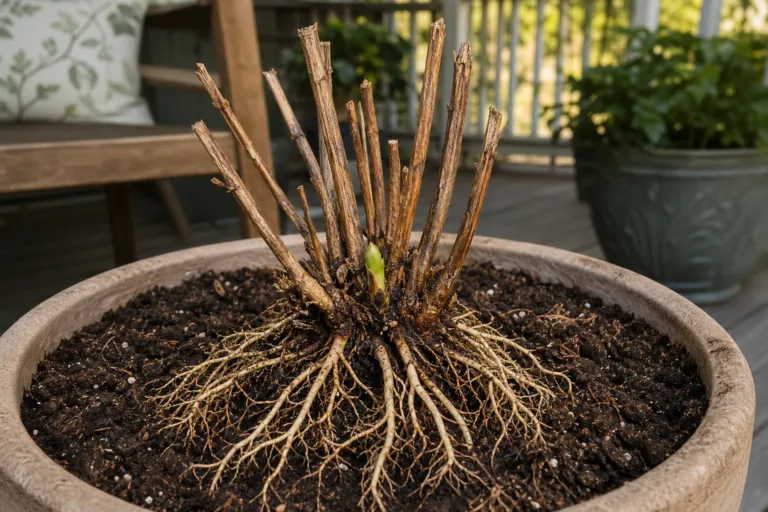
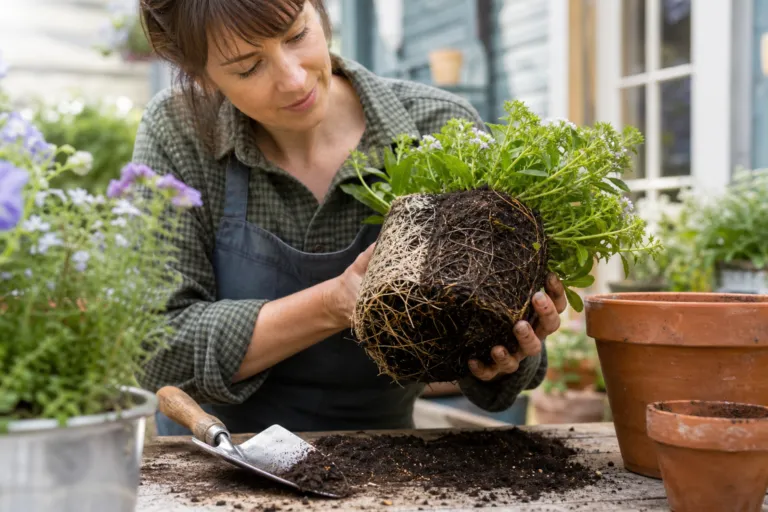
Roots do not absorb water evenly throughout the soil. The finest roots and their associated root hairs do much of the work, and plants may produce or maintain roots in portions of the soil profile that remain moist.
In a deep, well-structured bed, roots may continue drawing water from lower layers after the surface has dried. In a shallow container, however, the entire root zone can become dry within hours or days, especially in hot weather.
4. It pulls water from its own tissues
Leaves and young stems normally stay firm because their cells contain water under pressure. This internal pressure is called turgor. As water loss exceeds water uptake, turgor falls and leaves soften or droop.
Wilting is not always permanent. A plant that droops during a hot afternoon may recover overnight when temperatures fall and water loss slows. A plant that remains wilted through the cool morning may be much closer to severe stress.
Why dry soil can still contain unusable water
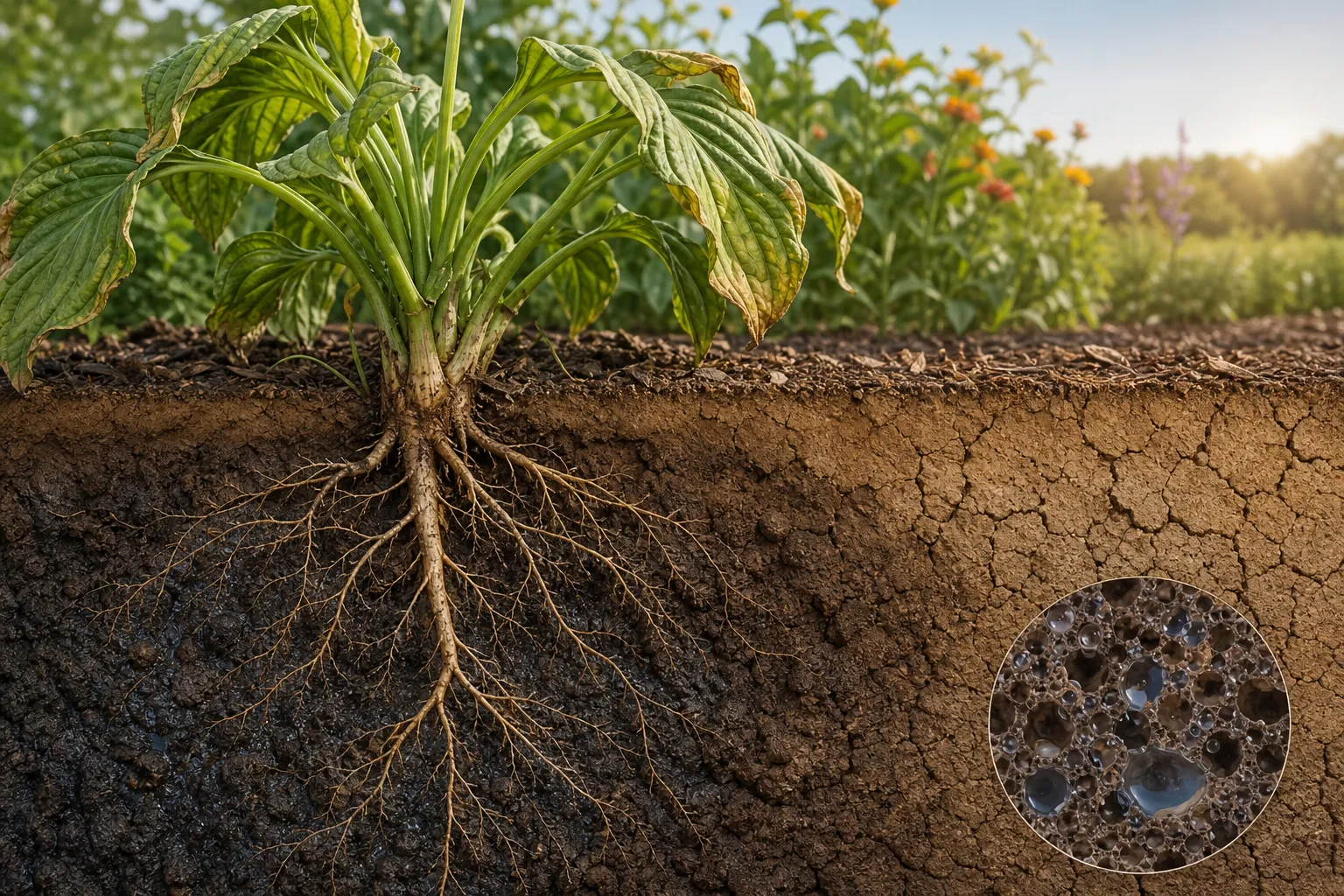
Think of soil as a sponge made from pores of many sizes. Large pores release water readily and drain quickly. Medium pores hold water that roots can often use. Tiny pores may retain water so tightly that it is effectively unavailable to most garden plants.
Texture makes a major difference:
- Sandy soil has large pores, so it drains quickly and often reaches plant stress sooner during hot, dry weather.
- Loam and silt loam commonly offer a useful balance of drainage and water storage.
- Clay soil can hold a great deal of water, but some of it sits in very small pores and is difficult for roots to extract.
- Compacted soil may lose useful pore space, restrict roots and make water movement uneven.
Organic matter can improve soil structure and water storage over time, particularly when it helps create stable aggregates and better-connected pores. It does not turn every soil into a bottomless reservoir, and adding a thin layer once will not solve drought stress immediately.
A practical home experiment: follow the final usable water
You can watch this process without specialized equipment. This experiment works especially well with two identical containers, such as 5-gallon nursery pots, and two similar plants. Choose a sturdy annual such as basil, marigold or pepper, and make sure both plants have similar size and root development.
What you need
- Two identical containers with drainage holes
- One consistent potting mix
- Two similar plants
- A kitchen or luggage scale that reads in ounces or grams
- A measuring cup or watering can
- A plant label and notebook
How to run it
- Fill both containers with the same amount of mix. Water each plant slowly until a small amount drains from the bottom.
- Allow the containers to drain for about 30 minutes, then weigh each one. Record the weight.
- Place both plants in the same bright location, but protect them from strong wind.
- Weigh the containers at the same time each day. Do not water until one plant shows mild, repeatable wilting.
- Record leaf position, weather, container weight and the time of day.
- Water both plants thoroughly, measure the amount applied and compare how quickly they recover.
Here is an illustrative data pattern you might see with two established basil plants in 5-gallon containers. Treat these numbers as a model, not a promise: temperature, humidity, plant size and potting mix can change the result.
- Starting weight after drainage: 34.0 pounds per container
- Day 2: 32.9 pounds; plants appear firm
- Day 4: 31.8 pounds; leaves slightly softer in late afternoon
- Day 5: 31.3 pounds; noticeable afternoon droop, partial recovery by morning
- Day 6: 30.9 pounds; droop remains into the morning, growth visibly slowed
- Water added to restore the original weight: about 3.1 pounds, or roughly 3 pints
One pound of water is approximately one pint, so container weight gives you a surprisingly practical way to track water loss. The experiment also shows why a calendar schedule can mislead you: the same plant may lose much more water during a hot, breezy week than during a cool, cloudy one.
Not all plants spend the last water the same way
Variety matters, but so does the plant’s growth stage. Two tomato varieties may respond differently to the same dry-down, especially if one has a more vigorous root system or naturally smaller leaves. A compact cherry tomato may continue setting fruit under conditions that cause a large slicer to wilt, although neither should be treated as drought-proof.
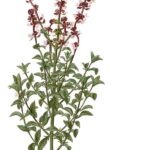
Leaf shape offers clues. Plants with small, narrow, waxy or hairy leaves often lose water more slowly than plants with large, thin leaves. Succulents and many Mediterranean herbs store water or limit leaf loss, while lettuce, basil and young beans usually need steadier moisture.
Rooting depth also changes the picture. Onions and many leafy greens have relatively shallow roots and can require more frequent irrigation. Deep-rooted perennials, shrubs and trees may find moisture well below a dry surface—provided the soil is deep enough and roots are not blocked by pavement, compaction or a hard layer.
How to tell whether a plant needs water now
Do not judge by the soil surface alone. The top inch may be dry while the root zone is still adequately moist, or the surface may look dark after a brief shower while deeper soil remains dry.
Try these checks:
- Push your finger or a narrow trowel into the soil near, but not directly against, the plant stem. Check several inches down where the roots are active.
- Lift a container. A noticeably lighter pot often needs water more urgently than one with damp mix.
- Observe the plant in the cool morning. Persistent morning wilt is more meaningful than a brief afternoon droop.
- Look for several signs together: dull leaves, slowed growth, curling, flower drop or dry soil throughout the root zone.
- Use a moisture meter only as a guide. Compare its readings with the actual soil and plant response rather than relying on a single number.
When you water, apply it slowly enough to soak the intended root zone. A shallow sprinkle may wet the surface without replenishing the deeper moisture that roots need. For many established garden plants, a thorough watering followed by a reasonable drying period encourages deeper rooting better than constant, shallow dampness.
A measurement-based watering example
Suppose a 4-by-8-foot raised bed covers 32 square feet. One inch of water over that area equals about 20 gallons. That does not mean every bed needs exactly 1 inch at every watering, but it helps you understand the scale of the task.
If you collect irrigation in straight-sided cans and find that your system applies one-quarter inch during a 20-minute run, you would need approximately four such applications to deliver 1 inch—unless rainfall contributes part of the total. In practice, break applications into cycles if water runs off, especially on clay or sloped ground.
For containers, measure instead of guessing. If a 12-inch pot receives 2 quarts, drains freely and still feels light the next day, the plant may need a slower, deeper application or a larger container. If water rushes through immediately, check whether the mix has pulled away from the pot edge or become difficult to re-wet.
Mulch buys time—but it cannot create water
A 2- to 3-inch layer of organic mulch can shade the soil surface, reduce evaporation and soften temperature swings. Keep mulch a few inches away from trunks and plant crowns so stems remain dry and visible.
Mulch works best alongside good watering habits. It cannot compensate for a shallow root zone, a leaking irrigation line or a plant placed in a location that exceeds its needs. During an extended US heat wave, even mulched beds may require more frequent checks.
When the last usable water is gone
At severe stress, stomata remain closed for longer, photosynthesis declines sharply and the plant may shed leaves or abandon flowers and fruit. Fine roots can die back, reducing the plant’s ability to recover quickly when rain finally arrives.
Some plants survive by entering dormancy. Others, particularly young annuals and newly transplanted specimens, may not recover. A plant can look alive after watering yet show delayed damage days or weeks later because drought affected developing tissues.
The best response is early and measured: check the root zone, water deeply when needed, protect the soil surface with mulch and match plants to the site. In USDA Hardiness Zones across the United States, the same plant may need very different care depending on summer heat, humidity, wind and winter moisture.
The gardener’s takeaway
A plant does not simply drink the final drop of water and continue normally. As soil dries, roots work harder, leaves close their pores, growth slows and the plant begins rationing its water budget. The remaining moisture may still be present, but it can be locked too tightly in the soil to meet the plant’s demand.
Watch the plant and the soil together. Measure when you can, water slowly, and learn how quickly your own beds and containers dry. Once you understand that “dry” is a process rather than a single moment, watering becomes less mysterious—and your plants have a much better chance of getting help before the last usable water disappears.