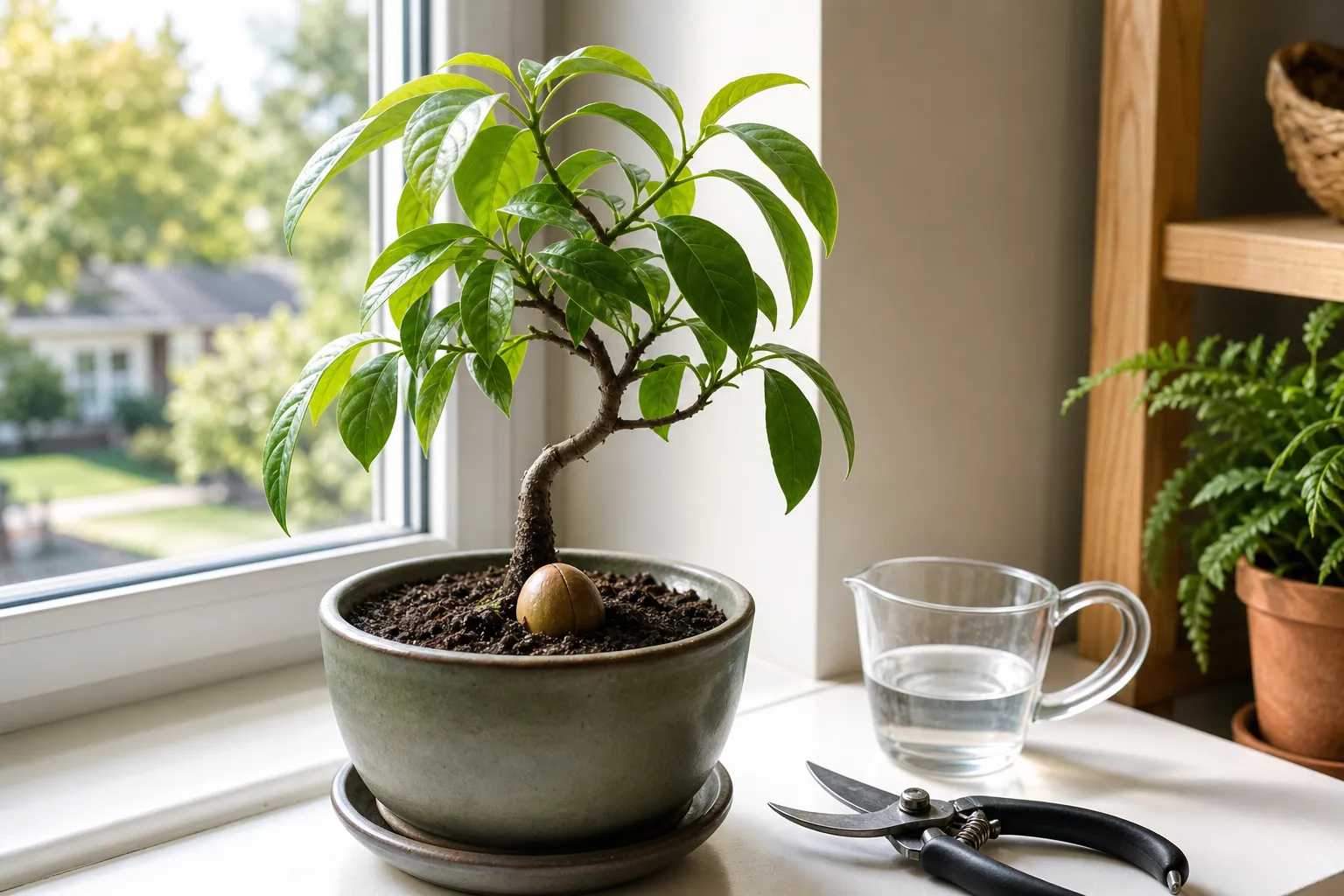
Growing an avocado bonsai is a wonderfully approachable gardening project. Start with a seed from a grocery-store avocado, give it warmth and bright light, then gradually guide the fast-growing seedling into a compact little tree. It will not behave exactly like a traditional Japanese bonsai, and a seed-grown avocado may never produce edible fruit indoors, but it can become an attractive leafy plant with a distinctive trunk and a satisfying shape.
The secret is to treat your avocado as a vigorous young tree rather than a delicate houseplant. Give it excellent drainage, avoid constantly wet soil, and prune little and often instead of making dramatic cuts all at once. With a few straightforward techniques, you can create a miniature tree that looks at home on a sunny windowsill, plant stand or sheltered patio.
What makes an avocado suitable for bonsai?
Avocados grow quickly from seed and produce large, glossy leaves on flexible green stems. That fast growth makes them rewarding for beginners because you can see the results of pruning within weeks. It also creates the main challenge: an untrimmed seedling tends to shoot upward, become lanky and develop a top-heavy appearance.
Avocado bonsai is best understood as a miniature-tree project, not a promise of a tiny fruit tree. Grocery-store avocados are usually grown from grafted commercial varieties, while the seed inside produces a genetically different plant. Even when the seedling eventually flowers, fruiting can take years, may require outdoor conditions and may not produce fruit that resembles the avocado you ate.
Compare common avocado types before you begin
The variety can influence how your plant grows, although the seed label is often unknown when you start with supermarket fruit.
- Hass: Common in U.S. grocery stores and generally a practical choice for a seed-growing experiment. Seedlings can become upright and vigorous.
- Fuerte: Often associated with a somewhat broader, more spreading habit, although individual seedlings vary.
- Florida or West Indian types: These are adapted to warm climates and may grow strongly in suitable outdoor conditions, but they are less commonly available as everyday supermarket fruit in many parts of the United States.
- Grafted nursery trees: A better option if your main goal is reliable fruit. Choose a compact or patio-suitable grafted tree rather than relying on a seedling.
For bonsai practice, the most important factors are the seedling’s health, stem thickness and natural branching habit. Choose the strongest plant rather than trying to force a weak, stretched seedling into an elaborate design.
Starting your avocado bonsai from seed
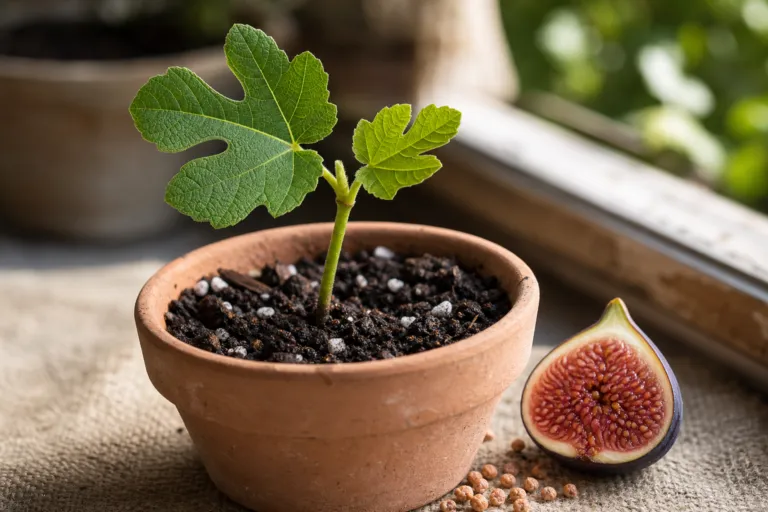
Remove the seed carefully and wash away all fruit residue. You can suspend it over water with toothpicks, but planting it directly in a small container of moist, free-draining potting mix is usually simpler and avoids the shock of transferring delicate water-grown roots.
Set the seed with its broader end down and its pointed end slightly above the surface. Keep the mix evenly moist, not saturated, and place the container in a warm location with bright indirect light. Germination commonly takes several weeks, but timing varies with temperature, seed freshness and growing conditions.
Once the seedling has a few healthy leaves, move it to the brightest practical location. A south- or east-facing window often works well indoors. If natural light is weak, use a full-spectrum grow light for roughly 12 to 14 hours daily, keeping it at the distance recommended by the light manufacturer.
When should you make the first pruning cut?
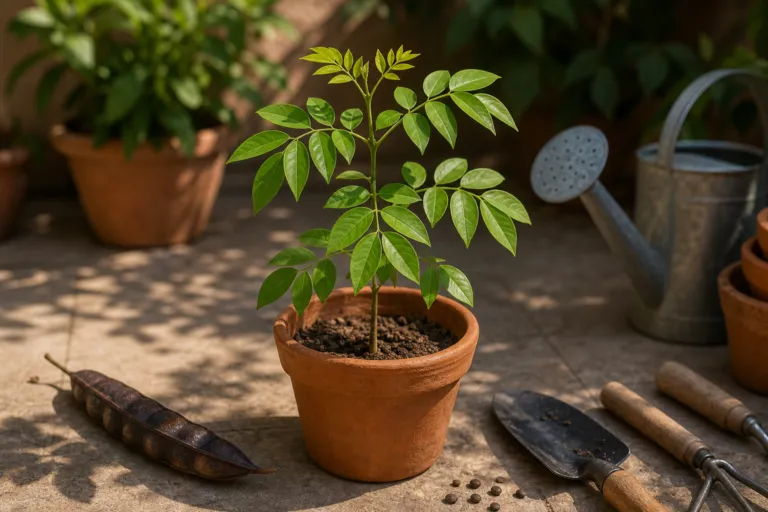
Let the young seedling establish before you begin shaping it. A stem around 12 to 18 inches tall with several healthy leaves is usually ready for its first heading cut. At this stage, removing the growing tip encourages side shoots and prevents the plant from putting all its energy into one tall stem.
Use clean, sharp pruners and cut just above a leaf or leaf node. A node is the point where a leaf or side shoot joins the stem. New branches are most likely to emerge from nodes below the cut, so choose a position that leaves several healthy leaves beneath it.
A simple beginner pruning sequence
- Allow the seedling to reach about 12 to 18 inches tall.
- Cut the main stem back by roughly one-third to one-half, depending on how tall and sparse it has become.
- Wait for new side shoots to develop rather than cutting again immediately.
- When a new shoot has produced several sets of leaves, pinch out its growing tip.
- Repeat selectively after each strong growth flush to build a compact crown.
Do not remove every leaf. Avocado leaves manufacture and store energy, so severe defoliation can slow recovery. Aim to shorten long shoots while keeping enough foliage to support new growth.
How to shape an avocado bonsai
Choose a design that suits the plant’s natural habit. A simple informal upright form is usually the easiest: one gently curving trunk with branches arranged at different heights. You can also develop a windswept look or a low, spreading form, but dramatic styles require more patience and careful support.
Build the trunk first
Young avocado stems are flexible, but they thicken quickly. If you want a bend, use a soft plant tie and a thin support stake. Adjust the tie regularly so it never cuts into the stem. Make gradual changes rather than forcing a sharp angle, and remove the support as soon as the trunk can hold its position.
Wire can damage avocado stems if it is applied too tightly or left in place while the plant expands. Beginners usually get better results with guy wires, soft ties and selective pruning. Check all supports every week during active growth.
Choose branches with intention
Keep side branches that contribute to the silhouette and remove or shorten those that compete with the trunk. A balanced arrangement typically looks more natural when branches do not all emerge at the same height or point directly toward one another.
- Remove dead, damaged or diseased-looking growth promptly.
- Shorten branches that are much longer than the rest of the crown.
- Thin crossing or rubbing shoots.
- Keep some lower branches while the trunk is developing; they help the plant build energy and girth.
- Pinch vigorous upright shoots to encourage lateral growth.
Avocados naturally have a somewhat irregular growth pattern. Do not try to make every branch perfectly symmetrical. A little asymmetry often gives the miniature tree more character.
When to prune and when to wait
Light pinching and the removal of occasional damaged growth can usually happen whenever the plant is actively growing. For larger structural cuts, choose a period of vigorous growth, typically spring or early summer indoors, when the plant can recover quickly.
Avoid heavy pruning just before moving the plant into cold conditions or placing it outdoors in strong sun. Freshly exposed stems and branches can be vulnerable to sunburn, temperature swings and drying winds. If a major cut leaves a branch suddenly exposed, provide bright filtered light while the plant adjusts.
Avocado trees generally respond better to gradual height control than to repeated severe topping. If your bonsai has become very tall, reduce it in stages and allow new shoots to mature between cuts.
Watering: measure the soil, not the calendar
Avocado roots need oxygen as well as moisture. Constantly wet soil is one of the quickest ways to weaken a container-grown avocado, especially when the pot lacks drainage. On the other hand, a small bonsai container can dry rapidly in a sunny window, so the goal is a repeatable check rather than a fixed weekly schedule.
Insert your finger about 1 to 2 inches into the potting mix. If that layer feels dry, water thoroughly until a little drains from the bottom. Empty any saucer after several minutes. If the mix still feels cool and damp, wait and check again the next day.
A practical home watering trial
For a young avocado in a 6-inch pot, begin by measuring how much water reaches the point of drainage. A measuring cup or kitchen scale can help you record the amount. Many plants of this size may use approximately 1 to 2 cups per watering, but the correct amount depends on the potting mix, root volume, temperature and light.
Try this simple two-week test:
- Check the soil every morning and record whether it is damp, slightly dry or dry.
- Water only when the top 1 to 2 inches have dried.
- Record the volume of water used and whether drainage appears.
- Shorten the interval during hot, bright weather and extend it during cool, cloudy periods.
The measurements are more useful than copying someone else’s schedule. If water runs straight through the pot immediately, the mix may be too dry or compacted. If the pot remains heavy and wet for many days, improve drainage and reduce watering.
Light, temperature and humidity
Give your avocado the brightest light you can provide without exposing it suddenly to intense afternoon sun. Indoors, rotate the pot a quarter-turn every week so the plant grows evenly rather than leaning toward the window.
In USDA Zones 9 through 11, a healthy avocado can often spend the warm season outdoors in a sheltered location. Acclimate it gradually over seven to 10 days, beginning with bright shade and increasing its exposure. In colder zones, bring it indoors well before frost and cold nights arrive. Avocado plants are tropical or subtropical and can suffer when exposed to freezing temperatures.
Average household humidity is often adequate, but very dry winter air can cause brown leaf edges. Grouping plants together or using a humidifier can help. Avoid leaving the pot in standing water, since raising humidity should never mean keeping the roots waterlogged.
Potting mix, containers and repotting
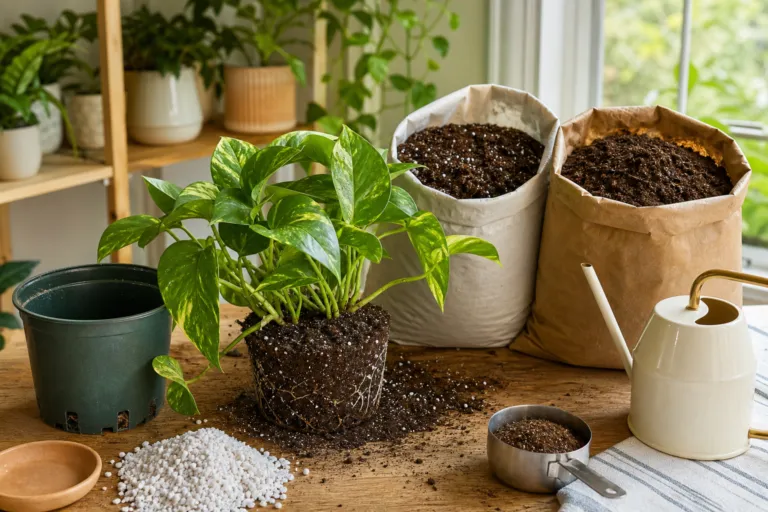
Use a loose, fast-draining container mix rather than heavy garden soil. A quality indoor potting mix amended with perlite or fine orchid bark can provide better air space around the roots. Always choose a container with a drainage hole.
Move the plant into a pot only one size larger when roots begin circling densely or emerging from the drainage hole. Oversized containers hold excess moisture and can make watering more difficult. Spring is usually the least stressful time to repot, but a root-bound plant may need attention sooner.
Repot gently and avoid tearing the main roots. Afterward, water thoroughly, place the plant in bright indirect light and delay strong fertilizer until it begins active new growth.
Feeding without forcing weak growth
During spring and summer, use a balanced houseplant fertilizer according to the product label. A dilute feeding program is safer than applying a concentrated dose, particularly in a small bonsai container where salts can accumulate quickly.
Reduce or stop feeding during the darker, slower-growing months. Yellow leaves, brown tips or a white crust on the soil surface can signal several possible problems, including watering stress or fertilizer buildup, so diagnose the growing conditions before adding more nutrients.
Common problems and quick corrections
- Long, bare stems: Increase light and pinch the growing tips to encourage branching.
- Yellow leaves with wet soil: Allow the mix to dry somewhat between waterings and check that the drainage hole is open.
- Brown, crispy edges: Check for underwatering, very dry air, hot window glass or fertilizer buildup.
- Leaves dropping after moving outdoors: Reacclimate the plant more gradually and protect it from wind and harsh afternoon sun.
- One-sided growth: Rotate the pot and improve light from the darker side.
- Sudden pest activity: Inspect new growth and leaf undersides regularly, then remove pests with gentle physical controls appropriate for indoor plants.
How long can an avocado bonsai last?
With strong light, careful watering and periodic repotting, an avocado can remain an attractive container plant for several years. Seed-grown plants are vigorous, however, and may eventually outgrow the bonsai treatment or develop coarse leaves and weak branches indoors.
Think of the project as an ongoing partnership with a fast-growing tree. You may need to refresh the plant, restart from a new seed or move an older specimen outdoors when space and climate allow. Each new seedling gives you another chance to experiment with trunk movement, branch placement and pruning timing.
Your next step: shape slowly and observe closely
An avocado bonsai rewards attention more than perfection. Start with a healthy seedling, provide bright light, water only when the soil needs it and make small pruning cuts above useful nodes. Take photographs every few weeks so you can see how each decision changes the silhouette.
Most importantly, do not be afraid of a little trial and error. A missed pruning window or an awkward branch rarely ends the project. Avocados grow quickly, and with patience you can guide yours toward a compact, personal miniature tree that reflects your own gardening style.