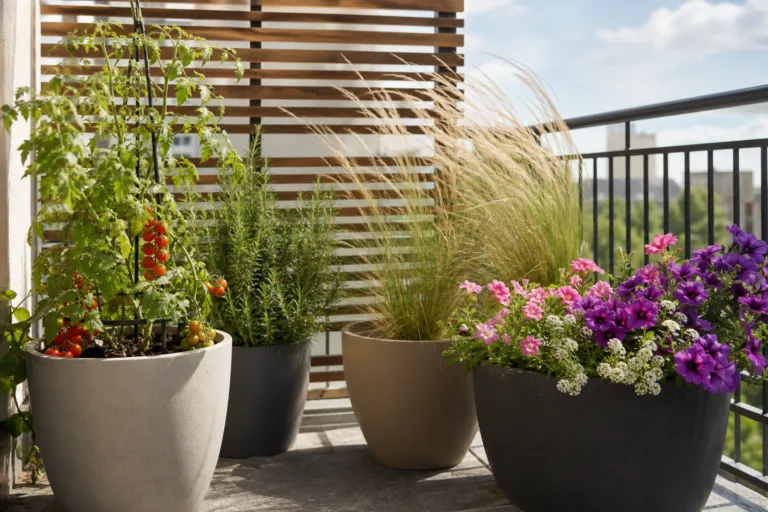
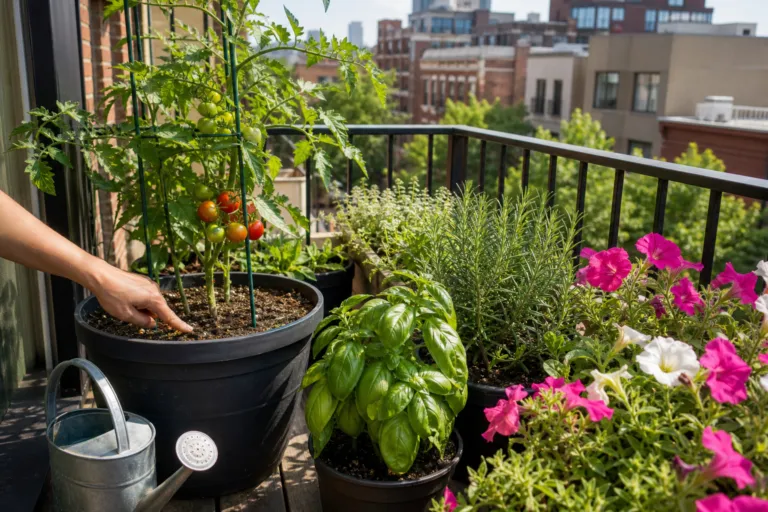
Your balcony may look like one small growing space, but your plants experience several different climates within just a few feet. A pot beside a pale wall may stay relatively cool, while one on dark decking can become dramatically hotter. A sheltered corner may hold moisture for days; a railing planter can dry out before lunchtime.
That is the hidden advantage of balcony gardening: once you learn to read these small climate zones, you can stop blaming yourself – or the plant – and start placing each container where it has the best chance to thrive.
Think of your balcony as a collection of tiny outdoor rooms. Each one receives a different mix of sunlight, reflected heat, wind, moisture, and protection. Your job is not to make every corner identical. It is to match each plant to the corner it naturally prefers.
What creates a balcony microclimate?
A microclimate is a small area where conditions differ from the broader weather around it. The USDA Plant Hardiness Zone Map is useful for choosing perennial plants across the United States, but it cannot describe the temperature, wind, or sun differences between two pots on the same balcony.
Several forces work together:
- Sun direction: A south- or west-facing balcony usually receives stronger, hotter light than a north-facing one. Morning sun is often gentler than afternoon sun.
- Reflected light: Glass, white walls, pale siding, and nearby buildings can bounce extra light onto foliage.
- Stored heat: Brick, concrete, stone, and dark decking absorb warmth during the day and release it later.
- Wind: Balconies can funnel or accelerate wind, especially around corners, railings, and taller buildings.
- Height: Air movement is often greater several stories above ground, and exposed containers may cool quickly at night.
- Shelter: Walls, screens, overhangs, and neighboring buildings can protect plants from wind, heavy rain, and sudden temperature changes.
- Container size: A small pot has less soil to hold water and protect roots from temperature swings.
Even the balcony floor matters. A plant sitting directly on hot concrete may face more root-zone heat than a similar plant raised on a stand with air circulating underneath.
Read the light before you buy plants
Plant labels often use terms such as “full sun,” “part sun,” or “shade,” but these descriptions are starting points rather than guarantees. On a balcony, six hours of direct sun beside a reflective wall may feel much more intense than six hours in an open garden.
Make a simple light map
For three clear days, check your balcony at 8 a.m., noon, 3 p.m., and 6 p.m. Mark each area as direct sun, bright indirect light, dappled light, or shade. Notice whether the sunlight reaches the plant itself or only the surrounding floor and walls.
Use masking tape or a quick sketch to record the results. You may discover that:
- The railing gets sun all afternoon but also receives the strongest wind.
- The corner near the door gets only morning sun and stays cooler.
- A wall reflects enough light to make a “part-sun” spot behave more like full sun.
- The floor below a railing planter stays shaded even while the leaves are in bright light.
Leafy greens, parsley, cilantro, begonias, and many houseplants generally appreciate protection from the hottest afternoon conditions. Tomatoes, peppers, rosemary, lavender, and many flowering annuals usually perform better where they receive stronger light, provided their containers do not dry out too quickly.
Why one pot dries out faster than another
Water loss comes from both the soil surface and the plant leaves. Wind speeds evaporation, heat raises water demand, and small containers simply run out of available moisture faster. A hanging basket or narrow railing planter can therefore need attention much more often than a large floor pot.
Pot material also changes the rhythm. Unglazed terra-cotta allows moisture to escape through its sides, while glazed ceramic and plastic generally slow that loss. Dark containers absorb more solar heat than light-colored ones, especially when they sit in direct afternoon sun.
Drainage is essential, but fast drainage does not mean you should water on an automatic schedule. Check the soil first. Push your finger about 2 inches into the mix, or lift the pot to compare its weight after watering with its weight when dry. When you water, do it slowly until a little water drains from the bottom. This wets the whole root zone instead of leaving a dry pocket in the middle.
A practical watering experiment
Try a one-week test with three similar containers. Place one in an exposed sunny spot, one beside a wall, and one in morning sun with afternoon shade. Use the same pot size, potting mix, and plant variety. Label them A, B, and C.
On a warm summer day, record the following:
- 8 a.m.: Check soil moisture 2 inches below the surface.
- Noon: Check again, especially for wilting or curling leaves.
- 4 p.m.: Weigh each pot or compare how light it feels.
- After watering: Measure the amount of water used with a marked container.
For a useful household comparison, begin with 2 cups of water per 10-inch pot, applied slowly. Record how much drains out. If 1/4 cup drains immediately and the soil still feels dry 2 inches down, add another 1/2 cup and check again after several minutes. Your goal is a thoroughly moistened root zone, not a fixed number of cups.
As an example, the exposed pot might require watering every day during a hot, breezy spell, while the sheltered pot may remain moist for two or three days. Those numbers are not a universal formula; they show why measuring your own balcony is more reliable than copying a neighbor’s routine.
Water in the morning when possible, when temperatures and wind are often lower. If a plant is visibly wilted and the soil is dry, water it when you notice rather than waiting for the “perfect” time. Direct water onto the soil near the base instead of routinely wetting the foliage.
Compare varieties, not just species
Two plants with the same common name can respond very differently to balcony conditions. Variety selection matters because compact growth, leaf size, maturity time, and heat tolerance can all affect performance in containers.
Tomatoes
A compact patio tomato may stay manageable in a 5-gallon container, while an indeterminate variety can become tall, heavy, and difficult to support on an exposed balcony. Cherry tomatoes often set fruit more readily in containers than large-fruited types, although performance depends on light, heat, pollination, and care.
Compare two varieties in matching pots: one compact determinate type and one vigorous indeterminate type. Place them where they receive at least six hours of direct sun, then record height, water use, flowering, and fruit set. The taller plant may produce more foliage but demand more support and water.
Herbs
Basil usually enjoys warmth and bright light but may wilt quickly in a small, windy pot. Thyme, oregano, and rosemary often prefer a sunnier, drier position once established. Parsley and cilantro can be happier with morning light and protection from intense afternoon heat, particularly during summer in warmer parts of the country.
Lettuce and leafy greens
Loose-leaf lettuce, spinach, and Asian greens are useful test plants because heat stress becomes visible quickly. A railing planter in full afternoon sun may cause leaves to wilt or turn bitter sooner than a sheltered corner with morning sun. Try one container in each location and compare leaf texture and harvest time.

Match each corner to a plant personality
Instead of arranging containers only by appearance, group them according to what the spot offers.
The hot, reflective wall
This location can suit sun-loving plants such as peppers, tomatoes, basil, lantana, marigolds, and many succulents. Use a larger, light-colored container when possible, and leave a small gap between the pot and the wall to improve airflow. Check the soil often during heat waves.
The windy railing
Choose shorter, sturdy plants and secure containers against tipping. Chives, thyme, compact peppers, some ornamental grasses, and tough annual flowers may cope better than tall, soft-stemmed plants. Avoid placing delicate seedlings here until they have developed stronger stems.
The sheltered doorway corner
This may be the best place for herbs that dislike rapid drying, leafy greens, begonias, ferns, and newly transplanted plants. Watch for stagnant air if the space is enclosed by walls or screens. Good airflow helps foliage dry after watering and reduces general plant stress.
The shaded floor
Use this area for plants that tolerate lower light, or for temporary relief during extreme heat. A plant that needs full sun will not produce well here simply because it is watered more often. If you need more light, use a wheeled plant stand so you can move containers as the season changes.

Seasonal changes can rearrange your balcony
Your microclimates are not fixed. The sun’s path changes across the year, so a spot that receives four hours of light in spring may receive only two hours in late summer. Nearby trees may leaf out, buildings may cast longer shadows, and a balcony awning may block winter light.
Recheck your light map every month or whenever a plant begins performing differently. In spring, young plants may need gradual exposure to stronger outdoor conditions. During a heat wave, move small pots away from reflective surfaces and provide temporary afternoon shade while keeping air circulation open.
In fall, walls and sheltered corners can protect containers from light frosts, but they do not guarantee winter survival. Container roots are more exposed to cold than roots in the ground. Use the plant’s hardiness rating as a general guide, then remember that wind exposure, pot size, and sudden temperature changes can make a balcony harsher than the surrounding yard.
A five-minute weekly balcony check
Walk the entire balcony instead of caring for every pot in exactly the same way. Look for patterns and adjust placement before a small problem becomes a crisis.
- Feel the soil in several pots, not just the largest one.
- Check leaves for midday wilting and compare plants in different corners.
- Look for wind damage, leaning stems, and loose supports.
- Notice whether a wall or floor is unusually hot to the touch.
- Rotate pots so plants grow evenly toward the light.
- Move stressed plants to a calmer position for a few days.
- Confirm that drainage holes are open and that saucers are not holding standing water.
Let the balcony teach you
The most successful balcony gardeners do not rely on a single watering rule or a perfect plant list. They observe, compare, and make small changes. A notebook with dates, weather, pot location, watering amounts, and plant responses can reveal useful patterns after only one season.
Start with two or three plants rather than filling every available corner. Test a sunny position against a sheltered one, compare two varieties, and measure how much water each container actually uses. Once you understand your balcony’s hidden climate, you can turn even its hottest, windiest, shadiest corners into productive growing spaces.