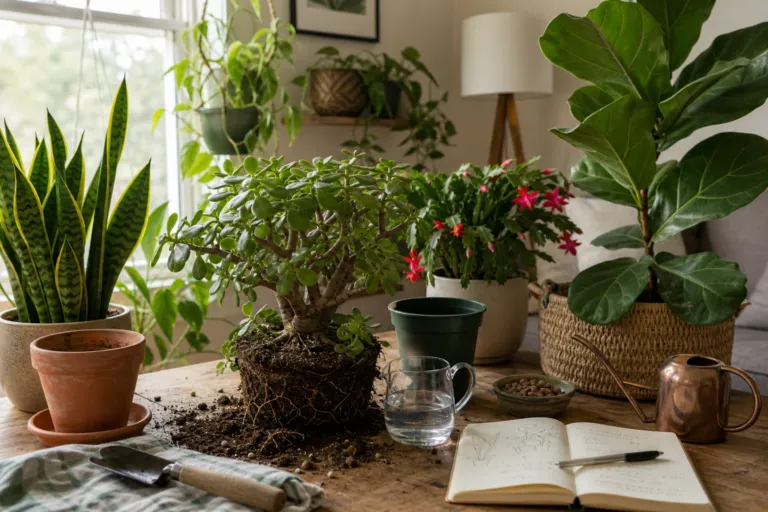
Have you ever noticed a houseplant leaning dramatically toward the window? You are not imagining it – and your plant is not being difficult. It is responding to light, growing toward the brightest available source in a natural behavior called phototropism.
Rotating the pot is one of the easiest ways to encourage balanced growth. A quarter turn now and then can help more leaves receive useful light, reduce one-sided stretching, and keep your plant looking fuller and better proportioned. It is a small habit, but it can make a noticeable difference over time.
Plants naturally grow toward the brightest light
Plants use light to make food through photosynthesis. Indoors, light often comes mainly from one direction: a nearby window or a grow light positioned above or to one side. As a result, stems and leaves may gradually turn toward that source.
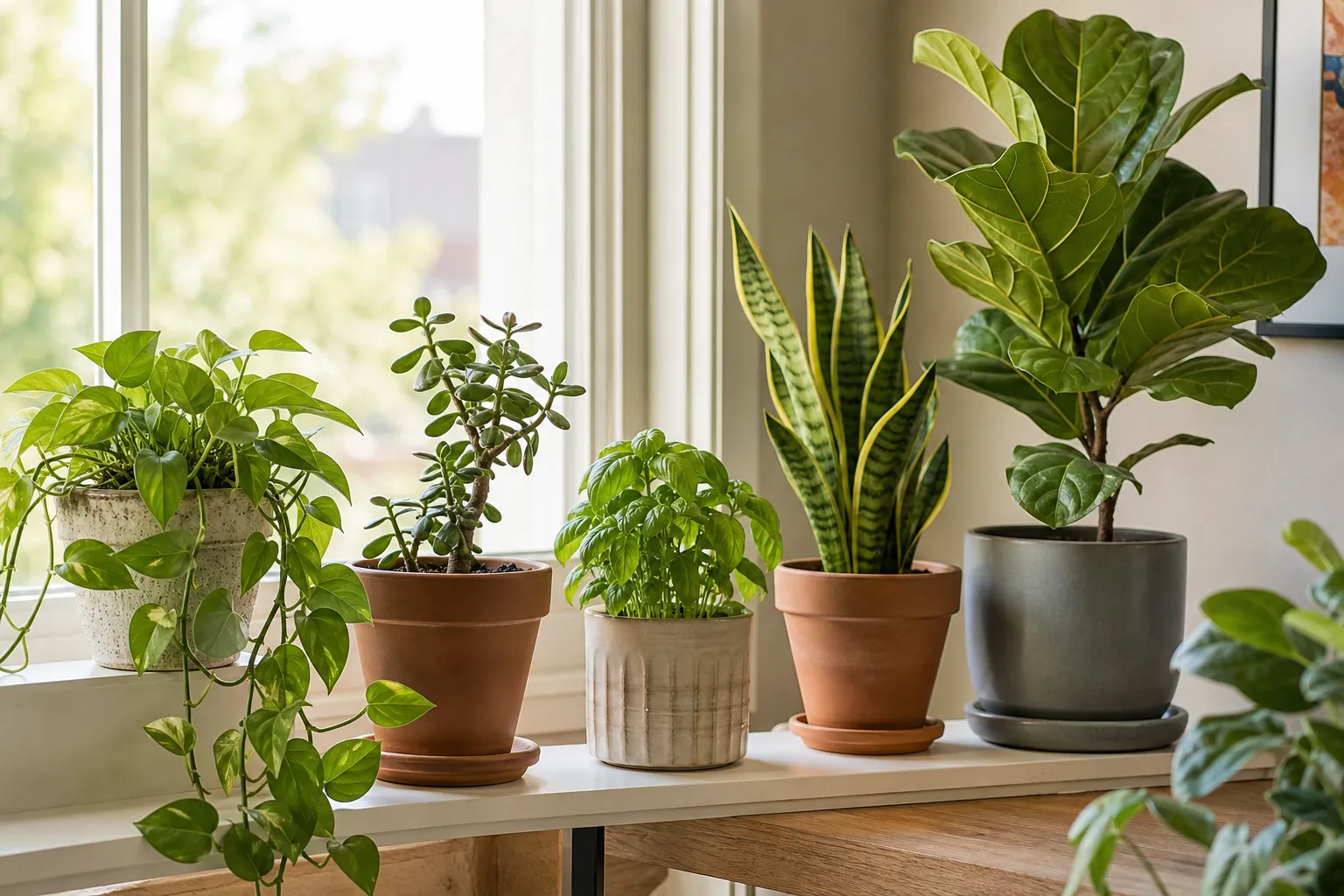
The process is especially noticeable in plants placed on windowsills. A fiddle-leaf fig, jade plant, basil plant, or young seedling may develop a clear “front” facing the glass, while the shaded side produces fewer leaves or grows more slowly.
When light reaches a stem from one side, plant hormones help cells on the shaded side elongate. That uneven growth causes the stem to bend toward the light. Turning the container changes which side faces the window, giving the plant a chance to develop more evenly around its center.
What rotating a plant can improve
1. A more balanced shape
Regular rotation helps prevent the familiar lopsided houseplant. Instead of every new leaf pointing toward the window, growth has a better chance of spreading around the plant.
This does not mean every plant will become perfectly symmetrical. Some naturally grow in a particular direction, and trailing plants often look attractive when allowed to spill toward the light. Still, rotating can help upright plants maintain a more pleasing silhouette.
2. Less leaning and stretching
A plant that receives too little light may develop long spaces between leaves, thin stems, and a stretched appearance. Gardeners often call this “leggy” growth. Rotation alone cannot solve a truly dark location, but it can help distribute the available light more fairly.
If your plant continues to lean, looks pale, or produces unusually small new leaves, move it closer to a suitable window or add a properly positioned grow light. Turning the pot is a supporting measure – not a replacement for adequate light.
3. More even leaf development
Leaves facing the window generally receive more light than leaves on the opposite side. Over time, the brighter side may produce more vigorous growth, while the shaded side remains sparse. Rotating the pot allows different leaves and stems to take turns receiving stronger illumination.
This is particularly useful for herbs, seedlings, foliage plants, and compact plants grown on a windowsill. More even light can support a more uniform canopy and reduce the temptation for new growth to crowd toward one side.
4. Better use of a small growing space
In a home, you may not have the luxury of placing every plant directly in front of a large window. Rotation helps make the most of the light that is available, especially in apartments, offices, and rooms with north- or east-facing windows.
It is also useful when several plants share a shelf. Turning them regularly can prevent the plants nearest the glass from monopolizing the strongest light while the plants behind them remain shaded.
How often should you rotate a houseplant?
For many houseplants, a quarter turn once a week is a practical starting point. You do not need to spin the pot every day or monitor its exact angle. Consistency matters more than precision.
If you tend to water on a regular schedule, use that moment as a reminder. Some indoor gardening guidance recommends turning the plant about one-quarter of a rotation each time you water. This creates a simple routine without adding another task to your calendar.
- Fast-growing plants: Try a quarter turn every few days to once a week.
- Most foliage houseplants: A quarter turn weekly or every two weeks is usually reasonable.
- Slow-growing plants: Rotate monthly or whenever you notice leaning.
- Seedlings and herbs: Turn them frequently because young stems can bend quickly toward a window.
Watch the plant rather than following a rigid rule. If the stem is already leaning, rotate gradually and improve the light conditions. A severely bent plant may not straighten completely, although new growth can develop more evenly after the change.
Not every plant needs the same treatment
Rotation is helpful for many plants, but your plant’s natural growth habit still matters. Compare the needs and appearance of a few common indoor favorites.
Fiddle-leaf fig
Fiddle-leaf figs prefer bright light and often lean toward a window when the light is insufficient or comes from only one direction. Rotate the pot gradually, especially if it has developed a strong lean. Avoid moving it suddenly from a dim room into intense direct sun, because leaves may scorch when conditions change too quickly.
Jade plant
Jade plants usually appreciate strong light and can become stretched when kept too far from a window. Rotation helps maintain a balanced crown, but it will not compensate for inadequate brightness. Give the plant a stable, bright location and turn it occasionally so one side does not receive all the available sun.
Pothos and heartleaf philodendron
These trailing plants are flexible. You can rotate them for fuller growth near the pot, or deliberately leave them facing the window if you prefer longer vines on one side. If you want a bushier appearance, combine rotation with pruning and propagate the cuttings back into the container.
Snake plant and ZZ plant
Snake plants and ZZ plants tolerate lower light better than many sun-loving houseplants, so they may not lean as dramatically. Rotation is still useful for maintaining even growth, especially when the plant sits near a one-sided window. Because these plants grow relatively slowly, monthly rotation may be enough.
Herbs and seedlings
Basil, cilantro, chives, and young vegetable seedlings often respond quickly to one-sided light. Without regular turning, stems can become thin and angled. Rotate them often and provide the brightest suitable light you can, particularly during the shorter days of winter.
A simple two-week growing experiment
If you enjoy observing your plants, try a small comparison at home. Choose two similar plants or two healthy cuttings of the same variety. Place them in the same room, at the same distance from the window, and water them in the same way.
- Leave Plant A facing the same direction for 14 days.
- Turn Plant B one-quarter turn every three or four days.
- Mark the original window-facing side with a small piece of removable tape on the pot.
- Measure the angle of leaning with a ruler or simply photograph both plants from the same position.
- Compare the number, direction, and size of new leaves at the end of the trial.
Do not expect dramatic results in every two-week trial. Slow-growing plants may show little visible change, while basil, seedlings, or vigorous vines may respond more clearly. The exercise is useful because it helps you learn how quickly your own plants react in your home’s particular light.
Rotation is not the same as moving a plant
Turning a pot in place usually creates a modest change. Moving a plant from a shaded corner to a sunny window is a much bigger adjustment. If you relocate a plant, introduce brighter light gradually when possible, especially if it has been growing in low light.
Also pay attention to seasonal changes. A window that provides gentle light in December may deliver hot, intense sun in July. In the United States, the angle and strength of sunlight can change considerably between winter and summer, so check your plants throughout the year rather than relying on a single placement decision.
South- and west-facing windows often provide stronger light, while north-facing windows generally provide less direct sun. East-facing windows can offer gentler morning light. These are useful general patterns, but nearby buildings, trees, curtains, tinting, and the distance from the glass can change the actual conditions in your room.
Use rotation as a watering reminder – but do not water by the calendar
Pairing rotation with watering can make the habit easier to remember, but avoid watering automatically every time you turn the pot. Water needs vary with plant type, pot size, soil, temperature, humidity, and light level.
For a practical measurement exercise, check the soil before watering and record what you find. For example, you might measure 2 inches down with your finger or a wooden skewer. If the upper 2 inches are dry in a foliage plant that prefers moderate moisture, water slowly until a little drains from the bottom, then empty the saucer after about 10 minutes.
Record the amount for your own reference. A 6-inch pothos may use roughly 12 to 16 fluid ounces in one watering under one set of indoor conditions, while a small succulent in the same room may need substantially less and should dry more thoroughly between waterings. These are observation examples, not universal targets. Let the plant and soil guide you.
- Check moisture before watering instead of following a fixed weekly schedule.
- Use a pot with drainage holes.
- Water thoroughly when the plant’s needs indicate it is time.
- Allow excess water to drain away.
- Do not increase watering simply because a plant receives more light after rotation.
More light can increase water use, but rotation by itself does not create a new watering schedule. A plant in bright light may dry faster than the same variety in a dim corner, so observe both soil moisture and new growth.
When rotation will not solve the problem
A leaning plant may be asking for more than a turn. Look for these signs that the light level itself needs attention:
- Long, thin stems with large gaps between leaves
- Pale or unusually small new leaves
- Loss of variegation in plants that normally have patterned foliage
- Few flowers on a plant that should bloom in bright conditions
- Growth that repeatedly bends toward the same window after rotation
Move the plant closer to an appropriate window, remove an obstruction, clean dusty leaves gently, or consider a grow light. Keep artificial lights at the distance recommended for the specific fixture and plant, and provide a period of darkness rather than leaving lights on continuously.
On the other hand, brown patches, bleached leaves, or crispy edges may indicate excessive light, heat, dry air, or watering stress. Rotation will not correct those problems. If symptoms appear soon after moving a plant, reassess the intensity and duration of the light as well as the watering routine.
A small habit with a big visual payoff
Rotating plants toward the light is simple because it works with the way plants naturally grow. By changing which side faces the window, you encourage a more even distribution of light and help reduce one-sided growth.
Start with one plant this week. Turn the pot a quarter turn, check the soil rather than watering automatically, and take a quick photograph from the same angle. After a month, you may notice a fuller shape, steadier new growth, or simply a plant that looks more balanced on the shelf.
You do not need perfect technique or expensive equipment. A regular glance, a gentle turn, and a little attention to the light can help your houseplants grow with greater strength and symmetry.