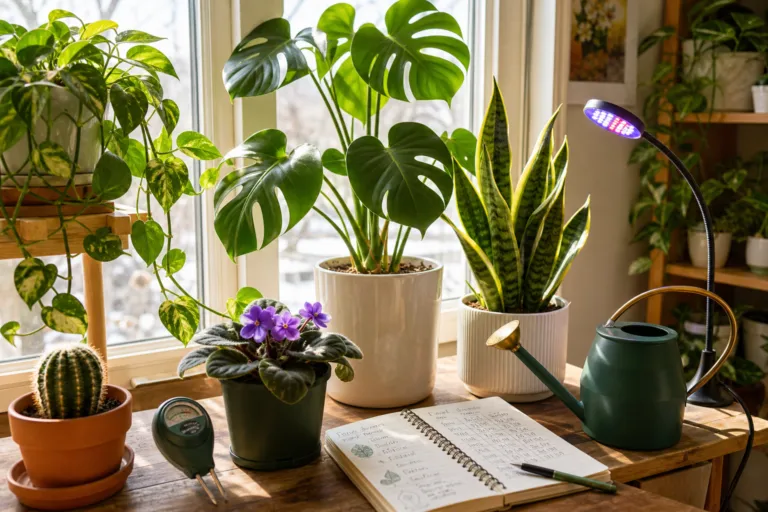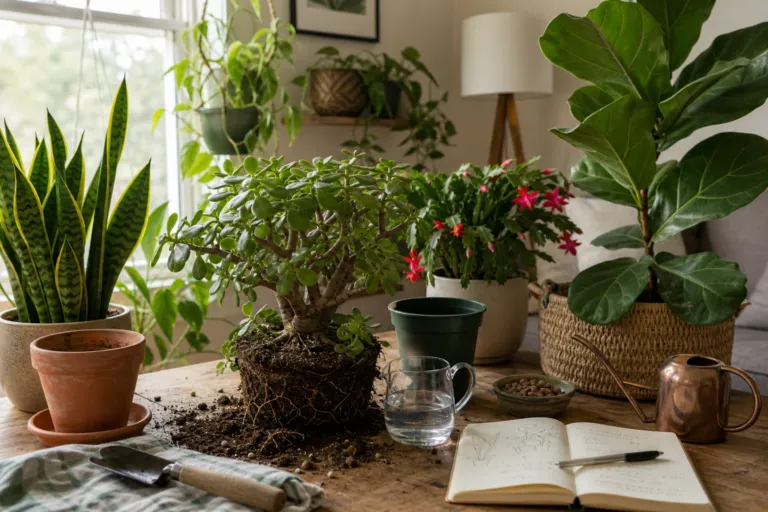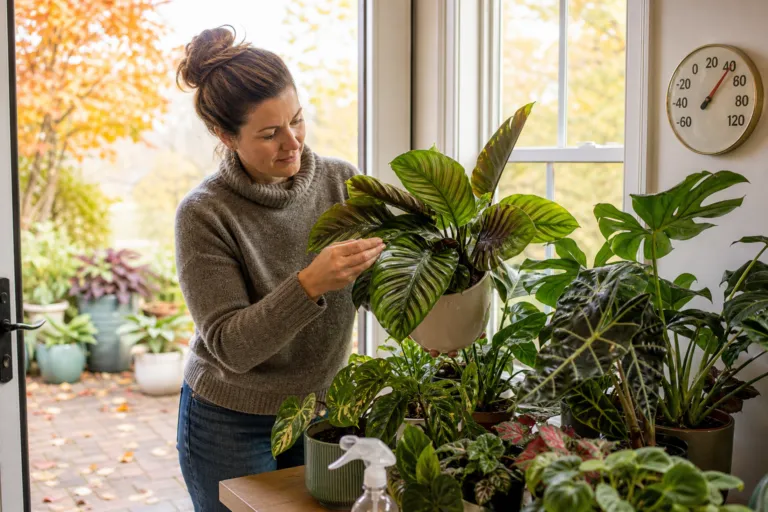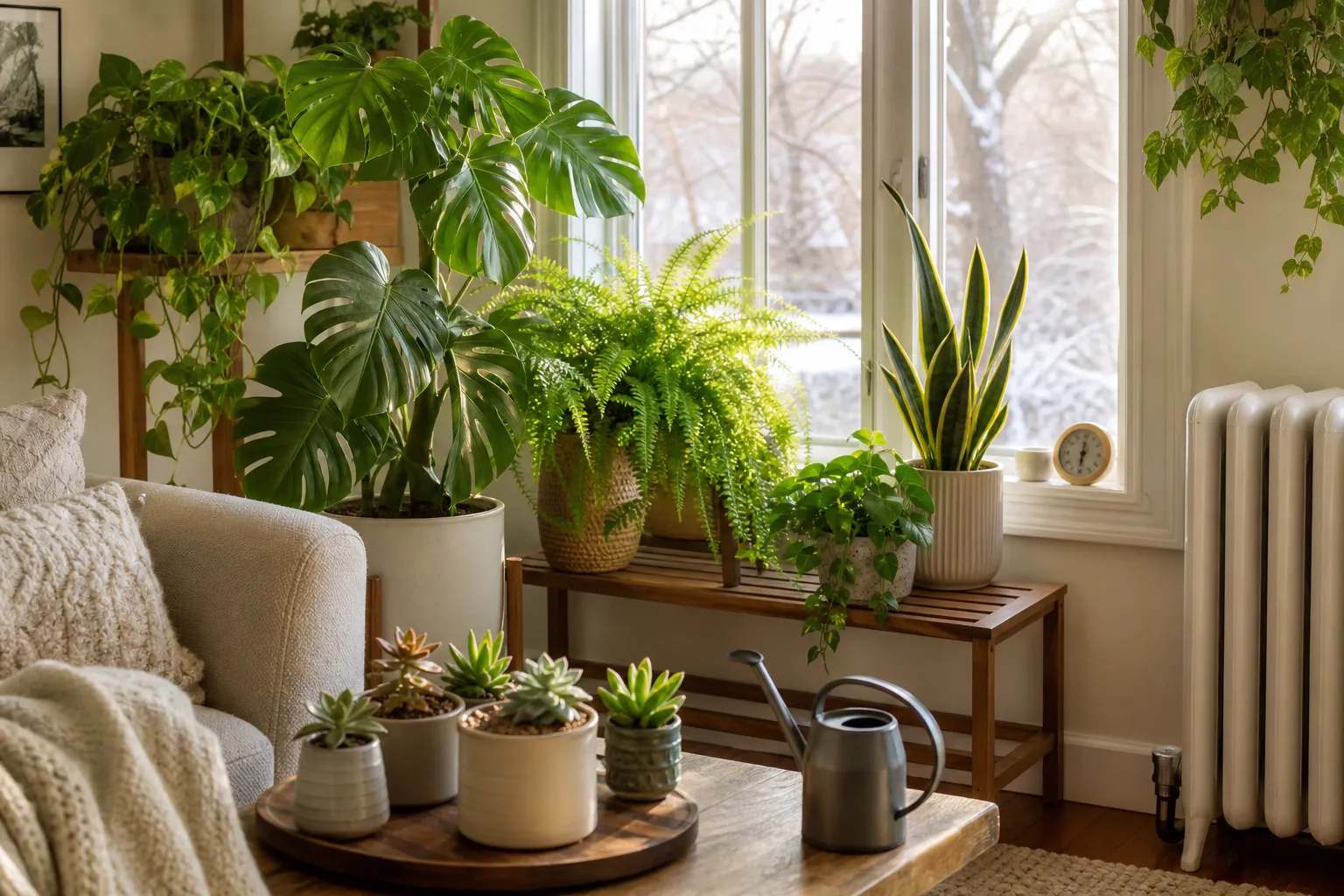
Winter does not mean your houseplants have stopped living – it means they have changed gears. As days shorten, indoor light weakens, heating dries the air, and many plants use water more slowly. A plant that needed a drink every few days in July may still be damp a week later in January.
That seasonal slowdown is normal. The trouble begins when you continue with summer routines in a winter environment. Extra watering, frequent fertilizer, a spot beside a heat vent, or a sudden move from patio sunshine to a dim room can push a perfectly healthy plant into decline.
Think of winter as a maintenance season. Your goal is not necessarily to force lush new growth. Instead, help each plant hold on to healthy roots and leaves until brighter, longer days return.
Winter changes the indoor growing environment
Houseplants experience winter differently from outdoor perennials. They are protected from freezing soil, snow, and wind, but they still respond to changes in light, temperature, humidity, and water use inside your home.
- Light levels fall: Days are shorter, the sun sits lower, and cloudy weather can make windows much less productive.
- Growth slows: Many foliage plants produce fewer leaves, smaller leaves, or no new growth at all.
- Water use decreases: Less growth and weaker light usually mean the potting mix stays wet longer.
- Indoor air becomes drier: Forced-air heating can push household humidity below what many tropical plants prefer.
- Temperature swings increase: A windowsill may be cold at night, while a nearby vent may blast the plant with hot, dry air during the day.
These factors interact. A plant in low light cannot use water as quickly as it does in bright summer conditions. If the soil stays wet, roots may become stressed even while the leaves appear thirsty or droopy.
Most plants slow down – but they are not necessarily dormant
The word “dormant” is often used for winter houseplants, but it does not describe every indoor plant precisely. Many tropical foliage plants, including pothos, philodendrons, spider plants, and peace lilies, remain alive and active all winter. They simply grow more slowly because the conditions are less favorable.
Succulents and some bulbs may enter a much deeper rest period. Others continue growing if they receive strong light, warm temperatures, and suitable moisture. Your plant’s origin and species matter, so compare its winter behavior with its normal care rather than assuming every plant follows the same schedule.
What normal winter adjustment can look like
- One or two older leaves turn yellow and drop.
- New leaves appear more slowly or are smaller than summer growth.
- Stems stretch toward the window.
- The potting mix remains damp for longer between waterings.
- A plant looks less full after moving indoors from bright outdoor conditions.
Normal adjustment should be gradual. Sudden widespread yellowing, mushy stems, a sour smell from the soil, or a rapid collapse suggests a care problem rather than a harmless seasonal pause.
Light becomes the biggest winter limitation
For many houseplants, winter light – not cold – is the main factor limiting growth. Even a bright room can provide far less usable light than an outdoor patio. A plant that thrived several feet from an east-facing window in summer may need to move closer to the glass once the sun’s angle changes.
Watch the plant rather than relying only on the compass direction of the window. Pale new growth, long spaces between leaves, leaning stems, and leaves that turn toward the glass are clues that the plant is stretching for more light.
Make the most of natural light
- Move light-hungry plants nearer to a bright south- or west-facing window, while protecting sensitive leaves from cold glass.
- Use an east-facing window for gentle morning sun and many plants that prefer bright, indirect light.
- Clean dusty leaves with room-temperature water and a soft cloth when the plant’s foliage allows it.
- Rotate pots a quarter turn every week or two for more even growth.
- Keep curtains and blinds open during daylight hours when temperatures and glare permit.
If natural light is weak, a grow light can help. Place it according to the manufacturer’s instructions and use a timer so the plant receives a consistent day-night rhythm. More light does not automatically mean more water; check the potting mix and the plant’s condition before changing your watering routine.
Why winter watering causes so many problems
Overwatering is one of the most common winter mistakes. This does not mean you should let every plant become bone-dry. It means you should water according to the potting mix, root system, container, temperature, and available light – not according to a fixed calendar.
In winter, a plant may lose water through its leaves while its roots sit in damp soil. Dry indoor air can make foliage look limp, but adding more water to the pot may not solve the problem. The roots need oxygen as well as moisture, and constantly saturated soil limits the air spaces they require.
A simple winter watering check
- Press a finger about 1 to 2 inches into the potting mix, depending on the pot size and plant type.
- Lift the pot if you can. A noticeably lighter container often indicates that moisture has been used.
- Check more deeply for large pots, because the surface can feel dry while the lower root zone remains wet.
- When watering, soak the mix thoroughly until water drains from the bottom.
- Empty the saucer or decorative outer pot so the container does not stand in water.
Plants with thick leaves, cacti, and many succulents usually need the mix to dry more thoroughly than moisture-loving tropical plants. Ferns and some calatheas may need more consistent moisture, but even they should not sit in stagnant water.
A practical winter watering experiment
Try a small measurement exercise with three similar plants or three pots of the same size. Water each pot until drainage begins, then record the amount used. For example, a 6-inch pot might require about 2 cups of water to become evenly moist, but the exact amount depends on the mix and root mass. Record the date, the volume applied, the pot’s weight or feel, and how many days pass before the top 1 to 2 inches dry.
In one home trial, you might find that a plant near a sunny south-facing window needs 2 cups every 9 days, while the same-size plant in a dimmer north-facing room needs only 2 cups every 16 days. Those numbers are not a universal schedule. They demonstrate why measuring your own plants is more reliable than copying a weekly reminder.
Repeat the test after moving a plant, turning on a grow light, or changing the potting mix. Winter care becomes much easier when you learn each container’s pattern.
Dry air affects leaves, but misting is not a magic fix
Heating systems often make winter air uncomfortable for humidity-loving plants. Brown leaf edges, crisp tips, curling leaves, and increased leaf drop can appear when the air is dry. Plants with thin leaves may show the effects sooner than thick-leaved plants or desert-adapted succulents.
Misting may make foliage feel damp for a short time, but it rarely raises room humidity for long. Repeatedly wetting leaves can also leave spots and may create conditions that favor disease on plants that dislike prolonged leaf wetness.
More dependable ways to improve humidity
- Group plants together: Several plants can create a slightly more humid pocket of air around their foliage.
- Use a humidifier: A portable unit near, but not blowing directly onto, plants offers more consistent control. Follow the device’s cleaning instructions.
- Try a pebble tray carefully: Set the pot above the water on pebbles or a raised insert. The container should not sit directly in water.
- Choose the room wisely: A kitchen or bathroom may be more humid, but only move a plant there if the light is also suitable.
- Measure rather than guess: An inexpensive hygrometer can show whether the air is actually dry.
Do not chase a perfect humidity number for every plant. Many houseplants tolerate ordinary household conditions if you manage light, watering, and temperature well. Prioritize the species that show the strongest signs of dry-air stress.
Temperature matters more than a warm room
Most common foliage houseplants appreciate steady indoor temperatures rather than extreme warmth. Keep them away from exterior doors, drafty windows, fireplaces, radiators, and forced-air vents. A plant can suffer from repeated hot-and-cold swings even when the room’s average temperature seems comfortable.
Cold glass can chill leaves during winter nights. If foliage touches the window, move the pot back a few inches or use a sheer curtain as a buffer. At the same time, avoid placing the plant so far from the window that it loses the light it needs.
When bringing plants indoors from a porch or patio, do not wait for a frost. Many tropical houseplants should come inside before outdoor temperatures consistently fall into the 50s Fahrenheit. Inspect leaves, stems, and the soil surface for insects before placing the plant near your collection.
Fertilizer: usually less is more
Fertilizer supports growth; it does not replace light. If a plant is barely growing in winter, feeding it heavily can leave unused salts in the potting mix and encourage weak growth. For many houseplants, it makes sense to pause routine fertilizing during the darkest part of winter or reduce it substantially.
The exception is a plant that is clearly growing under strong natural or supplemental light. If you feed it, use a product labeled for houseplants and follow the label rate. Do not increase the dose because growth looks slow. Slow growth may indicate insufficient light, not a nutrient shortage.
Different plants, different winter strategies
Tropical foliage plants
Pothos, philodendrons, monsteras, and many dracaenas often continue growing slowly. Give them bright, indirect light, allow the mix to dry somewhat between waterings, and protect them from vents and cold windows.
Ferns and other humidity lovers
Ferns may react quickly to dry heated air. Group them, monitor the soil more closely, and consider a humidifier if the room is consistently dry. Keep the soil evenly moist when appropriate for the species, but avoid leaving the pot in standing water.
Cacti and succulents
Many cacti and succulents need considerably less water in winter, especially in cool, dim conditions. Let the potting mix dry thoroughly before watering again, and provide the brightest safe location available. A cool, wet pot is a particularly risky combination for these plants.
Flowering plants
Flowering houseplants may need more light to maintain buds and blooms. Remove faded flowers, follow the plant’s specific watering needs, and avoid moving it repeatedly once it is in a suitable spot.
A five-minute winter inspection
Once a week, walk around your plants and look closely rather than watering automatically.
- Check the underside of leaves for webbing, scale, whiteflies, or sticky residue.
- Look for new yellowing, leaf drop, wilting, or stretched growth.
- Feel the soil before reaching for the watering can.
- Make sure drainage holes are open and saucers are empty.
- Check that leaves are not touching cold glass or hot vents.
- Turn the pot slightly if the plant is leaning toward the window.
If you find pests, isolate the plant from others and identify the problem before choosing a control. Winter is a good time for problems to spread because plants sit close together indoors and pest populations can build without outdoor predators or weather disruption.
The encouraging truth about winter houseplants
A tired-looking plant in January is not automatically doomed. Some leaf loss is part of adjustment, and many plants recover once days lengthen and light improves. Resist the urge to respond to every yellow leaf with more water or fertilizer.
Instead, provide steady conditions: enough light, careful watering, moderate humidity, clean leaves, and protection from drafts. By late winter or early spring, watch for signs of renewed growth – new leaves, faster drying of the potting mix, and stronger color.
Winter houseplant care is less about doing more and more about noticing more. If you observe how each plant responds and keep a few simple records, you can replace guesswork with confidence – and welcome spring with healthier, stronger greenery.