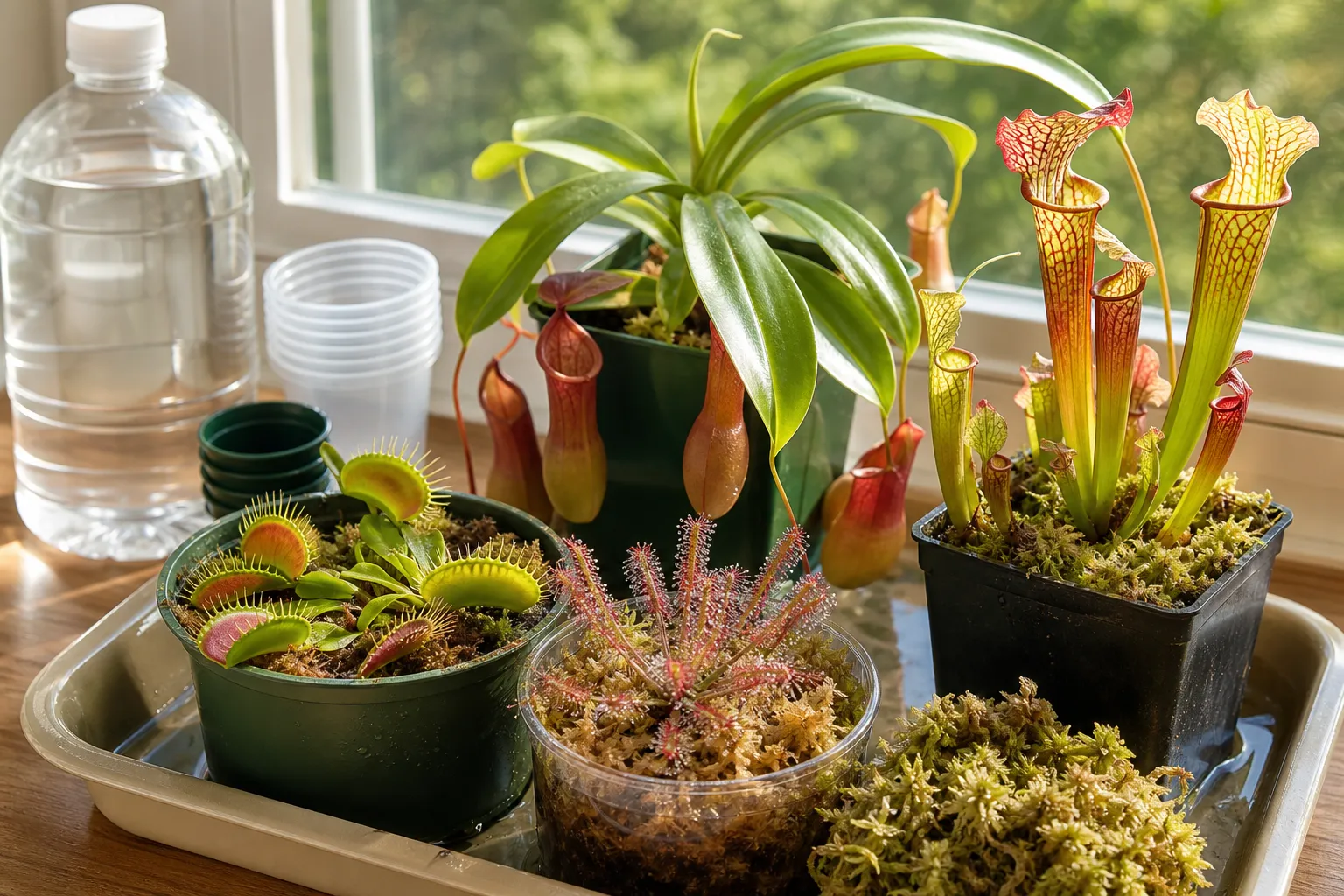
Carnivorous plants look exotic, but many are surprisingly manageable once you understand what they need. The secret is not feeding them hamburgers or keeping them in a sealed terrarium. It is recreating a few basic conditions: bright light, low-nutrient growing media, dependable moisture, and the right temperature for the species you choose.
Venus flytraps, sundews, American pitcher plants, tropical pitcher plants, and butterworts do not all grow alike. Think of them as a plant family with several different lifestyles. A sunny windowsill may suit a Cape sundew, while a Nepenthes prefers warm, humid air and filtered light. Start by matching the plant to your home rather than trying to force every carnivorous plant into the same routine.
What makes carnivorous plants different?
Most carnivorous plants evolved in habitats where the soil is wet but poor in nutrients. Their roots absorb water and provide anchorage, while their modified leaves capture small prey such as gnats, flies, ants, and other tiny insects. The insects supplement the plant’s nutrition; they do not replace light, water, or photosynthesis.
That explains two of the most common mistakes: planting them in rich potting soil and feeding them fertilizer. Ordinary garden soil can damage the roots, while fertilizer salts may burn them. Carnivorous plants generally prefer an acidic, airy, low-nutrient medium designed specifically for their needs.
Which carnivorous plant is best for a beginner?
Choose according to the growing conditions you can provide. The easiest option is often the one that naturally fits your light, temperature, and watering habits.
- Cape sundew (Drosera capensis): A forgiving choice for a bright windowsill. Its long leaves produce sticky droplets that catch small insects, and it can recover well from minor setbacks.
- Venus flytrap (Dionaea muscipula): A popular beginner plant, provided you can give it strong light, mineral-free water, and a winter rest.
- Purple pitcher plant (Sarracenia purpurea): A hardy North American species that can work well outdoors in suitable climates or in a sunny container garden.
- Tropical pitcher plant (Nepenthes): Beautiful and widely available, but it usually needs warmer temperatures, higher humidity, and bright filtered light rather than baking-hot direct sun.
- Butterwort (Pinguicula): Its broad, sticky leaves are attractive indoors. Care varies considerably between tropical and temperate types, so read the plant label carefully.
For a first experiment, try growing a Cape sundew and a Venus flytrap side by side for one season. Keep both in mineral-free water and a bright location, then compare the color, trap formation, and growth rate. The difference between the two plants will quickly show why “carnivorous plant care” is not one universal recipe.
How much light do carnivorous plants need?
Light is one of the biggest predictors of success. Most carnivorous plants need much brighter conditions than typical houseplants. Inadequate light can produce weak, stretched growth, pale coloring, and traps that fail to develop properly.
Indoor light
Place sun-loving plants near a bright south- or west-facing window, while watching for heat buildup behind glass. A sunny window can become much hotter than the surrounding room, especially in summer. If the leaves scorch or the plant wilts rapidly, move it slightly back from the glass or add a sheer curtain during the hottest part of the day.
Grow lights are useful for apartments, north-facing windows, and winter growing. Position the light according to the manufacturer’s instructions and keep a consistent daily schedule. A timer makes this much easier than trying to remember when to switch the light on and off.
Outdoor light
American pitcher plants and many temperate sundews generally appreciate several hours of direct sun. Introduce plants gradually if they have been grown indoors, because a sudden move into strong outdoor light can scorch the foliage. Tropical pitcher plants usually prefer bright, filtered light and protection from intense afternoon sun.
What water should you use?
Water quality matters more than many beginners expect. Tap water can contain dissolved minerals that accumulate in the growing medium over time. The safest routine is to use rainwater, distilled water, or water produced by a reverse-osmosis system.
If you collect rainwater, use a clean container with a lid and avoid water that has run across dirty roofs, treated wood, or heavily contaminated surfaces. Distilled water from a grocery store is convenient for a small collection, although the cost can add up if you are watering many plants.
A simple watering measurement
For a small 4-inch pot, place the container in a tray and add about 1 inch of water during the active growing season. Check the tray every day or two. In a warm, sunny room, that amount may disappear in 24 to 48 hours; in a cooler room, it may last longer.
Rather than following the calendar blindly, measure the water level. Keep the medium consistently damp for plants that need wet conditions, but do not assume every species should stand in deep water all year. During winter dormancy, many temperate plants need less water. Keep the medium from becoming bone dry, then discard standing excess water if the plant is resting.
This small test is useful: record the tray level in the morning, check it again after 24 hours, and repeat for a week. If the tray empties repeatedly before your next check, increase the frequency of refilling or move the plant away from a hot radiator. If the pot remains submerged and sour-smelling for many days, improve air circulation and confirm that the species actually likes standing water.
What soil or potting mix should you use?
Do not use ordinary potting soil, compost, garden soil, or fertilizer-enriched mixes. They contain more nutrients and minerals than most carnivorous plants can tolerate.
For many beginner species, a commercial carnivorous-plant mix is the simplest choice. You can also use a low-nutrient blend based on long-fiber sphagnum moss and an appropriate aerating material, provided every ingredient is free of fertilizer, wetting agents, and added minerals.
Peat-free options are becoming more available, and research trials with some Sarracenia have shown promising results using mixes based on sustainably produced sphagnum and fine pine bark. Because recipes vary by plant and supplier, check that the product is specifically intended for carnivorous plants rather than assuming any peat-free houseplant mix will work.
Choosing a container
- Use plastic or glazed containers that will not leach minerals into the medium.
- Avoid unglazed terracotta, which can release salts and dry out quickly.
- Choose a pot with drainage holes unless the plant’s growing method specifically calls for a water-holding container.
- Repot when the medium has broken down, the plant has outgrown its container, or mineral buildup is suspected.
Do carnivorous plants need to eat insects?
Usually, they can catch enough prey on their own when grown outdoors or in a bright, insect-accessible room. You do not need to place insects in every trap. Repeatedly triggering Venus flytraps without food can waste the plant’s energy, and dried-out or unsuitable prey may cause traps to blacken.
Never feed raw meat, cheese, pet food, or household scraps. These foods are too complex and can rot inside the trap. If a plant is grown indoors where insects are scarce, an occasional tiny insect may help, but feeding should remain secondary to good light and proper watering.
Be cautious with fertilizer. Many carnivorous plants need no fertilizer at all, and standard houseplant fertilizer can harm them. Some experienced growers use highly diluted, specialized products on selected tropical pitcher plants, but beginners will usually get better results by correcting light, water, and humidity first.
Should you keep a carnivorous plant in a terrarium?
A terrarium is optional, not a requirement. It can help maintain humidity for small tropical species, but a sealed container may also trap heat, reduce air movement, and encourage fungal problems.
For a Venus flytrap or sundew, an open tray setup near strong light is often simpler. For a Nepenthes, provide humidity without making the foliage constantly wet: group plants together, use a humidifier if needed, and keep air moving gently. A humidity tray may raise local humidity slightly, but it should not leave the pot sitting in stagnant water unless that method suits the species.
Which plants need winter dormancy?
Many temperate carnivorous plants naturally slow down during winter. Venus flytraps and many Sarracenia need a cooler, darker rest period to remain vigorous over the long term. Growth may stop, traps may become smaller, and older leaves may die back. That is not necessarily a problem.
In much of the United States, outdoor dormancy can work in regions where winter temperatures match the plant’s needs, but containers can freeze more quickly than ground soil. In colder USDA hardiness zones, growers often protect dormant plants in an unheated garage, cold frame, or other cool location. Avoid bringing a temperate plant into a warm living room and expecting it to follow a normal winter cycle.
Tropical Nepenthes generally do not need the same cold dormancy. They prefer steady warmth and bright, indirect light. Always check the species or hybrid label before deciding on an overwintering plan.
Why are the leaves turning black or brown?
Some leaf loss is normal. Individual traps and pitchers age, especially after flowering, transplanting, or a seasonal change. Trim completely brown or dead material with clean scissors, but leave partly green tissue so the plant can continue photosynthesizing.
Blackening can also signal stress. Check the basics first:
- Has the plant received ordinary tap water for months?
- Is it growing in fertilizer-rich soil?
- Has the growing medium dried out completely?
- Did it move suddenly from low light to hot direct sun?
- Is there poor air circulation around constantly wet foliage?
- Does the plant need winter dormancy?
Do not change everything at once. Correct the most likely problem, then watch the newest growth for two to four weeks. New leaves provide better evidence of recovery than older damaged traps.
Can carnivorous plants grow outdoors?
Yes, but the answer depends on the plant and your local climate. Sarracenia and some sundews can perform beautifully outdoors in a sunny bog garden or container. A shallow, water-retentive setup filled with low-nutrient carnivorous-plant medium can create the right conditions without altering your regular garden soil.
Keep the planting area separate from aggressive moisture-loving ornamentals, which may quickly shade or outcompete small carnivorous plants. In hot regions, provide afternoon protection for species that prefer cooler conditions. In cold regions, plan ahead for container insulation and winter protection.
A practical weekly care routine
Once your plant has the right setup, care can be pleasantly simple. Each week:
- Check the water level and refill with rainwater, distilled water, or reverse-osmosis water.
- Inspect the newest leaves for pests, distortion, or unusual discoloration.
- Remove dead traps and fallen debris before it begins to mold.
- Rotate indoor pots if growth leans strongly toward one direction.
- Check that the plant still receives the same amount of light as the season changes.
- Look for weeds or volunteer seedlings in outdoor bog containers.
Keep a short care log for your first season. Write down the plant’s species, pot size, water used, light location, and any changes you make. This turns guesswork into a useful growing experiment—and helps you discover what works in your own home.
The most important rule: match the plant to the conditions
Carnivorous plants are not difficult because they are mysterious; they are difficult when their needs are confused with those of ordinary houseplants. Give them mineral-free water instead of fertilizer-rich tap water, low-nutrient media instead of potting soil, and strong light instead of a dim corner.
Start with one or two forgiving species, observe the newest growth, and make changes gradually. With the right match between plant and place, your collection can become one of the most rewarding small gardening projects you can grow indoors or outside.