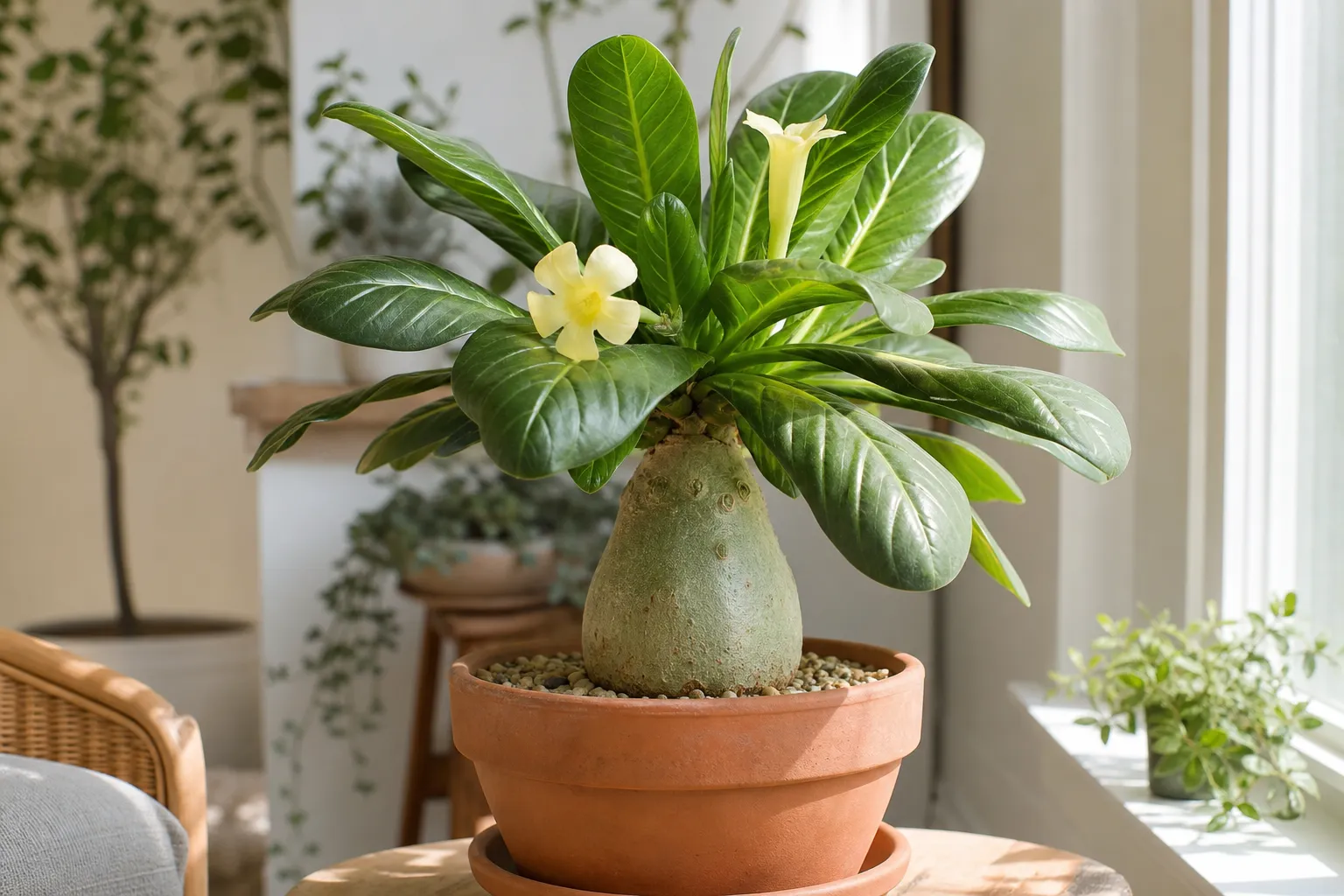
Brighamia insignis is one of those plants that looks as if it belongs in a botanical garden—and in a way, it does. Often sold as Hawaiian palm, cabbage-on-a-stick, alula, or ʻŌlulu, this unusual Hawaiian native forms a thick, water-storing stem topped with a rosette of glossy leaves and fragrant, pale yellow flowers.
Despite its exotic appearance, it can adapt well to a bright home when you get three things right: strong light, excellent drainage, and careful watering. The biggest mistake is treating it like a thirsty tropical palm. Think of it instead as a succulent-shaped cliff dweller that enjoys warmth and humidity but dislikes sitting in wet soil.
Meet the Hawaiian palm
Although its common name suggests a palm, Brighamia insignis belongs to the bellflower family, not the palm family. Its swollen stem stores water, while the soft leaves form a compact crown at the top. Mature plants may produce long, tubular, yellowish flowers, especially when growing conditions are stable.
The species is native to the Hawaiian Islands, where it is associated with steep, rocky habitats. It is extremely rare in the wild, so a cultivated plant carries more significance than an ordinary houseplant. Choose nursery-propagated stock rather than wild-collected material, and never remove plants or seed from natural areas.
Brighamia insignis versus related plants
- Brighamia insignis: usually has yellow flowers and a fuller, more succulent-looking stem. This is the species most often called Hawaiian palm.
- Brighamia rockii: another Hawaiian species, associated with Molokaʻi, generally recognized by its white flowers. It has similar container-care needs.
- Hybrids and nursery selections: may differ in vigor, leaf size, flowering, and tolerance of indoor conditions. Always follow the care information supplied with the plant if it conflicts with a generic label.
These are not traditional “varieties” in the way tomato cultivars are. Many plants offered for sale are simply species plants or nursery-grown selections, so compare the plant’s health and provenance rather than shopping by a fancy cultivar name.
Give it the brightest practical light
Light is often the deciding factor between a compact, healthy plant and one that slowly declines. Place your Hawaiian palm near a bright east- or west-facing window, or a few feet from a sunny south-facing window. In the brightest climates, filter harsh afternoon sun with a sheer curtain while the plant adjusts.
Some direct sun is useful, but a plant moved suddenly from a dim store display into intense sun can develop pale or scorched leaves. Acclimate it over 7 to 14 days by increasing exposure gradually.
- Bright indirect light is a safe starting point.
- Gentle morning or late-afternoon sun is usually beneficial.
- Rotate the pot a quarter turn every week or two for even growth.
- Use a grow light if winter daylight is weak, especially in northern states.
A stretched stem, widely spaced leaves, or a crown that leans toward the window usually indicates insufficient light. Move the plant closer gradually rather than making a sudden change.
Water by measurement, not by the calendar
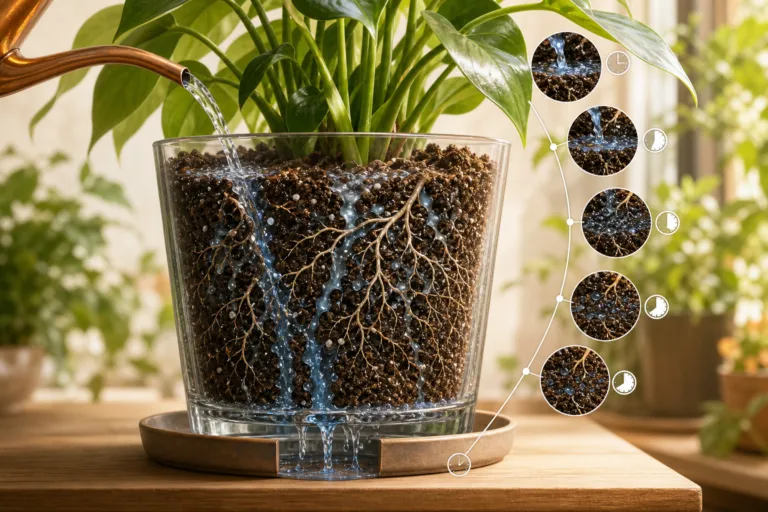
Watering deserves the most attention. The thick stem can hold moisture, so the plant may look healthy even when the roots are already staying too wet. Allow the potting mix to dry somewhat between waterings, then water thoroughly and let excess drain away.
For a plant in a 6- to 8-inch container, a useful starting experiment is to apply about 8 to 12 fluid ounces of water, then check whether water begins to drain from the bottom. If none emerges, add a little more. Pour out water collected in the saucer after 10 minutes. This volume is only a starting point: a shallow pot, a very porous mix, or a larger root system will change the amount required.
A simple two-week watering trial
- Water slowly until the mix is evenly moistened and a small amount drains from the pot.
- Record the date and approximate volume used.
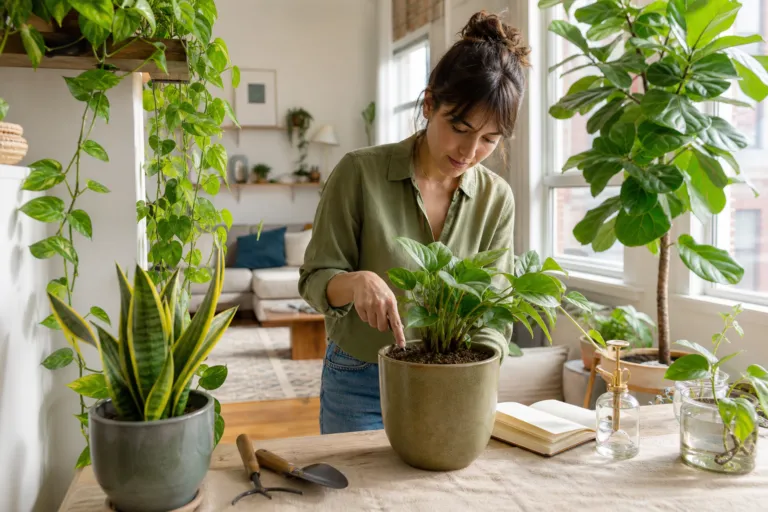
- Check the top 2 to 3 inches of mix every few days with your finger or a wooden plant label.
- Lift the pot and note how heavy it feels immediately after watering.
- Water again when the upper mix is dry and the pot feels noticeably lighter, not merely because the calendar says it is time.
In a bright, warm room, this may mean watering every 7 to 14 days. In winter, a cool or dim room may require much less frequent watering. Avoid both extremes: do not keep the mix constantly damp, but do not leave the plant severely dehydrated for long periods either.
Wrinkling or reduced leaf size can signal that the plant is using stored water. Yellowing lower leaves, a soft stem, sour-smelling soil, or sudden leaf drop more often points to excessive moisture or poor drainage. Check the roots and potting mix before increasing watering.
Use a fast-draining potting mix
Choose a container with a real drainage hole. Decorative cachepots are fine as outer covers, but the plant should remain in a nursery pot or inner container that allows water to escape freely.
A cactus-and-succulent mix can work well, particularly if it contains a generous amount of mineral material. If the mix feels heavy or stays wet for many days, improve it with materials such as pumice, perlite, or fine orchid bark. The goal is a mix that holds enough moisture for the roots but contains plenty of air spaces.
- Use a pot only slightly larger than the current root ball.
- Avoid dense garden soil in containers.
- Do not bury the swollen stem deeper than it was originally planted.
- Keep the stem base dry and free of constantly wet mulch.
Repot in spring or early summer, or when roots circle densely around the pot. Handle the stem gently: bruised tissue can become an entry point for rot.
Keep temperatures warm and steady
Brighamia insignis is not frost-tolerant and is best grown as an indoor plant in most of the United States. Aim for ordinary warm indoor temperatures, roughly 65 to 75°F during active growth. Protect it from cold windows, heating vents, air-conditioning blasts, and sudden temperature changes.
If you move it outdoors for summer, wait until nights remain consistently above 60°F. Start in bright shade, then introduce more sun over several days. Bring it indoors before cool autumn nights arrive. In USDA Zones 10 and 11, it may spend more time outdoors, but drainage and protection from prolonged rain remain important.
Humidity, airflow, and leaf care
Average household humidity is often adequate, provided the plant receives good light and airflow. If your home becomes very dry in winter, a room humidifier can help. Keep the plant away from stagnant, crowded corners, where pests and fungal problems are more likely.
Dusty leaves cannot use light as efficiently. Wipe them gently with a soft, damp cloth or rinse the foliage with lukewarm water, then let it dry in bright airflow. Avoid polishing products, which can leave residues on the leaf surface.
Fertilize lightly
Feed during active growth with a balanced, water-soluble houseplant fertilizer diluted to half the label strength. Applying fertilizer once every 4 to 6 weeks from spring through summer is a reasonable starting schedule for a plant in fresh, nutrient-containing mix.
Skip feeding when the plant is stressed, newly repotted, or sitting in dry soil. Fertilizer salts can damage roots when the mix is dry. Reduce or stop feeding in the darker months, when growth naturally slows.
Pruning and flowering
Routine pruning is rarely necessary. Remove yellow or damaged leaves with clean scissors, cutting close to the leaf base without injuring the stem. Never cut into the swollen trunk simply to reshape the plant.
Flowering depends on maturity, light, nutrition, and the plant’s individual rhythm. Long, tubular flowers may appear in cultivation, sometimes more than once a year. If you want to encourage blooms, prioritize bright light and steady care rather than forcing the plant with extra fertilizer.
Fruit and viable seed production can be more complicated because natural pollination relationships have been disrupted. If your plant flowers, enjoy the display and avoid making wild claims about seed viability. Hand pollination may be needed, and results can vary.
Watch for mites, scale, and mealybugs
Spider mites can become troublesome in warm, dry rooms. Look for fine webbing, stippled leaves, or a dull, dusty appearance. Mealybugs may gather where leaves meet the stem, while scale insects appear as small, fixed bumps.
- Inspect new plants before bringing them near your collection.
- Check the leaf undersides and the crown every week.
- Isolate an infested plant promptly.
- Remove a few pests by hand with a cotton swab or water rinse when practical.
- For any pesticide, follow the product label exactly and confirm that the product is suitable for indoor ornamentals.
Do not spray a stressed plant in intense sunlight or treat repeatedly without identifying the problem. Cultural corrections—more airflow, better light, and sensible watering—often make the plant less vulnerable.
Common problems and quick fixes
Lower leaves turn yellow
One or two older leaves may naturally age and drop. Widespread yellowing, especially with wet soil, suggests overwatering, poor drainage, or low light. Check the roots and allow the mix to dry more between waterings.
The stem feels soft
A soft or darkening stem is an urgent warning of rot. Stop watering, inspect the root zone, and move the plant into fresh, dry, fast-draining mix if the roots are affected. If the main stem has rotted extensively, recovery may not be possible.
Leaves drop after moving
Changes in light, temperature, watering, or humidity can trigger leaf loss. Give the plant a stable position and avoid reacting with frequent watering. New growth at the crown is a more useful sign of recovery than the number of older leaves remaining.
The plant is tall and sparse
Insufficient light is the most likely cause. Increase brightness gradually and rotate the pot regularly. Do not bury or cut the stem to correct a stretched shape.
A conservation-minded choice
Because Brighamia insignis is exceptionally rare in nature, responsible sourcing matters. Buy from a reputable nursery, botanical garden sale, or specialist grower that can explain how the plant was propagated. Avoid sellers who advertise wild-collected specimens or cannot provide basic information about origin.
Your best contribution is simple: keep the plant healthy, do not collect from the wild, and share accurate care information. A thriving container specimen cannot replace habitat conservation, but careful cultivation supports continued public interest in this remarkable Hawaiian plant.
Your practical care checklist
- Place the plant in bright light with some gentle sun.
- Use a small pot with excellent drainage.
- Let the upper 2 to 3 inches of mix dry before watering again.
- Start with about 8 to 12 fluid ounces for a 6- to 8-inch pot, then adjust to the plant and mix.
- Keep temperatures above 60°F and protect the plant from frost.
- Feed lightly during active growth only.
- Inspect weekly for mites, mealybugs, and scale.
- Choose nursery-propagated plants from responsible sources.
The Hawaiian palm rewards observation more than rigid routines. Watch the weight of the pot, the feel of the stem, the color of the leaves, and the speed of new growth. With bright light, airy soil, and a restrained watering hand, this rare-looking houseplant can become a handsome and surprisingly manageable part of your indoor garden.