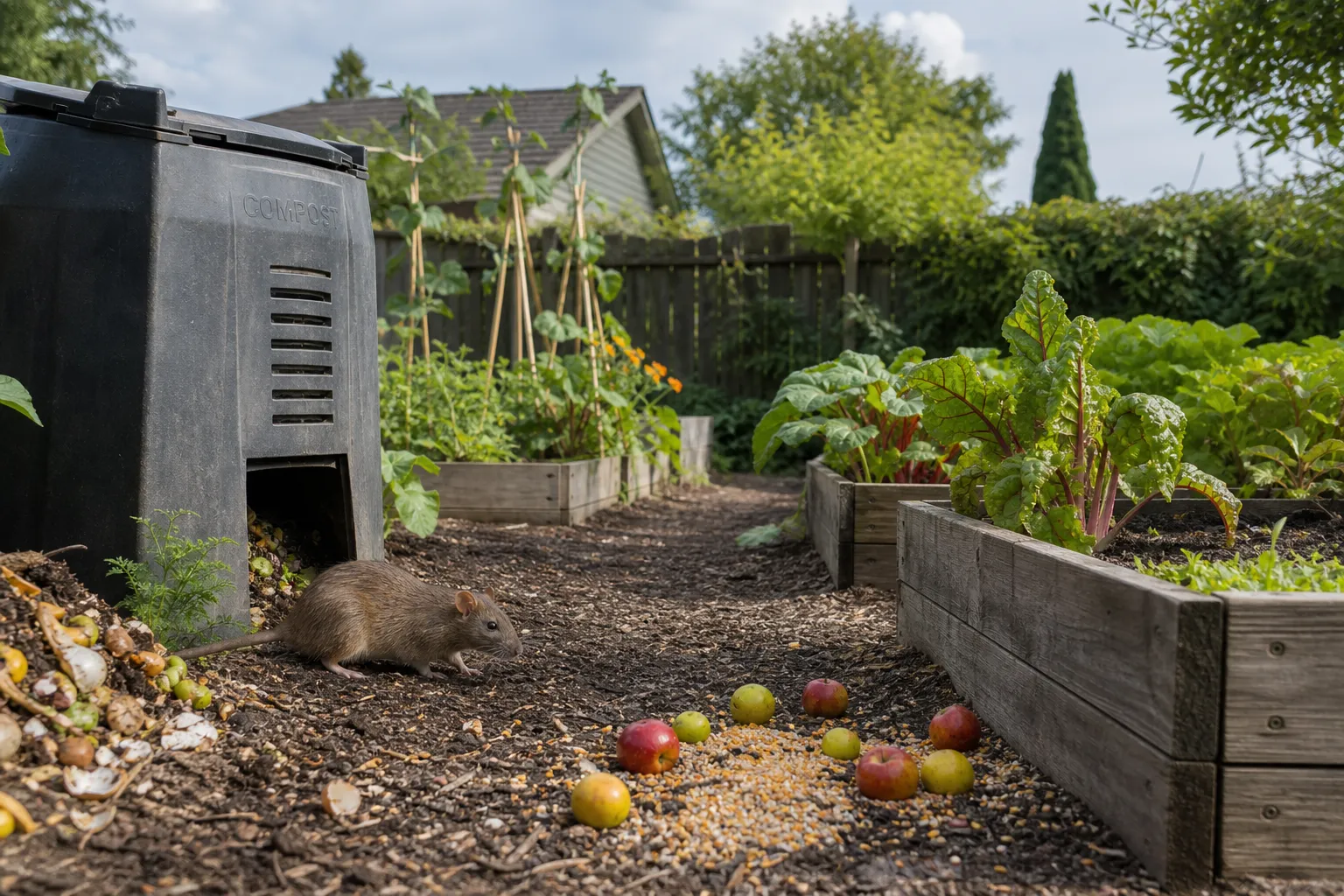
Spotting a rat in the garden is unsettling enough. Seeing one in broad daylight can feel like a warning that something is seriously wrong. The good news is that a daytime sighting does not automatically mean you have a large infestation. A rat may be searching for food, water, or shelter, or it may have been disturbed from a nearby hiding place.
Still, daylight activity deserves attention—especially if you see rats repeatedly, notice fresh droppings or burrows, or find chewed produce and damaged structures. With a calm inspection and a few practical changes, you can often make your yard far less attractive to them.
What does it mean when you see a rat during the day?
Rats are generally most active from dusk through nighttime, so a daytime sighting may indicate that a rat is moving between shelter and a food or water source. It can also happen when competition is high, the animal has been disturbed, or a nearby nest is crowded.
One sighting is not enough to estimate the size of a rat population. However, repeated sightings in the same area are more meaningful. Treat daytime activity as a prompt to investigate rather than as proof of a severe problem.
Daytime sightings are more concerning when you also find:
- Fresh droppings along walls, beneath sheds, near compost, or around feeding stations
- Burrow openings beside foundations, woodpiles, retaining walls, or dense vegetation
- Gnaw marks on plastic bins, chicken-coop materials, irrigation lines, or stored feed
- Partially eaten vegetables, fallen fruit, or disturbed seed trays
- Greasy rub marks along frequently used edges and pathways
- Repeated movement along the same fence line or garden border
Rats commonly settle where food, water, and cover occur close together. A garden with overflowing bird feeders, unsecured compost, pet food, leaking hoses, and dense ground-level shelter can unintentionally provide all three.
First, make sure it is actually a rat
Several animals can be mistaken for rats, especially in quick sightings. Large mice, muskrats, voles, squirrels, and even young opossums may create confusion. Rats typically have a blunt or moderately pointed snout, small ears relative to the head, a long mostly hairless tail, and a stocky body. Norway rats, one of the common rat types found around homes, are usually larger and heavier than house mice.
Look for patterns rather than relying on one glimpse. Rat droppings are usually dark, capsule-shaped, and larger than mouse droppings. Burrows often appear as smooth-edged holes in soil, commonly beside hard surfaces or under structures. If you are unsure, take a photograph from a safe distance and ask your county Extension office or a licensed wildlife or pest professional for help with identification.
Inspect the garden without disturbing the animal
Choose daylight for your inspection, but do not corner, chase, or handle a rat. Keep children and pets away from the area, and avoid reaching into holes, woodpiles, compost bins, or dense shrubs.
Walk the garden in four short passes
- Check food sources. Look for spilled birdseed, ripe fruit on the ground, vegetable scraps, open feed bags, pet food, and unprotected garbage.
- Check water sources. Inspect dripping faucets, hose connections, irrigation leaks, low spots that stay wet, birdbaths, and animal waterers.
- Check shelter. Examine the space beneath sheds, decks, pallets, brush piles, stacked lumber, dense vines, and thick mulch.
- Check access routes. Look along fences, foundations, gates, utility openings, and gaps beneath doors or siding.
Do not immediately fill an active-looking burrow. If a rat is still using it, sealing the opening without addressing the food source may simply push the animal toward another part of the yard—or into a building.
Remove the attractants before reaching for poison
The most reliable first step is habitat modification: reduce the food, water, and shelter that make your property worth returning to. This approach also protects beneficial wildlife and avoids exposing pets, owls, hawks, snakes, and other predators to rodenticide.
Make food harder to find
- Harvest ripe tomatoes, melons, squash, and fruit promptly.
- Pick up fallen apples, pears, stone fruit, and nuts every day during the season.
- Store chicken, bird, and livestock feed in sturdy, tightly closed metal or heavy-duty rodent-resistant containers.
- Clean spilled seed beneath bird feeders and consider pausing feeding temporarily if rat activity continues.
- Keep garbage in lidded containers and rinse food residue from recycling containers.
- Do not leave pet food outdoors overnight.
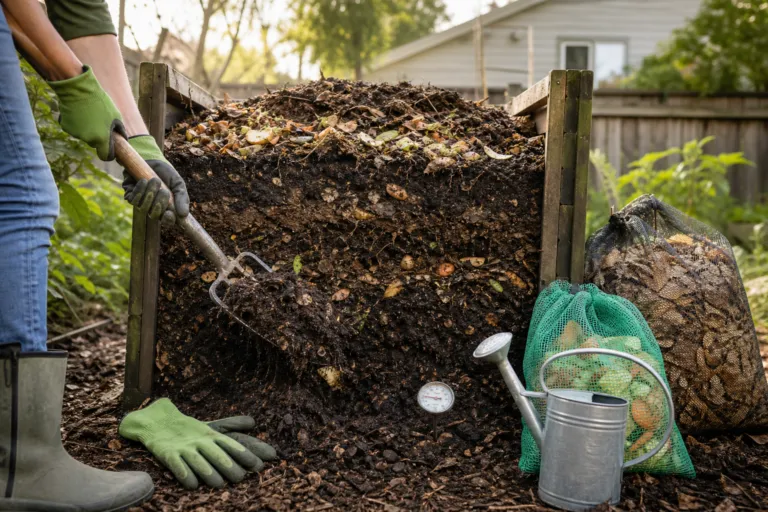
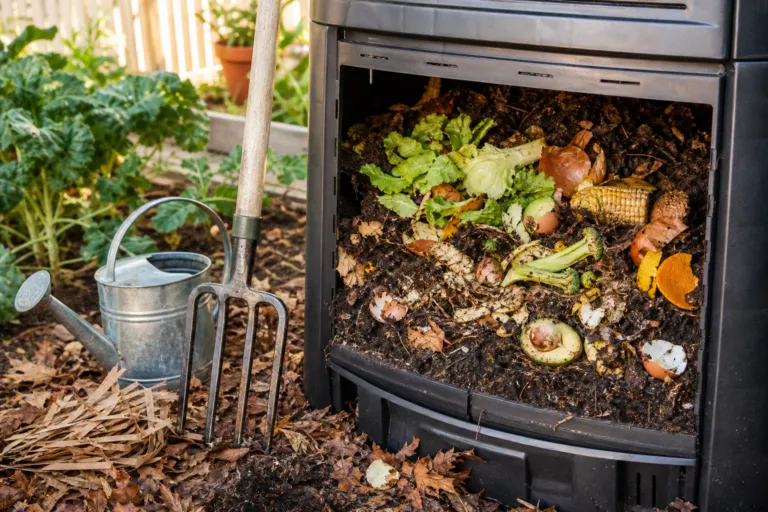
If you compost, avoid meat, bones, dairy products, greasy foods, and fatty scraps in an open backyard pile. Use a secure animal-resistant bin for kitchen waste, cover fresh additions with finished compost or soil, and keep the pile aerated. If rats have already found the pile, temporarily stop adding kitchen scraps while you improve the bin.
Reduce shelter without stripping the garden bare
You do not need to remove every shrub or turn a wildlife-friendly garden into a bare yard. Instead, focus on ground-level hiding places beside food sources and structures. Raise lumber and firewood off the soil, move pallets away from walls, trim vegetation so you can see beneath it, and keep weeds from forming a dense mat around sheds and compost bins.
Leave healthy habitat for birds, pollinators, and other desirable wildlife, but create a visible buffer around buildings. A clear strip roughly 12 to 18 inches wide can make it easier to inspect the foundation and spot fresh activity.
Use water wisely—and measure what the garden really needs
Water is easy to overlook because it may not look like a food attractant. Yet a leaking hose bib, constantly damp area beneath a downspout, or open animal waterer can make a garden more appealing to rats, particularly during hot, dry weather.
Try a simple one-week irrigation check. Place straight-sided tuna cans or rain gauges in several beds, run your irrigation system for 15 minutes, and measure the collected water. For example, if a zone delivers 0.25 inch in 15 minutes, running it for 30 minutes would provide about 0.5 inch—assuming the flow remains consistent.
Many established vegetable beds perform well with roughly 1 to 1.5 inches of water per week from rainfall and irrigation, adjusted for heat, soil type, crop, and local conditions. Sandy soil may need shorter, more frequent watering, while clay soil usually benefits from slower applications with time for infiltration. Check the top 2 to 3 inches of soil before watering rather than following a rigid schedule.
Fix leaks, empty shallow containers when they are not needed, and place birdbaths where spilled water will not create a constantly wet hiding area. Keep birdbaths clean and refresh them regularly for bird health.
Protect vegetables, chickens, and stored supplies
Rats are capable climbers and diggers. A low fence made from ordinary chicken wire may not stop them, particularly if the mesh is large, thin, or not secured at ground level.
For chicken runs, use small-opening hardware cloth rather than relying on chicken wire as a predator barrier. Secure the mesh around the sides, cover vulnerable gaps, and bury the lower edge or extend it outward as an apron to discourage digging. Remove feeders and waterers at night when practical, clean spilled feed promptly, and keep feed in rodent-resistant containers.
For raised beds, protect ripening crops with sturdy mesh and close gaps around the frame. Rats may investigate sweet corn, tomatoes, squash, berries, root crops, and fallen produce, but the exact crops affected will vary with what else is available in your yard.
Trapping: when and how to consider it
Once you have reduced food and shelter, trapping can help with a small, localized problem. Snap traps are generally preferable to glue traps because they can kill quickly when properly placed, while glue traps may cause prolonged distress and can capture non-target animals.
Place traps only where children, pets, and wildlife cannot reach them. Set them along walls, behind objects, or beside known travel routes rather than in the middle of an open lawn. Rats may be cautious around new objects, so follow the trap manufacturer’s instructions and consider using a professional if you are not confident about placement.
Check traps frequently. Wear disposable or washable gloves when handling a captured animal, and follow local rules for disposal. Never handle a live rat or reach into a burrow.
Why poison should not be your first garden solution
Rodenticide can kill rats, but it also creates risks for pets, children, and wildlife that may eat bait or consume a poisoned rodent. For that reason, poison is best treated as a last resort rather than a routine garden treatment.
If you decide that bait is necessary, use only a product registered for the intended setting and follow the label exactly. Consumer products are generally sold in ready-to-use bait stations, and outdoor use requires attention to weather resistance, placement, and access by children, pets, and non-target animals. Never scatter loose bait around the garden, use homemade mixtures, or place poison where it can wash into soil or water.
Remove dead rodents promptly using gloves and the cleaning procedure recommended by public-health authorities. If you find several carcasses, a heavy accumulation of droppings, or evidence inside a house, shed, attic, or ventilation system, contact a qualified pest professional instead of attempting a large cleanup yourself.
Clean droppings safely
Do not sweep or vacuum dry rat droppings, nesting material, or contaminated dust. That can send particles into the air. Instead, ventilate enclosed spaces, wear gloves, thoroughly wet the material with an appropriate disinfectant, allow the product to sit for the label’s required contact time, and then wipe it up with disposable towels.
Wash gloved hands before removing the gloves, then wash your bare hands with soap and water. For heavy infestations or contamination in enclosed areas, use a professional cleanup service and follow guidance from your local health department.
A simple seven-day garden reset
- Day 1: Photograph signs, identify likely travel routes, and remove pets and children from the affected area.
- Day 2: Secure garbage, feed, compost, birdseed, and fallen produce.
- Day 3: Repair leaks and measure irrigation output in the affected beds.
- Day 4: Clear clutter beside buildings and improve visibility beneath shrubs.
- Day 5: Check fences, doors, sheds, coops, and utility openings for gaps.
- Day 6: Reinspect for fresh droppings, tracks, gnawing, or new digging.
- Day 7: If activity continues, contact your county Extension office or a licensed pest professional for a site-specific plan.
The bottom line
A rat in daylight is a reason to pay attention, not a reason to panic. Start by looking for the combination of food, water, shelter, and access that may be supporting the animal. Secure attractants, improve sanitation, protect vulnerable areas, and monitor for fresh evidence before escalating control.
With steady follow-through, many gardeners can make their yards far less inviting without sacrificing productive beds or wildlife-friendly planting. The goal is not simply to chase away one rat—it is to remove the conditions that encourage rats to stay.