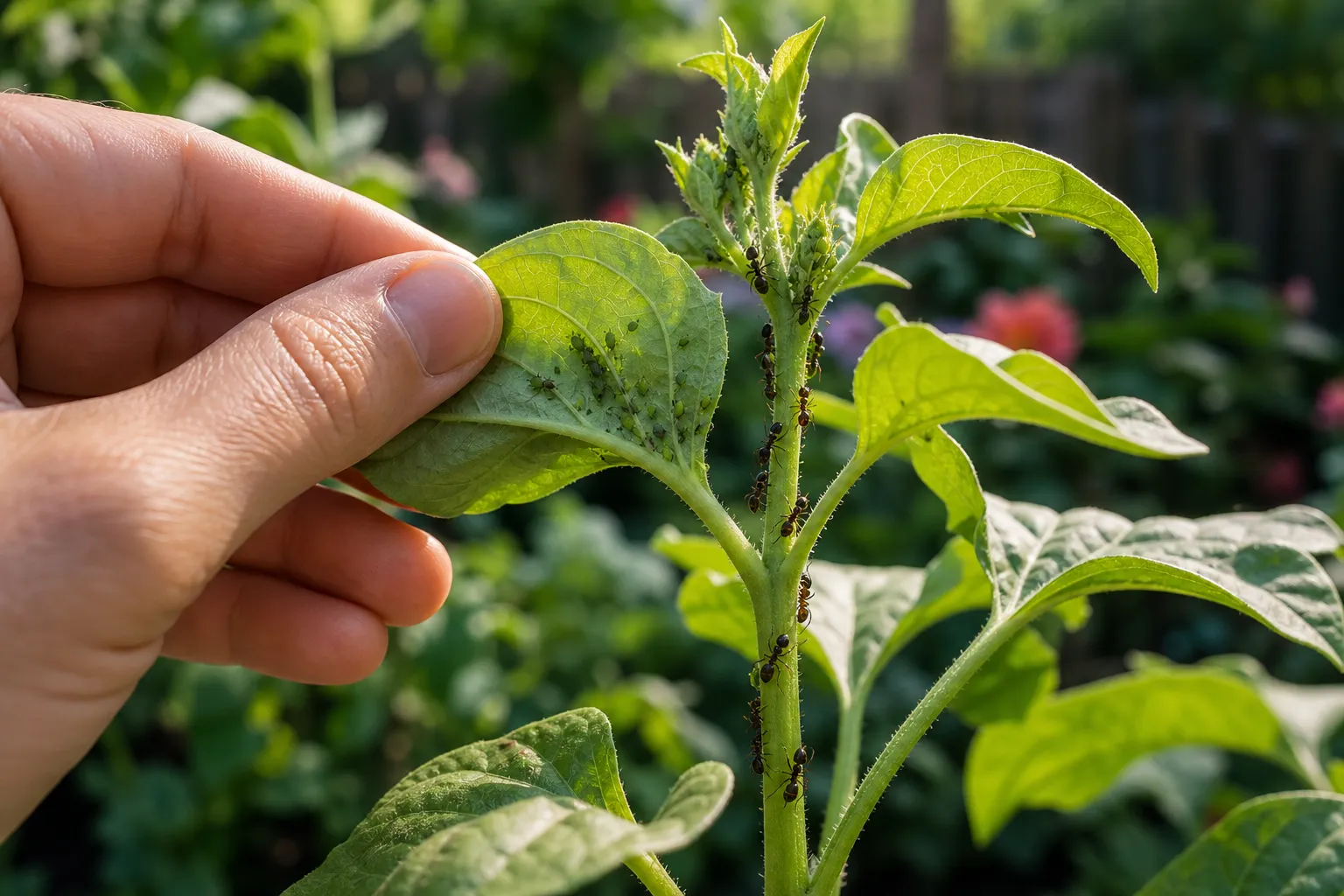
When you spot ants marching up a tomato cage, climbing a rose, or circling a houseplant, it is tempting to blame the ants immediately. Often, though, they are not the original problem. They may be following a food source created by another insect—one that is quietly feeding on your plant.
The most common suspects are aphids, scale insects, mealybugs, whiteflies, and related sap-sucking pests. These insects take in more plant sap than they need and release a sticky, sugary waste called honeydew. Ants find that honeydew irresistible, and some species actively protect the insects producing it.
That makes a line of ants useful information. Instead of treating the visible symptom first, use the ants as a prompt to inspect the plant from top to bottom. You may uncover the real cause before the leaves become badly distorted or growth begins to suffer.
What the ants may be telling you
Ants do not automatically mean a plant is unhealthy. They may simply be collecting nectar from flowers, feeding on a fallen piece of ripe fruit, or investigating a damp hiding place. A few ants passing through are usually less meaningful than a steady trail that repeatedly climbs the same plant.
Pay particular attention when ants are concentrated on new growth, flower buds, stems, leaf undersides, or the junctions where leaves meet stems. Those are favorite hiding places for several honeydew-producing pests.
- Aphids are soft-bodied insects that often cluster on tender shoots and the undersides of young leaves.
- Scale insects may look like small bumps, shells, or flakes attached to stems and leaves.
- Mealybugs appear as white, cottony patches, especially in leaf joints and other protected crevices.
- Whiteflies flutter up in a small cloud when an infested leaf is disturbed.
- Some root-feeding insects can also attract ants below the soil surface, although these are harder to diagnose without closer inspection.
The plant may also feel sticky. Check leaves below the area where ants are active, as honeydew can drip onto lower foliage, pots, patio furniture, or anything beneath a tree. A dark, dusty-looking coating called sooty mold may grow on that residue. The mold is usually a sign that honeydew has accumulated; it is not necessarily the original disease or pest problem.
Why ants sometimes protect plant pests
In nature, ants often act as enthusiastic collectors of sugary food. When they discover honeydew, they may stay near the aphids or other insects producing it. Some ant species guard those insects from predators and parasites, and they may even move them to new feeding sites.
This relationship can work against your garden. Lady beetles, lacewings, hover fly larvae, and tiny parasitic wasps are among the beneficial organisms that help suppress aphids and related pests. Ants may interfere with those natural enemies, allowing the sap-sucking insects to remain active for longer.
That does not mean every ant colony is harming every plant. Ant species behave differently, and ants also perform useful jobs such as scavenging dead insects and helping break down organic material. The practical lesson is simple: manage ants when they are clearly connected with a plant pest, not merely because you happen to see one outdoors.
A five-minute plant inspection
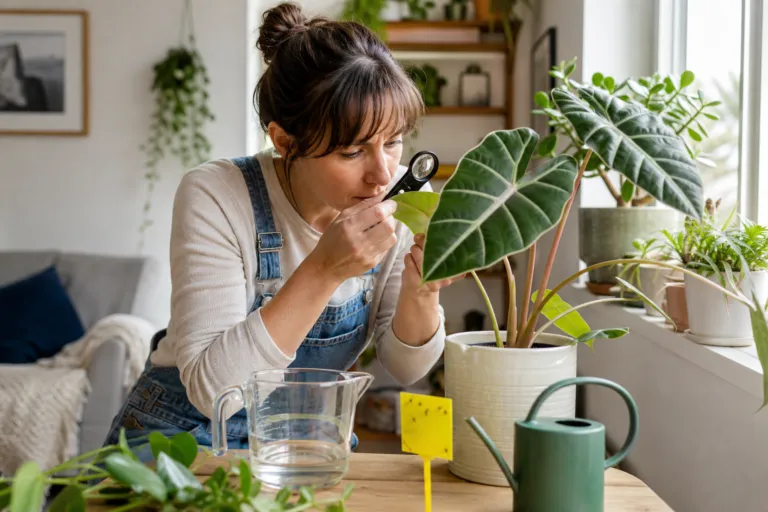
Before reaching for a spray, examine the plant in good light. A phone flashlight or a 10-power hand lens can make tiny pests much easier to find.
- Start with the newest growth. Look at shoot tips, developing leaves, flower buds, and tender stems.
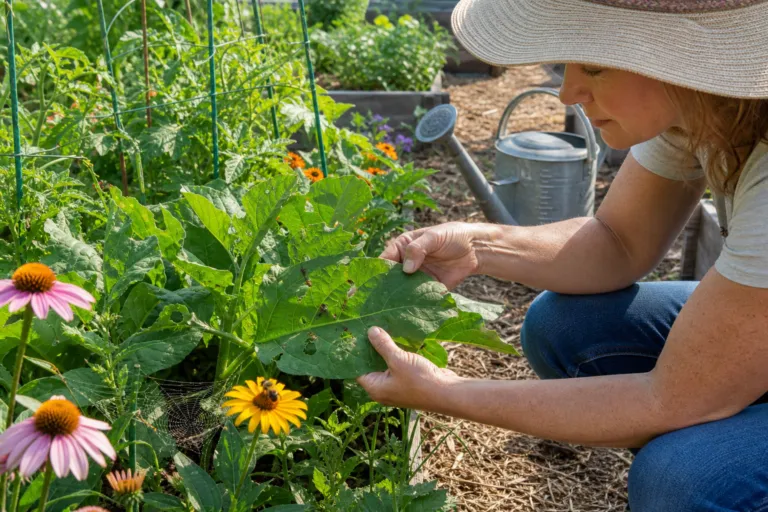
- Turn leaves over. Aphids and whiteflies often gather on the undersides, where they are protected from weather and casual observation.
- Inspect leaf joints and crevices. Mealybugs and scale insects can hide where leaves meet stems or where branches fork.
- Look for sticky surfaces. Honeydew may appear as a shiny film or a tacky coating on leaves and objects below the plant.
- Check for natural enemies. Lady beetles, lacewing larvae, hover fly larvae, and parasitized aphids can indicate that the plant already has biological help.
- Follow the ant trail. Watch where ants enter the soil, cross a branch, or disappear beneath mulch, a pot rim, a stone, or a piece of wood.
Do not assume that curled or yellowing leaves prove an aphid infestation. Those symptoms can have many causes, including watering stress, nutrient problems, herbicide injury, disease, or normal aging. Look for the insects or their signs before deciding what to do.
Houseplants: check the pot as well as the leaves
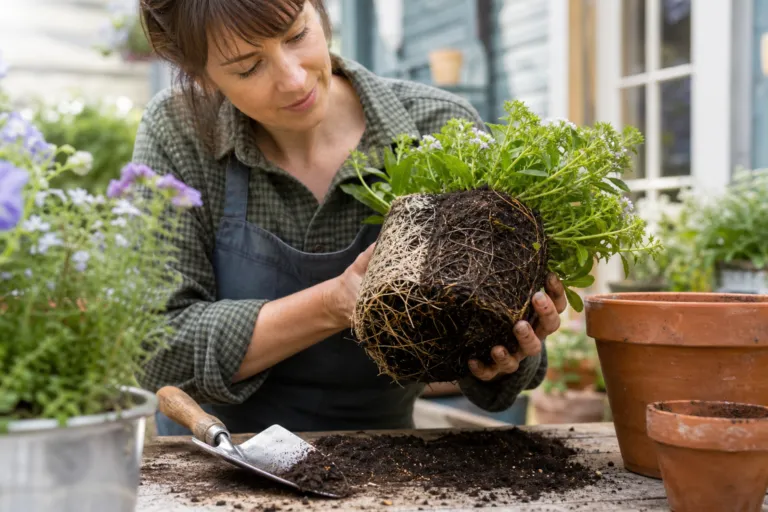
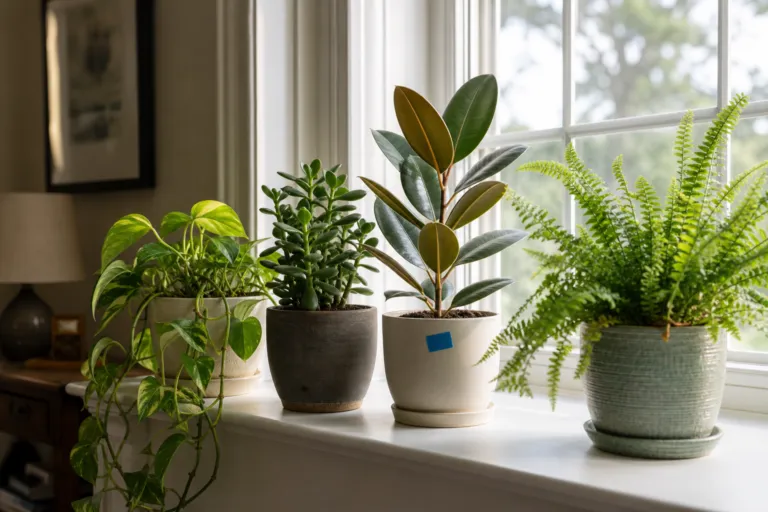
Indoor ants may be following honeydew on the foliage, but they can also be nesting in or beneath a container. Inspect the pot rim, drainage holes, saucer, nearby windowsill, and the space under the pot.
Houseplants are especially easy to overwater when you are trying to help them recover. That can create a separate problem: fungus gnats, which breed in persistently moist potting mix. Fungus gnats are small, dark flies that rise from the soil when you water or disturb the plant. They are not the same as ants, but both can appear around a pot and lead to confusion about what is happening.
As a useful comparison, look at the plant’s foliage and soil independently:
- Ants on stems and sticky leaves point more strongly toward honeydew-producing insects.
- Small flies emerging from damp soil point toward fungus gnats.
- White cottony material in leaf joints suggests mealybugs.
- Small raised brown or tan spots firmly attached to stems suggest scale.
If you recently brought a plant home or moved it indoors for winter, keep it separated from your collection for a week or two. That gives hidden pests time to become visible before they spread.
Outdoor plants: the trail may lead higher than you think
On a shrub or tree, ants may climb a trunk to reach pests high in the canopy. Inspect several branches rather than focusing only on the area where the ants are easiest to see. On fruiting plants, also check for split, overripe, or fallen fruit, because sugary juice can attract ants without any insect infestation.
Roses, fruit trees, ornamental shrubs, vegetables with tender new growth, and plants receiving heavy nitrogen feeding can all develop lush tissue that attracts aphids. This does not mean you should avoid these plants. It means regular inspection is worthwhile, especially during periods of rapid growth.
Different varieties may show the problem differently. In a small garden comparison, you might grow two varieties of the same crop side by side—for example, two types of pepper or bean—and inspect five new leaves on each plant twice a week. One variety may host more aphids because of differences in leaf texture, growth rate, or timing, while the other remains nearly clean. Such a comparison is not a scientific trial, but it can help you notice patterns in your own garden rather than relying on assumptions about which variety is always “pest resistant.”
Measure watering before blaming the plant
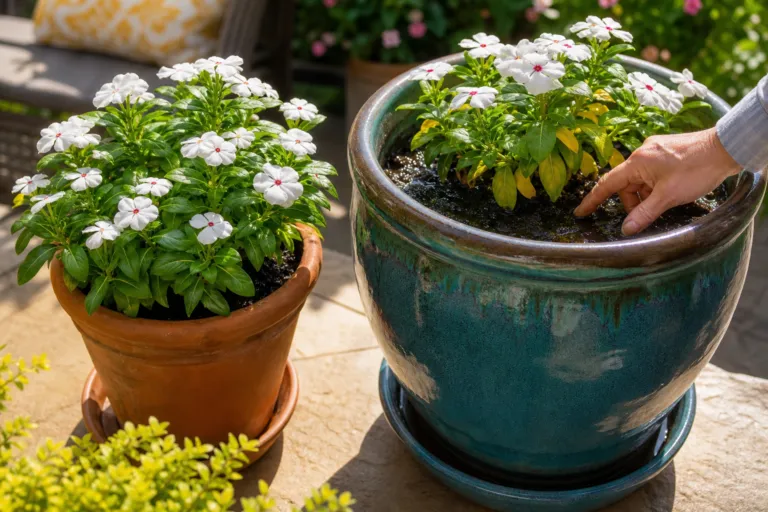
Ant activity can draw attention to a plant that is already stressed, but watering problems may be unrelated to the ants. Avoid treating every yellow leaf as evidence of insects. Instead, measure moisture in a repeatable way.
Try this simple seven-day check:
- Push your finger about 2 inches into the potting mix or soil near the plant, avoiding the stem.
- Record whether the soil feels dry, slightly moist, or wet at the same time each day.
- If you water, measure the amount rather than estimating. A 1-quart container makes a convenient measuring tool.
- For a container plant, note how long it takes for a small amount of water to begin draining from the bottom.
For example, a 10-inch container might receive 1 quart of water on day one, remain slightly moist 2 inches down on day three, and feel dry at that depth on day six. That record is more useful than a vague note that the plant was “watered regularly.” Your own results will vary with plant type, potting mix, temperature, humidity, and light.
In the ground, use a small trowel to check several inches below the surface. A dry surface does not always mean the root zone is dry, while a constantly wet root zone may indicate poor drainage. Correct watering stress first, because a struggling plant can be more difficult to evaluate and recover.
What to do when you find the real pest
Start with the least disruptive option that fits the situation. A strong stream of water can dislodge aphids from sturdy outdoor plants, and removing badly infested leaves or shoots can reduce the population. Repeat inspections every few days because pests may return or appear on new growth.
For houseplants, isolate the affected plant and wipe accessible pests away with a damp cloth or cotton swab. Prune heavily infested parts when the plant can tolerate it, and bag discarded material rather than leaving it beside the pot.
If you decide to use insecticidal soap or horticultural oil, choose a product labeled for the specific plant and pest. Read and follow the label, including directions about dilution, application timing, temperature, protective equipment, and whether the product should be tested on a small area first. These products work by contact, so thorough coverage is important, especially on leaf undersides and protected crevices.
Avoid spraying simply because ants are present. Broad, unnecessary treatments can also affect beneficial insects. If the pest population is low and predators are active, monitoring may be the better choice.
Manage the ants without creating a new problem
Once you have identified a honeydew-producing pest, reducing ant access can help natural enemies reach it. On woody plants, a sticky barrier around the trunk may work, but place the material on a protective wrap rather than directly on thin or sensitive bark. Keep branches from touching fences, buildings, the ground, or neighboring plants, since these can create alternate routes.
For outdoor colonies, enclosed ant baits may be useful in situations where ants are actively protecting plant pests. Use only products labeled for the location and follow all directions. Keep baits away from children, pets, wildlife, and edible crops unless the label specifically permits that use.
Do not pour household cleaners, fuel, boiling water, or unlabeled pesticides into soil. These shortcuts can injure roots, contaminate planting areas, and harm organisms that contribute to soil health.
Also correct conditions that make ants more likely to settle near structures:
- Repair leaking irrigation lines and outdoor faucets.
- Keep mulch, boards, bricks, and plant debris from touching building foundations.
- Remove ripe or rotting fruit from beneath trees.
- Prune vegetation that creates a bridge into the house.
- Keep containers clean and inspect saucers for standing water or nesting activity.
When ants are only innocent visitors
Sometimes the answer really is just ants. A few workers around a flowering plant may be collecting nectar. Others may be scavenging a dead insect or searching for moisture after hot, dry weather. If you find no honeydew, no sap-sucking insects, no plant damage, and no persistent trail, there may be nothing to treat.
Observe the pattern for several days. Ant numbers that rise steadily, remain concentrated on one plant, or coincide with sticky leaves deserve a closer inspection. A brief visit that disappears on its own usually does not justify intervention.
Turn an annoying clue into useful garden information
Ants around a plant are not a diagnosis, but they are a valuable signal. They can point you toward aphids, scale, mealybugs, whiteflies, ripe fruit, excess moisture, or a nest hidden under a pot or piece of mulch.
The best response is calm and methodical: inspect first, measure watering, identify the actual cause, and choose the gentlest effective step. With a little practice, you will start seeing ants not just as pests, but as early-warning messengers that help you catch a different problem while it is still manageable.