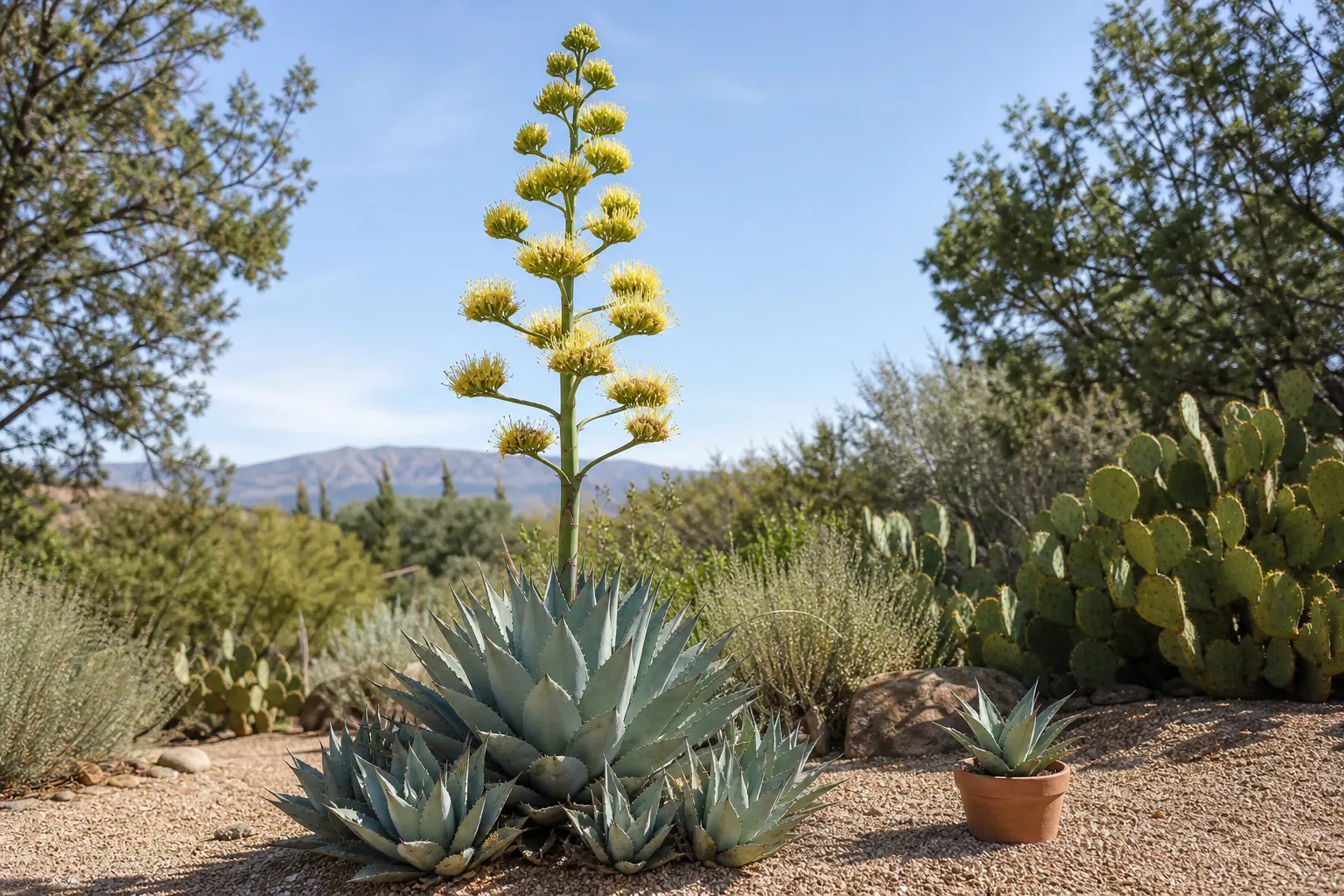
Few garden moments are as dramatic as an agave sending up a flower stalk. One week, you have a compact rosette of architectural leaves; the next, a sturdy spear begins rising from the center like an asparagus shoot. Some agave flower stalks eventually reach 15 to 30 feet, depending on the species and growing conditions.
The display is spectacular, but it also signals a major change: most agaves flower only once and then gradually die. That does not mean your planting is finished. In many cases, the mother plant leaves behind pups at its base, and some agaves produce tiny plantlets called bulbils along the flower stalk. With a little planning, you can turn one dramatic bloom into a new generation of plants.
Why does an agave die after flowering?
Most agaves are monocarpic, which means they flower once, set seed or produce young plants, and then decline. The plant spends years building a substantial rosette and storing energy. When it finally blooms, much of that stored energy goes into the flower stalk, flowers, seeds, and vegetative offspring.
“Century plant” is a memorable nickname, but it is not a reliable timetable. Many commonly grown agaves flower after roughly 10 to 25 years, while some bloom sooner or much later. Container culture, climate, species, and growing conditions all influence the schedule. A plant grown indoors may rarely flower at all.
Not every agave behaves in exactly the same way, so identify your plant if possible. Some species form numerous offsets around the base, while others produce bulbils on the flower stalk. A few may produce both. The important point is that the original rosette’s decline is a natural part of its life cycle – not a sign that you did something wrong.
What to expect after the flowers fade
The flower stalk may remain attractive for months
Agave flowers often open in waves, starting lower on the stalk and progressing upward. Depending on the species and weather, the flowering period may last several weeks or longer. Bees, hummingbirds, and other flower visitors may use the blooms, and seed capsules can develop if pollination is successful.
After flowering, the stalk eventually browns and dries. You do not need to cut it immediately. A dried stalk can provide winter interest, perching places for small birds, and a useful visual marker while you wait for bulbils or seeds to mature. In a small yard, however, remove it sooner if it becomes unstable or threatens paths, roofs, power lines, or other plants.
The mother rosette declines gradually
The original rosette may not collapse overnight. Leaves can soften, discolor, or dry from the outside inward, and the plant may remain standing for months. In some gardens, the dead structure persists for a year or more before removal becomes practical.
Do not rush to pull it out if healthy pups are still attached. The fading mother plant can help shelter young offsets from intense sun and temperature swings. Once the central rosette is clearly dead and the pups have developed their own roots, you can remove the spent plant and tidy the area.
Three ways to propagate agave
For most home gardeners, propagation means growing offsets or bulbils. Seed is also possible, but it takes longer and the seedlings may not look exactly like the parent plant. Vegetative propagation produces clones, so a pup from a striped or unusually colored agave generally retains that cultivar’s appearance.
1. Separate basal pups
Basal pups are small agaves that develop beside or beneath the mother plant. They are usually the easiest and most dependable choice for beginners.
- Choose a pup with a firm rosette and, ideally, visible roots.
- Wear sturdy gloves, long sleeves, and eye protection before working around spines.
- Brush away soil so you can see where the pup joins the mother plant.
- Use a clean, sharp knife or pruning saw to separate it, taking a small piece of stem or rhizome if possible.
- Set the offset in a shaded, dry place for several days so the cut surface can dry and form a callus.
- Plant it in a fast-draining cactus or succulent mix.
- Wait several days before watering, then water lightly and allow the mix to dry thoroughly between waterings.
Do not bury the rosette deeply. Set the base at approximately the same depth it was growing before removal. Deep planting, compact soil, or frequent watering can encourage rot before roots have formed.
2. Root bulbils from the flower stalk
Some agaves, including octopus agave, produce bulbils in clusters along the flowering stalk. These tiny plantlets are genetically identical to the mother plant and can often root readily.
Wait until the bulbils are plump and reasonably well developed. If they detach with a small piece of stem or already show short roots, they are ready to handle. Remove them gently, allow any fresh wound to dry, and place them in a shallow container of gritty, well-drained mix.
Keep the container in bright, indirect light while the plantlets establish. Add only a small amount of water when the mix is completely dry. Once you see new growth or the plant resists a very gentle tug, gradually introduce more direct sunlight. Make the transition slowly; a tiny plant can scorch more easily than a mature agave.
3. Grow agave from seed
Seed propagation is rewarding when you want a larger number of plants or hope to grow a species that does not produce many pups. However, seed formation is not guaranteed, and seedlings can vary from the parent, especially if pollen came from another agave.
Collect mature, dry seed capsules only after they have formed and begun to open. Sow the seeds on the surface of a sterile, sharply draining seed-starting mix. Press them gently into place rather than covering them deeply. Keep the medium lightly and evenly moist – not soggy – and provide warmth and bright filtered light.
Seedlings are slow compared with many annual flowers. Give them time to develop a stronger root system before transplanting. Once they have several true leaves and are large enough to handle safely, move them into individual small pots.
A simple watering experiment for new pups
Watering advice for succulents often becomes vague: “water sparingly” is not very helpful when you are trying to establish a new plant. A simple home experiment can make the timing more concrete without pretending that every garden has the same climate.
For a newly potted pup in a 6-inch container, begin with a completely dry, well-drained mix. Add about 1 cup of water slowly, stopping if water begins to pool on the surface. Record the date and feel the mix 2 inches below the surface every two or three days with a wooden skewer or your finger.
- If the mix remains damp after seven days, improve drainage and wait longer.
- If it is dry at 5 to 7 days and the pup looks firm, repeat the same modest watering.
- If the plant softens, smells sour, or develops dark tissue at the base, stop watering and inspect for rot.
- In a cool room or during a wet winter, the interval may stretch to two weeks or more.
- In a hot, dry outdoor location, the interval may be shorter, but the soil should still dry substantially between waterings.
This is a starting measurement, not a fixed rule. Pot material, soil composition, humidity, sunlight, plant size, and local weather all change how quickly the container dries. Mature, rooted agaves usually need less frequent irrigation than newly separated pups.
Comparing popular agave types
American century plant
Agave americana forms a large, blue-green rosette and may eventually produce a very tall flower stalk. It is best suited to spacious landscapes in warmer areas, roughly USDA Zones 8 through 10, although local microclimates matter. Its offsets can form a broad colony, so leave room around the planting bed.
Parry’s agave
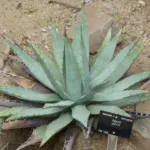
Agave parryi is more compact and cold-hardy than many large landscape agaves, making it useful in selected dry gardens and rock gardens. Its blue-gray rosette stays relatively low, but the leaf tips and margins are sharply armed. It may produce pups, although the number varies from plant to plant.
Foxtail or smooth-leaved agave
Agave attenuata is popular for containers and frost-free landscapes because its leaves lack the fierce marginal teeth found on many relatives. It prefers bright light and excellent drainage, but it is less tolerant of freezing temperatures. In areas with cold winters, grow it in a pot that can be moved to shelter.
Octopus agave
Agave vilmoriniana is especially interesting after flowering because it commonly produces bulbils along the stalk. Its flexible, twisting leaves create a softer silhouette, but the plant still needs careful handling and excellent drainage. Bulbils make this type a good candidate if you want to experiment with flower-stalk propagation.
US growing and safety considerations
Choose a site based on the species rather than the common name. Many agaves thrive in full sun and sharply drained soil, while tender types may need afternoon shade in very hot climates or winter protection in colder USDA Zones. In the ground, amend neither heavy clay nor wet soil by simply adding a little compost; instead, consider a raised bed, mound, container, or a different planting location that drains quickly.
Agave leaves and flower stalks can be difficult to handle. Sharp tips and margins can puncture skin, and some gardeners report irritation after contact with plant sap. Wear gloves, long sleeves, eye protection, and sturdy shoes when separating pups or removing a spent plant. Keep children and pets away from the work area, and dispose of trimmed material carefully.
Should you remove the flower stalk?
Removing the stalk will not make a monocarpic agave live indefinitely. Once the plant has committed to flowering, its life cycle is already underway. If you enjoy the display, leave it in place and watch for flowers, seed capsules, or bulbils.
Remove the stalk when it becomes hazardous, begins to fall, or no longer fits the space. Use a stable ladder only with appropriate help, and consider hiring a professional for very tall stalks near structures or utility lines. After the mother plant has died, cut away dry leaves one at a time rather than attacking the whole plant with powered equipment.
The best way to think about an agave bloom
An agave’s final flowering is not simply a farewell. It is a handoff. The mother rosette may fade, but pups at the base, bulbils on the stalk, or seeds in mature capsules can carry the planting forward.
Enjoy the flower stalk, identify your agave, and resist overwatering the young plants. If you separate offsets carefully, let wounds dry, use a gritty mix, and adjust watering to the actual drying rate of your container, you can turn one once-in-a-lifetime bloom into a collection of healthy new rosettes.