You plant two flowers that look nearly identical. They bloom side by side, receive the same sunlight, and appear equally healthy. Yet bees crowd around one while barely glancing at the other.
It can feel mysterious, but bees are not choosing flowers by appearance alone. They respond to a combination of visual signals, scent, flower shape, nectar and pollen rewards, temperature, timing, and learned experience. A tiny difference that is easy for you to miss may be highly meaningful to a bee.
The good news is that you do not need to become an insect scientist to use this information. With a little observation—and one simple garden experiment—you can discover which flowers genuinely work in your own yard.
Bees see more than a flower’s color
Human eyes tend to begin with color: purple, yellow, pink, white, or orange. Bees also use color, but their vision does not match ours. They can detect ultraviolet patterns that are invisible to people, and many flowers carry contrasting markings that help guide insects toward pollen or nectar.
Two flowers that look equally yellow to you may reflect light differently to a bee. One may stand out sharply against green foliage, while the other blends into the background. A small dark center, a ring of contrasting petals, or a subtle ultraviolet pattern can change how easily a bee recognizes a flower from the air.
Color still matters, but it works as part of a larger visual package. Researchers studying bee visits often find that flower size, overall floral area, height, and the number of flowers displayed together can influence visitation. A plant with slightly larger blooms or a fuller display may simply be easier for a foraging bee to spot.
Why a “better” color is not always better
There is no single bee-approved color. Different bee species have different bodies, vision, foraging habits, and seasonal needs. Honey bees, bumble bees, mason bees, sweat bees, and mining bees may not make the same choice.
Even within one bee species, preferences can change. A bee that has recently found abundant nectar in a blue flower may continue searching for that same visual pattern. Another bee may be focused on pollen, floral scent, or a flower shape it already knows how to handle.
Flower shape controls access
Think of a flower as a tiny dining room with a particular entrance. Some flowers offer an open landing platform. Others hide their rewards in a tube, behind a narrow opening, or beneath specialized structures.
A bee’s tongue length and body size affect which flowers it can use efficiently. Bumble bees can often handle larger, deeper flowers, while many small solitary bees work more easily with shallow, open blooms. A flower may contain nectar, but that does not mean every visitor can reach it.
Small changes in a cultivar can also affect access. Extra petals, tightly packed petals, a narrower throat, or a more crowded center may hide pollen or make landing difficult. This is one reason a highly doubled ornamental flower can receive fewer bee visits than a simpler single-flowered form, even when the two plants belong to the same species.
When comparing two varieties, look beyond the outer petals. Check whether the center is exposed, whether pollen-bearing structures are accessible, and whether a bee can land securely without pushing through a maze of petals.
Nectar and pollen are the real currency
A flower’s visual signal is an invitation, not a guarantee. Bees quickly learn which flowers reward their effort. If one nearly identical plant offers more nectar, more concentrated nectar, more accessible pollen, or a steadier supply, bees may return to it repeatedly.
Rewards also vary during the day. Nectar production can change with temperature, humidity, soil moisture, and the flower’s age. A bloom that was attractive in the morning may be less rewarding later, while another flower may become more productive as the day warms.
Pollen quality matters as well as pollen quantity. Bees collect pollen to feed developing young, and different plants provide different nutritional profiles. A bee may therefore visit one flower for nectar and another for pollen, depending on what the colony or nest needs at that moment.
The center of the flower deserves a close look
Use a hand lens if you have one, or take a close-up photograph with your phone. Compare:
- How much pollen is visible?
- Are the anthers open and easy to brush against?
- Does the flower have a clear landing surface?
- Is nectar likely to be accessible to a short-tongued visitor?
- Do older flowers look depleted or remain visibly fresh?
Do not assume that a flower with a large, showy bloom provides the most food. Breeding for appearance can sometimes change the very structures bees use.
Bees often stay with what they know
One of the most important explanations for selective flower visits is called flower constancy. During a foraging trip, an individual bee may concentrate on one flower type even when other rewarding flowers are nearby.
This behavior can save time. Once a bee has learned how to land on, open, and feed from a particular flower, switching to a different flower type may require a new search pattern and handling technique. The bee may also have learned that a certain color-and-shape combination usually pays off.
That means a flower can be ignored not because it is worthless, but because the bee is currently locked onto another option. A patch of one flower type may attract more visits simply because it is common, easy to recognize, and already part of the bee’s learned route.
Flower constancy is flexible rather than absolute. Bees can switch when rewards change, when a preferred flower becomes depleted, or when another plant offers a better opportunity.
Variety trials: when small differences matter
Ornamental plant breeding often focuses on traits gardeners love: unusual colors, compact growth, longer bloom, larger flowers, or more petals. Those changes can also alter a plant’s relationship with pollinators.
A useful comparison is to grow two or three varieties of the same plant under similar conditions. For example, you might compare a single-flowered and double-flowered coneflower, two colors of bee balm, or different cultivars of catmint. Keep the plants close enough for bees to encounter them during the same foraging period.
A simple backyard observation plan
- Choose a calm day. Avoid making comparisons during heavy wind, rain, or unusually cool weather.
- Observe at consistent times. Try 9 a.m., noon, and 3 p.m. for three to five days.
- Count visits, not just insects present. Record each landing and feeding visit during a 10-minute period.
- Separate visitors when possible. Note honey bees, bumble bees, small dark bees, and other insects.
- Record flower numbers. A plant with twice as many open blooms has more opportunities to receive visits.
- Repeat before drawing conclusions. One quiet afternoon is not enough to establish a preference.
To make the comparison fair, count visits per 10 open flowers rather than visits per plant. This prevents a larger plant from automatically winning simply because it offers a bigger target.
Watering can change the result
Gardeners often compare cultivars without realizing that one plant is slightly drier, more shaded, or more stressed than the other. That matters because water availability can affect flower production and the timing or amount of nectar available.
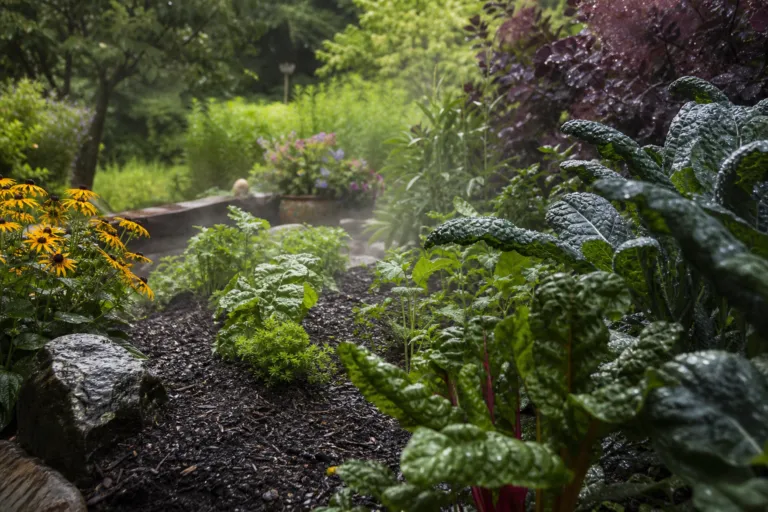
You can make watering more precise with a simple measurement. Place a straight-sided container beneath a hose or watering wand and measure how long it takes to collect 1 inch of water. Then apply that same duration to each test plant, adjusting for differences in soil area and drainage.
For a more controlled trial, use a rain gauge or several identical cans placed around the root zone. If one plant receives 0.5 inch and another receives 1 inch, record it rather than guessing. Check the soil 2 to 3 inches below the surface with your finger before watering again, because sandy soil, clay soil, mulch, heat, and container culture all change how quickly moisture disappears.
Do not flood flowers immediately before observing them. Water the root zone in the morning when practical, keep the treatment consistent, and note unusual heat or drought. The goal is not to force visits but to remove avoidable differences between plants.
Season and surroundings can outweigh cultivar differences
Bees do not evaluate your flowers in isolation. They choose from the entire neighborhood. A plant ignored in June may receive heavy visits in September when fewer alternatives are blooming.
Weather also affects activity. Cold temperatures, strong wind, rain, and cloudy conditions can reduce flights. Some bees begin foraging early, while others become more active later in the day. A flower that appears unpopular may simply be open when its likely visitors are elsewhere.
Look at the surrounding landscape before replacing a plant. Nearby trees, weeds, vegetable crops, and roadside plants may offer more abundant or accessible food. A single specimen can be overlooked, while a group of five or seven plants creates a stronger visual target and a more worthwhile stop.
Build a continuous buffet
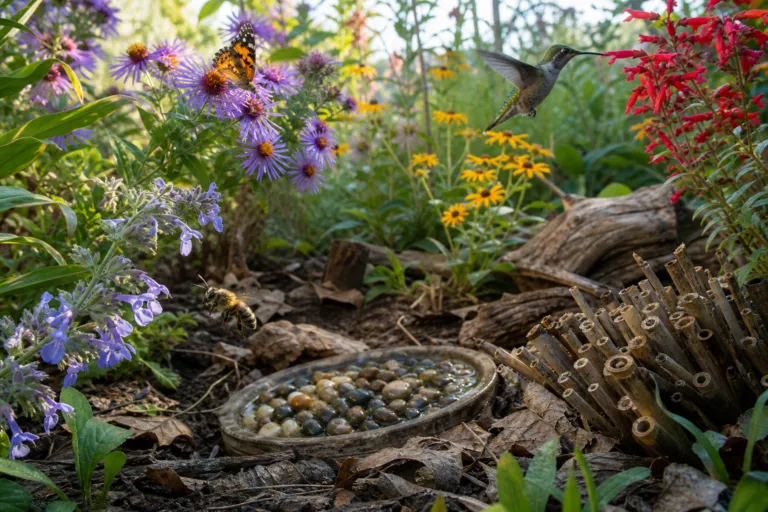
Try to provide overlapping bloom periods rather than one spectacular flush. In much of the United States, that might mean early spring shrubs and bulbs, late-spring perennials, summer natives, and fall asters and goldenrods. Choose plants suited to your USDA hardiness zone and local growing conditions, then favor a mix of flower shapes and bloom times.
- Include open, shallow flowers for small bees.
- Add tubular or deeper flowers for bees with longer tongues.
- Grow several plants of the same variety to create a visible patch.
- Use native plants where they thrive, while recognizing that well-chosen nonnative ornamentals can also provide resources.
- Leave some stems, leaves, and bare soil for nesting habitat.
How to interpret an “ignored” flower
A few minutes without a bee does not prove a plant has no value. It may be too early in the bloom cycle, temporarily outcompeted, difficult to see, or suited to visitors that are active at another time.
Instead of asking, “Do bees like this flower?” ask more useful questions:
- Which bee species visit it?
- At what temperature and time of day?
- How many flowers are open?
- Are pollen and nectar accessible?
- Does visitation change after several days?
- Does the plant perform differently in a group?
This approach helps you avoid overgeneralizing from one observation. Research on ornamental cultivars shows that plant traits can influence which pollinator groups appear, but the effect may differ among plant genera and bee species.
Your garden can answer the question
When two similar flowers receive different attention, the cause is usually not one magical trait. Bees combine visual cues, scent, flower architecture, reward quality, learned expectations, and immediate weather conditions.
Start with the simplest practical response: compare varieties, count visits consistently, measure watering, and observe across several weeks. If a flower remains quiet, pair it with a more openly accessible companion rather than removing it immediately.
The best bee garden is rarely a collection of one “perfect” plant. It is a changing, layered menu that offers different shapes, colors, rewards, and bloom periods. Give bees choices, give them repetition, and give yourself time to watch. Once you begin looking closely, the mystery becomes one of the most enjoyable parts of gardening.