At first glance, an earthworm may seem to do little more than appear after a rainstorm and leave a few small piles of soil on the lawn. But below ground, it is helping remodel the space where your plants live. Every tunnel, casting and fragment of leaf it pulls downward can alter how air, water, roots and microbes move through the soil.
That hidden work does not guarantee bigger tomatoes or weed-free flower beds. Earthworms are one part of a much larger soil ecosystem, and their effects depend on moisture, organic matter, soil texture, temperature, compaction and the species present. Still, when you create welcoming conditions, earthworms can become quiet partners in building a more workable, resilient garden.
The underground changes earthworms make
They create passageways for water and air
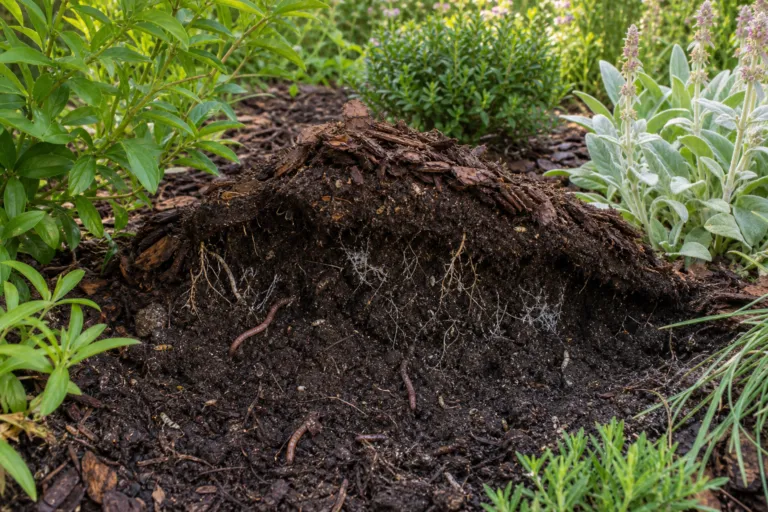
As earthworms move through the soil, they make pores and channels. Some are temporary; others can remain after the worm has moved on, especially when the tunnel walls become stabilized by organic compounds and microbial activity. These larger pores – sometimes called macropores – give water a route into the soil instead of leaving it to run across the surface.
The same channels help exchange air below ground. Plant roots need oxygen, particularly in the spaces between soil particles. In compacted soil, those spaces can collapse or fill with water. Earthworm channels do not magically cure compaction, but they can create important vertical routes through otherwise difficult soil.
Roots may follow these pathways because they offer less resistance than dense surrounding soil. A root that reaches farther down can explore a larger volume for water and nutrients, which may help plants cope with short dry spells. The result is largely invisible until a plant stays upright a little longer during heat or recovers more quickly after heavy rain.
They turn loose particles into more stable crumbs
Healthy soil is not simply a pile of sand, silt and clay. It also contains organic matter, fungal threads, roots and microscopic binding materials that hold particles together in small aggregates, or crumbs. Earthworms contribute to this process as they ingest soil and organic residue, then excrete castings.
Good aggregation improves the balance between drainage and water retention. Water can enter through spaces between crumbs, while smaller spaces continue to hold moisture for roots. A well-aggregated soil is also less likely to form a hard crust after rain or become dusty and easily eroded when dry.
You can sometimes spot the surface evidence as soil that looks granular rather than cloddy. The more meaningful change, however, occurs below the top inch: soil that breaks apart into small pieces when moist, yet does not collapse instantly into mud when watered.
They move organic matter into the root zone
Many garden earthworms feed on dead leaves, fine roots and other decomposing material. Depending on the species, they may pull surface debris into their burrows or consume organic matter already mixed into the soil. This connects the mulch layer with the soil beneath it.
That connection matters because microbes need organic material as an energy source. As earthworms shred and digest residues, they make the material more accessible to bacteria and fungi. The soil food web then continues the decomposition process, gradually releasing nutrients in forms plants can use.
Earthworms are not compost machines that convert every leaf directly into plant food. Tough, dry material may decompose slowly, and the speed varies with temperature and moisture. But their feeding and burrowing can help start or accelerate the process.
Castings are more than little piles of dirt
Earthworm castings are the material that passes through a worm’s digestive system. They often contain more plant-available nitrogen, phosphorus, potassium and calcium than the surrounding soil, along with microbial activity and organic compounds that help bind soil particles.
That does not mean every casting pile functions like a complete fertilizer. Nutrient levels vary with the worm species, the soil and the food available. A garden with many castings still needs sensible composting, soil testing and crop nutrition practices.
Think of castings as small, biologically active packets distributed through the soil. Instead of nutrients sitting only at the surface, some are moved into the zone where roots and microbes interact. In a healthy garden, this gradual redistribution can support nutrient cycling without requiring you to dig deeply or turn the soil repeatedly.
Not all earthworms work in the same way
Gardeners often use “earthworm” as if it described one creature, but several ecological types occupy different parts of the soil.
- Leaf-litter dwellers live mainly in surface residues and decomposing leaves. They are common in organic layers and help process fresh plant material.
- Shallow soil dwellers travel through the upper soil and consume a mixture of organic matter and mineral soil. Their activity helps mix the surface layer.
- Deep-burrowing worms make more permanent vertical channels that may extend well below the main root zone. Nightcrawlers are a familiar example.
This difference explains why two gardens with the same number of visible worms may behave differently. A population concentrated in leaf litter may be excellent at breaking down mulch, while deep burrowers may have a stronger effect on vertical water movement.
There is also an important United States context: many familiar garden earthworms are nonnative, and some introduced species can damage forest soils. Jumping worms, for example, can produce a loose, granular soil layer that disrupts the organic horizon in woodlands. Do not move worms, soil or potted plants into natural areas, and check your state’s guidance if you suspect an unusual, highly active worm population.

A simple garden experiment: measure what you cannot see
You do not need laboratory equipment to observe whether soil biology is changing. Try a small comparison between two similar beds or between a mulched section and a bare section.
Set up the comparison
- Choose two areas with similar sun exposure, soil and plants.
- Leave one area bare or lightly cultivated.
- Cover the other with about 2 to 3 inches of shredded leaves, finished compost or another suitable organic mulch.
- Mark a 12-by-12-inch square in each area.
- Record the date, recent rainfall, air temperature and whether the soil feels dry, moist or saturated.
After six to eight weeks, gently dig a slice of soil about 12 inches deep in each marked square. Spread it on a tarp and count earthworms, visible channels, roots and large pieces of undecomposed residue. Return the soil carefully and cover it again.
This is not a scientific population survey, and one count cannot prove that earthworms caused a change. It is a useful garden baseline. Repeat the test in spring and fall, when soil moisture and temperatures are often more favorable for earthworm activity in many parts of the United States.
Compare water infiltration, not just worm numbers
To test whether water enters the soil more readily, press a bottomless 6-inch-diameter can or section of pipe about 1 inch into the ground. Pour in 1 pint of water and time how long it takes to disappear. Repeat the test three times in each area, using spots at least 6 inches apart, and calculate the average.
For example, if the mulched bed absorbs 1 pint in 2 minutes 10 seconds, 2 minutes 35 seconds and 2 minutes 20 seconds, its average is about 2 minutes 22 seconds. If the bare bed takes 5 minutes 40 seconds, 6 minutes 15 seconds and 5 minutes 55 seconds, its average is about 5 minutes 57 seconds.
Keep the test conditions similar. Very dry soil may repel water at first, while saturated soil will absorb little because its pore spaces are already full. A slower result can also point to compaction, clay content or a crusted surface – not simply a lack of earthworms.
What different garden plants may reveal
Earthworm-friendly soil can benefit many plants, but their needs are not identical. Compare how plants respond rather than assuming one soil treatment suits every bed.
- Tomatoes and peppers: often benefit from deep, well-aerated soil because their roots explore a substantial volume during the growing season.
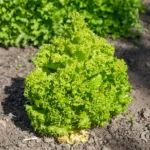
- Lettuce and herbs: rely more heavily on a loose, moisture-consistent upper layer. Surface mulch can help, but keep it away from plant crowns.
- Carrots and parsnips: need low-resistance soil for straight roots. Earthworm channels may help, but stones, clods and compacted layers remain major obstacles.
- Native perennials: should be matched to local soil and moisture conditions rather than planted solely to attract earthworms.
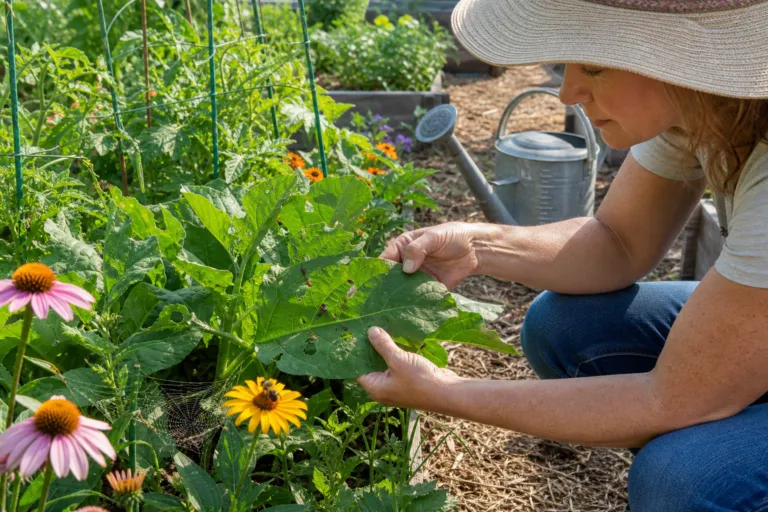
A useful comparison is to grow the same tomato variety in two beds, then compare it with a different variety in the same beds. For instance, a compact determinate tomato may mature differently from an indeterminate variety regardless of soil biology. Use plant height, flowering date, fruit count, disease pressure and irrigation needs – not just final yield – when you evaluate the result.
How to encourage helpful earthworm activity
The most reliable strategy is not to buy worms. It is to improve the habitat already in your garden.
- Feed the soil surface: leave healthy plant residues in place, add finished compost and use a suitable mulch.
- Reduce unnecessary tilling: repeated digging can destroy channels and disturb the organisms living in them.
- Manage moisture: water deeply when needed, but avoid keeping beds constantly saturated.
- Protect the soil from extremes: mulch helps moderate temperature and slows moisture loss.
- Limit compaction: keep foot traffic on paths and avoid working wet soil, when it smears or forms sticky clods.
- Use soil tests: check pH and nutrient levels before adding lime or fertilizer. Earthworms generally do best in soils that are not strongly acidic, but changing pH without a test can create new problems.
- Read pesticide labels carefully: effects vary by product, dose, species and exposure. Avoid unnecessary applications, and follow the product label and local regulations.
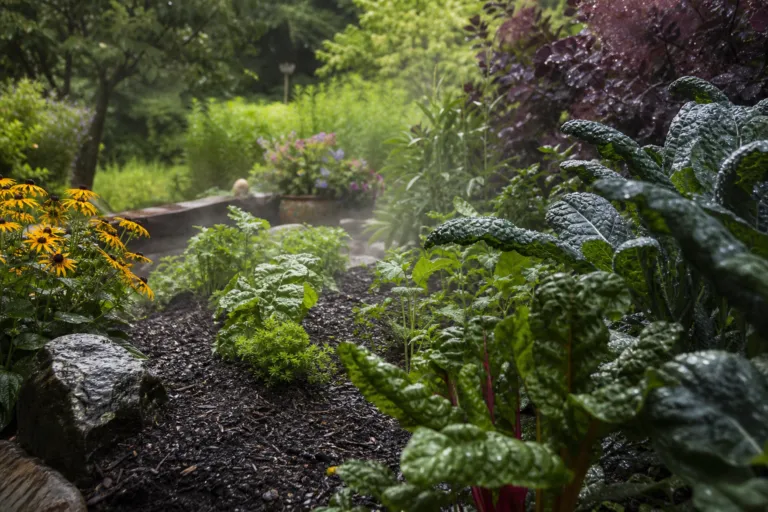
In a vegetable bed, a surface layer of about 2 to 3 inches of organic mulch is often practical. Keep mulch a few inches away from stems to reduce prolonged wetness around the plant crown. In lawns, earthworm castings can be brushed across the surface once dry rather than treated as a reason to reach for a chemical control product.
When earthworms are not the answer
More worms do not automatically mean healthier soil. A sudden flush of earthworms after irrigation or rain may simply reflect movement toward a moist surface. Worms may also be scarce in soil that is too hot, too dry, highly compacted, persistently waterlogged or low in organic residue.
Some gardens contain imported earthworms that are poorly suited to local ecosystems, particularly in forested regions. If you find worms that jump vigorously, thrash aggressively or occur with an unusually uniform, coffee-ground-like soil texture, avoid spreading the material. Contact your state extension service or natural resources agency for identification guidance.
Finally, remember that earthworms cannot replace roots, fungi, bacteria, mulch or good watering habits. They work as part of a community. If plants struggle, look at the entire system: sunlight, drainage, soil texture, fertility, pests and planting choices.
The hidden payoff of leaving soil alone
Earthworms change a garden most effectively when you give them time. Their tunnels improve continuity through the soil; their castings redistribute nutrients; their feeding links mulch to microbial decomposition; and their activity contributes to aggregates that influence water and air movement.
You may never see those changes directly from above. Instead, you notice that a trowel enters more easily, rain disappears instead of pooling, roots pull free with fine soil attached, or a bed stays workable a little longer after a storm.
Start with one small experiment. Add organic matter, reduce disturbance, measure infiltration and observe the soil at 12 inches – not just at the surface. If earthworms are present and the conditions suit them, their quiet underground work can help your garden become more resilient one tunnel at a time.