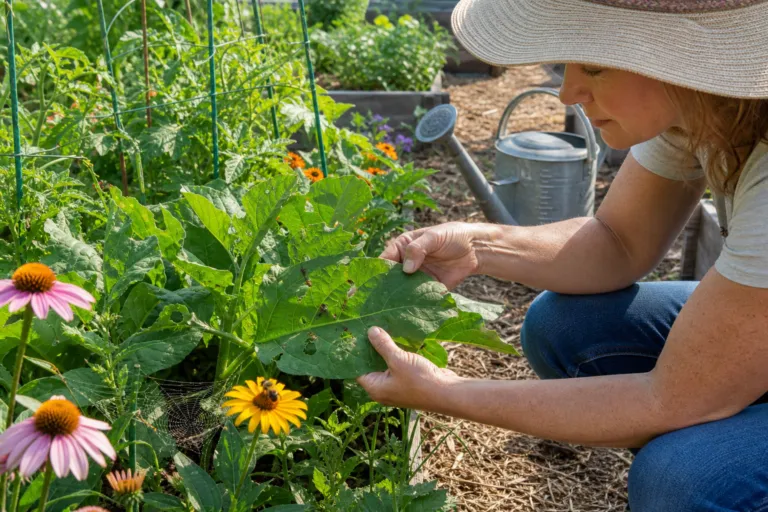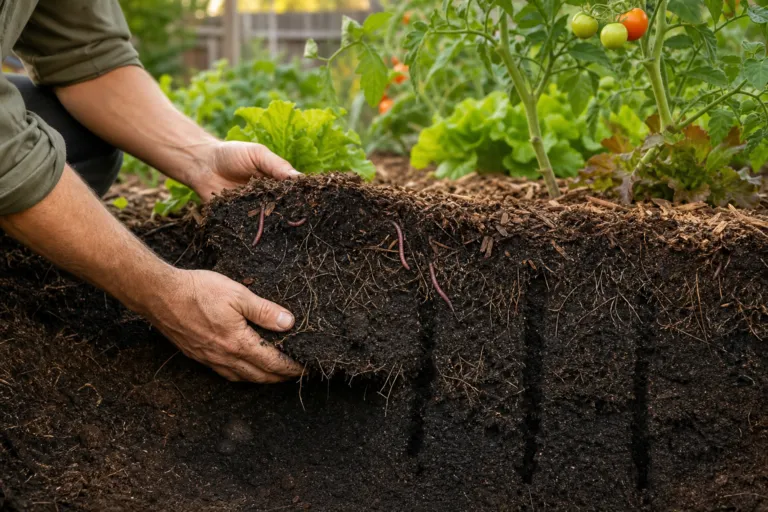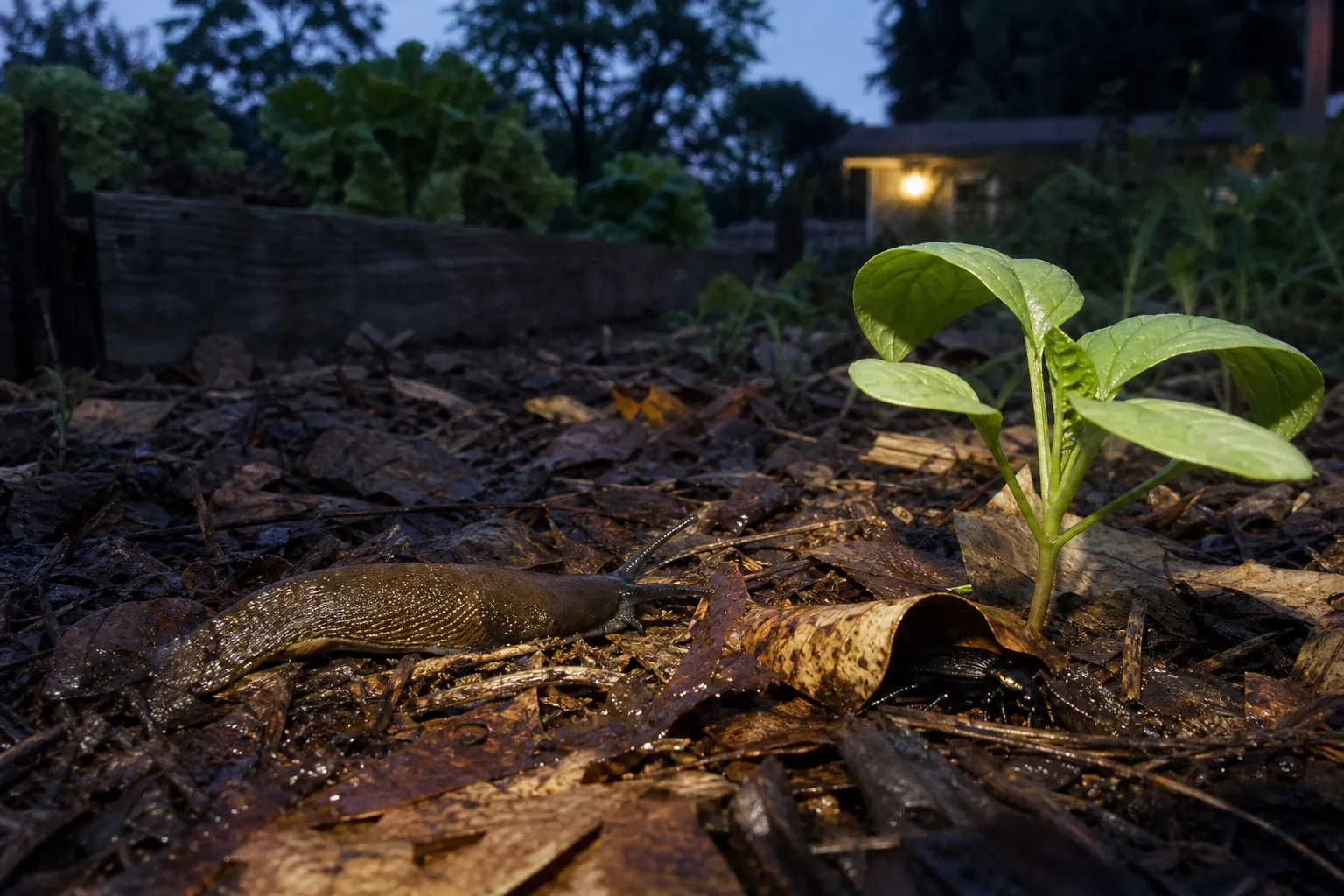
When you find a slug sliding across a lettuce leaf, it is easy to label the entire species a garden villain. Yet slugs are not simply leaf-munching machines. Much of their time is spent hiding from heat and sunlight, feeding on fallen organic matter, laying eggs, or becoming food for other creatures.
That does not mean you have to surrender your seedlings. It does mean you can manage slugs more effectively when you understand their daily routine. Instead of treating every slug as an emergency, learn where it goes, what it does, and when intervention will make the greatest difference.
A slug’s day begins when the garden quiets down
Most land slugs are mainly active after sunset, overnight, and during cool, cloudy or rainy weather. Their soft bodies lose moisture easily, so bright sun, dry air and hot soil send them looking for shelter.
During the day, check the shady places that hold moisture:
- Under boards, stones, pots and garden edging
- Inside dense mulch or piles of fallen leaves
- Below low-growing plants and ground covers
- In cracks in the soil or beneath clods of earth
- Under decks, pallets, containers and other damp structures
- Along the underside of leaves close to the ground
In hot, dry weather, some slugs retreat into the soil or seal themselves against a protected surface until conditions improve. In colder regions, they may overwinter as eggs, young slugs or adults in protected places. This is why a garden can appear slug-free in midsummer and suddenly become busy after a soaking rain.
They recycle more than you might expect
Living plants are only one part of a slug’s menu. Many slugs also graze on algae, fungi and decaying plant material. A slug moving through leaf litter may be scraping softened organic matter rather than attacking your prized hosta.
As they feed, slugs break large pieces of dead material into smaller fragments. Their droppings then return partially digested organic matter to the soil, where microbes and other decomposers continue the process. Slugs are not the main engine of composting, but they are one small link in the garden’s decomposition network.
This role becomes especially noticeable in a naturalistic bed, woodland edge or compost area. A few slugs among damp leaves may be participating in nutrient cycling rather than causing meaningful plant damage. The practical lesson is simple: focus your control efforts where slugs threaten young plants, vegetables or fruit, instead of trying to make every corner of the property completely slug-free.
Slugs help feed the garden food web
A slug is also a meal. Ground beetles, rove beetles, centipedes, harvestmen, some firefly larvae, birds, frogs, toads, snakes and small mammals may prey on slugs or their eggs. Not every predator will eliminate a slug outbreak, but a diverse garden gives these helpers more opportunities to work.
Ground beetles are particularly valuable because they hunt along the soil surface, where young slugs and other soft-bodied pests travel. You may spot them beneath mulch or at the edge of a path. They often move quickly when disturbed and have shiny, dark bodies.
Predators need shelter, too. A completely bare, frequently disturbed garden may offer fewer places for beneficial hunters to live. Try creating a balance:
- Keep some leaf litter in low-risk areas.
- Use a few flat stones or logs as wildlife shelter, away from vulnerable seedlings.
- Grow a mixture of plants rather than a single uniform crop.
- Avoid unnecessary broad-spectrum insecticide use, which can harm helpful invertebrates as well as pests.
- Leave a modest, untidy corner where beetles, frogs and other small predators can find cover.
There is an important distinction here: encouraging predators is a long-term strategy, not a guaranteed overnight cure. If slugs are already clipping off every seedling, you may still need hand-picking, barriers or another carefully chosen control method.
They are searching for moisture, not just dinner
Many slug problems begin with a moisture problem. A bed that stays wet on the surface through the night creates a comfortable travel route. Heavy mulch, dense weeds and closely packed containers can provide both humidity and hiding places.
Watering earlier can make a noticeable difference. As a practical comparison, try measuring two equal beds for one week:
- Bed A: water at sunrise with a soaker hose or drip line.
- Bed B: water in the late afternoon with a sprinkler.
- Use a rain gauge or straight-sided container to measure about 1 inch of water in each bed over the week.
- After dark, count slugs in a marked 1-square-yard area for five minutes on three evenings.
The point is not to produce a scientific trial for publication. It is to observe whether the timing and method of irrigation change nighttime activity in your own garden. Morning watering usually gives foliage and soil surfaces more time to dry before nightfall, while drip irrigation keeps more water close to plant roots.
Do not reduce watering so far that plants wilt. Healthy, well-established plants often tolerate minor feeding better than stressed plants, and drought-stressed seedlings may be more vulnerable to damage.
Egg laying is one of their most important “other” activities
When temperatures are moderate and moisture returns, adult slugs mate and lay clusters of translucent, rounded eggs. Depending on the species and local conditions, eggs may appear beneath leaves, in soil cracks, under debris or in other protected spots.
Slugs are hermaphrodites, meaning individuals have both male and female reproductive organs. They typically still mate with another slug, after which both may lay eggs. This biology helps explain why a small number of survivors can contribute to a larger population later.
Egg clusters can resemble tiny pearls or beads pressed together. If you are preparing a bed or moving mulch, look carefully rather than disturbing everything indiscriminately. In a heavily infested vegetable bed, shallow cultivation that brings exposed eggs to the surface can help them dry, but deep or frequent soil disturbance can damage soil structure and living organisms. Use the lightest approach that fits your situation.
Different slugs behave differently
Not every slug in the yard has the same preferences. Some species favor garden crops and seedlings, while others are more commonly found in damp woodland debris, compost or greenhouse conditions. Size, color and markings vary considerably, so identification based on appearance alone can be unreliable.
Instead of trying to name every slug, compare behavior. Place identical pieces of cardboard in three locations: beside lettuce, under a shrub and near the compost pile. Lift them at the same time each morning for a week and record the number and approximate size of slugs underneath.
You may find that one location holds most of the population. That information is more useful for management than a casual guess about species. If the compost area is the main refuge, protect seedlings with a barrier and keep the compost habitat in place. If slugs cluster beneath pots beside the vegetable bed, move the pots, raise them off the ground or inspect underneath regularly.
A small variety trial can reveal your garden’s favorites
Slugs generally prefer tender, succulent growth, but plant varieties can differ in how much damage they suffer. Rather than relying on a universal “slug-proof” list, run a simple comparison.
Plant three or four varieties of the same crop in short, labeled rows. For example, compare loose-leaf lettuce, romaine, butterhead and a red-leaf type. Give each variety the same spacing, soil preparation and irrigation. Once a week, rate damage from 0 to 5:
- 0: no visible feeding
- 1: a few small holes
- 2: noticeable damage, plant still vigorous
- 3: several damaged leaves or reduced growth
- 4: severe damage, plant struggling
- 5: plant destroyed or missing
After three or four weeks, look for patterns. A variety with firmer leaves or faster growth may perform better in your conditions, even if it is not truly resistant. Choose the better performers for your main planting, while reserving the most vulnerable varieties for containers or protected beds.
When a slug is more visitor than pest
A slug deserves a different response depending on where you find it. One slug in a mature ornamental border is not the same problem as dozens beneath newly planted beans. Consider three questions:
- Is the plant young, tender or especially valuable?
- Are you seeing fresh damage and shiny trails?
- Are slugs concentrated in a small area or spread throughout the garden?
If the answer to all three is no, observation may be enough. If seedlings are being cut down overnight, act promptly. Young plants have little spare leaf area, and repeated feeding can set them back even when older plants recover.
Practical ways to redirect or reduce slug activity
Use daytime shelters as monitoring stations
Place a small board, shingle or piece of cardboard on short spacers near vulnerable plants. Slugs may gather beneath it during the day. Lift the shelter each morning, remove the slugs and repeat regularly. This approach also tells you whether the population is declining.
Inspect after dark
Two hours after sunset, take a flashlight and look along leaf undersides, soil lines and garden edges. Hand-picking works best when you repeat it consistently for several nights rather than doing it once and expecting permanent results.
Protect the plants that matter most
Seedling collars, raised containers and copper edging can help exclude slugs when installed carefully. Barriers work best when they form a continuous route-blocking edge and the bed is cleared of slugs before installation. Inspect for leaves or mulch bridging the barrier.
Keep traps realistic
Beer or yeast-based traps may attract slugs from a limited nearby area, but they do not solve a widespread infestation by themselves. They also need frequent checking and refilling. Use them as a monitoring or supplementary tool, not as the entire plan.
What not to do
Avoid spreading salt through the garden. It can damage soil and nearby plants. Be cautious with homemade sprays and unregistered remedies, because a product that harms slugs may also burn foliage, injure soil life or create risks for pets and wildlife.
If you use a commercial bait, read the current label carefully and follow all directions for the crop, application rate, storage and treatment area. Keep products away from children and pets, and remember that baits work better when you also reduce shelter and excess moisture.
The more useful view of a slimy garden resident
Slugs hide, decompose, reproduce and become prey long before you notice a hole in a leaf. Seeing those roles does not require you to tolerate serious crop damage. It simply helps you replace blanket eradication with targeted management.
Start by watching for a week. Note when slugs appear, where they shelter, which plants they favor and how irrigation affects activity. Then protect young plants, reduce unnecessary nighttime moisture, preserve a few predator-friendly spaces and inspect the garden regularly.
With that approach, you can keep lettuce, beans and seedlings growing while allowing the wider garden food web to remain active. A slug may still cross your path after dark—but it does not have to control the whole garden.