
 Source:
 Magnolia ‘Susan’ short overview
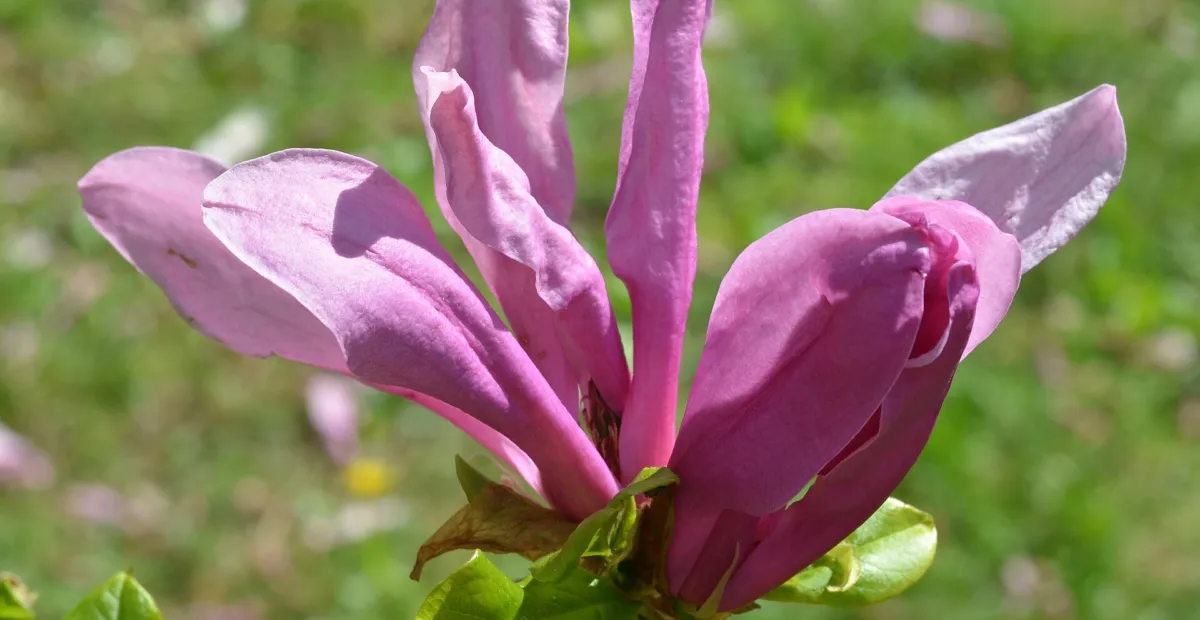
Magnolia 'Susan' is a compact deciduous magnolia from the U.S. National Arboretum’s Little Girl series. Its upright, often multi-stemmed form carries fragrant, narrow goblet-shaped flowers in rich fuchsia purple, opening in spring before the leaves. Later flowering than many magnolias, it can avoid some late-frost damage. Grow it as a specimen shrub or small tree in full sun or light shade, sheltered from strong winds, with evenly moist, well-drained acidic to neutral soil.
Taxonomic classification
Magnolia ‘Susan’ care guide
Light and placement
Grow in full sun to partial shade, ideally with morning sun and some afternoon protection in hot climates. A sheltered east- or southeast-facing position can support flowering without overheating the buds. Sparse flowering or elongated growth may indicate insufficient light; scorched leaves or prematurely opened buds can follow excessive heat, reflected light or drought.
Watering and humidity
Water deeply and slowly when the upper few inches of soil begin to dry, keeping the root zone evenly moist but never saturated. Young plants need regular watering through their first two growing seasons; established plants need supplemental water during drought. Apply mulch to reduce evaporation, but keep it off the trunk. Humidity usually needs no special management outdoors.
Soil and growing medium
Use organically rich, moisture-retentive but well-drained soil. A loam amended with compost suits the shallow, fleshy root system. Slightly acidic to neutral conditions are preferred; avoid strongly chalky or persistently waterlogged ground. Mulch over the root zone, keeping mulch away from the stems.
Feeding
Apply compost or a light, slow-release balanced fertilizer in early spring as growth begins, especially on poor soil. Do not heavily fertilize late in the season, because soft late growth is more vulnerable to winter injury. Avoid routine feeding when foliage is healthy and annual growth is satisfactory.
Growth and habit
This cultivar forms a broad-upright, often multi-stemmed shrub that may mature as a small tree. It tends to branch from low on the plant and can become rounded with age. Establishment is more reliable when the root system is left undisturbed; routine shaping is usually unnecessary.
Planting and repotting
Plant in fall or early spring while dormant, setting the root flare level with the surrounding soil rather than deeply burying it. Allow about 10–15 feet of space for the usual mature spread, with more room where conditions are exceptionally favorable. Water thoroughly after planting and maintain a broad mulch ring during establishment.
Magnolia 'Susan' is best planted permanently rather than kept long-term in a container. If container-grown, transplant while dormant or just before spring growth begins, disturbing the fleshy roots as little as possible. Choose a large, stable container with excellent drainage and expect more frequent watering than in ground.
Propagation and pruning
Propagation
Usually propagated by grafting or other nursery methods; semi-ripe cuttings may be possible but are not consistently easy. Layering can work on suitable young branches. Propagate in summer for cuttings or during the dormant season for layering, using clean material from a verified cultivar.
Pruning
Prune only as needed, immediately after flowering, to remove dead, damaged or crossing branches. Magnolias can respond poorly to heavy cutting, and substantial pruning may remove next season’s developing flower wood. Avoid late-season hard pruning and protect the bark from mechanical injury.
Overwintering
Hardy across much of USDA Zones 4–8, though flower buds can still be damaged by late freezes. Site away from wind and avoid late-summer nitrogen. Maintain mulch over the root zone, water before the ground freezes during dry autumns, and do not wrap the plant routinely unless exposed to severe wind or unusual cold.
Uses
Use as a flowering specimen, informal hedge, foundation accent or small-garden tree. Its compact habit and fragrant spring flowers suit residential landscapes, patios in large containers, and woodland-edge plantings. It is ornamental rather than a documented culinary or medicinal plant.
Appearance
The plant has mid-green, broad elliptic to obovate leaves on smooth gray-brown branches. Velvety burgundy buds resemble narrow upright bills before opening. Flowers appear on bare branches, creating the strongest display before leaf-out; later, a cone-like aggregate fruit may develop.
Flowering
Flowers open from burgundy, somewhat furry buds before the foliage, generally in April in much of the United States, with timing shifting by climate. The narrow goblet-shaped blooms are held upright to slightly spreading and may appear on young plants. Flowering is typically two to four weeks later than star magnolia and saucer magnolia.
Pollination and visitors
Magnolia flowers are adapted primarily to crawling insect visitors, especially beetles and other small insects, rather than producing abundant windborne pollen. The flowers provide pollen and scent cues, and their sturdy floral parts tolerate insect movement.
Magnolia 'Susan' photos
Click any photo for a larger view. Source, author and license are shown separately.
Diseases and pests
Diseases
Watch for leaf spot, powdery mildew, cankers and occasional fungal problems after prolonged wet weather. Improve air circulation, avoid unnecessary overhead irrigation, remove diseased debris, and prune out dead or infected wood during dry weather. Healthy plants in suitable soil usually need no routine fungicide.
Pests
Scale insects, aphids and magnolia scale may occur; inspect stems and leaf undersides. Encourage beneficial insects, wash off light infestations, and use horticultural oil only when label directions and weather conditions are suitable. Prevent trunk injury and drought stress, which can worsen pest problems.
Toxicity and pollen
No cultivar-specific toxic principle was identified in the reviewed sources. Magnolia is generally regarded as low risk for people and pets, but ingestion of any ornamental plant can cause minor stomach upset, and plant material should not be eaten. Contact a veterinarian or poison service after a concerning ingestion.
- Typical season
- Spring flowering period
- Pollination / pollen
- Mostly insect-carried pollen; limited airborne dispersal
Magnolia flowers are insect-pollinated and generally release much less airborne pollen than wind-pollinated trees. Sensitive individuals may still react to pollen or floral fragrance, particularly during spring bloom, so local symptoms and exposure should guide precautions.
Native habitat
Magnolia 'Susan' is a cultivated hybrid rather than a wild native population. Its parentage combines Asian magnolias, and it performs best in temperate garden conditions resembling moist, sheltered woodland margins: rich soil, reliable moisture, good drainage and protection from drying winds.
Interesting fact
‘Susan’ is one of the eight Little Girl hybrids introduced through the U.S. National Arboretum program. It resulted from Magnolia liliiflora ‘Nigra’ crossed with Magnolia stellata ‘Rosea’. Its later bloom helps reduce, but does not eliminate, spring-frost risk. The cultivar was named for Susan Skinner, daughter of former National Arboretum director Henry Skinner.
Frequently asked questions (FAQ)
The most relevant questions about this plant, with short and direct answers.
🌱Quick care
What is Magnolia 'Susan'?⌄
Magnolia 'Susan' is a deciduous hybrid magnolia grown as a large shrub or small tree. It is part of the National Arboretum’s “Little Girl” series and is known for late-blooming, fuchsia to purple-red flowers.
How big does Magnolia 'Susan' get?⌄
Magnolia 'Susan' typically reaches about 8–12 feet tall and wide, although some plants may grow larger in favorable conditions. Its naturally multi-stemmed form can be maintained as a shrub or trained into a small tree.
Is Magnolia 'Susan' evergreen or deciduous?⌄
Magnolia 'Susan' is deciduous, so it loses its leaves in fall and remains bare through winter. The bare branches and fuzzy flower buds provide some winter interest.
What USDA zones are suitable for Magnolia 'Susan'?⌄
Magnolia 'Susan' is generally hardy in USDA Zones 4–8. Flower buds can still be damaged by unusually late freezes, especially when spring warms early.
🌤️Environment and placement
How much sun does Magnolia 'Susan' need?⌄
Plant Magnolia 'Susan' in full sun to partial shade, with roughly four or more hours of direct sunlight for the best flowering. In hot climates, light afternoon shade can reduce heat and drought stress.
Where is the best place to plant Magnolia 'Susan'?⌄
Choose a sheltered location with well-drained, organically rich soil and enough room for an 8–12-foot shrub or small tree. Avoid exposed windy sites and warm south-facing locations that can trigger premature flowering.
Can Magnolia 'Susan' grow in clay soil?⌄
Magnolia 'Susan' can tolerate clay soil if it drains adequately and is enriched with organic matter. Avoid sites that stay waterlogged, because saturated soil can damage its roots.
Does Magnolia 'Susan' prefer acidic soil?⌄
Magnolia 'Susan' grows best in slightly acidic to neutral soil that is organically rich and moisture-retentive. It may tolerate somewhat broader soil conditions, but persistent alkalinity can contribute to nutrient problems.
How much water does Magnolia 'Susan' need?⌄
Provide moderate, even moisture, especially during the first few growing seasons and during drought. Water deeply when the upper soil begins to dry, then apply mulch to help stabilize soil moisture.
💧Care and problems
Why is my Magnolia 'Susan' not blooming?⌄
Common causes include insufficient sunlight, drought stress, excessive nitrogen, immature plants, or flower buds damaged by frost. Magnolia 'Susan' blooms on older wood, so severe pruning can also remove the next season’s flower buds.
Why are the leaves on my Magnolia 'Susan' turning brown?⌄
Brown leaves are often caused by drought, root stress, wind, heat, transplant shock, or leaf-spot diseases. Check soil moisture and drainage first, and avoid keeping the root zone constantly saturated.
Should I mulch Magnolia 'Susan'?⌄
Yes, apply a 2–3-inch layer of organic mulch over the root zone to conserve moisture and moderate soil temperature. Keep mulch several inches away from the trunks and main stems.
What diseases affect Magnolia 'Susan'?⌄
Magnolia 'Susan' may experience leaf spots, anthracnose, cankers, dieback, or powdery mildew. Improve air circulation, water at the soil line, remove damaged tissue, and avoid unnecessary leaf wetting.
What pests attack Magnolia 'Susan'?⌄
Possible pests include scale, thrips, snails, and weevils. Inspect plants regularly and use the least-disruptive control appropriate for the pest and severity of the infestation.
🪴Planting and repotting
When is the best time to plant Magnolia 'Susan'?⌄
Plant Magnolia 'Susan' in spring or fall when temperatures are moderate and the soil is workable. Fall planting is often useful in many U.S. regions, but spring is preferable where severe winter cold arrives early.
How do I plant Magnolia 'Susan' correctly?⌄
Dig a hole about as deep as the root ball and two to three times as wide, then set the plant with the root flare at or slightly above soil level. Backfill with the native soil, water thoroughly, and mulch without covering the trunk.
Can Magnolia 'Susan' be grown in a container?⌄
Magnolia 'Susan' can be grown temporarily in a large container, but it is ultimately better suited to the ground because it develops a substantial root system. Use a deep, well-drained pot and expect to monitor watering closely.
Can I transplant an established Magnolia 'Susan'?⌄
Transplanting an established Magnolia 'Susan' is risky because magnolias have fleshy, easily damaged roots. Move only a relatively young plant if necessary, and preserve as much of the root ball as possible.
✂️Propagation and pruning
How is Magnolia 'Susan' propagated?⌄
Magnolia 'Susan' is usually propagated clonally by softwood cuttings, grafting, or other nursery methods. Seed-grown plants may not reproduce the named cultivar consistently.
Can I grow Magnolia 'Susan' from seed?⌄
You can grow magnolia seedlings from seed, but they may differ from Magnolia 'Susan' because the cultivar is a hybrid. Seed propagation is therefore unsuitable when an identical replacement plant is required.
Can Magnolia 'Susan' be propagated from cuttings?⌄
Magnolia 'Susan' can be propagated from softwood cuttings, but rooting is often difficult and success depends on timing, humidity, rooting medium, and hormone treatment. Nursery propagation is generally more reliable than casual home propagation.
When should Magnolia 'Susan' be pruned?⌄
Prune Magnolia 'Susan' immediately after flowering, before new flower buds develop for the following year. Limit pruning to removing dead, damaged, crossing, or poorly placed branches whenever possible.
Can I keep Magnolia 'Susan' small by pruning?⌄
You can control its shape and modestly reduce its size with selective pruning, but repeated hard pruning is not ideal. Choose a suitable planting location and remove no more than necessary each year.
⚠️Toxicity and safety
Is Magnolia 'Susan' toxic to dogs or cats?⌄
Magnolia 'Susan' is generally considered low risk, and no serious toxicity is documented for this cultivar. Even so, prevent pets from consuming large quantities of plant material and contact a veterinarian if illness follows ingestion.
🌸Flowering and special interest
When does Magnolia 'Susan' bloom?⌄
Magnolia 'Susan' usually blooms in mid-April to early May in much of the United States, depending on climate and spring temperatures. Its flowers generally open later than those of star and saucer magnolias.
What do Magnolia 'Susan' flowers look like?⌄
The flowers are goblet-shaped, about 5 inches wide, and typically deep fuchsia, purple-red, or reddish-purple outside with somewhat paler interiors. The six tepals may be slightly twisted or inwardly rolled.
Are Magnolia 'Susan' flowers fragrant?⌄
Magnolia 'Susan' flowers are generally slightly fragrant, although fragrance intensity can vary with weather and individual plants. The floral display is usually more noticeable for color and timing than for strong scent.
Does Magnolia 'Susan' bloom more than once a year?⌄
Magnolia 'Susan' may produce occasional, lighter summer flowers after its main spring display. Repeat blooming is sporadic and should not be expected every year.
Does Magnolia 'Susan' resist late spring frost?⌄
Magnolia 'Susan' has better spring-frost avoidance than earlier-blooming magnolias because it flowers later. However, an unusually late freeze can still damage open flowers or developing buds.
Similar plants
 Canary Island Lavender (Lavandula canariensis) care guideLavandula canariensis
 Lavandula intermedia care guideLavandula intermedia
 Edging lobelia (Lobelia erinus) care guideLobelia erinus
 Blue Lobelia (Lobelia siphilitica) care guideLobelia siphilitica
 Magnolia ‘Star Wars’Magnolia 'Star Wars'
 Green lavender or white lavende (Lavandula viridis) care guideLavandula viridis