Summer gives houseplants a vacation: brighter light, warm air, rain-washed foliage, and often a welcome burst of growth. But as autumn approaches, that outdoor staycation can turn risky surprisingly fast. A warm afternoon may be followed by a chilly night, and many tropical houseplants can be damaged before the first frost ever appears.
The safest approach is to watch nighttime temperatures rather than waiting for a dramatic weather change. For most common houseplants, plan to bring them indoors before temperatures fall below 50°F. Tender tropicals may show stress even earlier, especially when nights dip into the low 40s. With a little preparation, you can move your plants inside without carrying half the garden’s insects along with them.
The short answer: bring them in before 50°F nights
For most foliage houseplants, 50°F is a useful safety line. That includes popular outdoor vacationers such as pothos, philodendrons, begonias, coleus, tropical hibiscus, ficus, citrus, mandevilla, and many palms. Some plants tolerate cooler conditions briefly, but a forecast below 50°F is a good signal to start the move.
Do not wait for the first frost. Frost can arrive after a clear, calm night, and a plant sitting near a house wall or under a porch may experience a different temperature from the one shown by a weather app. If the forecast calls for several nights in the 40s, bring tender plants inside before the cold settles in.
Use these guidelines as a starting point, not a substitute for knowing your plant:
- Most tropical foliage plants: bring inside before nights fall below 50°F.
- Very tender tropicals: move them in when nights approach the low 50s or low 40s.
- Succulents and cacti: some tolerate temperatures around 40°F, but requirements vary widely. Keep them dry and protect them from frost.
- Hardy outdoor plants: a plant labeled hardy for your USDA zone may not need to come indoors at all, even if you have grown it in a container.
- Annuals and tender perennials: decide whether you want to save the whole plant, take cuttings, or let the plant finish outdoors.
Your local timing depends on more than the calendar
There is no single “bring-in day” for the entire United States. In northern states, the transition may begin in late August or September. In the South and along parts of the West Coast, outdoor conditions may remain suitable well into fall. Even within one state, a mountain garden and a sheltered urban patio can have very different timing.
Start checking the forecast about two weeks before the usual first frost in your area. Search for the expected overnight low, not simply the daytime high. A plant can look perfectly comfortable at 75°F during the day and still be stressed by a 45°F night.
Also consider where the plant has been growing. A container on an exposed deck loses heat quickly, while one against a sunny brick wall may stay warmer for a little longer. Neither location is a guarantee, so use the forecast as your main guide.
Compare your plants before you move them
Different plants respond to the move in different ways. Comparing them helps you avoid treating every pot identically.
Tropical foliage plants
Pothos, heartleaf philodendron, arrowhead vine, dieffenbachia, and many similar plants generally prefer a warm transition. Bring them in before cool nights become routine. They may drop a few older leaves after the move because indoor light is weaker, but that adjustment does not necessarily mean the plant is dying.
Flowering tropicals
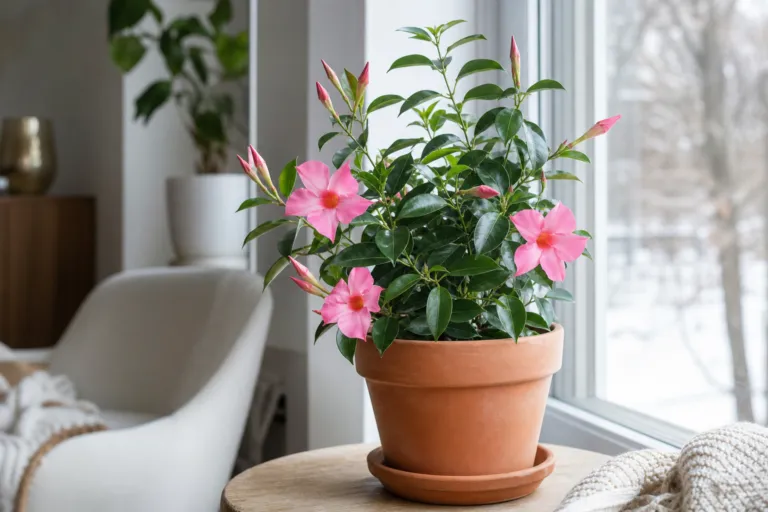
Hibiscus, mandevilla, bougainvillea, and angel’s trumpet often need more light than a typical living room can provide. If you want to overwinter them, choose the brightest available location and expect them to slow down. Some gardeners prune large specimens lightly before moving them inside, but avoid severe pruning unless the plant’s care requirements support it.
Succulents and cacti
These plants are often more tolerant of cool air than tropical foliage plants, but they are not automatically frost-hardy. Keep them protected from frost and reduce watering as growth slows. A cool, bright room can work well, provided the soil is not kept wet.
Herbs and edible plants
Basil is usually short-lived indoors and may be easier to replace with a new plant or rooted cutting. Rosemary, bay, thyme, and some peppers can be overwintered successfully when they receive strong light and careful watering. Inspect edible plants closely before bringing them near a kitchen window.
Prepare plants one to three weeks before the move
The best indoor transition starts before the plants cross the threshold. Use the preparation period to reduce pests, tidy the plants, and make a realistic plan for space and light.
- Choose which plants are worth saving. A plant that is badly infested, diseased, or too large for your home may not be a good candidate. You can often preserve a favorite variety with a healthy cutting instead.
- Prune selectively. Remove dead leaves, damaged stems, and growth that will not fit indoors. Avoid removing large amounts of healthy foliage immediately before the move.
- Check the pot and drainage. Clean away soil clinging to the outside of the container. Make sure drainage holes are open and that the plant has a saucer suitable for indoor use.
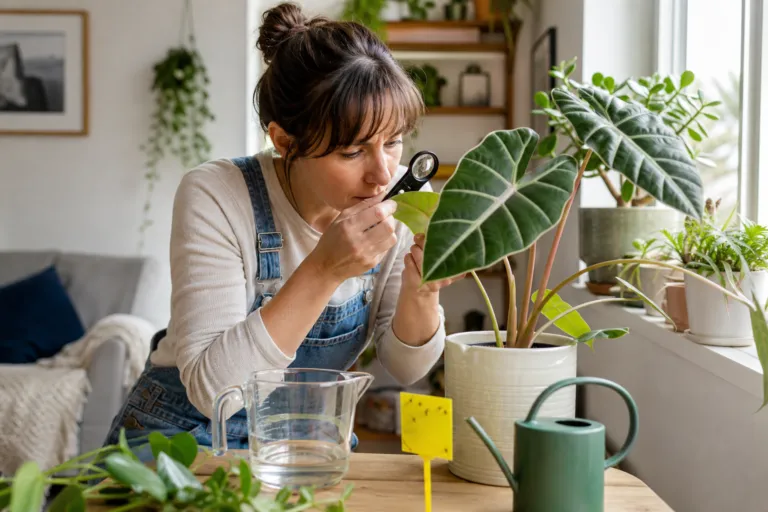
- Inspect the plant carefully. Look beneath leaves, around stem joints, along new growth, and near the soil surface. Watch for webbing, sticky residue, cottony clusters, scale-like bumps, aphids, whiteflies, and small flies around the pot.
- Rinse the plant if appropriate. A gentle spray of water can remove dust and some surface pests. Hold the foliage securely and allow it to dry before placing the plant indoors.
- Quarantine returning plants. Keep them away from established houseplants for about three weeks when possible. Continue checking them during watering because pests or eggs can become noticeable later.
If you use any pest-control product, read the label carefully. Confirm that it is approved for indoor use and for your specific plant, and follow all directions. A product suitable for an outdoor shrub may not be appropriate for a houseplant.
Make the transition gradual when you can
Moving a plant directly from bright outdoor conditions to a dim indoor corner is a major change. Clemson Extension recommends reducing light gradually over roughly a week, moving plants from sun to lighter shade, then deeper shade, and finally indoors.
Try this simple schedule:
- Days 1–2: move the plant out of intense afternoon sun.
- Days 3–4: place it in bright shade or filtered light.
- Days 5–7: move it closer to its intended indoor location, while still protecting it from cold.
- After moving inside: place it in the brightest suitable spot, then adjust if the leaves show signs of excessive light or stress.
Weather may force you to move plants inside quickly. If a sudden freeze is predicted, protect the plant first and acclimate it later. Saving the plant from cold damage matters more than achieving a perfect transition.
Find the right indoor location
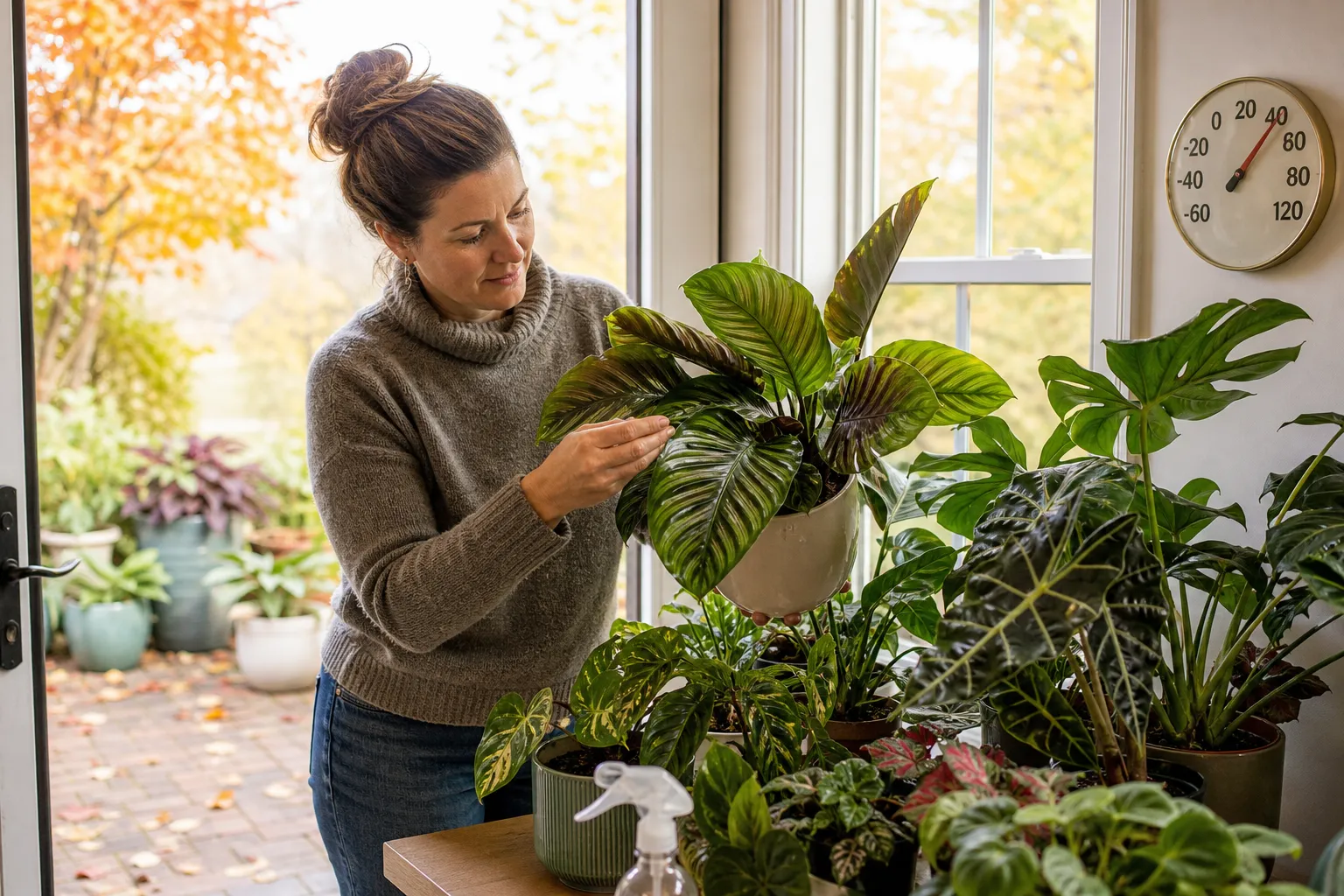
Indoor light is usually much weaker than outdoor light, even beside a bright window. A plant that grew vigorously on a covered patio may slow down in a living room. Place sun-loving plants near a south- or west-facing window if the glass and drafts are not a problem. Plants that prefer filtered light may do better near an east-facing window or a few feet back from stronger exposure.
Keep foliage away from heating vents, radiators, fireplaces, and cold glass. Rapid temperature changes can stress leaves, while dry heated air can be difficult for humidity-loving plants. Grouping plants together may slightly increase humidity around their foliage, but good light and proper watering remain more important than creating a damp corner.
If natural light is limited, a grow light can help. Follow the manufacturer’s recommended distance and schedule rather than placing the fixture directly against the foliage.
Water less – but measure instead of guessing
Plants usually use less water indoors because light levels, air movement, and growth rates decrease. Continuing the outdoor watering routine is one of the quickest ways to create soggy soil and root problems.
Instead of watering on a fixed calendar, check the soil and the pot’s weight. Push a finger about 1 inch into the soil for smaller pots, or use a wooden skewer for deep containers. If the upper layer feels dry and the plant’s needs call for watering, water thoroughly until a little drains from the bottom. Empty the saucer afterward.
A simple home trial can make your routine more accurate. Weigh or lift a freshly watered pot and record its weight, then check it again every two or three days. For example, a 10-inch plastic pot might weigh 12 pounds just after watering and 9.5 pounds when the upper several inches have dried. Those numbers are only an illustration – the correct interval depends on the plant, potting mix, light, and indoor temperature – but tracking your own plant is more useful than copying a generic weekly schedule.
As a practical starting point, many medium-sized tropical foliage plants may shift from watering every few days outdoors to roughly every 7–14 days indoors. Succulents may go considerably longer. Treat those intervals as observations to test, not rules to follow blindly.
Expect a few yellow leaves – but know when to investigate
Leaf yellowing or leaf drop after the move is common. The plant is adapting to lower light, different humidity, cooler root temperatures, and a new watering pattern. Older leaves may be shed while the plant settles into slower winter growth.
Investigate if the problem continues or spreads quickly. Check for:
- Soil that stays wet for many days
- Roots emerging from blocked drainage holes
- Webbing, sticky residue, or clusters of insects
- Leaves pressed against cold glass
- Dry, crispy edges caused by low humidity or inconsistent watering
- Long, weak new growth caused by insufficient light
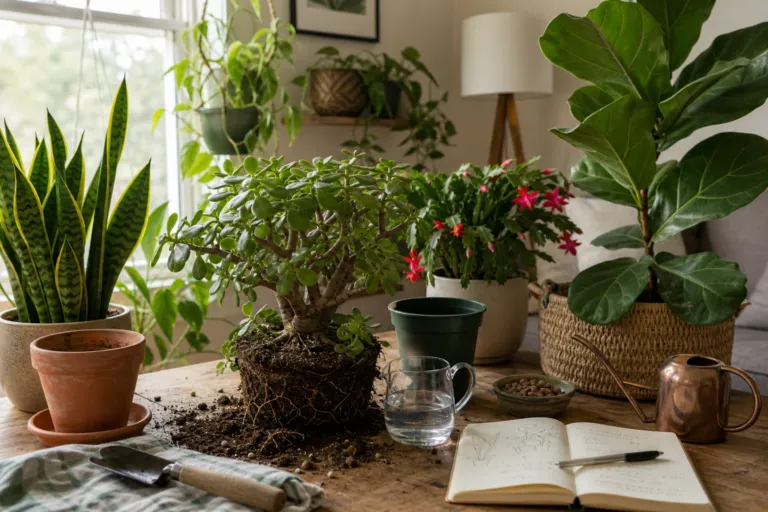
Do not repot every plant automatically in fall. Repotting can add stress, and many houseplants prefer to rest during winter. Repot only when there is a clear need, such as severely compacted soil, damaged roots, or a container that no longer drains properly.
Should you bring every plant inside?
No. Bringing everything indoors can create crowded conditions, pest problems, and a care burden that is difficult to manage. Make a short list of plants that have sentimental value, are difficult to replace, or have a good chance of thriving in your available light.
Compare a large tropical hibiscus with a compact pothos before committing. The hibiscus may need intense light, pruning, and close pest monitoring, while the pothos may tolerate a wider range of indoor conditions. A favorite coleus or geranium may be easier to save as several healthy cuttings than as a full, sprawling container.
This is also a good time to check plant labels and local frost information. A plant sold as a perennial in your USDA hardiness zone may survive outdoors, while a tender tropical sold in the same garden center may need protection well before frost.
A calm fall checklist
- Check nighttime forecasts and plan to move tender plants before temperatures fall below 50°F.
- Bring especially sensitive tropicals in before nights reach the low 40s.
- Inspect leaves, stems, soil, pot rims, and drainage holes for pests.
- Rinse plants when suitable, clean containers, and isolate returning plants.
- Gradually reduce outdoor light when weather allows.
- Place each plant according to its light and temperature needs.
- Reduce watering as growth slows, and measure soil moisture rather than following a calendar.
- Monitor plants weekly throughout winter.
Moving houseplants indoors is less about choosing one perfect date and more about noticing the signals your plants and weather are giving you. Start when nighttime temperatures approach 50°F, prepare carefully, and give each plant the light, water, and space it can realistically use. With that simple plan, your summer collection can settle indoors comfortably and be ready for another season outside when warm weather returns.