Yucca plants are wonderfully forgiving, but their bold, sword-shaped leaves still send clear signals when something is wrong. A few yellow leaves at the base may simply be part of normal aging. A whole crown turning pale, soft, or limp, however, usually means your watering, light, drainage, or seasonal routine needs a rethink.
The good news is that yellowing does not automatically mean your yucca is finished. Start by looking at where the yellowing appears, how quickly it is spreading, and what the soil and roots feel like. With a careful diagnosis, many yuccas can recover and produce healthy new growth.
First, decide whether the yellowing is normal
Yucca leaves do not live forever. As the plant grows, the oldest leaves on the lowest part of the rosette gradually lose color, dry out, and eventually turn brown. If only one or two lower leaves are yellow while the newest leaves remain firm and green, the plant may simply be shedding older foliage.
Yellowing is more concerning when it is sudden or widespread. Pay close attention if several leaves become yellow within days, the foliage feels limp, the stem looks soft, or the potting mix stays wet for a long time. These signs often point to excess moisture and declining roots.
A quick symptom check
- One or two lower leaves: often normal aging, especially when the rest of the plant looks healthy.
- Many yellow, soft, or drooping leaves: commonly linked to overwatering or poor drainage.
- Pale, stretched, or leaning growth: usually suggests insufficient light.
- Yellow spots with brown or purple centers: may indicate a leaf-spot problem rather than a simple watering mistake.
- Yellowing with fine webbing, sticky residue, or small bumps: inspect closely for pests.
The most common mistake: watering too often
Yuccas store water in their thick roots and stems, so they prefer a thorough drink followed by a period of drying. The most common indoor mistake is watering on a fixed weekly schedule instead of checking the plant first.
Wet soil contains less air. When the roots remain saturated, they can become damaged or begin to rot, reducing the plant’s ability to take up water and nutrients. The leaves may then turn yellow even though the pot feels wet.
How to measure moisture before watering
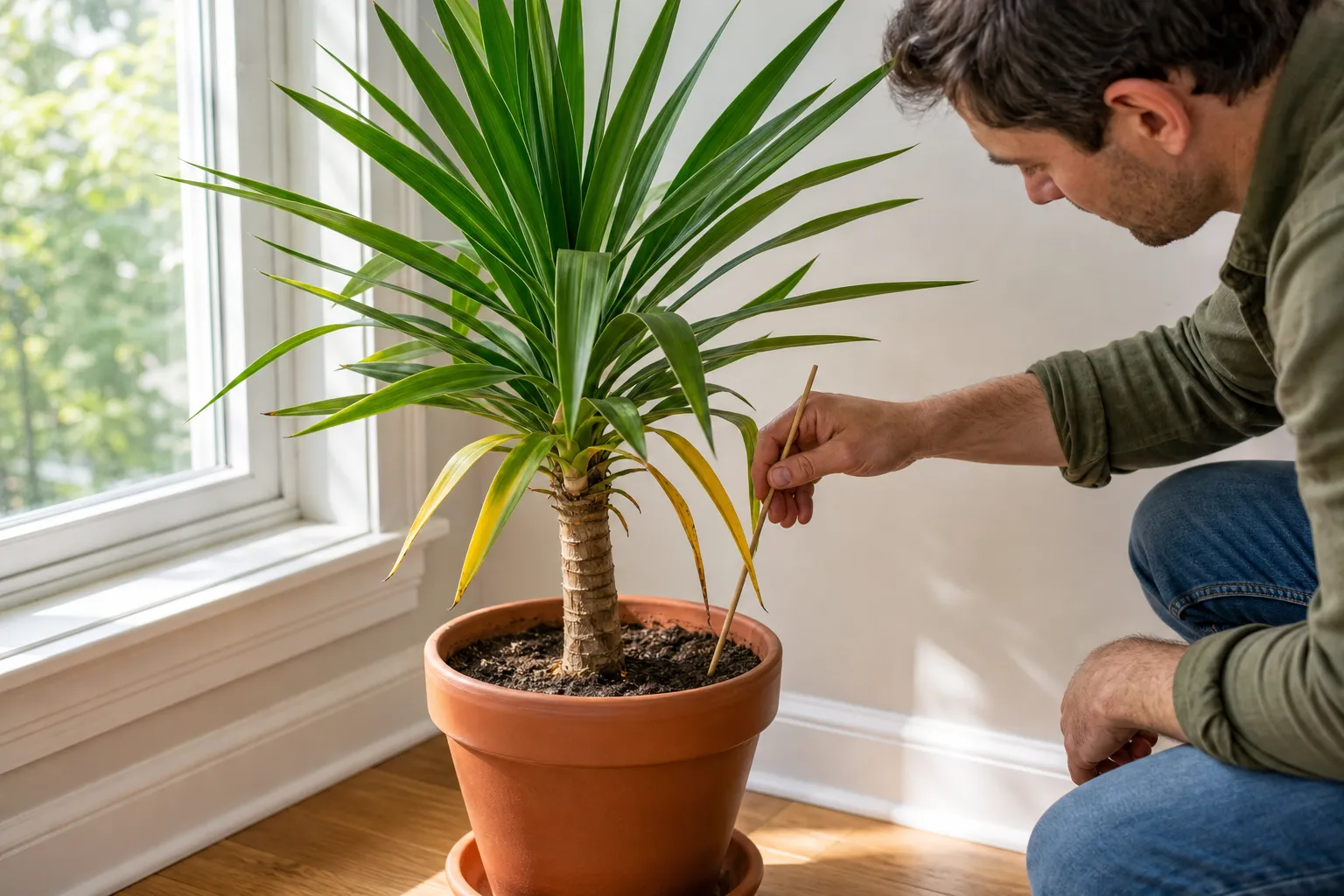
Use your finger or a wooden skewer to check the soil about 2 to 3 inches below the surface. If that zone still feels cool and damp, wait a few more days. For a more consistent experiment, weigh the potted plant after watering and again every few days. A noticeably lighter pot is a useful sign that moisture has been used, although the exact timing will vary with pot size, temperature, light, and soil mix.
For the next two weeks, record three simple observations:
- The date you watered.
- Whether the top 2 to 3 inches of soil were dry.
- Whether the leaves were firm, soft, yellowing, or drooping.
This small log often reveals the problem more clearly than guesswork. A yucca in a small pot beside a sunny window may dry in a week, while a large plant in a dim room may remain damp much longer.
Water thoroughly, then let excess drain
When the soil is dry enough, water slowly until a little water runs from the drainage holes. This moistens the full root ball instead of wetting only the surface. Empty a saucer or decorative cachepot afterward; do not allow the pot to sit in standing water.
Do not respond to yellow leaves by giving tiny sips every day. That pattern can keep the upper soil damp while the deeper root zone remains poorly aerated. A complete watering followed by a drying period is usually a better approach.
Check the pot, soil, and roots
A drainage hole is essential, but it is not enough if the soil is dense or the hole is blocked. Lift the pot and check that water can escape freely. If the container has no drainage hole, move the yucca into a suitable nursery pot with drainage and place that inside the decorative container.
Use a fast-draining commercial potting mix designed for cacti or succulents, or improve a standard indoor potting mix with a mineral component such as coarse perlite. Avoid packing the mix tightly around the roots. Choose a container only slightly larger than the root ball; an oversized pot holds extra soil and can stay wet for too long.
When root inspection is worthwhile
If the soil smells sour, remains wet for more than a week, or the plant is yellowing rapidly, gently slide it from the pot. Healthy roots are generally firm and pale to tan. Mushy, very dark, or collapsing roots suggest serious moisture stress.
If you find damaged roots, trim away only the clearly rotten portions with clean, sharp tools. Repot into fresh, barely moist, well-drained mix in a pot that fits the remaining roots. After repotting, place the plant in bright light and water cautiously rather than soaking it repeatedly while it is recovering.
Light matters more than many gardeners expect
Yuccas need strong light to maintain compact, sturdy growth. Indoor plants generally do best close to a bright window, often an unobstructed south- or west-facing window in the United States. A sheer curtain can help if intense afternoon sun causes pale scorch patches or crisp spots.
Low light does not always turn leaves yellow immediately. More often, the plant stretches, leans toward the window, produces weaker growth, and uses water more slowly. That slower water use can then lead to overwatering if you continue with the same schedule.
If you move a yucca from a dim room into strong sun, make the change gradually over about a week. Sudden changes in light can stress foliage. Turn the pot every week or two so the plant grows more evenly.
Indoor and outdoor yuccas are not identical
Many tender yuccas sold as houseplants, including spineless forms, need bright indoor light but should be protected from cold drafts and sudden temperature swings. Landscape yuccas, such as filamentous or beaked types, are adapted to outdoor sun and sharply drained soil. They may tolerate cold far better than an indoor specimen, but wet winter soil can still cause trouble.
Compare your plant’s natural growth habit before changing its care. A blue-leaved, trunk-forming outdoor yucca typically wants more sun and drier conditions than a tender indoor plant grown in a container. Variegated cultivars may also show yellow or cream markings as part of their normal pattern, so distinguish stable leaf coloring from new, spreading yellow patches.
Could the season be responsible?
Seasonal changes can upset a previously reliable routine. In fall and winter, indoor light levels drop and many yuccas grow more slowly. Because the plant uses less water, the soil may stay damp longer. Reduce watering frequency rather than automatically adding more water.
When bringing a container yucca indoors, check the leaves and stems for pests before placing it near other plants. The change from outdoor brightness to indoor light can also cause temporary yellowing or leaf drop. Give the plant the brightest practical location and allow it time to adjust.
Outdoor yuccas can yellow after prolonged rain, irrigation problems, or a poorly drained planting site. If the soil stays saturated, moving an established plant may be difficult, so first improve surface drainage and redirect downspouts. Do not pile mulch against the crown.
Look for pests and leaf-spot symptoms
Spider mites, scale, mealybugs, and aphids can weaken yuccas, particularly indoors or in dry, stressful conditions. Inspect both sides of the leaves, the leaf bases, and the stem. Fine webbing, cottony clusters, shell-like bumps, or sticky residue deserve attention.
Start with a gentle response: isolate the plant if needed, wipe accessible leaves with a damp cloth, and follow the label directions for any product you choose. Avoid spraying a stressed plant in hot, bright sun, and never mix household remedies without reliable instructions.
Leaf-spot diseases usually create distinct spots or lesions rather than an even, all-over yellow color. Remove badly affected leaves, improve air circulation, avoid wetting the foliage late in the day, and clean up fallen debris. If the problem continues, take clear photographs to a local extension office or reputable garden center for identification.
Should you fertilize yellow leaves?
Fertilizer is not a first-aid treatment for every yellow yucca. If the roots are waterlogged, adding fertilizer can increase stress. Correct drainage and watering first, then reassess new growth.
Once the plant is actively growing and otherwise stable, use a balanced houseplant fertilizer at the label’s recommended rate. A cautious half-strength application is often sensible for a container plant that has not been fed for a long time. Avoid repeated heavy applications, which can cause salt buildup and browned leaf edges.
A simple yucca rescue plan
- Move the plant into bright light. Avoid a sudden jump from deep shade to intense afternoon sun.
- Check moisture 2 to 3 inches down. Do not water simply because the calendar says it is time.
- Confirm drainage. Make sure the container has an open drainage hole and the saucer is empty.
- Inspect the roots if symptoms are severe. Look for mushy, collapsing roots and repot only when necessary.
- Remove only dead or badly damaged leaves. Wait until a yellow leaf has loosened, or cut it cleanly at the base with sanitized tools.
- Inspect for pests and spots. Check leaf undersides and the crown before treating.
- Pause before fertilizing. Feed only after watering and root conditions are under control.
- Watch new growth. Recovery is best judged by firm, normally colored new leaves, not by expecting already-yellow tissue to turn green again.
When to seek local help
Ask a county extension office, master gardener program, or experienced nursery professional for help when the crown is collapsing, the stem is soft, yellowing spreads despite corrected care, or the plant has unusual spots and lesions. Bring photographs of the whole plant, close-ups of the leaves, and details about watering, light, potting mix, and recent moves.
Most yellow yucca leaves are a care clue, not a verdict. Slow down, check the soil rather than guessing, and make one change at a time. With bright light, excellent drainage, and a watering routine based on actual moisture, your yucca has a good chance to replace tired foliage with strong new growth.