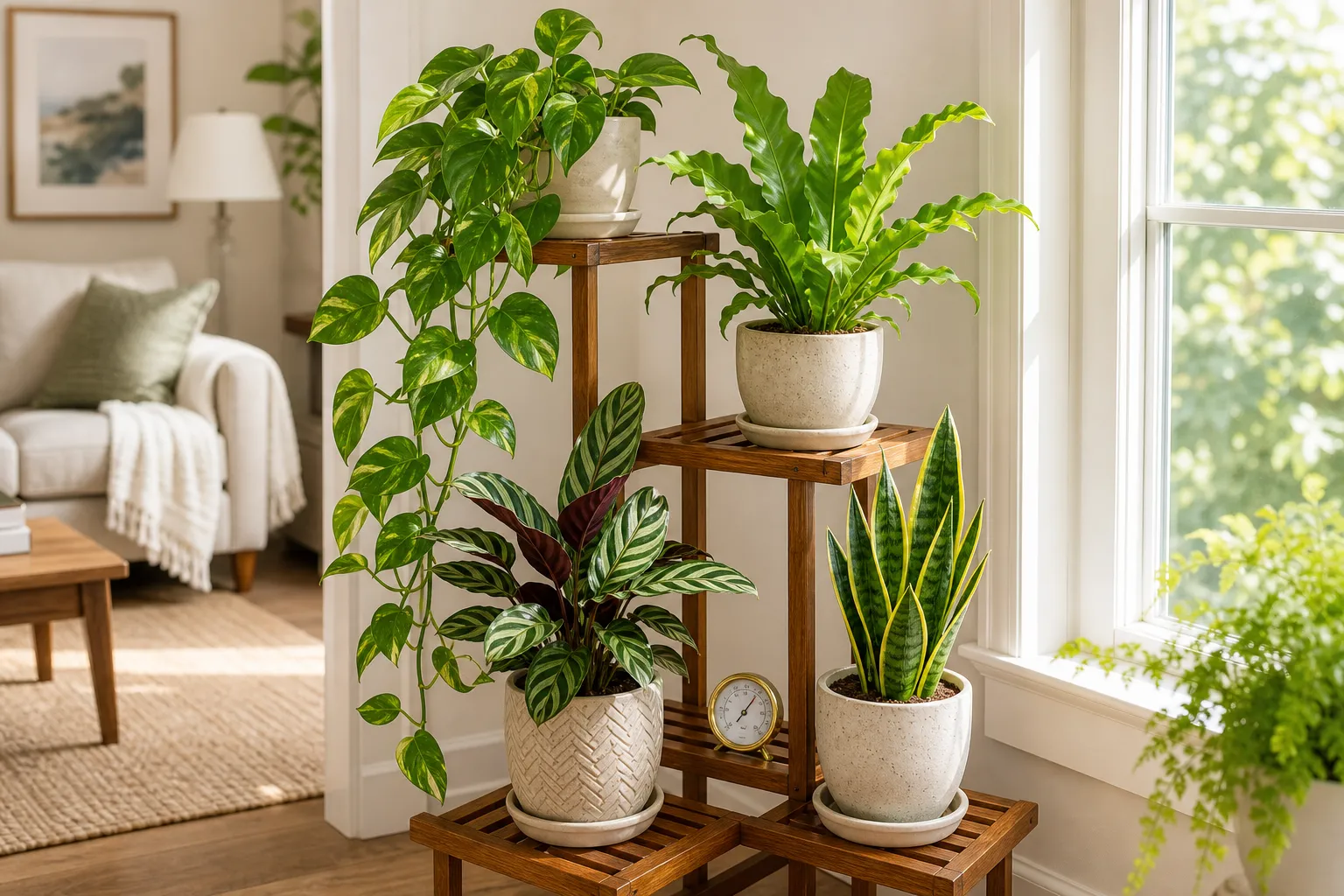
There is something wonderfully jungle-like about a cluster of houseplants gathered on a shelf or plant stand. But does that attractive arrangement actually help your plants grow—or is it simply good-looking décor?
The short answer is: sometimes. Grouping houseplants can create a slightly more humid pocket of air, make care routines easier and help moisture-loving plants feel more at home. It can also make problems spread faster, reduce air circulation and encourage you to water every plant on the same schedule, even when their needs are completely different.
Think of plant grouping as a useful gardening tool, not a magic growth formula. The best results come when you group plants with similar light, watering and humidity preferences, then leave enough space for every pot and leaf to breathe.
Why plants may benefit from company
Plants naturally release water vapor through tiny openings in their leaves. This process, called transpiration, slightly increases humidity immediately around the foliage. When several leafy plants sit close together, that moisture may linger longer than it would around a single small pot.
In a dry home—especially during winter heating season—that small, local change can be helpful for tropical houseplants such as ferns, calatheas, prayer plants and some aroids. The effect is strongest when the plants are fairly close together, the room is not oversized and air is not constantly moving from a fan, vent or open window.
However, grouping plants will not transform a dry living room into a tropical greenhouse. In a large room, the moisture disperses quickly. A hygrometer can tell you what is really happening: measure the humidity beside the group rather than relying on how the leaves feel.
The biggest benefit may be consistency
A plant cluster can also create a more stable care zone. Once you position the group in a suitable spot, you are more likely to notice drooping leaves, dry soil or pest activity during regular check-ins. Keeping plants together may also make it easier to place a small humidifier nearby or provide supplemental light during short winter days.
That practical advantage often matters more than the humidity effect itself. Healthy growth still depends primarily on the basics: adequate light, appropriate watering, drainage, suitable temperatures and a potting mix that matches the plant.
When grouping plants can backfire
Plants do not automatically cooperate just because they share a windowsill. A tightly packed display can create a warm, stagnant pocket where leaves stay damp and pests move from one host to another.
Common problems include:
- Too little air movement: Crowded foliage dries slowly after watering, especially in cool rooms.
- Faster pest spread: Spider mites, scale, mealybugs and fungus gnats can move through a collection more easily when pots touch.
- Uneven light: Tall plants may shade smaller ones, while leaves pressed against glass can overheat or become chilled.
- Watering mistakes: A thirsty fern may be placed beside a drought-tolerant snake plant, encouraging you to treat both alike.
- Hidden problems: A yellowing leaf or soggy pot can be overlooked when many plants overlap.
Good spacing matters. Aim to keep leaves from rubbing constantly, leave room to lift each pot and avoid placing plants directly over heating vents or in the strong draft of an air-conditioning register.
Group plants by needs, not just by appearance
The most successful indoor plant groupings resemble a small community with similar environmental preferences. Before arranging pots, compare four essentials: light, moisture, humidity and temperature.
A bright, moderately dry group
Place plants such as snake plant, jade plant, haworthia and many cacti near a bright window. These plants generally prefer the potting mix to dry more thoroughly between waterings and do not need the humid conditions favored by tropical foliage.
Use a fast-draining mix and containers with drainage holes. Keep this group away from plants that require frequent watering, because repeated splashes or consistently damp air can make care confusing.
A bright, evenly moist group
Pothos, heartleaf philodendron, many peperomias and some palms can work well together in bright, indirect light. Their exact requirements differ, so check each pot individually, but they are often more compatible than a mix of succulents and moisture-loving ferns.
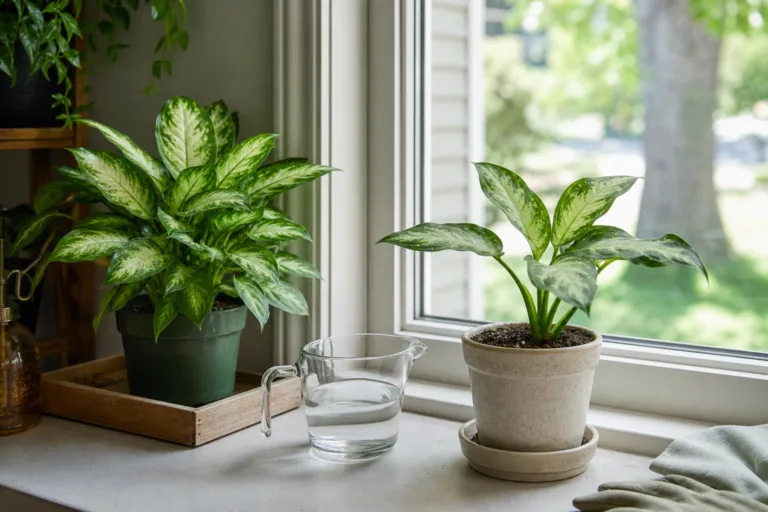
Allow the upper layer of potting mix to dry according to the species, then water thoroughly until excess drains from the bottom. Never let pots sit in collected water.
A higher-humidity group
Ferns, calatheas, marantas and certain begonias may appreciate being arranged together in a bright area away from dry drafts. A bathroom can work if it also provides adequate light, but a humid room alone will not compensate for darkness.
Keep this group open enough for air to move around the leaves. High humidity without ventilation can be just as troublesome as very dry air.
What about mixing different varieties?
Variety can make a plant display far more interesting, but visual compatibility is not the same as growing compatibility. Compare plants before you combine them.
- Snake plant versus bird’s-nest fern: The snake plant tolerates longer dry periods, while the fern prefers more consistent moisture and higher humidity. They may share a room, but they are poor candidates for identical watering.
- Pothos versus calathea: Both can enjoy bright, indirect light, but calathea may react more quickly to dry air or inconsistent moisture. Keep the calathea closer to the humidifying influence of the group and monitor it separately.
- Jade plant versus peace lily: Jade prefers a substantial drying period; peace lily generally wilts sooner when moisture is limited. Their contrasting needs make a shared watering routine risky.
- Ferns versus succulents: They can create an attractive display, but their light and watering preferences usually point in opposite directions.
When in doubt, group plants by care category first and appearance second. You can still create a beautiful display using matching pots, varied heights and repeated colors.
A simple growing experiment you can run at home
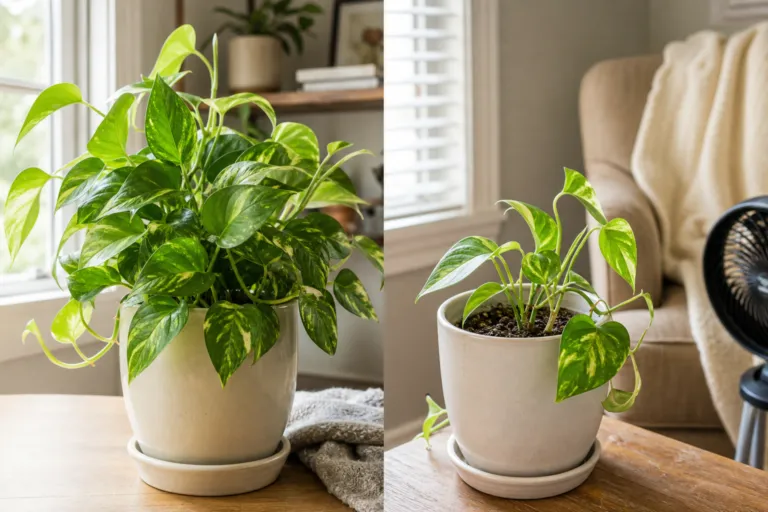
Instead of guessing whether a grouping helps, try a small comparison. Choose two similar healthy plants—two pothos cuttings or two spider plants are good beginner options—and place one alone and one in a group of three or four compatible plants.
Keep the test fair:
- Use plants of similar size and containers with drainage holes.
- Place both setups at the same distance from the same window.
- Use the same potting mix and water source.
- Rotate pots weekly so one plant does not receive all the best light.
- Record room temperature and humidity with an inexpensive digital hygrometer.
- Measure new growth, rather than judging only by leaf color or fullness.
Run the comparison for six to eight weeks during active growth. Note the number of new leaves, the length of new vines and how many days pass before the potting mix reaches your chosen dryness level. If the grouped plants grow faster, the reason may be slightly higher humidity—or it may be better placement, more attentive care or differences between individual plants.
This is not a laboratory study, but it is a useful way to learn what happens in your own home. Indoor conditions vary greatly between a sunny apartment in Arizona, a heated home in Minnesota and a humid coastal home in Florida.
Measure watering instead of following a calendar
Grouping often causes one common mistake: watering all the pots every Sunday. A calendar can remind you to check, but it cannot tell you whether each plant needs water. Light, pot size, soil type, temperature and humidity all change how quickly a container dries.
Try a simple measurement routine:
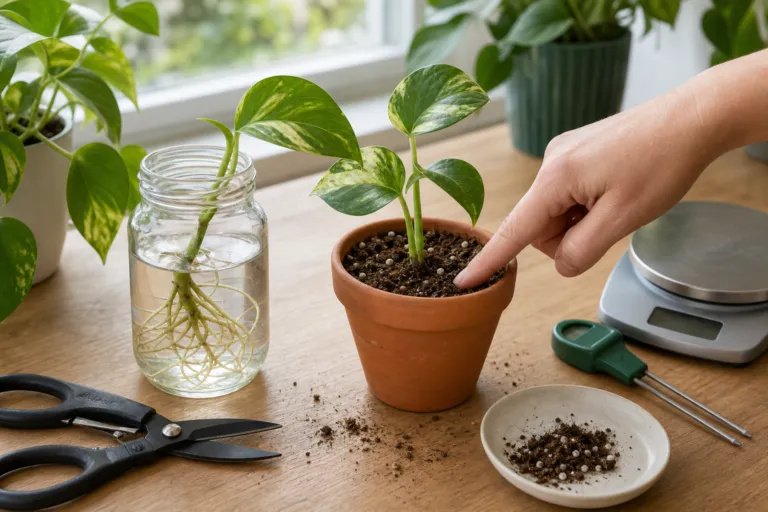
- Choose one reference pot and weigh it immediately after a thorough watering, after excess water has drained. Record the weight in pounds and ounces using a kitchen scale.
- Check the same pot every two or three days. Record its weight and test the potting mix about 2 inches below the surface with a clean finger or wooden skewer.
- Water when the plant’s species-specific care needs and the soil condition agree—not merely because several days have passed.
- Water slowly until approximately 10 to 20 percent of the applied water drains from the bottom, then empty the saucer.
For example, if a pothos pot weighs 4 pounds 8 ounces after watering and falls to 3 pounds 14 ounces as the mix dries, that 10-ounce difference gives you a useful household reference. It is not a universal target: a fern may need attention sooner, while a succulent may need the pot to become much lighter before watering.
Moisture meters can offer clues, but they are not always reliable in every potting mix. Use them alongside touch, pot weight and knowledge of the plant. If a plant wilts while the mix is wet, do not automatically add more water; inspect the roots, drainage and light conditions instead.
How close should houseplants be?
There is no single correct spacing measurement, because plant size and airflow vary. As a practical starting point, leave roughly 2 to 6 inches between neighboring pots and enough room for leaves to move without pressing tightly against one another.
Large-leaved plants need more space than small succulents. If you cannot easily see the soil surface, turn the pot or lift it without disturbing its neighbors, the arrangement is probably too crowded.
Use a small fan on a low setting if the area feels stagnant, but do not aim a strong stream of air directly at delicate foliage. Air movement should gently circulate the room, not rapidly dry the plants.
Quarantine new plants before adding them
One of the most important rules for plant collections is to keep newcomers separate at first. Inspect stems, leaf undersides, soil surfaces and drainage holes when you bring a plant home. Look for webbing, cottony clusters, sticky residue, scale-like bumps and flying insects.
Keep the new plant apart from established plants for about two weeks while you monitor it. This does not guarantee that every pest will be detected, but it reduces the chance of introducing a problem to the entire group. If a plant looks stressed or infested, do not place it in the center of your display simply because the pot matches.
Does grouping make plants grow faster?
Sometimes, but the improvement is usually indirect and modest. A cluster may raise local humidity, reduce sudden swings in the immediate air around the leaves and help you provide more consistent care. Those advantages can support healthier foliage and steadier growth for plants that enjoy moderate to high humidity.
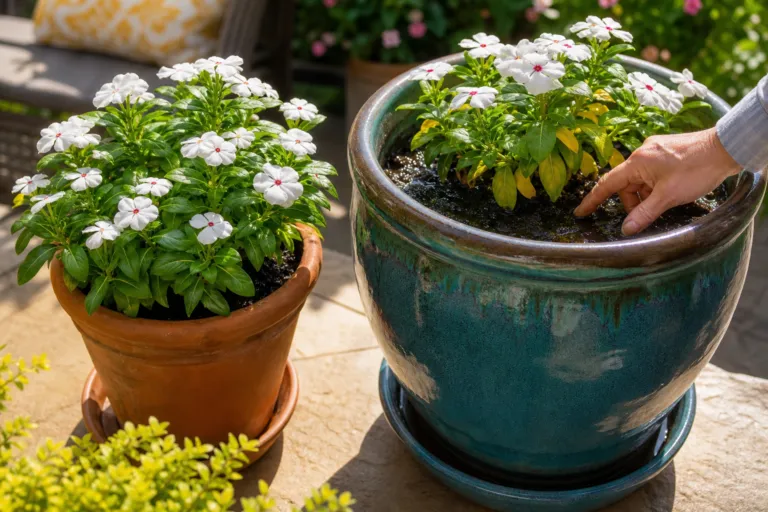
Grouping will not make a low-light plant grow quickly, correct overwatering or replace the right potting mix. A plant with poor light may become leggy no matter how many companions surround it. A plant in waterlogged soil may decline faster in a crowded, humid display.
The editor’s verdict
Houseplants can grow better together when you group compatible plants in a bright, well-ventilated space and monitor each pot individually. The main reward is not a mysterious “teamwork” effect; it is a slightly friendlier microclimate and a more organized care routine.
Start with three plants that enjoy similar conditions. Give them breathing room, check the soil rather than the calendar and keep a simple watering record for a month. If the display looks healthy and the plants are producing new growth, you have found a grouping that suits your home. If leaves yellow, pests appear or the soil stays wet too long, spread the plants out and reassess their individual needs.
With a little observation, you can enjoy the lush look of an indoor jungle without sacrificing the health of the plants that make it possible.