
 Source:
 Pfitzer’s juniper (Juniperus pfitzeriana) short overview
Pfitzer's juniper is an evergreen hybrid juniper valued for its broad, spreading form, arching branch tips, and aromatic blue-green foliage. It performs best in full sun and sharply drained soil, tolerates drought once established, and suits borders, slopes, foundation plantings, and informal screens. The name covers a cultivated hybrid group, so mature size and foliage color vary among named selections.
Taxonomic classification
Pfitzer’s juniper (Juniperus pfitzeriana) care guide
Light and placement
Give full sun, ideally with at least 6 hours of direct light and open exposure from the south or west. Dense shade produces thinner, looser growth and weaker color, while intense reflected heat may scorch exposed foliage in drought. If the plant becomes open inside or develops weak, elongated shoots, increase light and check root-zone moisture.
Watering and humidity
Water deeply and slowly when the upper several inches of soil have begun to dry, allowing excess water to drain completely. Keep newly planted shrubs evenly moist through their first growing season; established plants need less frequent irrigation and tolerate short dry periods. Do not use frequent shallow watering or keep the root zone saturated.
Soil and growing medium
Use a porous, sharply drained soil; sandy or gravelly loam is suitable. The hybrid tolerates a broad pH range from mildly acidic to mildly alkaline, but prolonged saturation is damaging. Improve heavy clay with raised planting or drainage rather than adding large amounts of organic matter directly to the planting hole.
Feeding
Usually needs little fertilizer once established. In poor soil, apply a balanced, slow-release fertilizer in early spring according to the product label, or use a thin surface layer of finished compost. Do not fertilize drought-stressed, newly transplanted, or actively diseased plants, and avoid late-summer feeding that may encourage tender growth.
Growth and habit
This hybrid group generally forms a broad, spreading shrub with layered branches and branch tips that arch upward or outward. Growth is often vigorous enough to outgrow narrow foundation spaces. Select a cultivar for the intended spread, and preserve the natural layered habit rather than repeatedly shearing the outer surface.
Planting and repotting
Plant in spring or early fall when soil moisture is dependable. Set the root flare level with the surrounding soil; do not bury the trunk or stem base. Space according to the selected cultivar, allowing room for lateral spread and air movement. Water deeply during the first growing season, then reduce frequency as roots establish.
Repot container plants in early spring before strong new growth, moving up only one pot size. Use a gritty, free-draining conifer mix and never leave the root ball in standing water. Large specimens are difficult to transplant successfully, so handle the root ball intact and water consistently during establishment.
Propagation and pruning
Propagation
Propagate mainly by semi-hardwood or hardwood cuttings, usually from healthy young lateral shoots taken from late fall through winter. Apply rooting hormone and use a porous medium with high humidity but no saturation. Rooting can be slow; named cultivars should be propagated vegetatively to preserve their characteristics.
Pruning
Prune in late winter or early spring, removing dead, damaged, crossing, or poorly placed branches. Reduce long shoots back to a living side branch. Avoid cutting deeply into old, leafless wood because junipers often do not regenerate from bare interior stems. Shearing can destroy the natural layered form.
Overwintering
Outdoor plants generally need no special winter protection in suitable zones. Water thoroughly before the ground freezes, especially after a dry fall. Protect young plants from drying winter winds with temporary burlap screens, not airtight wrapping. Container specimens are more vulnerable because roots are exposed to rapid temperature changes.
Uses
A durable ornamental for borders, foundation plantings, slopes, screens, large containers, rock gardens, and low-water landscapes. Its evergreen structure provides year-round form. Do not harvest cones or foliage for culinary, medicinal, or flavoring use from unidentified ornamental plants.
Appearance
The plant has evergreen, scale-like foliage arranged in soft, layered sprays. Branches commonly spread outward and arch at the tips, giving mature specimens a fountain-like or broadly mounded outline. Foliage may be blue-green, gray-green, or gold in named selections. Crushed foliage is often aromatic, but scent alone is not diagnostic.
Pollination and visitors
Junipers are primarily wind-pollinated rather than animal-pollinated. Their inconspicuous cones are not documented here as a dependable nectar or pollen resource for bees, butterflies, or other garden visitors.
Juniperus pfitzeriana photos
Click any photo for a larger view. Source, author and license are shown separately.
Diseases and pests
Diseases
Avoid wet soil, trunk injury, and dense, poorly ventilated planting. Potential problems include root rot, Phytophthora, cankers, tip or needle blights, and rust diseases. Remove affected material, improve drainage, disinfect pruning tools, and avoid overhead irrigation when disease is suspected.
Pests
Monitor for aphids, scale, bagworms, webworms, spider mites, and occasional caterpillars. Inspect new growth and branch junctions, encourage air movement, and use hand removal or targeted control when populations are localized. Avoid unnecessary broad-spectrum insecticides that can disrupt beneficial insects.
Related diseases and pests
Only Plant Doctor profiles whose host data indicate this plant may be affected are shown here.
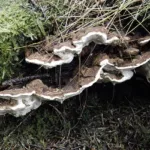 DiseaseHeterobasidion root diseaseHeterobasidion annosum
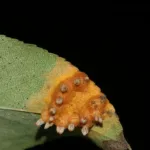 DiseasePear trellis rustGymnosporangium sabinae
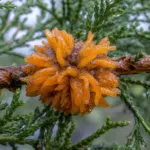 DiseaseCedar-Apple RustGymnosporangium juniperi-virginianae Schwein.
 PestBrown Garden SnailCornu aspersum (Müller, 1774)
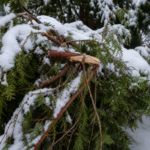 Environmental stressSnow Load Damage
 Environmental stressWind scorch
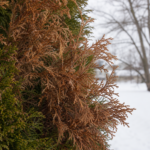 Environmental stressWinter desiccation (winter burn)
 Environmental stressRoot Anoxia
Toxicity and pollen
Reliable sources do not establish a single toxicity profile for every plant sold under the Pfitzer Group name. Juniper foliage and seed cones contain aromatic compounds and can cause gastrointestinal upset or skin irritation if eaten or handled sensitively. Do not use ornamental plants as food, and keep children and pets from chewing substantial amounts.
- Typical season
- Usually late winter to spring in the United States, but regional timing varies
- Pollination / pollen
- Light, wind-dispersed conifer pollen
Male junipers release abundant, lightweight airborne pollen; exposure is typically greatest during the regional late-winter or spring juniper pollen season. Individual plants and cultivars differ in sex expression and pollen production. Sensitive gardeners should avoid placing male or unknown-sex plants beside frequently used outdoor living areas.
Native habitat
The hybrid is associated with cultivated plants rather than a single natural wild habitat. Its parentage links it to temperate junipers adapted to sunny sites, seasonal moisture, and well-drained mineral soils. In gardens it handles heat and drought after establishment but declines in compacted or waterlogged ground.
Interesting fact
The Pfitzer Group represents cultivated hybrids associated with Juniperus chinensis and J. sabina. Its taxonomic placement has varied between J. pfitzeriana and J. media. Crushed foliage may release a savin-like aroma. Many nursery cultivars are selected for blue, gold, compact, or strongly spreading growth.
Frequently asked questions (FAQ)
The most relevant questions about this plant, with short and direct answers.
🌱Quick care
What is Pfitzer's juniper?⌄
Pfitzer's juniper is a broad, spreading evergreen shrub in the cypress family, Cupressaceae, known botanically as Juniperus pfitzeriana. It is commonly used for foundation plantings, hedges, rock gardens, and groundcover-style landscaping.
How much sunlight does Pfitzer's juniper need?⌄
Pfitzer's juniper grows best in full sun, generally at least 6 hours of direct sunlight daily. Too much shade can produce thinner growth and increase disease problems.
How often should I water Pfitzer's juniper?⌄
Water Pfitzer's juniper moderately while it establishes, then allow the soil to dry somewhat between waterings. Established plants are drought tolerant, but they still benefit from deep watering during prolonged heat or drought.
Is Pfitzer's juniper evergreen?⌄
Yes, Pfitzer's juniper is an evergreen shrub that retains its foliage through winter. Its scale-like foliage may vary from green to blue-green or golden depending on the cultivar.
🌤️Environment and placement
What type of soil is best for Pfitzer's juniper?⌄
Pfitzer's juniper prefers well-drained sandy, loamy, rocky, or calcareous soil. It tolerates relatively poor soil, but consistently wet or poorly drained ground can cause root problems.
Can Pfitzer's juniper grow in clay soil?⌄
Pfitzer's juniper can tolerate clay soil if drainage is improved, but it performs poorly in heavy clay that stays wet. Planting on a slight mound or raised area can help prevent waterlogging.
Is Pfitzer's juniper drought tolerant?⌄
Yes, established Pfitzer's juniper is drought tolerant when grown in full sun and well-drained soil. Newly planted shrubs need regular deep watering until their roots become established.
Is Pfitzer's juniper cold hardy?⌄
Pfitzer's juniper is cold hardy across much of the United States, although exact tolerance depends on the cultivar and local exposure. Winter wind, ice, and poorly drained frozen soil can still cause damage.
Can Pfitzer's juniper grow in shade?⌄
Pfitzer's juniper can tolerate light shade but grows best in full sun. Dense shade may make the shrub open, weak, and more vulnerable to fungal diseases.
Is Pfitzer's juniper deer resistant?⌄
Pfitzer's juniper is generally avoided by deer and is considered relatively deer resistant. However, deer may browse it when food is scarce or populations are high.
💧Care and problems
How do I care for Pfitzer's juniper?⌄
Give Pfitzer's juniper full sun, well-drained soil, moderate water during establishment, and occasional pruning to control its spread. Once established, it usually needs little supplemental irrigation or fertilizer.
Why is my Pfitzer's juniper turning brown?⌄
Brown foliage on Pfitzer's juniper may result from drought, winter injury, root rot, insect damage, or fungal blight. Check soil moisture and drainage first, then remove dead or diseased branches and improve air circulation.
What diseases affect Pfitzer's juniper?⌄
Pfitzer's juniper can develop twig and tip blights, rust diseases, cankers, and root rot. Poor drainage, overhead watering, crowding, and prolonged wet foliage increase disease risk.
What insects attack Pfitzer's juniper?⌄
Common occasional pests include aphids, bagworms, webworms, and scale insects. Inspect the foliage and branch tips regularly, and remove small infestations by hand when practical.
Why is the center of my Pfitzer's juniper dying?⌄
A bare or dying center may be caused by shading, dense growth, age, drought stress, or disease. Junipers do not reliably regrow from completely bare old wood, so thinning crowded branches and maintaining healthy green growth is important.
🪴Planting and repotting
When is the best time to plant Pfitzer's juniper?⌄
The best planting times are spring and early fall, when temperatures are moderate and soil moisture is easier to maintain. Avoid planting during extreme summer heat or when the ground is frozen.
How far apart should Pfitzer's juniper be planted?⌄
Space Pfitzer's juniper according to the mature width of the specific cultivar and the intended landscape effect. Leave enough room for mature branches to spread without constant crowding against buildings, sidewalks, or neighboring plants.
Can Pfitzer's juniper be grown in a container?⌄
Pfitzer's juniper can be grown in a large container for a time, provided the pot has excellent drainage and enough room for its spreading roots. Container plants need more frequent watering and may require winter root protection.
How do I transplant Pfitzer's juniper?⌄
Transplant Pfitzer's juniper during cool weather, preserving as much of the root ball as possible and replanting it at the original soil depth. Water deeply after planting and keep the root zone evenly moist while it recovers.
✂️Propagation and pruning
Can Pfitzer's juniper be propagated from cuttings?⌄
Yes, Pfitzer's juniper is commonly propagated from semi-hardwood or hardwood cuttings, although rooting success varies by cultivar. Taking healthy cuttings and using a well-drained rooting medium can improve results.
How do I prune Pfitzer's juniper?⌄
Prune Pfitzer's juniper by thinning or shortening branches back to a healthy side branch, rather than shearing the entire shrub. Avoid cutting deeply into bare old wood because junipers may not produce new growth there.
When should Pfitzer's juniper be pruned?⌄
Prune Pfitzer's juniper in late winter or early spring, before strong new growth begins, or remove damaged branches whenever necessary. Make cuts during dry weather when possible to reduce disease spread.
Can I shear Pfitzer's juniper into a formal hedge?⌄
Pfitzer's juniper can be lightly shaped, but repeated shearing often destroys its natural layered form and can expose bare interior wood. Selective thinning is usually healthier and more attractive than frequent mechanical trimming.
⚠️Toxicity and safety
Is Pfitzer's juniper poisonous to dogs or cats?⌄
Pfitzer's juniper may cause irritation or stomach upset if eaten, but cultivar-specific toxicity information is limited. Keep pets from consuming the foliage, berries, or large quantities of plant material and contact a veterinarian if symptoms occur.
Is Pfitzer's juniper edible?⌄
No, Pfitzer's juniper should not be treated as an edible plant. Its foliage and fruit-like cones may be irritating or harmful if eaten, and the exact risk can vary among cultivars.
Can Pfitzer's juniper trigger allergies?⌄
Pfitzer's juniper can release pollen that may bother people with sensitivities, especially during its pollination period. Individual allergy responses vary, and the pollen risk may differ between male and female plants.
🌸Flowering and special interest
Does Pfitzer's juniper flower?⌄
Pfitzer's juniper does not produce showy flowers; instead, it forms small reproductive cones typical of junipers. Its main ornamental features are evergreen foliage, spreading structure, and cultivar-specific color.
Does Pfitzer's juniper produce berries?⌄
Pfitzer's juniper may produce small berry-like seed cones, depending on the cultivar and whether compatible plants are present for pollination. These structures are not recommended for eating.
Similar plants
 Eastern redcedar (Juniperus virginiana) care guideJuniperus virginiana
 Juniperus × media ‘Old Gold’Juniperus × media 'Old Gold'
 Rocky Mountain Juniper (Juniperus scopulorum) care guideJuniperus scopulorum
 Flaky juniper (Juniperus squamata) care guideJuniperus squamata
 Compressa (Juniperus communis ‘Compressa’)Juniperus communis 'Compressa'
 Creeping juniper (Juniperus horizontalis) care guideJuniperus horizontalis