
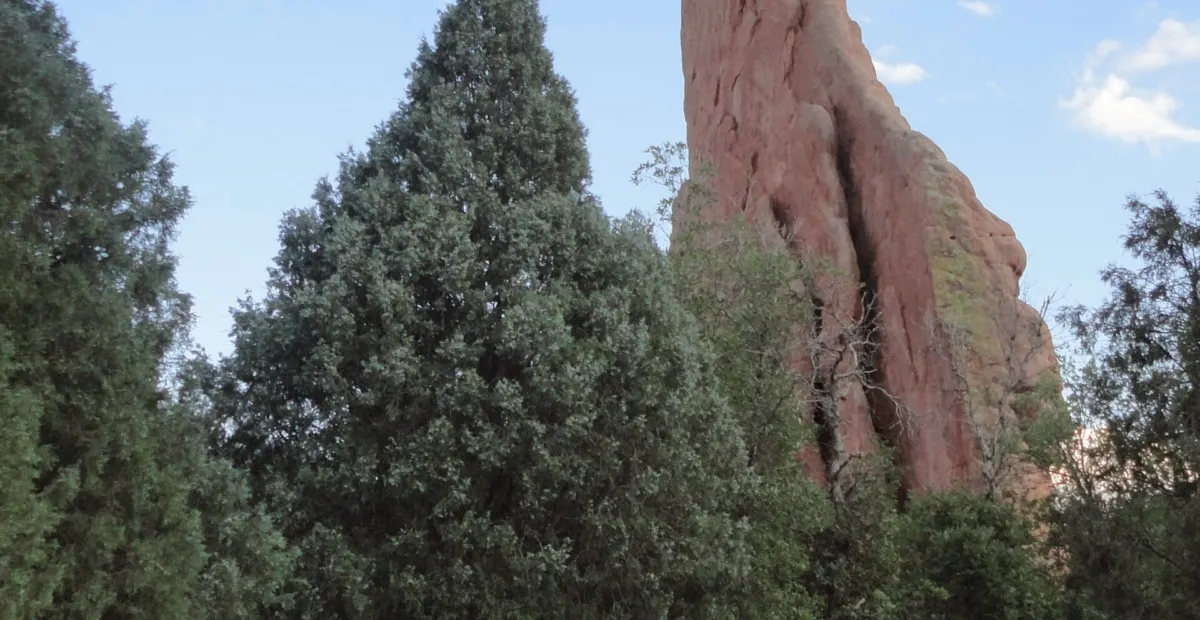
 Source:
 Rocky Mountain Juniper (Juniperus scopulorum) short overview
Rocky Mountain Juniper is a hardy, slow-growing evergreen native to the mountains, foothills, plateaus, and dry woodlands of western North America. Its blue-green scale foliage, fibrous reddish-brown bark, and bluish berry-like seed cones provide year-round structure and wildlife value. Give it full sun, excellent drainage, and room to mature; established plants tolerate drought, cold, wind, and a wide range of soils.
Taxonomic classification
Rocky Mountain Juniper (Juniperus scopulorum) care guide
Light and placement
Choose full sun with open exposure and good air movement, ideally with southern or western light unobstructed by buildings or taller trees. Young plants tolerate some shade, but established trees become less shade tolerant and may thin in low light. Excessive shade produces weak, open growth; intense winter sun and drying winds can brown foliage in exposed northern sites.
Watering and humidity
Water deeply and slowly through the first one to two growing seasons, allowing the upper soil to dry somewhat between irrigations. After establishment, water mainly during prolonged drought, extreme heat, or autumn dry spells before frozen soil. Do not keep the root zone constantly wet; saturated soil encourages decline. Humidity is not normally a care requirement.
Soil and growing medium
Use a sharply drained mineral soil, from sandy or rocky loam to clay that does not stay saturated. The species tolerates poor, shallow ground but performs well in deeper soils with dependable drainage. Slightly alkaline and calcareous conditions are acceptable; avoid compacted, waterlogged sites.
Feeding
Established plants usually need no routine fertilizer, especially in native or naturally fertile soil. If growth is weak and a soil test identifies a deficiency, apply a slow-release, balanced fertilizer in early spring at the label rate. Do not fertilize drought-stressed, newly transplanted, or late-season plants.
Growth and habit
A slow-growing, long-lived evergreen that may develop as a shrub or small tree. In open sites it commonly forms a pyramidal or irregular crown with branches extending toward the ground; shaded young plants may be more open or spreading. Mature transplantation becomes increasingly difficult, so choose the final site carefully.
Planting and repotting
Plant dormant container or bare-root stock in early spring, or in fall where soil remains workable. Set the root flare level with the surrounding soil, backfill without amendments that impede drainage, water deeply, and maintain a weed-free mulch ring. Allow broad spacing for natural branching and avoid moving established trees.
Not generally suited to long-term container culture because of its eventual size and deep, spreading root system. If grown temporarily in a container, move it while young into a much larger pot with a gritty, well-drained mix and avoid root disturbance.
Propagation and pruning
Propagation
Propagation is primarily by seed, but juniper seed has dormancy and may require prolonged stratification or other specialized treatment. Selected cultivars are commonly propagated by rooted cuttings. Seed-grown plants are variable, while cuttings preserve cultivar traits.
Pruning
Prune lightly in late winter or early spring to remove dead, damaged, crossing, or poorly placed branches. Avoid cutting deeply into old wood because junipers often produce little or no regrowth from fully bare interior branches. Preserve the natural outline rather than shearing unless maintaining a formal cultivar.
Overwintering
Hardy outdoors in cold climates when properly sited. Young plants benefit from a weed-free mulch ring and protection from rabbits, deer, and rodents. In exposed northern regions, winter wind can burn foliage; use burlap as a wind screen if necessary, but do not wrap tightly around the canopy. Container plants are more vulnerable to root freezing than plants in the ground.
Uses
Useful as a specimen, screen, windbreak component, erosion-control plant, native landscape tree, and wildlife shelter. Bluish seed cones and dense evergreen branches provide food or cover for birds and mammals. Do not use the species as a culinary substitute or for medicinal purposes without authoritative identification and guidance.
Appearance
Foliage is mainly scale-like on older twigs, with sharper awl-like leaves often prominent on young shoots. Branches are thick, ascending, and frequently extend toward the ground. Bark ranges from reddish brown to gray brown and becomes thin, furrowed, shreddy, and fibrous with age. Female plants carry blue, whitish-bloomed, berry-like seed cones.
Pollination and visitors
Pollination is by wind, not by animal visitors. Male plants release airborne pollen from small pollen cones; female plants develop berry-like seed cones after pollination. The dense evergreen structure has greater documented wildlife value than its reproductive structures have documented pollinator value.
Juniperus scopulorum photos
Click any photo for a larger view. Source, author and license are shown separately.
Diseases and pests
Diseases
Generally resilient, but it can serve as an alternate host for cedar-apple rust, which may severely affect nearby apples and other pome fruits. Improve air circulation, avoid persistently wet foliage, remove badly infected material where practical, and do not plant it close to valuable susceptible apple trees if rust is a recurring local problem.
Pests
Potential problems include cedar twig beetles, bark beetles, roundheaded borers, cedar flathead borers, and gall midges. Prevent stress with correct siting and deep establishment watering; inspect for boring dust, dieback, galleries, or localized swelling and prune affected branches when practical. Avoid unnecessary pesticide use.
Related diseases and pests
Only Plant Doctor profiles whose host data indicate this plant may be affected are shown here.
 DiseaseCedar-Apple RustGymnosporangium juniperi-virginianae Schwein.
 DiseaseHeterobasidion root diseaseHeterobasidion annosum
 DiseasePear trellis rustGymnosporangium sabinae
 PestBrown Garden SnailCornu aspersum (Müller, 1774)
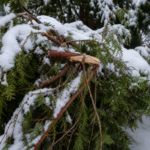 Environmental stressSnow Load Damage
 Environmental stressWind scorch
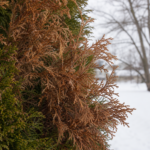 Environmental stressWinter desiccation (winter burn)
 Environmental stressRoot Anoxia
Toxicity and pollen
Juniper foliage and berry-like cones contain aromatic oils and other compounds. Small incidental exposure is not generally considered a major human poisoning hazard, but eating substantial amounts may cause gastrointestinal upset; concentrated oils are a greater concern. Keep children and pets from consuming plant material, and seek professional advice after significant ingestion.
- Typical season
- Late winter to early spring in much of the United States; timing varies by region.
- Pollination / pollen
- Fine, wind-dispersed pollen from male cones
Juniper pollen is light and wind-dispersed, so male plants can contribute to seasonal airborne pollen exposure. Regional extension information places pollen release in late winter or early spring in parts of the United States, with timing shifting by latitude and elevation. People sensitive to juniper or related cedar pollen may wish to avoid planting male trees near frequently used outdoor areas.
Native habitat
Native across much of the western United States and adjacent parts of Canada, from foothills and plateaus to mountain valleys, canyons, prairie hillsides, and open pinyon-juniper woodlands. It occurs on rocky, sandy, clayey, shallow, calcareous, and sometimes poorly developed soils, often in dry or semiarid climates but also in cooler, moister ravines and slopes.
Interesting fact
The species can live for several centuries, with exceptional individuals estimated at far greater ages. Its common berry-like structures are fleshy seed cones rather than true fruits. It hybridizes with several other junipers, including eastern redcedar and creeping juniper. Mature plants may tolerate temperatures near -35°F under suitable conditions.
Frequently asked questions (FAQ)
The most relevant questions about this plant, with short and direct answers.
🌱Quick care
What is Rocky Mountain Juniper?⌄
Rocky Mountain Juniper is an evergreen shrub or small tree, Juniperus scopulorum, in the cypress family Cupressaceae. It is native to western North America and is valued for its blue-green foliage, drought tolerance, and year-round structure.
How fast does Rocky Mountain Juniper grow?⌄
Rocky Mountain Juniper grows slowly, often adding less than 1 foot per year under typical landscape conditions. Growth varies with cultivar, sunlight, moisture, soil quality, and climate.
How big does Rocky Mountain Juniper get?⌄
Rocky Mountain Juniper commonly reaches about 10–30 feet tall, although some specimens can grow larger in favorable conditions. Cultivars may remain much shorter, narrower, or more columnar.
Is Rocky Mountain Juniper evergreen?⌄
Yes, Rocky Mountain Juniper is an evergreen conifer that retains its foliage throughout the year. Its scale-like leaves may range from green to blue-green or silvery blue, depending on the plant.
🌤️Environment and placement
What USDA hardiness zones are suitable for Rocky Mountain Juniper?⌄
Rocky Mountain Juniper is generally hardy in USDA Zones 3 through 7, although some horticultural references list broader ranges for particular cultivars or climates. Choose a cultivar tested for your local winter conditions.
Does Rocky Mountain Juniper need full sun?⌄
Yes, plant Rocky Mountain Juniper in full sun for the densest growth and best color. It can tolerate some shade when young, but mature plants usually become thinner and less vigorous in low light.
Can Rocky Mountain Juniper grow in shade?⌄
Rocky Mountain Juniper can tolerate partial shade, but it performs best with at least 6 hours of direct sunlight daily. Dense shade can produce sparse foliage, weak form, and reduced drought tolerance.
What type of soil is best for Rocky Mountain Juniper?⌄
Use well-drained sandy, loamy, rocky, clayey, or calcareous soil. Rocky Mountain Juniper tolerates a wide range of soil textures, but persistent saturation and poor drainage are more damaging than lean or alkaline soil.
Can Rocky Mountain Juniper grow in clay soil?⌄
Yes, Rocky Mountain Juniper can grow in clay soil if excess water drains away. Improve drainage by planting slightly high or on a slope rather than placing the root ball in a compacted, waterlogged planting hole.
Is Rocky Mountain Juniper drought tolerant?⌄
Yes, established Rocky Mountain Juniper is drought tolerant and usually needs little supplemental water. Newly planted trees still require regular deep watering until their roots become established.
Is Rocky Mountain Juniper suitable for hot, dry landscapes?⌄
It is well suited to many sunny, dry landscapes, especially where summers have low humidity and soils drain quickly. Performance may decline in hot, humid sites or where warm nights and wet soil persist.
Can Rocky Mountain Juniper tolerate wind and cold?⌄
Rocky Mountain Juniper is generally cold hardy and tolerates exposed, windy sites once established. In very cold regions, dry winter winds can cause foliage injury, especially on young or poorly hydrated plants.
💧Care and problems
How often should I water Rocky Mountain Juniper?⌄
Water deeply when the soil has partly dried during the establishment period, usually for the first one to two growing seasons. After establishment, water during prolonged drought rather than following a frequent schedule.
Why is my Rocky Mountain Juniper turning brown?⌄
Brown foliage can result from drought stress, root damage, winter desiccation, poorly drained soil, pests, or disease. Check soil moisture and drainage first, then inspect for webbing, boring damage, rust galls, or dead branches.
Why is Rocky Mountain Juniper dying after planting?⌄
The most common causes are transplant shock, insufficient establishment watering, buried roots, damaged roots, or saturated soil. Keep the root flare near the soil surface, water deeply, and avoid frequent shallow watering.
Does Rocky Mountain Juniper need fertilizer?⌄
Usually not, if it is planted in reasonably fertile soil and is growing normally. A soil test should guide any fertilizer application because excess nitrogen can encourage weak, overly lush growth.
What pests affect Rocky Mountain Juniper?⌄
Potential pests include spider mites, juniper berry mites, bark beetles, twig beetles, borers, and gall midges. Stress from drought, root problems, or poor placement can make plants more vulnerable.
What diseases affect Rocky Mountain Juniper?⌄
Rocky Mountain Juniper may be affected by cedar-apple rust and related cedar rusts, as well as occasional fungal problems associated with stressed or poorly drained plants. Symptoms can include orange gelatinous growths, galls, dieback, or discolored foliage.
🪴Planting and repotting
When is the best time to plant Rocky Mountain Juniper?⌄
Plant Rocky Mountain Juniper in spring or fall when temperatures are moderate and soil moisture is reliable. Avoid planting during frozen ground, extreme summer heat, or prolonged drought.
How far apart should Rocky Mountain Juniper be planted?⌄
Spacing depends on the mature width of the cultivar and the intended use. Allow enough room for the plant’s mature spread, commonly about 12–24 feet for full-sized forms, and use closer spacing only for a planned screen.
Can Rocky Mountain Juniper be grown in a container?⌄
Young or compact cultivars can be grown temporarily in large containers with excellent drainage. Full-sized plants eventually develop too much root and top growth for long-term container culture.
Can Rocky Mountain Juniper be transplanted?⌄
Rocky Mountain Juniper can be transplanted when young, but established specimens are difficult to move because they develop substantial roots and respond slowly to disturbance. Transplant during cool, dormant conditions and preserve as much of the root ball as possible.
✂️Propagation and pruning
How do you propagate Rocky Mountain Juniper from seed?⌄
Propagation from seed is possible, but germination can be difficult because the seeds have prolonged dormancy and may require specialized preparation. Seed-grown plants may also vary from the parent in form and foliage color.
Can Rocky Mountain Juniper be grown from cuttings?⌄
Yes, Rocky Mountain Juniper can be propagated from cuttings, although upright forms are often difficult to root. Terminal cuttings taken from healthy growth and handled under controlled conditions generally offer the best chance of success.
When should Rocky Mountain Juniper be pruned?⌄
Prune Rocky Mountain Juniper in late winter or early spring before strong new growth begins, or remove small dead branches whenever necessary. Avoid severe pruning into old, leafless wood because junipers may not reliably regrow from it.
How do you prune Rocky Mountain Juniper without killing it?⌄
Remove dead, diseased, crossing, or unwanted branches selectively, and cut back to a living side branch with foliage. Do not shear deeply into bare interior wood or remove a large portion of the canopy at once.
⚠️Toxicity and safety
Is Rocky Mountain Juniper poisonous to dogs or cats?⌄
Rocky Mountain Juniper has a low toxicity concern, but substantial ingestion of foliage, berries, or other plant parts may cause digestive upset. Prevent pets from eating large quantities and contact a veterinarian if symptoms develop.
Are Rocky Mountain Juniper berries edible?⌄
The blue structures are berry-like seed cones rather than true berries, and they are not recommended as a casual food source. Some juniper species are used in food or beverages, but correct species identification and safe quantities are important.
Is Rocky Mountain Juniper safe around children?⌄
It is generally a low-concern landscape plant, but children should not chew or swallow its foliage, cones, or seeds. The sharp juvenile leaves and resinous plant parts also make supervision sensible.
🌸Flowering and special interest
Does Rocky Mountain Juniper produce flowers?⌄
Rocky Mountain Juniper produces small, inconspicuous reproductive cones rather than showy flowers. Male and female cones are usually borne on separate plants, and pollination occurs by wind in spring.
Why does my Rocky Mountain Juniper have no berries?⌄
A Rocky Mountain Juniper may have no berry-like cones because it is male, too young, unpollinated, or growing under stressful conditions. Female plants generally need pollen from a compatible male plant nearby to produce seeds.
When do Rocky Mountain Juniper berries ripen?⌄
The berry-like seed cones usually mature during the second year after pollination, commonly from fall into winter. They develop a blue to bluish-purple color with a pale waxy coating when mature.
Do birds eat Rocky Mountain Juniper berries?⌄
Yes, birds and some small mammals use the blue, berry-like seed cones as a food source. The dense evergreen branches also provide year-round cover and nesting structure.
Similar plants
 Creeping juniper (Juniperus horizontalis) care guideJuniperus horizontalis
 Compressa (Juniperus communis ‘Compressa’)Juniperus communis 'Compressa'
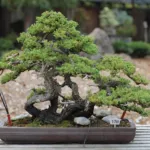 Dwarf Japanese garden juniper (Juniperus procumbens ‘Nana’)Juniperus procumbens 'Nana'
 Savin juniper (Juniperus sabina) care guideJuniperus sabina
 Flaky juniper (Juniperus squamata) care guideJuniperus squamata
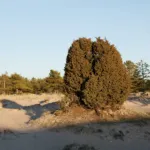 Common juniper (Juniperus communis) care guideJuniperus communis