
 Source:
Saucer Magnolia (Magnolia soulangeana) short overview
Saucer Magnolia is a deciduous hybrid tree or large shrub valued for its dramatic display of large, tulip- to saucer-shaped flowers before the leaves emerge. Blooms range from white to pink, rose, and purple, often with paler interiors. It grows best in full sun to light shade with evenly moist, fertile, well-drained soil and protection from late frosts. Give it room to develop broad, low branches and prune only when necessary.
Taxonomic classification
Saucer Magnolia (Magnolia soulangeana) care guide
Light and placement
Choose full sun for the heaviest flowering, or light partial shade where summers are hot. An east or south-facing site with shelter from strong wind is suitable. Too much shade produces sparse flowering and weaker growth; intense reflected heat or drought can scorch foliage and stress roots. Avoid frost pockets because early flowers are vulnerable to freezes.
Watering and humidity
Water deeply and slowly when the upper few inches of soil begin to dry, especially during the first two growing seasons. Maintain even moisture from bud swell through flowering and during summer drought, but do not keep roots waterlogged. A wide organic mulch layer helps moderate soil temperature and moisture; keep it away from the trunk.
Soil and growing medium
Use fertile, organic soil that drains freely but does not dry rapidly. Loam or sandy loam with added compost is suitable. A slightly acidic to neutral reaction is generally appropriate. Avoid compacted sites, prolonged saturation, and major root disturbance.
Feeding
Maintain a mulch-and-compost zone over the root area. If foliage is pale or annual growth is weak, apply a balanced slow-release fertilizer in early spring according to the label. Do not fertilize drought-stressed plants, newly planted trees heavily, or late in the growing season.
Growth and habit
Usually develops as a low-branched, multi-stemmed tree or broad large shrub with a spreading crown. It establishes slowly and can be long-lived when roots remain undisturbed. Its broad branching pattern makes early site selection important; avoid repeatedly removing lower limbs unless a tree form is specifically desired.
Planting and repotting
Plant in fall or early spring while dormant, setting the root flare at soil level rather than burying the trunk. Water deeply during establishment and mulch broadly without touching the bark. Allow generous clearance for the eventual spreading canopy and avoid planting where late frost collects.
Container-grown plants should be moved into a larger container only when roots fill the existing root ball. Transplant during dormancy or early spring, preserving the root ball and avoiding prolonged container culture because mature magnolias dislike root disturbance.
Propagation and pruning
Propagation
Seed propagation is possible but does not reliably reproduce a selected cultivar. Named forms are commonly propagated by grafting; cuttings and layering can work but are technically demanding and cultivar-dependent. Use fresh seed and stratification only when genetic variation is acceptable.
Pruning
Prune sparingly immediately after flowering, before midsummer, when cuts have time to heal. Remove dead, crossing, damaged, or weakly attached branches and selected basal shoots if a tree form is wanted. Avoid heavy renovation pruning because magnolias heal slowly and may respond poorly to large cuts.
Overwintering
Established plants are generally hardy in USDA Zones 5–9. Protect young trees with a thick, loose mulch layer over the root zone, not against the trunk. In colder or exposed areas, choose a sheltered site and avoid early-warming locations that encourage premature flowering. Open flowers and swollen buds can be damaged by late freezes.
Uses
A high-value ornamental specimen for lawns, entry gardens, parks, courtyards, and mixed borders. It provides early-season floral display and structural interest but is not a dependable edible or medicinal plant. Fallen petals, leaves, and seed structures can create seasonal litter.
Appearance
Leaves are large, simple, broadly oval to obovate, and medium to dark green, with a smooth overall appearance. Young branches and older bark are gray-brown. The plant is recognized by its broad branching, large fuzzy flower buds, and conspicuous cup-shaped blooms that appear before the foliage. After flowering, cone-like aggregate fruit structures may develop.
Flowering
Flowers usually open before the foliage in late winter or spring. Individual blooms are large and showy, with broad tepals arranged in a goblet or saucer-like form. Flowering time varies by region, cultivar, and spring temperature; late freezes can brown open flowers and damage buds.
Pollination and visitors
Magnolia flowers are characteristically associated with beetle pollination. Beetles forage among the tepals, stamens, and reproductive structures; the flower's robust parts tolerate this activity. Other insects may visit open flowers, but beetles are the best-supported characteristic visitor group.
Magnolia soulangeana photos
Click any photo for a larger view. Source, author and license are shown separately.
Diseases and pests
Diseases
Watch for leaf spot, cankers, powdery mildew, and dieback, especially where foliage stays wet or branches are injured. Improve air circulation, remove affected material, disinfect pruning tools, and avoid unnecessary wounds. Serious cankers or declining branches may require arborist assessment.
Pests
Scale insects, aphids, magnolia leaf miners, and occasional magnolia scale may occur. Inspect stems and leaf undersides, encourage beneficial insects, and use horticultural oil or targeted controls only when infestations are significant. Protect young trunks from mechanical injury.
Related diseases and pests
Only Plant Doctor profiles whose host data indicate this plant may be affected are shown here.
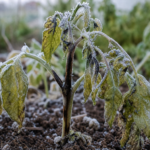 Environmental stressFreeze injury
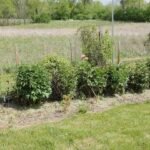 Environmental stressFrost injury
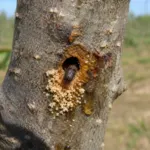 PestEuropean shot-hole borerXyleborus dispar (Fabricius)
 PestBrown Marmorated Stink BugHalyomorpha halys
 Environmental stressRoot Anoxia
 Environmental stressWaterlogging
 DiseaseMaple powdery mildewSawadaea bicornis
 DiseaseCucurbit Powdery MildewPodosphaera xanthii (Castagne) U. Braun & Shishkoff
Toxicity and pollen
Reliable US pet references generally treat magnolia as non-toxic to dogs and cats, although eating large amounts of any plant material may cause stomach upset. Human poisoning evidence for this hybrid is limited; discourage ingestion, especially of unfamiliar plant parts, and seek professional advice after significant exposure.
- Typical season
- Late winter through spring during flowering
- Pollination / pollen
- Heavy, insect-carried pollen with limited airborne dispersal
The flowers are insect-pollinated, so pollen is not typically released in the same airborne quantities as wind-pollinated trees. Sensitive people may still react to pollen or floral material, and individual allergy responses vary. Flowering occurs mainly from late winter into spring in the United States.
Native habitat
The hybrid derives from Asian magnolia species associated with temperate woodland margins and cultivated landscapes. It performs best in climates with a distinct cool season, fertile soils, adequate moisture, and protection from severe late frosts. It is cultivated widely outside its parent range.
Interesting fact
This cultivated hybrid was developed from Magnolia denudata and Magnolia liliiflora. Magnolia flowers have tepals rather than a sharply differentiated petal-and-sepal arrangement. The flowers evolved with tough floral structures associated with beetle pollination. Many cultivars vary widely in flower color and mature size.
Frequently asked questions (FAQ)
The most relevant questions about this plant, with short and direct answers.
🌱Quick care
How do you care for a Saucer Magnolia?⌄
Give Saucer Magnolia full sun to partial shade, fertile evenly moist but well-drained soil, and regular water during dry weather. Mulch over the root zone, protect it from strong wind, and prune only when necessary.
How much sun does Saucer Magnolia need?⌄
Saucer Magnolia grows best in full sun, although it tolerates partial shade. More shade can produce thinner, leggier growth and fewer flowers, while morning sun with some afternoon protection can help in hot climates.
How often should you water Saucer Magnolia?⌄
Water Saucer Magnolia deeply whenever the soil begins to dry, especially during its first growing season and periods of drought. Keep the soil evenly moist but never persistently waterlogged.
What soil is best for Saucer Magnolia?⌄
The best soil is fertile, organic, well-drained loam that stays evenly moist and is slightly acidic. Avoid sites with compacted, alkaline, or poorly drained soil because the fleshy roots can suffer.
How fast does Saucer Magnolia grow?⌄
Saucer Magnolia has a moderate growth rate and commonly matures as a small tree or large shrub about 15 to 33 feet tall and 15 to 25 feet wide. Final size varies by cultivar and growing conditions.
🌤️Environment and placement
Where should I plant a Saucer Magnolia?⌄
Plant Saucer Magnolia in a spacious, sunny, sheltered location where its spreading roots and mature canopy have room. Keep it away from strong winds, heavy foot traffic, utility lines, and structures that could restrict its form.
Can Saucer Magnolia grow in partial shade?⌄
Yes, Saucer Magnolia can grow in partial shade, but flowering and branch density are usually best with several hours of direct sun. Avoid deep shade, which can lead to weak, sparse growth.
Is Saucer Magnolia suitable for USDA Zones 4 through 9?⌄
Saucer Magnolia is generally suitable for USDA Hardiness Zones 4 through 9, depending on the cultivar and local exposure. In colder areas, flower buds and open blooms remain vulnerable to late freezes even when the tree survives winter.
How much space does Saucer Magnolia need?⌄
Allow roughly 15 to 25 feet of horizontal space for a mature Saucer Magnolia, while checking the expected size of the specific cultivar. Its low branches and fleshy root system make generous spacing preferable.
Can Saucer Magnolia tolerate wet soil?⌄
Saucer Magnolia tolerates brief moisture but does not perform well in persistently wet or poorly drained soil. Plant it in porous soil and correct drainage before planting rather than relying on frequent amendments afterward.
Is Saucer Magnolia drought tolerant?⌄
Established Saucer Magnolia has some drought tolerance but performs best with consistent moisture. Water deeply during extended dry periods, especially for young trees, trees planted in sandy soil, or specimens exposed to hot afternoon conditions.
💧Care and problems
Why are my Saucer Magnolia leaves turning yellow?⌄
Yellow leaves can result from overwatering, drought stress, nutrient problems, or high-pH soil that limits iron availability. Check soil moisture and drainage first, then consider a soil test before applying fertilizer or amendments.
What pests affect Saucer Magnolia?⌄
Magnolia scale is one of the main pests that can affect Saucer Magnolia, and squirrels may sometimes eat flower buds. Inspect stems and buds regularly, and identify the pest before choosing a treatment.
What diseases affect Saucer Magnolia?⌄
Saucer Magnolia can develop leaf spots, powdery mildew, cankers, or verticillium wilt, especially when stressed or grown in wet conditions. Improve air circulation, avoid overhead irrigation, remove affected wood, and seek an arborist’s diagnosis for serious decline.
Should I fertilize Saucer Magnolia?⌄
Fertilize only if growth is weak or a soil test shows a deficiency; established Saucer Magnolia is not usually a heavy feeder. Apply a balanced, slow-release fertilizer in spring according to the product label, and avoid excessive nitrogen.
Why is my Saucer Magnolia losing branches?⌄
Branch loss may result from weak, brittle wood, storm damage, disease, decay, or drought stress. Remove clearly dead or hazardous branches, but have an arborist assess large limbs, cavities, fungal growth, or damage near buildings.
🪴Planting and repotting
When is the best time to plant Saucer Magnolia?⌄
Plant Saucer Magnolia in spring, preferably before active growth begins, or during another mild period when the soil is workable. Water thoroughly after planting and maintain consistent moisture while the root system establishes.
How do you plant a Saucer Magnolia?⌄
Dig a broad hole no deeper than the root ball, set the tree with its root flare at or slightly above soil level, backfill with native soil, water deeply, and apply a few inches of mulch without touching the trunk.
Can Saucer Magnolia be grown in a container?⌄
Saucer Magnolia can be grown temporarily in a large container, but it is generally better suited to the ground because it becomes a substantial tree with a fleshy root system. Choose a compact cultivar if container growing is unavoidable.
Can you transplant an established Saucer Magnolia?⌄
Young Saucer Magnolia transplants better than older specimens because its fleshy roots are sensitive to disturbance. Move it during a mild dormant or early-growth period with as much intact root ball as possible, then water consistently.
✂️Propagation and pruning
Can Saucer Magnolia be grown from seed?⌄
Yes, Saucer Magnolia can be grown from seed, but seedlings may not reproduce the parent’s exact flower color, form, or performance. Clean fresh seed and provide the required cool, moist stratification before sowing.
Can Saucer Magnolia be propagated from cuttings?⌄
Saucer Magnolia can be propagated from cuttings, but rooting is often less reliable than for many shrubs and success depends on timing, juvenile wood, humidity, and rooting conditions. Cultivars are commonly propagated by specialized nursery methods.
When should you prune Saucer Magnolia?⌄
Prune Saucer Magnolia shortly after flowering, once the spring display has finished. This timing helps you see the structure while reducing the chance of removing next year’s flower buds, which form on older wood.
How do you prune a Saucer Magnolia?⌄
Remove dead, damaged, crossing, or poorly placed branches with clean cuts, and make only modest structural changes. Avoid heavy pruning because older magnolias heal slowly and large wounds may remain vulnerable.
Can Saucer Magnolia be trained as a single-trunk tree?⌄
Yes, a young Saucer Magnolia can be trained gradually by selecting a main leader and removing competing stems over several seasons. Many specimens naturally develop multiple trunks, so preserve the plant’s natural form unless clearance is necessary.
⚠️Toxicity and safety
Is Saucer Magnolia toxic to dogs?⌄
Saucer Magnolia is generally considered non-toxic to dogs. However, eating large amounts of any plant material can still cause stomach upset, choking, or an obstruction, so contact a veterinarian if symptoms or significant ingestion occur.
Is Saucer Magnolia toxic to cats?⌄
Saucer Magnolia is generally considered non-toxic to cats. Keep pets from consuming large quantities of leaves, flowers, fruit, or seeds because plant material can still cause gastrointestinal irritation or other mechanical problems.
Are Saucer Magnolia seeds poisonous?⌄
Saucer Magnolia seeds are not generally regarded as poisonous to dogs or cats, but seeds and fruit can still cause digestive upset or choking if eaten in quantity. Remove fallen seed pods if pets regularly chew plant material.
🌸Flowering and special interest
When does Saucer Magnolia bloom?⌄
Saucer Magnolia usually blooms in late winter or spring, with timing varying from February in warmer parts of the United States to April in colder regions. The large, fragrant flowers appear before or as the leaves emerge.
Why is my Saucer Magnolia not blooming?⌄
The most common reasons are immature age, excessive shade, late-frost damage, drought stress, pruning at the wrong time, or flower buds eaten by wildlife. Saucer Magnolia forms flower buds the previous year, so winter injury can eliminate spring flowers.
Why did frost kill my Saucer Magnolia flowers?⌄
Saucer Magnolia blooms and flower buds are highly vulnerable to subfreezing temperatures because flowering occurs early. Choose a later-flowering cultivar, avoid exposed frost pockets, and do not prune away healthy buds before winter.
How can I protect Saucer Magnolia buds from frost?⌄
Reduce frost risk by planting Saucer Magnolia in a sheltered location and selecting a late-flowering cultivar. During an unusual freeze, cover a small tree with frost fabric before temperatures fall and remove the cover after conditions moderate.
Does Saucer Magnolia have fragrant flowers?⌄
Yes, Saucer Magnolia typically produces large, cup-shaped flowers that may be fragrant, with colors ranging from white to pink, purple, or combinations of these shades. Fragrance and color intensity vary among cultivars.
Does Saucer Magnolia produce fruit?⌄
Saucer Magnolia may produce knobby aggregate fruit that develops reddish-orange seeds in late summer or fall, although fruiting is often sparse. The pods can be ornamental but may create seasonal litter beneath the tree.
Similar plants
 Japanese Big Leaf Magnolia (Magnolia obovata) care guideMagnolia obovata
 Campbell’s Magnolia (Magnolia campbellii) care guideMagnolia campbellii
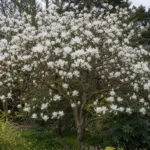 Alba (Magnolia campbellii ‘Alba’)Magnolia campbellii 'Alba'
 Magnolia × loebneri ‘Merrill’Magnolia × loebneri 'Merrill'
 Magnolia sprengeri care guideMagnolia sprengeri
 Magnolia ‘Susan’Magnolia 'Susan'