
 Source:
 Cucurbit Powdery Mildew
Podosphaera xanthii (Castagne) U. Braun & ShishkoffCucurbit Powdery Mildew overview
Cucurbit powdery mildew, caused primarily by the obligate biotrophic fungus Podosphaera xanthii, forms conspicuous white, flour-like colonies on cucumber, melon, squash, pumpkin, gourd and related plants. The disease can spread rapidly during warm growing conditions, reduce photosynthesis, weaken vines and cause premature fruit ripening. Early detection, resistant varieties, sanitation and integrated management are essential.
Typical conditions
Overview
Cucurbit powdery mildew is a foliar disease affecting cucumber, muskmelon, squash, pumpkin, gourd and watermelon. Podosphaera xanthii grows on living plant tissue and produces visible white colonies composed of fungal mycelium and asexual spores.
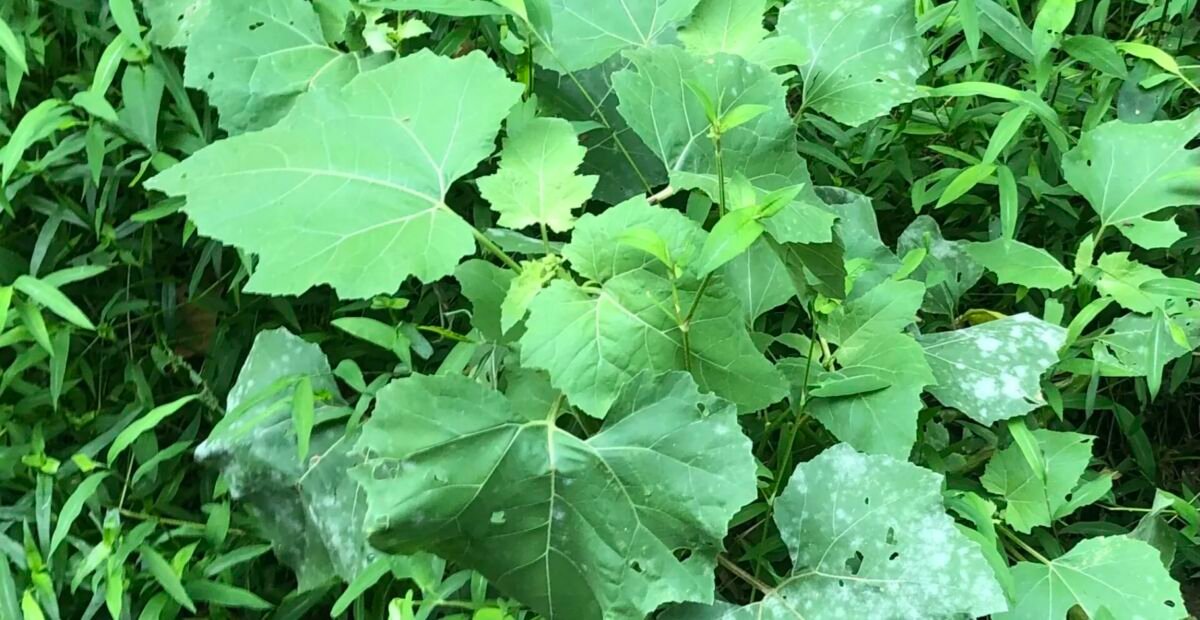
Early infections may appear as small, pale-yellow or chlorotic spots. As colonies enlarge, leaves, petioles and vines can become covered with a white, powdery growth. Severe disease reduces photosynthesis, weakens the plant and may lead to premature fruit ripening, smaller fruit or sunburned fruit because of lost leaf cover.
Several powdery mildew fungi can infect cucurbits in different regions. In U.S. cucurbit surveys, P. xanthii has been the predominant or only species detected in the sampled production areas, but species identification requires microscopy, molecular testing or a qualified diagnostic laboratory.
Symptoms and identification
- Small pale-yellow spots develop on older leaves, petioles or stems.
- White, flour-like colonies expand across the upper or lower leaf surface and may occur on both sides.
- Infected leaves become dull, chlorotic, brittle, brown and papery as disease advances.
- Vines may weaken, and heavily infected plants can produce fewer or smaller fruit or ripen fruit prematurely.
- Fruit infection is uncommon in many U.S. cucurbit systems, but infections of fruit stems and, occasionally, watermelon fruit have been documented.
Powdery mildew can be confused with spray residue, dust or other mildew species. A diagnostic sample is advisable when the diagnosis affects a commercial treatment decision.
Causes and spread
Podosphaera xanthii is an obligate parasite that obtains nutrients from living cucurbit tissue. Spores are produced on infected surfaces and are readily dispersed by air currents, plant handling and moving equipment. New infections can develop quickly once spores reach susceptible foliage.
Unlike many leaf-spot pathogens, powdery mildew does not generally require free water on the leaf for spore germination. Warm conditions, susceptible cultivars, dense foliage and a humid plant canopy favor disease development. Volunteer cucurbits, late-season infected plants and nearby unmanaged hosts can maintain inoculum between plantings, although the importance of sexual overwintering structures varies by region.
Life cycle and persistence
The fungus grows on the surface of living cucurbit tissue while sending specialized feeding structures into epidermal cells. It produces chains of conidia, the dry spores responsible for rapid secondary spread. Wind carries conidia to newly expanding leaves, where they germinate and establish new colonies under suitable conditions.
In many U.S. gardens and fields, the disease becomes conspicuous from mid- to late summer, but timing varies with climate, crop succession and the arrival of airborne inoculum. P. xanthii has distinct physiological races and populations differ in virulence and fungicide sensitivity, so cultivar performance and control success can vary by location.
Treatment and control
Begin management when the first colonies are found, because established mildew is more difficult to suppress. Remove badly affected leaves when practical and improve canopy ventilation. Harvest mature fruit promptly and maintain plant vigor without encouraging excessive succulent growth.
For edible crops, any fungicide or biological product should be selected through an integrated program and applied preventively or at the earliest labeled disease stage. Rotate products among effective FRAC groups, avoid repeated use of one mode of action, and follow all crop, rate, interval, reentry and preharvest restrictions on the current U.S. label. Fungicides cannot restore damaged foliage, and resistant pathogen populations can reduce performance.
Low-impact and biological control
Use resistant or tolerant cultivars, sanitation, canopy ventilation and early removal of heavily infected tissue as the foundation of organic management. Products based on sulfur, potassium bicarbonate, horticultural oils or microbial biologicals may suppress powdery mildew when they are labeled for the specific cucurbit crop and used early; efficacy is usually greatest against new infections rather than dense established colonies.
- Test oils or soap-based products on a small area first to check for phytotoxicity.
- Do not apply sulfur near oil applications or during excessive heat unless the product label specifically permits that use.
- Apply bicarbonate, oil or biological products with thorough coverage and repeat only according to the current label.
- Do not rely on homemade milk, baking-soda or essential-oil mixtures as a substitute for a legally labeled product and sound cultural control.
Prevention
- Grow cultivars described by the seed supplier or local extension service as resistant or tolerant to powdery mildew, while recognizing that resistance is not absolute and can vary among pathogen races.
- Provide adequate spacing, trellising where appropriate and sunlight to improve air movement through the canopy.
- Remove severely infected leaves and dispose of them away from the planting; do not compost diseased material unless the composting process is reliably hot and complete.
- Remove volunteer cucurbits and manage abandoned or late-season cucurbit plants that can produce spores.
- Avoid excessive nitrogen fertilization and maintain balanced irrigation and fertility; lush, dense growth can increase disease risk.
- Inspect plants frequently from early summer onward, especially during fruiting and when powdery mildew is common locally.
Interesting facts
- Podosphaera xanthii was formerly widely referred to as Sphaerotheca fuliginea.
- Powdery mildew spores are dry and easily wind-dispersed, helping the disease move rapidly through a planting.
- Infection can reduce photosynthetic leaf area even before leaves turn brown or collapse.
- U.S. isolates have shown resistance or reduced sensitivity to several fungicide groups, making mode-of-action rotation important.
- Although most disease is observed on foliage, documented U.S. cases include infection of watermelon fruit and previously overlooked cucurbit hosts.
Use only fungicides legally authorized and currently labeled in the United States for the specific cucurbit crop and powdery mildew problem. Follow the current label exactly, including rate, application interval, personal protective equipment, reentry interval, preharvest interval and resistance-management requirements. Product registrations and labels can differ by crop and state; consult your state extension service and the current EPA-approved label before use.