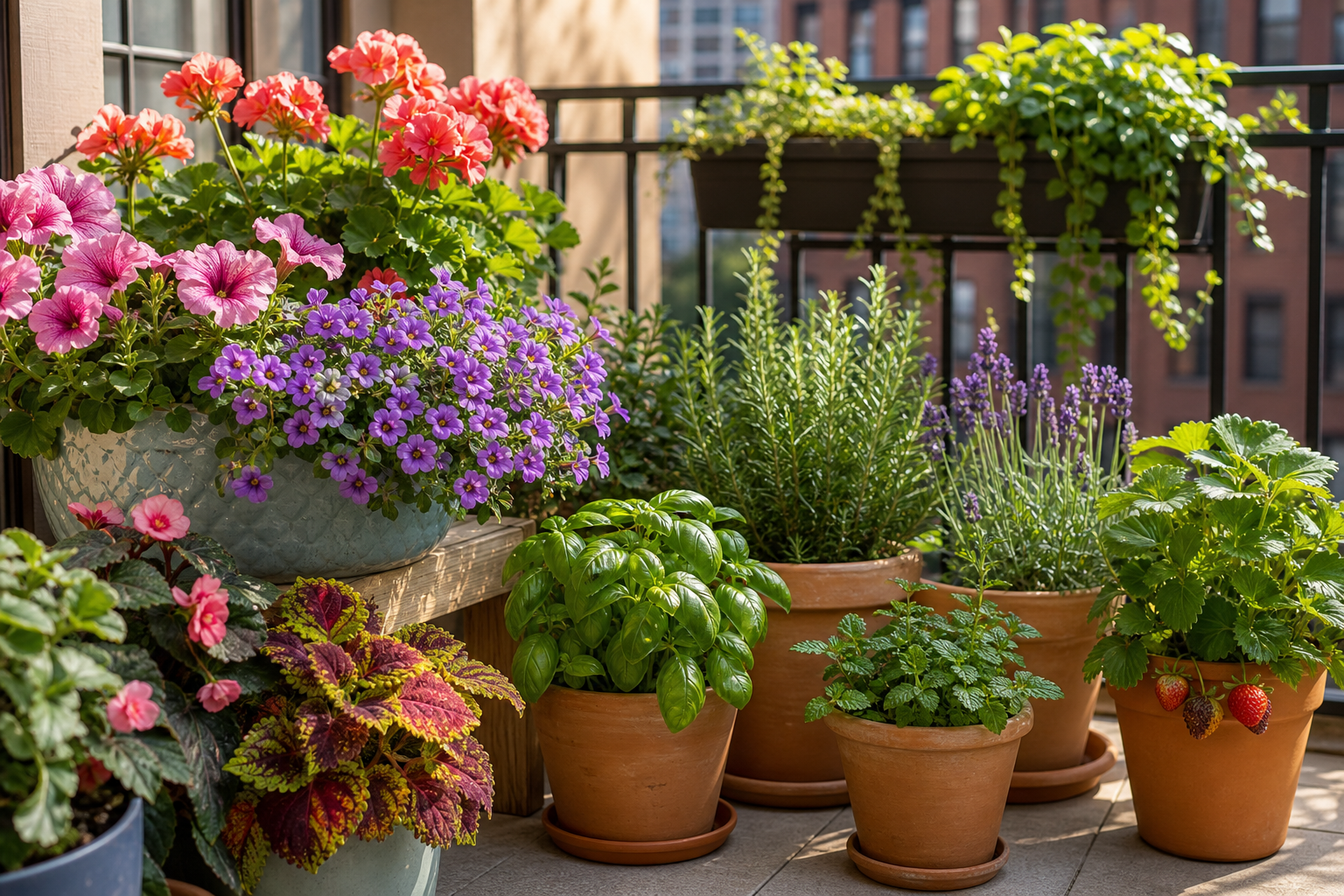
A thoughtful Mother’s Day plant does more than brighten a patio or balcony. The right container plant can offer months of flowers, fresh herbs for summer cooking, fragrance by the doorstep, or a satisfying daily gardening ritual in even the smallest outdoor space.
For a gift that keeps looking good, match the plant to the growing conditions before choosing the prettiest pot. Notice how much direct sun the space receives, whether it is exposed to wind, and how often your recipient enjoys watering. A sunny south-facing balcony needs a different plant from a shady covered porch, and containers usually dry out faster than garden beds.
Below, you’ll find ten reliable, attractive choices for U.S. patios and balconies, plus simple care notes to help your gift thrive beyond Mother’s Day.
Before You Buy: Three Quick Checks
- Count the sunlight. Full sun generally means at least 6 hours of direct light; part shade usually means roughly 3 to 6 hours, often with protection from intense afternoon sun.
- Look for drainage. Choose a pot with at least one drainage hole. Decorative cachepots are lovely, but the plant should be able to drain freely after watering.
- Check local temperatures. In much of the United States, Mother’s Day can arrive before the last spring frost. Tender annuals may need to stay indoors overnight until freezing weather has passed.
Use a quality commercial potting mix rather than garden soil. It is lighter, drains more predictably, and is better suited to the limited root space of a container.
1. Geranium: A Classic Sunny-Spot Favorite
Garden geraniums, botanically known as Pelargonium, remain popular for good reason. Their rounded flower clusters bring cheerful color in red, coral, pink, white, and salmon, while their sturdy foliage gives a container a full, finished appearance.
Choose geraniums for a sunny patio, balcony railing, or front step. They generally perform best in bright light and well-drained potting mix. Let the surface of the mix dry slightly between thorough waterings, and remove faded flower clusters to encourage a tidier display.
- Best for: Full sun to light shade
- Watering style: Allow the top inch of mix to dry, then water deeply
- Gift idea: Pair a coral geranium with a simple terracotta pot and matching saucer
2. Petunia: Big Color for a Sunny Balcony
Petunias are one of the easiest ways to create a generous display in a container. Modern types range from upright mounds to trailing forms that spill over hanging baskets and balcony planters. Colors include classic purple, pink, red, white, yellow, and dramatic bicolors.
Petunias appreciate plenty of sun and regular moisture. Many newer varieties are self-cleaning, meaning old flowers drop away on their own, but a light trim can still refresh plants that become lanky. Windy balconies may dry them quickly, so check the pot rather than relying on a fixed watering schedule.
- Best for: Full sun
- Watering style: Water when the top inch feels dry; do not leave the pot sitting in runoff
- Gift idea: Select a trailing variety for a hanging basket or elevated planter
3. Calibrachoa: A Cascading “Million Bells” Display
Calibrachoa produces masses of small, petunia-like flowers on trailing stems. It is especially attractive in hanging baskets, window boxes, and tall containers where the stems can cascade over the rim.
Give calibrachoa bright sun and a fast-draining potting mix. The plants dislike staying constantly soggy, but they also struggle if allowed to wilt repeatedly. A container with several drainage holes is particularly helpful.
Calibrachoa is a good choice when you want a polished gift with very little deadheading. Look for compact, branching plants with plenty of buds and healthy green foliage.
4. Begonia: Reliable Beauty for Part Shade
For a covered porch or balcony that receives morning sun and afternoon shade, begonias are excellent candidates. Wax begonias offer small flowers and glossy foliage, while tuberous begonias produce larger, rose-like blooms in vivid colors.
Begonias appreciate evenly moist but well-drained soil. In hot climates, protect them from harsh afternoon sun, which can scorch foliage or fade flowers. Avoid wetting the leaves whenever possible, especially when air circulation is limited.
- Best for: Part shade; some types tolerate brighter light with adequate moisture
- Watering style: Water when the surface begins to dry, aiming the stream at the soil
- Gift idea: A basket of pink or white begonias makes a graceful choice for a shaded entryway
5. Coleus: A Foliage Plant That Loves Color
If your recipient enjoys foliage as much as flowers, choose coleus. Its leaves may combine lime green, burgundy, rose, copper, cream, and nearly black, often in bold patterns that remain attractive even between blooms.
Coleus performs well in containers and is particularly useful where flowers are difficult to maintain. Many cultivars prefer part shade, although some newer selections tolerate more sun. Read the plant tag and watch the leaves: bleached patches can indicate too much intense light, while stretched growth may signal too little.
Pinching the growing tips encourages a bushier shape. If flower spikes appear and the goal is colorful foliage, remove them before they become prominent.
6. Lavender: Fragrance for a Sunny Container
Lavender brings silvery foliage, purple flower spikes, and a distinctive fragrance to a patio. It is especially appealing as a Mother’s Day gift because it looks elegant in a simple pot and can be enjoyed by touch as well as sight.
Lavender needs excellent drainage and plenty of sun. Choose a container with a drainage hole and avoid heavy, water-retentive mixes. Let the potting mix dry more deeply than you would for a moisture-loving annual, but do not assume that “drought tolerant” means “never water.” Newly planted lavender needs regular attention while its roots establish.
Hardiness varies by species and cultivar. In colder regions, many potted lavenders are best treated as seasonal plants or overwintered in a bright, protected location.
7. Basil: A Beautiful and Useful Kitchen Garden
A pot of basil offers the pleasure of harvesting as well as the beauty of lush green leaves. Genovese basil is a familiar choice for pesto, while Thai, lemon, cinnamon, and purple-leaved types add variety to a patio collection.
Basil likes warmth, sun, and consistent moisture. Harvest often by pinching stems just above a pair of leaves, which helps the plant branch. If flower buds appear, remove them when you want to keep the plant focused on leafy growth and a milder flavor.
Do not place basil in the same container as especially dry-loving herbs such as rosemary or thyme. Basil generally prefers more regular moisture, while Mediterranean herbs perform better when the mix dries more between waterings.
- Best for: Full sun after temperatures are reliably warm
- Watering style: Check daily in hot weather; water when the top inch is dry
- Gift idea: Combine basil with a small pair of harvesting scissors and a decorative plant marker
8. Rosemary: An Architectural Herb for the Patio
Rosemary has upright or trailing forms, needle-like evergreen foliage, and small flowers that can add extra seasonal interest. Its shape gives a mixed container height and structure, while its leaves are ready for roasted vegetables, breads, and grilled dishes.
Give rosemary full sun, sharp drainage, and good air circulation. It is usually better to water thoroughly and then let the mix dry than to provide frequent sips that keep the roots wet. A porous terracotta pot can be useful in humid or rainy locations, although it will dry faster than plastic.
Rosemary is perennial in warmer regions but may not survive winter outdoors in colder USDA hardiness zones, especially in an exposed container. Treat the plant as a seasonal patio herb or move it to a bright, cool indoor location when necessary.
9. Mint: A Fragrant Plant That Belongs in Its Own Pot
Mint is vigorous, wonderfully fragrant, and forgiving enough for many beginning gardeners. Spearmint, peppermint, apple mint, and chocolate mint offer different scents and flavors, and the leaves are useful in drinks, salads, desserts, and summer garnishes.
Always grow mint in its own container. Its spreading roots and stems can quickly crowd neighboring plants or escape into garden beds. Mint prefers regular moisture and usually appreciates morning sun with some afternoon protection in hot climates.
Trim stems regularly to keep the plant compact. If the pot dries completely and the foliage wilts, water slowly so the mix can absorb moisture instead of allowing water to run down the sides.
10. Strawberry: A Sweet Surprise for Small Spaces
Strawberries make a delightful Mother’s Day gift for anyone who enjoys edible gardening. Compact plants work well in strawberry pots, hanging baskets, window boxes, and ordinary containers, and their white flowers are attractive before the fruit develops.
Choose everbearing or day-neutral types when you want the potential for harvests over a longer season, although the exact timing depends on local temperatures and growing conditions. Set the crown—the point where the roots meet the leaves—level with the surface of the potting mix. Planting too deeply can cause problems, while planting too shallowly exposes the roots.
Strawberries need sun, regular watering, and a container large enough to support healthy roots. Keep fruit from resting on wet soil by using a hanging basket or a pot with space between plants.
A Simple Watering Test You Can Actually Use
Container care becomes easier when you replace guesswork with a quick measurement. Insert your finger about 1 inch into the potting mix. If it feels dry at that depth, water slowly until a small amount drains from the bottom.
As a practical starting benchmark, a 10-inch container may take approximately 1 to 2 quarts of water during a normal watering, while a 14-inch container may take roughly 2 to 4 quarts. These are not fixed prescriptions: a windy balcony, a porous terracotta pot, intense summer heat, or a thirsty plant can change the amount considerably.
- Check small pots daily during hot, windy weather.
- Water in the morning when possible.
- Lift lightweight containers occasionally; a noticeably lighter pot often signals that the mix is drying.
- Empty saucers after watering so roots do not remain in standing water.
- Use a narrow-spout watering can to direct water onto the potting mix.
How to Turn One Plant Into a Finished Mother’s Day Gift
A healthy plant does not need an elaborate arrangement. Choose a container that is only a little larger than the nursery pot, or place the nursery pot inside a decorative cover for an instant presentation. Add a saucer, a handwritten care card, and one useful accessory such as herb snips, a watering can, or a set of plant labels.
For a larger planter, use the classic “thriller, filler, spiller” approach: one upright plant for height, one rounded plant to fill the center, and one trailing plant to soften the edge. Keep companions together only when they have similar needs for sunlight and moisture.
Give Her a Plant She Can Enjoy All Season
The best Mother’s Day plant is not necessarily the rarest or most expensive. It is the one that suits the light, space, climate, and gardening style of the person receiving it. A sunny balcony may call for petunias, calibrachoa, lavender, or rosemary, while a shaded porch may be happier with begonias and colorful coleus.
Start with one beautiful container, check the soil regularly, and adjust care as the weather changes. With the right match and a little attention, your gift can become a bright corner of summer that keeps giving long after the celebration ends.