Cacti have a reputation for being nearly indestructible, but even the toughest plant can struggle in the wrong pot or a dim corner. The good news is that you do not need a greenhouse, a complicated watering schedule or years of experience to grow them well. Choose a naturally forgiving variety, give it bright light and let the soil dry before watering again.
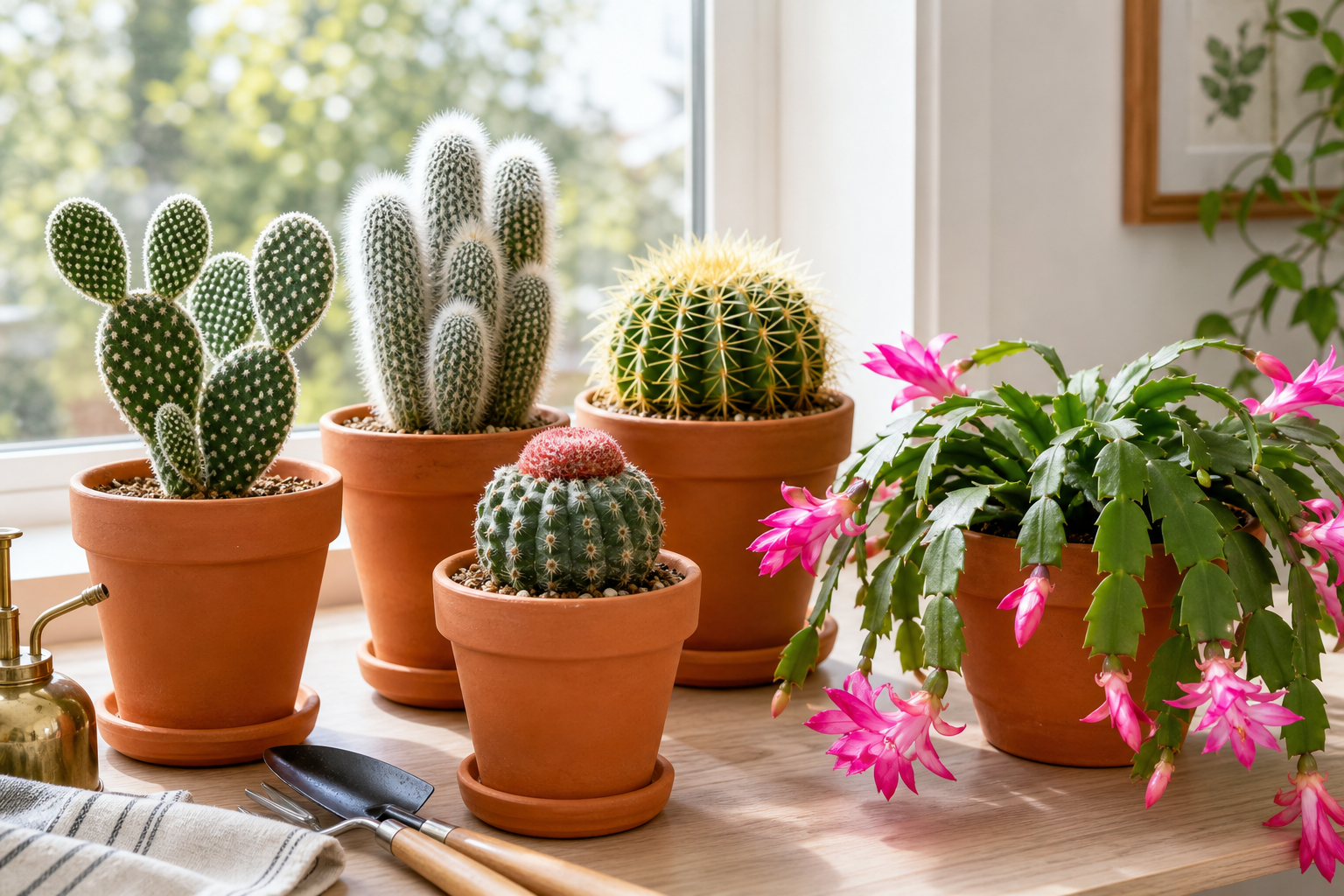
These five cacti are excellent starting points for a US gardener. They represent a useful range of shapes and habits, from round, spiny plants to a trailing holiday cactus that prefers gentler light. Most are widely available at garden centers, nurseries, home improvement stores and online plant shops.
Before you buy: the three rules that prevent most problems
Beginner cactus care becomes much easier when you focus on the basics rather than the calendar. Indoor conditions vary widely from a bright Arizona window to a cloudy apartment in the Pacific Northwest, so your plant’s soil and appearance are better guides than a fixed weekly routine.
- Light: Most desert cacti need a bright south- or west-facing window. A few hours of direct sun is ideal, but introduce a plant to intense sunlight gradually to reduce the risk of sunburn.
- Drainage: Use a pot with a drainage hole and a commercial cactus or succulent mix. A decorative cachepot is fine, but empty water that collects beneath the nursery pot.
- Watering: Water thoroughly until some water runs from the drainage hole, then let the mix dry completely before watering again. Do not give frequent small sips, which can leave the lower soil damp while the surface looks dry.
In a simple home test, check the soil with a wooden chopstick or your finger before every watering. In a warm, bright room during summer, a small cactus may need water roughly every 10 to 21 days. In winter, especially near a cold window or in a low-light room, the interval may stretch to four weeks or longer. Treat these numbers as starting points, not rules.
1. Bunny ears cactus (Opuntia microdasys)
If you want a cactus with instant character, bunny ears is hard to beat. It produces flat, rounded pads that appear in pairs or clusters, giving the plant its friendly common name. Some forms have green pads, while others are sold with yellow, white or reddish glochids—the tiny, hairlike bristles that can detach easily.
Why beginners like it
- It grows readily in a sunny window.
- The pad structure makes new growth easy to spot.
- It can become a striking patio container plant during warm weather.
- Detached pads can root after the cut end dries and calluses.
Give bunny ears cactus the brightest light you have and use a gritty, fast-draining mix. Water when the soil is fully dry, then allow the pot to drain freely. If the pads become thin, stretched or unusually pale, the plant probably needs more light.
Handle this cactus with tongs, folded newspaper or thick gloves rather than bare hands. The fine bristles can be difficult to see and are particularly easy to transfer to skin, clothing and pets’ bedding. For that reason, place it where curious children and animals will not brush against it.
2. Old lady cactus (Mammillaria hahniana)
Old lady cactus is a compact, rounded cactus covered in white hairs and orderly clusters of spines. Mature plants may form a ring of small pink or purple flowers near the crown, especially when they receive strong light and a cooler, drier winter rest.
A compact choice for sunny windowsills
This is a good option if you want a cactus that stays relatively manageable in a small space. It does not need frequent repotting, and its rounded shape makes changes in health easy to notice. A firm body and even color usually indicate good condition; soft areas, dark patches or a sour-smelling potting mix suggest that the roots may be staying too wet.
Place old lady cactus close to a bright window, but turn the pot a quarter turn every week or two so growth stays balanced. Water deeply only after the potting mix has dried completely. During winter, reduce watering sharply and give just enough moisture to prevent severe shriveling if the plant is kept warm indoors.
Among the five choices in this article, Mammillaria types are also among the most rewarding cacti for indoor flowering. Do not be discouraged if your young plant does not bloom immediately; maturity, light and seasonal conditions all play a role.
3. Bishop’s cap cactus (Astrophytum myriostigma)
Bishop’s cap is a handsome, nearly spineless cactus with pronounced ribs that give it a softly star-shaped outline. Tiny pale flecks cover the green surface, adding a silvery pattern without the sharp appearance of many desert cacti. Its sculptural form looks especially good in a simple terracotta pot.
Best for the collector who prefers fewer spines
This species appreciates full sun and very fast drainage. Choose a pot only slightly wider than the root ball, because a large container holds more moisture than the plant can use. Terracotta is helpful in humid regions or for gardeners who tend to water generously, since the porous clay allows the mix to dry more quickly.
Bishop’s cap prefers a dry growing medium, so resist the temptation to mist it. Misting does not replace proper watering and can leave moisture trapped around the plant’s surface. Instead, water at the soil line and keep the body of the cactus as dry as practical.
Its slow, steady growth makes it a low-maintenance desk or windowsill plant, provided the location is genuinely bright. If the cactus begins leaning toward the glass, move it closer to the light or add a balanced grow light on a timer.
4. Golden barrel cactus (Echinocactus grusonii)
Golden barrel cactus is one of the most recognizable round cacti, with a ribbed green body and golden-yellow spines. Young plants make cheerful tabletop specimens, while older plants become impressive architectural features in warm-climate landscapes or large containers.
How to keep its shape dense and attractive
Strong light is the key. A golden barrel grown in insufficient light may stretch rather than maintain its rounded shape, and that distorted growth will not simply shrink back later. Place it in a bright south- or west-facing window, or acclimate it gradually to outdoor sun during the summer.
For container growing outdoors, use a pot with several drainage openings and protect the plant from prolonged rainfall. In USDA Zones 10 and 11, it may be possible to grow golden barrel outdoors year-round in a warm, sharply drained location, but winter moisture can be more damaging than cold alone. In colder zones, bring containers indoors before freezing weather.
Water carefully around the root zone and avoid leaving the pot in a saucer of water. The plant stores moisture in its thick body, so a missed watering is generally less dangerous than a saturated root system.
Because the spines are substantial, use a folded towel, sturdy gloves or a plant-moving strap when repotting. Never pull a mature cactus by its body.
5. Thanksgiving or Christmas cactus (Schlumbergera hybrids)
Holiday cactus is the useful exception in this group. Instead of coming from a desert, it is an epiphytic cactus from Brazil, where related plants grow on trees and rocks in humid forest environments. Its flattened, jointed stems trail gracefully over the side of a pot, and colorful flowers appear in late fall or winter.
The best cactus for a less-sunny home
Holiday cactus prefers bright, indirect light or gentle morning sun rather than the fiercest afternoon rays. An east-facing window is often ideal; a west- or south-facing window can also work if you provide a sheer curtain or keep the plant slightly back from the glass.
Unlike desert cacti, it should not be left bone-dry for long periods. Water when the upper portion of the mix feels dry, then drain thoroughly. The soil should remain lightly and evenly conditioned during active growth, but never soggy. A loose mix containing potting soil and plenty of perlite or other drainage material works well.
Holiday cactus can drop flower buds after sudden changes in temperature, light or watering. Once buds appear, keep the plant in a stable location away from drafts, heaters and frequently opened exterior doors. Avoid moving it repeatedly to chase the best display.
To encourage flowering, give the plant bright light during the day and long, uninterrupted nights in fall. A cool room at night can help, but avoid extremes and do not let the plant freeze. Thanksgiving cactus and Christmas cactus are closely related and often sold under overlapping common names, so the exact bloom date may vary.
A practical watering experiment for your first month
If you are unsure how quickly your home dries a cactus mix, try a simple measurement exercise. Choose one plant, note the date you water it, and record the pot’s weight immediately afterward. Check the pot every few days; when it feels substantially lighter and the mix is dry, water again until drainage begins.
For a 4-inch pot in a bright indoor window, you might use approximately 1 to 1½ cups of water to thoroughly moisten the mix, although the correct amount depends on the pot, soil and plant. The important measurement is not the exact cup count but whether water reaches the roots and exits the drainage hole. Pour slowly, wait a minute, then discard runoff.
- Summer: Check weekly, but water only when the mix is dry.
- Fall: Increase the interval as light levels decline.
- Winter: Water sparingly for desert cacti; holiday cactus may need moderate moisture while it is growing or blooming.
- After repotting: Give damaged roots time to recover before returning to a normal watering routine.
Common beginner mistakes—and easy fixes
“I put it in a dark room because it needs little care.”
Low maintenance does not mean low light. Move the cactus closer to a bright window or supplement with a full-spectrum grow light. Make changes gradually if the plant has been in shade.
“I water a little every day.”
Frequent sips can keep the root zone damp and encourage rot. Switch to a thorough watering followed by a complete drying period.
“I used a pot with no drainage hole.”
Repot the cactus into a container with drainage. Keep the decorative pot as an outer cover if you like, but remove the inner pot whenever you water and empty the cachepot afterward.
“The cactus turned brown after moving outdoors.”
It may have experienced sun stress. Start in bright shade, then expose it to more direct sun over one to two weeks. Outdoor plants also dry faster and may need more frequent checking, especially during hot weather.
Which cactus should you choose?
- For a playful shape: Bunny ears cactus.
- For compact flowering potential: Old lady cactus.
- For a nearly spineless sculptural plant: Bishop’s cap cactus.
- For bold desert style: Golden barrel cactus.
- For flowers and a hanging basket: Thanksgiving or Christmas cactus.
Start with one plant, observe how quickly its potting mix dries and adjust your care from there. With bright light, a draining pot and a little restraint at the watering can, you can enjoy years of healthy growth—and perhaps your first cactus flowers sooner than expected.