
Rhizomania of Sugar Beet
Beet necrotic yellow vein virus (BNYVV)Rhizomania of Sugar Beet overview
Rhizomania is a serious soilborne viral disease caused by beet necrotic yellow vein virus (BNYVV), especially damaging to sugar beet. Infected plants may remain inconspicuous above ground while developing a small, constricted taproot covered with excessive fine lateral roots. Yellowing, wilting, upright foliage and brown vascular tissue can occur. Reliable diagnosis requires root examination and laboratory testing because symptoms overlap with several root diseases and nutrient or water stresses.
Typical conditions
Overview
Rhizomania, also called crazy-root disease, is caused by Beet necrotic yellow vein virus (BNYVV), a positive-sense single-stranded RNA virus in the genus Benyvirus. Unlike many plant viruses, BNYVV is primarily introduced into roots by the soil-inhabiting, fungal-like plasmodiophorid Polymyxa betae.
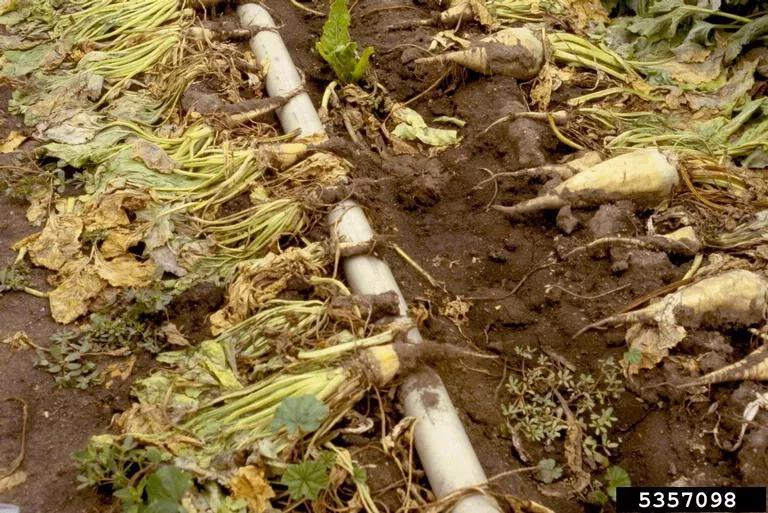
The most characteristic damage is below ground: infected sugar beet develops a shortened, narrowed or wineglass-shaped taproot with a dense beard of fine lateral and feeder roots. Above-ground symptoms can be mild or absent early in the season, so visual inspection alone is unreliable. Confirm suspected cases with a plant diagnostic laboratory using root tissue and appropriate serological or molecular testing.
Symptoms and identification
Symptoms vary with cultivar resistance, virus strain, infection timing, soil inoculum and weather. Common field symptoms include:
- patches of stunted, pale or chlorotic sugar beet plants;
- wilting despite adequate soil moisture and an unusually upright leaf posture;
- small, constricted or misshapen taproots;
- profuse proliferation of fine lateral roots, producing the characteristic “bearded” or “crazy” root;
- tan to brown discoloration of vascular tissues in the root; and
- occasionally, yellow vein clearing that may become necrotic on leaves during systemic infection.
Root symptoms are more diagnostic than foliar symptoms. Yellowing and wilting can resemble nitrogen deficiency, drought, Aphanomyces root rot, Fusarium yellows and other root disorders.
Causes and spread
BNYVV is spread mainly when motile zoospores of Polymyxa betae carry the virus into young beet roots. The parasite produces long-lived resting spores, or cystosori, in infected root tissue and soil. Infested soil can move between fields on tillage equipment, harvesters, vehicles, footwear, tools, transplants and muddy water. Runoff, irrigation water and soil movement can enlarge contaminated areas.
The vector has a restricted host range that includes beet and some related members of the beet and amaranth groups, but its presence does not prove that it carries BNYVV. The parasite may persist in soil without causing disease unless virus is also present.
Life cycle and persistence
Resting spores of Polymyxa betae can survive for many years in infested soil. When soil is sufficiently moist, spores germinate and release zoospores. These swim through water films to root hairs or young root tissue, where the vector establishes infection and delivers BNYVV into susceptible beet cells.
The virus multiplies within root tissues and is redistributed through the plant. Infected roots support further development of the vector, including formation of new resting-spore clusters that return to the soil when roots decompose. Systemic movement into foliage is uncommon, which explains why severe root damage may occur with limited leaf symptoms. Some BNYVV populations can partially overcome commonly used resistance genes, so resistance performance must be considered locally.
Treatment and control
There is no treatment that eradicates BNYVV from an infected plant or reliably cleans infested soil. Remove severely affected plants from small garden plantings without spreading attached soil, and bag or dispose of them according to local requirements rather than composting soil-covered roots.
For commercial or repeated plantings, the principal management measure is planting a resistant or tolerant sugar beet cultivar. Resistant plants may still become infected, particularly where resistance-breaking virus populations occur, but they generally maintain better root yield and quality. Improve drainage where feasible, avoid unnecessary irrigation and reduce soil movement. Confirm the diagnosis before treating for nutrient deficiency, nematodes or other root diseases.
Low-impact and biological control
No organic spray, soil amendment or biological product should be presented as a proven cure for BNYVV. In organically managed systems, emphasize resistant cultivars, clean planting material, sanitation of equipment, runoff control, removal of volunteer beets, sensible rotation and prevention of soil movement. Maintaining balanced fertility and avoiding water stress may reduce compounding damage, but these practices do not eliminate the virus or its vector.
Use only organically approved inputs that are legally registered for the specific crop and use in the United States; verify current certification and label status before application.
Prevention
Prevention is more effective than attempting to cure infected plants or disinfect infested soil. In U.S. beet production or large plantings:
- Choose cultivars with documented rhizomania resistance suited to the local production region and current resistance-breaking risk.
- Use clean, certified seed and avoid moving soil from known infested fields.
- Remove soil from tillage, planting and harvesting equipment before it enters clean fields; clean tires, tools and footwear as practical.
- Manage runoff and avoid moving contaminated irrigation water into clean beet ground.
- Use crop rotation to reduce beet production in infested ground, while recognizing that rotation alone may not eliminate the long-lived vector or virus.
- Control volunteer beets and relevant weeds that can maintain the vector or, where documented, the virus.
- Map affected patches and arrange laboratory testing before selecting future cultivars or changing field plans.
Interesting facts
The name rhizomania means “root madness” and refers to the striking proliferation of fine roots around the taproot. The virus name comes from the less common symptom of yellow vein clearing that can progress to vein necrosis. Rhizomania is unusual because a virus disease depends on a soilborne plasmodiophorid parasite for efficient natural transmission.
BNYVV has been detected in spinach and other documented hosts, but host response and epidemiological importance vary by isolate and host genotype. In the United States, resistance-breaking BNYVV populations have been investigated in sugar beet-growing regions, making local cultivar recommendations and laboratory confirmation important.
No chemical treatment is recommended as a cure for BNYVV, and no pesticide program should be assumed to eliminate the persistent soilborne vector. Use only products legally authorized for the specific crop and problem in your state and country, and follow the current product label exactly. Any pesticide decision should be based on a confirmed diagnosis and advice from a state extension specialist or licensed crop adviser.