
 Source:
 Black Dot Disease
Colletotrichum coccodesBlack Dot Disease overview
Black dot disease is a soil- and tuber-borne fungal disease caused by Colletotrichum coccodes. It is best known on potato, where it produces black microsclerotia on roots, stolons, stems and tubers, but the same fungus can also cause root rot and ripe-fruit anthracnose of tomato and disease on other documented hosts. Symptoms are often confused with wilt, early blight or other blemish diseases.
Typical conditions
Overview
Colletotrichum coccodes is a fungal plant pathogen most strongly associated with black dot disease of potato (Solanum tuberosum). It can colonize roots, stolons, underground and aboveground stems, tubers and, in some production systems, foliage. On tomato it is also associated with root disease and ripe-fruit anthracnose or fruit rot. Disease importance varies with cultivar, inoculum level, crop history, weather and stress.
Diagnosis should not rely on black speckling alone. Microsclerotia, acervuli and other signs should be examined with a hand lens or confirmed by a plant diagnostic laboratory because similar discoloration can occur with other potato blemish diseases, wilts and rots.
Symptoms and identification
- Potato: roots may be reduced, brown to black and rotted; stolons and stems can carry numerous tiny black, dot-like microsclerotia. Tubers may show gray-brown to dark surface discoloration, irregular blemishes or round spots, particularly where skin is immature or damaged.
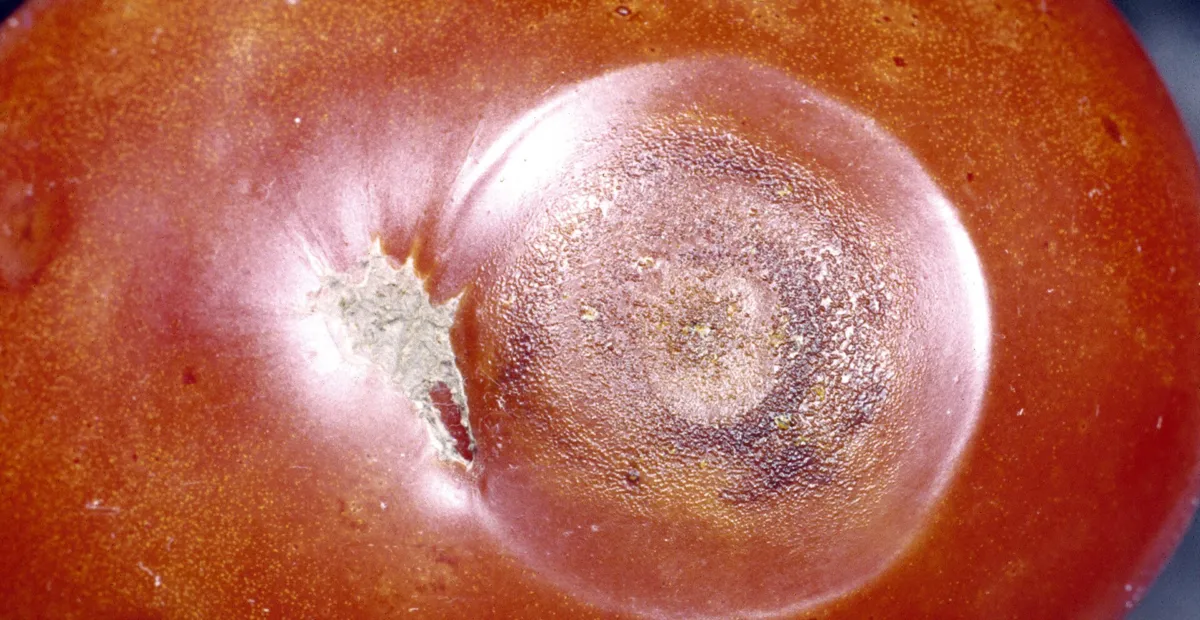
- Tomato: root and lower-stem browning, dry cracked cankers, microsclerotia on roots, premature decline and fruit decay may occur. Ripe fruit can develop sunken, circular lesions with dark fungal structures.
- Aboveground yellowing, wilting and early plant decline can resemble Verticillium wilt, drought stress or early blight. A hand lens may reveal black microsclerotia or dark acervuli.
Causes and spread
The pathogen survives for extended periods as microsclerotia and mycelium in infected crop debris, soil and contaminated seed or tubers. In potato, infected seed tubers can introduce inoculum, while infested soil and residues support root and stem infection. Spores are produced in acervuli and can spread by splashing water, irrigation, rain, soil movement, equipment, workers and handling of infected plant material.
Wounds, immature tissue, transplant stress, root injury and other diseases can increase infection. Volunteer potatoes, volunteer tomatoes and susceptible solanaceous weeds may help maintain the pathogen between crops. Host records are broad but not uniform; a reported association does not mean every isolate causes economically important disease on every host.
Life cycle and persistence
Colletotrichum coccodes persists between seasons mainly in soil, infected roots, stems, tubers and crop residue as dark microsclerotia. During favorable weather, the fungus produces acervuli and conidia on infected tissue. Conidia are moved short distances by rain or overhead irrigation and germinate on susceptible tissue when moisture persists.
Potato infection can begin in roots, stolons or stems and progress during the season, with tuber infection particularly important before skin set or where tuber skin is damaged. In tomato, root colonization may begin early, while fruit symptoms often become more apparent as fruit enlarges and ripens. The fungus may continue to develop on infected tissue after harvest or during storage.
Treatment and control
There is no way to eradicate established infection from a living plant. Remove severely affected plants and fruit when practical, and avoid moving contaminated soil or plant debris to clean beds. In potatoes, manage the crop for good vine health and minimize tuber injury at harvest; affected tubers should be graded out because blemishes reduce market quality.
For future plantings, combine rotation, clean planting material, sanitation, weed control, irrigation management and resistant or less susceptible cultivars where reliable local information is available. If symptoms are severe or diagnosis is uncertain, submit roots, stems, tubers or fruit to a state or university plant diagnostic laboratory.
Low-impact and biological control
Organic and low-input management relies primarily on prevention rather than curative treatment: certified clean seed, long rotations away from Solanaceae, removal of infected residue and volunteer hosts, careful handling, drip irrigation, improved drainage and reduced soil movement. Composting should be based on a verified process rather than assumed pathogen destruction.
Biological products may be permitted in some organic systems, but performance and labeling vary by crop, formulation and location. Use only products listed by the Organic Materials Review Institute or otherwise permitted under the applicable organic standard, and follow the product label.
Prevention
- Plant disease-free, certified potato seed and inspect seed pieces or transplants before planting.
- Use crop rotation with non-solanaceous crops; avoid repeatedly planting potato, tomato, pepper or eggplant in the same soil.
- Remove and destroy or properly dispose of diseased plants, cull tubers and heavily infected residue. Do not compost material unless the composting process reliably reaches pathogen-killing temperatures.
- Control volunteer potatoes, volunteer tomatoes and documented solanaceous weed hosts.
- Minimize root and tuber injury, improve drainage, avoid excessive irrigation and use drip or directed irrigation when practical.
- Clean soil and plant debris from tools, stakes, harvest equipment and footwear before moving between fields or beds.
- Harvest and handle tubers carefully to protect skin, then cure and store them under conditions appropriate for the crop and cultivar.
Interesting facts
- The disease name refers to numerous black, dot-like microsclerotia visible on infected potato tissue.
- The same organism is associated with potato black dot and tomato ripe-fruit anthracnose or root disease, although symptoms and economic importance differ by host.
- Potato tuber skin can limit penetration when intact; damaged or immature skin is more vulnerable to infection.
- Black dot may be mistaken for Verticillium wilt, early blight, black scurf, silver scurf or other potato blemish problems without close examination.
- Host records include several solanaceous crops and weeds, but susceptibility and disease severity can vary substantially among isolates and host varieties.
Fungicides generally provide the greatest value as part of a preventive, integrated program and cannot reliably reverse advanced root, stem or tuber infection. Product registrations and approved uses differ by crop, state and production system. Use only a pesticide legally authorized for the specific crop and disease in your country and state, and follow the current label exactly, including rate, timing, personal protective equipment, re-entry interval, preharvest interval and resistance-management instructions. Do not treat edible crops with an off-label product.
Affected plants
The plants below are linked to this problem by structured host-plant data. The list updates automatically as new plant profiles are added.
 Onion (Allium cepa) care guideAllium cepa
 Allium christophii care guideAllium christophii
 Bunching onion (Allium fistulosum) care guideAllium fistulosum
 Giant Allium (Allium giganteum) care guideAllium giganteum
 Ornamental onion (Allium) care guideAllium
 Garlic (Allium sativum) care guideAllium sativum
 Chives (Allium schoenoprasum) care guideAllium schoenoprasum
 Ransoms (Allium ursinum) care guideAllium ursinum