
Wind damage
Wind damage overview
Wind damage is a noninfectious environmental disorder caused by strong, persistent or gusty air movement, often intensified by blowing soil or sand. It can shred leaves, abrade stems, break branches, topple plants, expose roots, increase water loss and reduce crop quality. Symptoms may appear suddenly after storms or develop gradually where drying winds repeatedly stress exposed plants.
Typical conditions
Overview
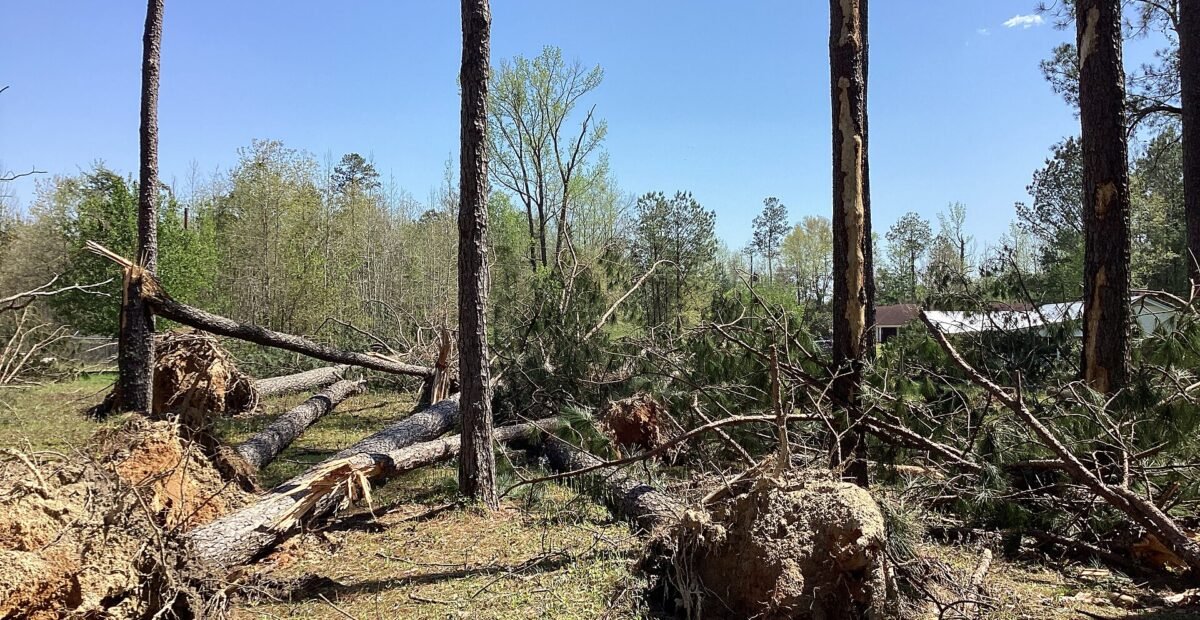
Wind injury ranges from temporary wilting and leaf flutter damage to severe tearing, stem breakage, uprooting and canopy loss. Direct wind can desiccate foliage and increase transpiration; wind-driven sand or dust causes abrasion that removes or wounds surface tissue. Strong storms may also move soil, bury seedlings, expose roots, break fruiting stems or cause trees to lean.
Diagnosis is strongest when damage is concentrated on the windward side, follows a storm or windy period, and lacks the characteristic pattern of an infectious disease or feeding pest. Inspect the whole site, including nearby plants and exposed soil, before deciding on treatment.
Symptoms and identification
- Ragged, shredded, curled or scorched-looking leaves, often with brown margins or pale abrasions.
- Fine stippling, scraped epidermis, desiccated patches or sandblasted lesions on wind-facing foliage.
- Bent, cracked, split or broken stems, petioles, branches and flower stalks.
- Leaning or uprooted plants, heaved soil, exposed roots, buried seedlings and fallen fruit.
- Wilting despite moist soil, reduced leaf area, delayed maturity and lower yield or market quality after repeated exposure.
Wind injury is often uneven across a planting and may be most severe at field edges, on elevated sites and where barriers suddenly end.
Causes and spread
Causes include thunderstorms, derechos, hurricanes, frontal winds, persistent seasonal winds and strong localized gusts. Dry soil, sparse ground cover, open exposure, newly transplanted plants, tender young growth, large canopies, weak branch unions, poor root establishment and saturated or shallow rooting zones increase vulnerability.
Windblown sand and dry soil particles act as abrasives. They can remove topsoil, bury or uncover roots and abrade plant surfaces. Wind itself does not spread a disease, but wounds and airborne dust may increase the opportunity for secondary infection or contamination by plant pathogens. Damage is not contagious from plant to plant.
Life cycle and persistence
There is no biological lifecycle. Injury develops during or after exposure: moving air first increases water loss and bends tissues; stronger gusts tear leaves or break stems; windblown particles abrade the surface; and prolonged erosion may uncover roots or bury seedlings. Recovery then depends on remaining healthy buds, roots and vascular tissue. Secondary decay or disease may develop later in large wounds, especially when tissues remain wet or damaged.
Treatment and control
- Assess safety first. Keep away from hanging limbs, unstable trees and downed power lines; use a qualified arborist for major limbs, split trunks, uprooted trees or work near utilities.
- Replant small, recently disturbed plants if roots remain intact, firm the soil around them and water thoroughly. Do not bury the crown or trunk.
- Remove leaves or stems that are fully broken, crushed or dead with clean tools. For trees, make proper cuts just outside the branch collar; do not make flush cuts or coat routine wounds.
- Water deeply during dry weather, but avoid saturated soil. Apply a 2–3 inch layer of organic mulch over the root zone, keeping it several inches away from trunks and crowns.
- Do not rush to fertilize severely damaged plants. Allow recovery, then correct confirmed soil or nutrition problems based on a soil test rather than assuming fertilizer will repair wind injury.
- Monitor surviving plants for several seasons for dieback, decay, insect attack or disease entering through wounds. Replace plants when stems, crowns or roots are irreparably destroyed.
Low-impact and biological control
Wind damage has no pesticide cure. The most effective nonchemical measures are windbreaks, hedgerows, residue retention, cover crops, organic mulch, soil-cover management, appropriate irrigation and careful structural pruning. For valuable trees, professional assessment and corrective pruning are preferable to improvised repair. Remove broken plant material where it could harbor secondary problems, but do not remove healthy foliage unnecessarily.
Prevention
- Choose plant species and cultivars suited to the site and place wind-sensitive crops behind properly designed windbreaks, hedgerows, fences or buildings.
- Use living wind barriers that reduce wind speed without creating severe turbulence; maintain appropriate spacing and avoid abrupt barrier gaps.
- Retain crop residue, use cover crops and keep soil covered to reduce wind erosion and sandblasting.
- Establish transplants before the windiest season when practical, irrigate deeply during dry periods and avoid cultivating soil when it is loose and highly erodible.
- Support newly planted trees only when needed. Use broad, flexible ties that allow limited trunk movement, inspect them regularly and remove supports once roots are established.
- Prune trees before storm season to remove dead, broken or poorly attached branches and correct structural defects while young; do not make unnecessary large cuts.
- After storms, secure containers, repair barriers and remove hazards only when it is safe to do so.
Interesting facts
- Windblown soil can injure plants by impact, burial and root exposure, not only by bending or breaking tissues.
- Young vegetable plants may be more sensitive to abrasive wind and sand than established field crops.
- Repeated wind can reduce leaf area, photosynthesis, growth, yield, fruit quality and survival even when no single storm kills the plant.
- Corn may suffer “green snap” or brittle snap when stalks break during rapid vegetative growth and severe winds.
- Healthy trees with sound root systems and strong branch attachments generally tolerate storms better than trees weakened by decay, girdling roots, poor planting or previous wounds.
Pesticides generally do not correct wind damage. Use only products legally authorized for the specific crop and problem in your country, and follow the current product label. Do not apply fungicides or insecticides solely because a wind-damaged plant has wounds; first confirm a secondary pest or disease and follow integrated pest-management guidance.
Affected plants
The plants below are linked to this problem by structured host-plant data. The list updates automatically as new plant profiles are added.
 Solanum aethiopicum care guideSolanum aethiopicum
 Solanum macrocarpon care guideSolanum macrocarpon
 Eggplant (Solanum melongena) care guideSolanum melongena
 Garden Huckleberry (Solanum scabrum) care guideSolanum scabrum
 Acer palmatum care guideAcer palmatum
 Electric Pink (Cordyline australis ‘Electric Pink’)Cordyline australis 'Electric Pink'