
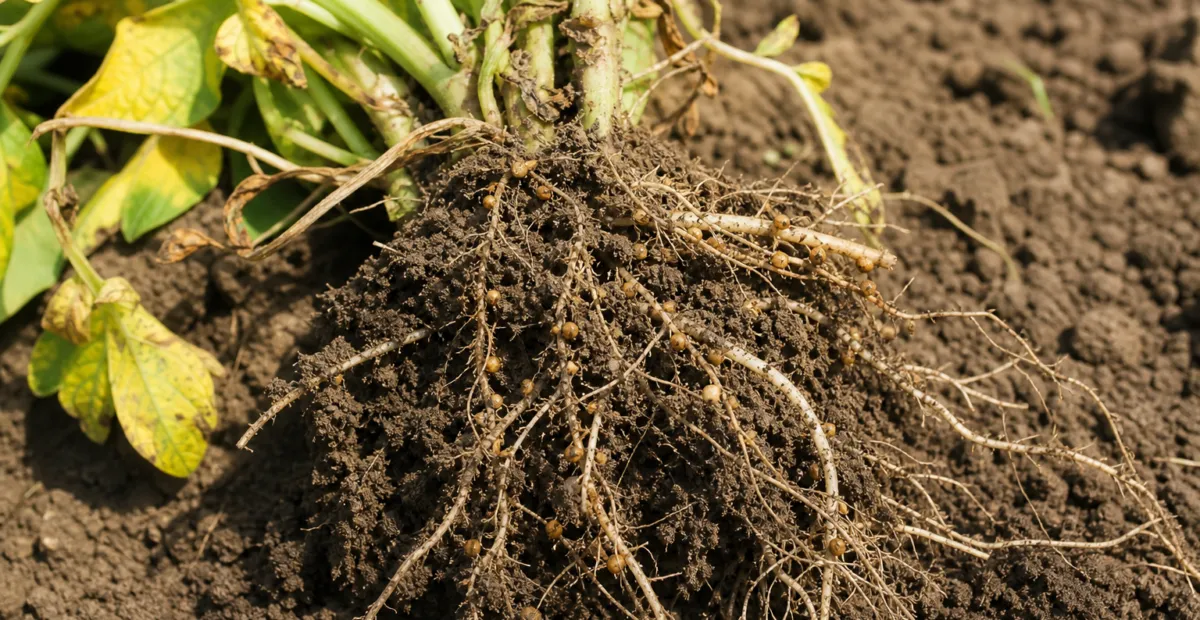
Golden nematode
Globodera rostochiensis (Wollenweber) Mulvey & StoneGolden nematode overview
Golden nematode, Globodera rostochiensis, is a soil-dwelling quarantine pest of potato and other susceptible solanaceous plants. Feeding on roots can produce stunting, yellowing, wilting and uneven patches, although low populations may cause no obvious symptoms. The pest is difficult to eradicate because mature cysts protect hundreds of eggs that can survive in soil for decades. Confirm suspected infestations through official soil testing rather than visual diagnosis alone.
Typical conditions
Overview
Golden nematode is a microscopic, sedentary root parasite. Second-stage juveniles hatch from cysts, enter susceptible roots and establish feeding sites. Infected plants may remain apparently normal when population density is low, but heavy infestations reduce root function and can cause patchy crop growth, yield loss and increased management costs.
In the United States, confirmed golden nematode infestations are concentrated in regulated areas of New York. A suspected finding should be reported and sampled through the appropriate state or federal plant-health channel; do not move potentially infested soil or plant material.
Symptoms and identification
Symptoms are usually nonspecific and become more pronounced as populations increase:
- stunting and uneven plant growth;
- yellowing, premature decline or wilting of foliage, especially during moisture stress;
- patchy or clustered weak plants in the field;
- reduced root development and poor tuber yield.
Small spherical cysts may be found on roots or in soil, but they are only a fraction of a millimeter across and may be difficult to see without magnification. Cysts can range from golden or orange to brown or black. Similar symptoms can result from drought, poor fertility, other nematodes, root rots or vascular diseases, so symptoms alone are not diagnostic.
Causes and spread
Spread occurs mainly when cyst-containing soil or plant material is moved. Important pathways include infested seed potatoes, soil adhering to farm or garden equipment, footwear, tools, vehicles, rooted transplants, harvested tubers and runoff or wind erosion of contaminated soil. Cysts detach from roots at harvest and remain in the field. Volunteer potatoes and susceptible weeds can maintain reproduction between crops.
Life cycle and persistence
Eggs remain protected inside a hardened female body, or cyst, in soil. Root exudates from a suitable host stimulate some eggs to hatch. Infective second-stage juveniles move through soil, enter roots and establish feeding sites. Females swell and become attached to roots; males become mobile and mate with females. The female body then hardens into a cyst containing roughly 300–500 eggs.
There is generally one generation per growing season. Development may take about 38–58 days under favorable conditions, while cysts can remain viable for many years—USDA states up to about 30 years. In the absence of suitable hosts, populations decline gradually, but a long rotation is not an immediate eradication guarantee.
Treatment and control
There is no curative treatment for an individual infected plant. Remove and dispose of suspect plants and soil only as directed by plant-health officials; do not compost them or transport the soil. Have soil sampled by an approved or state-recommended laboratory before choosing a management plan.
In regulated production, treatment may involve quarantine, clean-stock requirements, resistant cultivars, nonhost rotations, soil sanitation or other officially approved measures. Chemical nematicides or fumigants, where legally available, require a crop- and site-specific label and professional risk assessment; they are not a substitute for quarantine and sanitation.
Low-impact and biological control
There is no dependable home-garden treatment that eliminates an established golden nematode population. The most useful nonchemical measures are exclusion, sanitation and rotation:
- Plant certified, nematode-free seed potatoes and avoid saving tubers from an unknown or suspect source.
- Prevent soil movement by cleaning soil from boots, tools, tillers, harvest equipment and vehicles before entering another planting area.
- Do not move soil, rooted plants, tubers, compost or equipment from a suspect site.
- Remove volunteer potatoes and nightshade weeds that could provide host roots.
- Use long rotations with verified nonhost crops; do not assume that every broadleaf or weed species is a safe host.
- Where appropriate, grow potato cultivars with resistance to the confirmed pathotype, recognizing that resistance is pathotype-specific.
Cover crops, compost and soil-health practices may improve plant vigor but should not be presented as proven eradication methods for this quarantine nematode.
Prevention
Prevention is substantially more effective than attempting to reclaim infested soil. Use certified seed potatoes, maintain clean planting and harvest equipment, and establish a separate workflow for any suspect area. In New York and other regulated situations, comply with APHIS and state requirements for surveys, permits, movement and sanitation.
For commercial production, base cultivar selection and rotation planning on laboratory identification of the species and pathotype. For home gardens, avoid planting potatoes, tomatoes, eggplant or other potentially susceptible Solanum crops in soil associated with a confirmed or suspected infestation until authorities provide guidance.
Interesting facts
- The common name refers to the golden-yellow color of the mature female before it dies and becomes a darker cyst.
- Several cysts can fit on a pinhead, making visual detection in the field unreliable.
- Golden nematode was first identified in the United States in 1941 in New York.
- New York populations include the Ro1 and Ro2 pathotypes; potato resistance effective against one pathotype may not protect against another.
- APHIS reduced some New York regulated acreage in March 2025, but regulated areas and restrictions remain subject to official orders and updated surveys.
Do not begin a pesticide or soil-fumigation program based only on symptoms. In the United States, use only products legally authorized and currently labeled for the specific crop, site and nematode problem in your state, and follow the entire current label. Because golden nematode is federally regulated, contact USDA APHIS and the appropriate state plant-health authority before moving soil, plants, tubers, equipment or other regulated articles from a suspect site.