
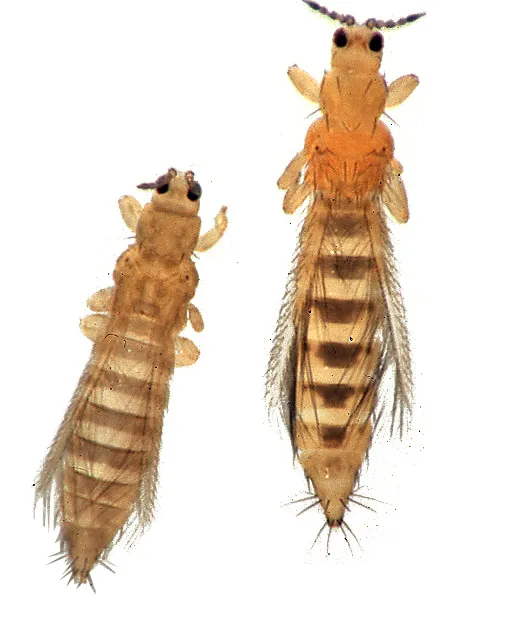
Onion thrips
Thrips tabaci LindemanOnion thrips overview
Onion thrips, Thrips tabaci, are tiny, highly mobile insects that rasp and suck plant cells from leaves, especially inside onion leaf folds and near the bulb. Feeding produces pale streaks, silver stippling and scarring, and severe infestations can reduce bulb size, yield and storage quality. The species also has a broad host range and may transmit iris yellow spot virus.
Typical conditions
Overview
Thrips tabaci, commonly called onion thrips, is a small insect in the family Thripidae. Adults are usually about 0.05–0.06 inch long, slender, and pale yellow to brown, with narrow fringed wings. Immatures are smaller, lighter and wingless.
Onion thrips commonly hide between folded leaves and near the onion neck, where they are difficult to reach with contact treatments. Both larvae and adults feed. Damage is most economically important during onion leaf development and early bulb formation, although green onions can become unmarketable from relatively minor scarring.
Thrips species can be difficult to separate in the field. A hand lens helps detect an infestation, but confirmation of T. tabaci may require an experienced diagnostician and microscopic characters.
Symptoms and identification
- Whitish specks, narrow streaks and elongated scars on leaves.
- Leaves develop a silvery, stippled or bleached appearance as feeding intensifies.
- Young leaves may become distorted, flattened or curled.
- Severe injury reduces green photosynthetic tissue and may contribute to premature leaf decline.
- Onions may form smaller or distorted bulbs and have reduced yield or storage quality.
- Green onions may be rejected because of visible scarring even when bulb yield is not greatly reduced.
- Black specks of frass may occur among damaged leaf folds, although their absence does not rule out thrips.
Inspect the interior of the onion neck and the protected surfaces of developing leaves; checking only exposed leaf surfaces can substantially underestimate numbers.
Causes and spread
Adults and larvae feed with rasping-sucking mouthparts, scraping epidermal cells and consuming plant fluids. The resulting empty or damaged cells reflect light, producing the characteristic silvering and stippling.
Populations commonly increase in hot, dry weather. Thrips may move into onions from grain or alfalfa as those crops senesce or are cut, and they can also develop on broadleaf weeds, volunteer plants and other crops. Wind assists adult dispersal, while infested transplants and plant debris can introduce or maintain populations.
T. tabaci can transmit iris yellow spot virus to onion and related crops. Virus symptoms should not be attributed to thrips feeding alone; laboratory or extension diagnosis may be needed when yellowing, diamond-shaped lesions or rapid plant decline occur.
Life cycle and persistence
Onion thrips pass through egg, first-instar larva, second-instar larva, prepupa, pupa and adult stages. Females insert small eggs into plant tissue. The two larval stages feed actively on leaves, while prepupae and pupae do not feed and commonly develop in soil or leaf litter beneath host plants.
Warm conditions can shorten development substantially; a generation may be completed in roughly 2–4 weeks, depending on temperature, host quality and local conditions. Multiple overlapping generations occur during the growing season. Females can reproduce without mating, allowing populations to increase rapidly when conditions are favorable.
Adults may overwinter in protected plant debris, soil-associated habitats or living vegetation, then disperse to spring crops. Exact overwintering success varies with climate and crop system.
Treatment and control
Use an integrated approach rather than relying on one rescue spray. Confirm that the insects and injury are consistent with thrips, then monitor inner leaves and record numbers and damage. For onions, an action threshold of about 30 thrips per plant has been used in some commercial production systems, but thresholds vary with plant age, market type, region and crop value; green onions may justify action at the first feeding injury because appearance determines marketability.
- Use a strong stream of water to dislodge thrips from small garden plantings, repeating as needed while avoiding prolonged leaf wetness.
- Remove badly infested leaves or plants when practical, especially in containers, beds and greenhouse crops.
- Improve spray coverage of leaf folds and the plant neck if a legally labeled treatment is selected; poor coverage is a common reason for failure.
- Rotate insecticides among different IRAC mode-of-action groups when repeated applications are necessary, and do not repeat ineffective products.
- Continue monitoring after treatment because eggs inside plant tissue and pupae in soil or litter are not consistently exposed to contact sprays.
When thrips are associated with a virus, insecticides may not prevent transmission if insects acquire and transmit the virus before being killed. Remove severely infected plants where recommended and manage both the vector and nearby weed or crop reservoirs.
Low-impact and biological control
For organically managed crops, combine sanitation, exclusion, monitoring, water sprays, reflective mulch and conservation of natural enemies. Predatory mites, minute pirate bugs and lacewings may contribute to suppression, although they may not control heavy infestations alone.
Products based on insecticidal soap, horticultural oil, azadirachtin, spinosad or entomopathogenic fungi such as Beauveria bassiana may be available for some U.S. crops and production systems. Effectiveness depends on formulation, timing, coverage and the crop label. These products can harm beneficial insects or cause phytotoxicity under hot conditions, so test and follow the label.
Because onion thrips occupy protected leaf folds and have nonfeeding stages away from exposed foliage, organic control usually requires repeated monitoring and coordinated cultural, biological and carefully timed contact measures.
Prevention
- Begin scouting before onion bulbing, when injury can become difficult to reverse.
- Inspect at least several plants from multiple areas of the garden or field, pulling leaves apart to examine the neck and inner leaves.
- Remove volunteer onions, cull piles and crop debris after harvest, and manage nearby weeds that sustain thrips.
- Where practical, avoid placing onions beside grain or alfalfa fields likely to senesce or be cut during onion development.
- Use healthy transplants and quarantine or inspect purchased plants before placing them near established crops.
- Maintain even irrigation and avoid drought stress. Rainfall and overhead irrigation can suppress thrips, although they are not reliable stand-alone controls.
- Use reflective mulch around young susceptible plants where appropriate; it may reduce colonization and delay virus spread.
- Protect predatory mites, minute pirate bugs, lacewings and other beneficial organisms by avoiding unnecessary broad-spectrum sprays.
Interesting facts
- Onion thrips are among the most important insect pests of onion in many U.S. production regions.
- The insects are often hidden between tightly folded leaves, so casual inspection can miss a damaging population.
- Most plant injury is caused by feeding larvae and adults; eggs are concealed inside plant tissue and the resting stages are commonly associated with soil or litter.
- Females can reproduce parthenogenetically, helping populations build quickly from a small starting infestation.
- Thrips damage can create entry points or predispose foliage to secondary problems, but silvering itself is not a fungal disease.
- Species identification matters: onion thrips may occur with western flower thrips and other species that differ in virus-vector capacity, host use and insecticide response.
Use only pesticide products legally authorized in the United States for onion thrips on the specific crop and production site. Follow the current product label for crop, rate, application interval, preharvest interval, reentry interval, personal protective equipment, pollinator precautions and resistance-management requirements. Do not infer legal use from a product name, another state, another crop or an older recommendation. Avoid spraying blooming weeds or crops where bees are foraging, and consult your state extension service or pesticide regulator for current local options.
Affected plants
The plants below are linked to this problem by structured host-plant data. The list updates automatically as new plant profiles are added.
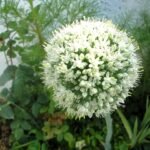 Onion (Allium cepa) care guideAllium cepa
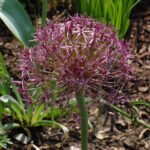 Allium christophii care guideAllium christophii
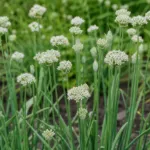 Bunching onion (Allium fistulosum) care guideAllium fistulosum
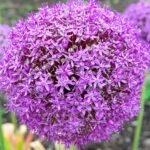 Giant Allium (Allium giganteum) care guideAllium giganteum
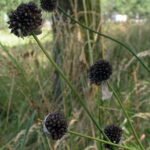 Ornamental onion (Allium) care guideAllium
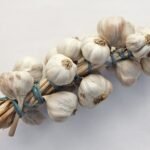 Garlic (Allium sativum) care guideAllium sativum
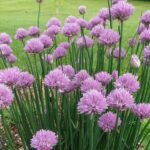 Chives (Allium schoenoprasum) care guideAllium schoenoprasum
 Ransoms (Allium ursinum) care guideAllium ursinum
 Wild leek or broadleaf wild leek (Allium ampeloprasum) care guideAllium ampeloprasum
 Shallot (Allium cepa Aggregatum Group)Allium cepa Aggregatum Group
 Cepa Group (Allium cepa Group)Allium cepa Cepa Group
 Rakkyo (Allium chinense) care guideAllium chinense