
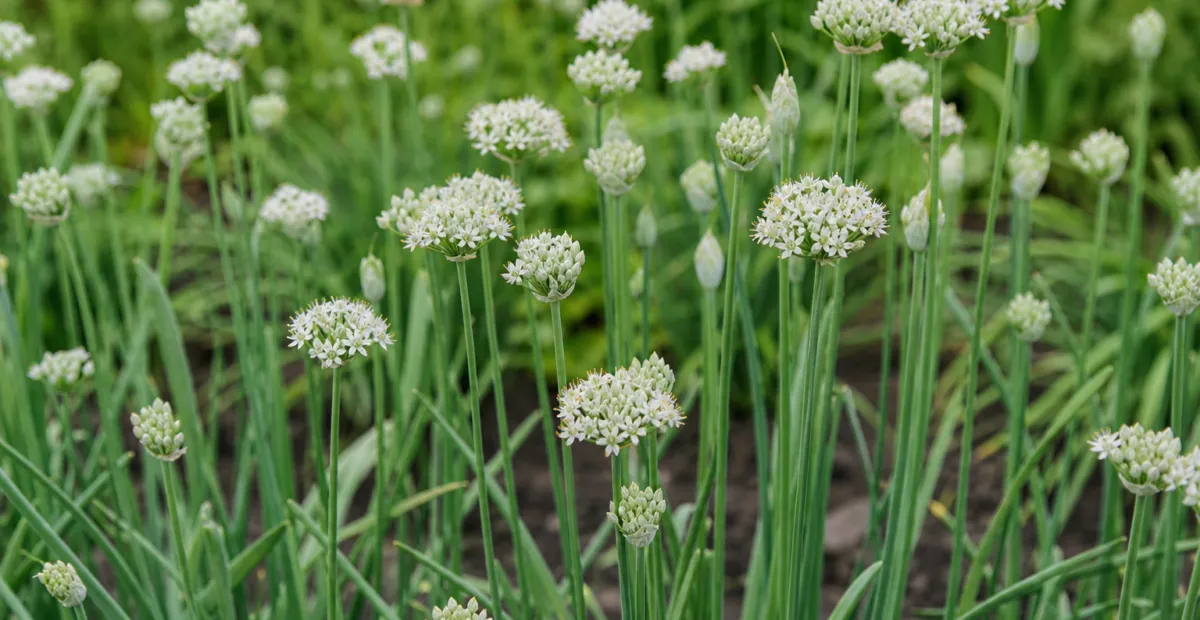
 AI-generated illustration
Bunching onion (Allium fistulosum) short overview
Bunching onion is a cold-hardy, non-bulbing onion grown for its crisp green leaves and mild, fresh flavor. It forms persistent clumps rather than a large storage bulb, making it useful for repeated harvesting in vegetable beds, containers, and small-space gardens. Give it full sun, fertile soil, and consistent moisture, then divide crowded clumps to maintain vigorous growth. A clump-forming, non-bulbing onion cultivated for its hollow green leaves and white leaf bases. It is commonly harvested young, but established plants can persist for multiple seasons and can be divided when crowded.
Taxonomic classification
Bunching onion (Allium fistulosum) care guide
Light and placement
Grow in a site receiving at least 6 hours of direct sun, ideally with morning and afternoon light. In hot climates, light afternoon shade can reduce stress without greatly reducing growth. Pale, thin leaves and weak stems suggest insufficient light; scorched tips and wilting despite moist soil suggest excessive heat, reflected light, or drought rather than too much sun alone.
Watering and humidity
Water deeply when the upper inch of soil begins to dry, keeping the shallow root zone evenly moist while avoiding standing water. Increase frequency during hot, windy weather and reduce it during cool, rainy periods. Container plants may need watering more often than plants in the ground. Mulch helps stabilize moisture and temperature.
Soil and growing medium
Use fertile loam or amended garden soil with good drainage and enough organic matter to prevent rapid drying. Raised beds and containers should drain freely because saturated soil can damage roots. A slightly acidic to neutral soil supports nutrient availability; very alkaline soil may cause micronutrient deficiencies and pale foliage.
Feeding
Incorporate finished compost before planting, then apply a balanced vegetable fertilizer or a modest nitrogen feed after establishment and again during sustained leaf production if growth is pale or slow. Avoid heavy late-season feeding, especially with excess nitrogen, because it can produce soft growth and increase disease pressure. Do not fertilize drought-stressed or waterlogged plants.
Growth and habit
Plants produce successive hollow leaves from a compact basal clump and do not normally form a large storage bulb. Mature clumps gradually expand through offsets and can remain productive for several years. Harvesting outer leaves or whole young plants keeps the stand open; divide crowded clumps before growth becomes weak and congested.
Planting and repotting
Sow shallowly in prepared soil and keep the seedbed evenly moist until emergence. For a continuous harvest, make successive sowings every few weeks during the suitable season. Thin crowded seedlings gradually and use the thinnings in the kitchen. Plant transplants without burying the crown, and leave room between perennial clumps for division and airflow.
Container-grown plants can be divided and refreshed when the clump fills the pot or growth becomes thin. Move the plant into a slightly wider container with fresh, fertile, well-drained mix. Keep the crown at its former depth, water thoroughly after planting, and provide bright sun while roots recover.
Propagation and pruning
Propagation
Sow seed shallowly in spring or during other locally suitable cool-season windows. Established clumps can be lifted and divided, with each division retaining roots and several shoots. Replant divisions promptly at the original crown depth and keep them evenly moist while they re-establish.
Pruning
Remove yellow, damaged, or diseased leaves at the base. Cut developing flower scapes before bloom if the priority is continued leaf harvest and clump multiplication. Avoid shearing the entire clump repeatedly; retain healthy foliage so the plant can replenish its reserves.
Overwintering
Established plants are cold hardy in much of the United States. Apply a light mulch after the ground begins to cool, especially in exposed sites, but keep mulch away from the crown. In containers, protect roots from repeated freeze-thaw cycles by grouping pots or moving them to a sheltered outdoor location. Avoid winter overwatering.
Uses
Primarily grown as an edible green onion for salads, garnishes, stir-fries, soups, sauces, and cooked dishes. The slender clumps suit raised beds, containers, balconies, and small vegetable gardens. Flowering plants can provide nectar and pollen to insect visitors. Keep raw plant material away from dogs and cats because consumed Allium tissues can cause toxicity.
Appearance
The species is recognized by upright, tubular, hollow green leaves and white to pale green leaf bases. Unlike bulbing onion types, it generally maintains a slender, non-enlarged base. Flowering plants send up a taller, leafless scape topped by a rounded cluster of small flowers. The hollow, round leaf cross-section helps distinguish it from some flat-leaved onion types.
Flowering
Flowering follows bolting and is more likely when plants are mature or exposed to chilling and seasonal cues. Numerous tiny flowers are held in a rounded umbel above the foliage. If the goal is continued leaf production and clump expansion, remove the developing scape before flowering; allow it to remain when seed production or pollinator value is desired.
Pollination and visitors
The exposed umbels provide pollen and nectar for insect visitors, including bees, bumblebees, hoverflies, and other small insects. Allium flowers are generally insect-pollinated, and the species has floral traits associated with cross-pollination rather than reliable self-pollination.
Allium fistulosum photos
Click any photo for a larger view. Source, author and license are shown separately.
Diseases and pests
Diseases
Good drainage, crop rotation, clean seed, and adequate spacing reduce problems. Watch for damping-off in seedlings, botrytis leaf blight, downy mildew, and root or bulb rots in wet conditions. Remove affected foliage, improve airflow, avoid overhead watering, and do not replant immediately in soil known to be contaminated with onion pathogens.
Pests
Thrips, onion maggots, and other onion-associated pests may attack foliage or roots. Inspect leaf bases and new growth regularly. Use row cover over young plants where appropriate, remove heavily infested material, rotate Allium crops, control weeds that shelter pests, and follow local extension guidance before using an insecticide.
Related diseases and pests
Only Plant Doctor profiles whose host data indicate this plant may be affected are shown here.
 DiseaseOnion downy mildewPeronospora destructor
 PestAllium leafminerPhytomyza gymnostoma Loew
 DiseaseAllium rustPuccinia allii
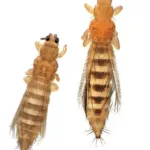 PestOnion thripsThrips tabaci Lindeman
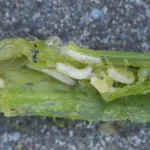 PestOnion MaggotDelia antiqua
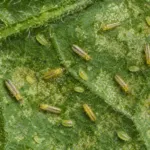 PestMelon thripsThrips palmi Karny
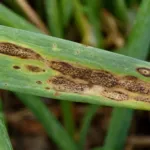 DiseaseStemphylium Leaf BlightStemphylium vesicarium (Wallr.) E.G. Simmons
 DiseaseSouthern blightAthelia rolfsii
Toxicity and pollen
Allium plants contain sulfur compounds that can damage red blood cells in susceptible pets, potentially causing hemolytic anemia after sufficient ingestion. Risk depends on amount and form consumed, and concentrated or repeated exposure is more concerning. Do not allow pets to eat leaves, bulbs, flowers, or kitchen trimmings; contact a veterinarian or animal poison service after suspected ingestion.
- Typical season
- Typically late spring through summer in the United States
- Pollination / pollen
- Relatively heavy pollen released from exposed anthers; mainly moved by flower visitors rather than long-distance wind transport.
The flowers produce pollen, but the species is primarily insect-pollinated, so pollen is not generally dispersed as efficiently as pollen from strongly wind-pollinated plants. Sensitive people may still react during bloom, especially when handling flowering plants or working closely around umbels. Remove flower stalks before bloom if reducing local pollen exposure is important.
Native habitat
This cultivated species is associated with temperate climates and fertile, open soils that remain moderately moist but drain well. It tolerates cool conditions and can persist through winter where the soil does not remain saturated. In cultivation it is found in vegetable beds, gardens, containers, and occasionally as a garden escape or introduced plant.
Interesting fact
The species usually forms no large storage bulb, unlike common bulb onion types. Its leaves are hollow and round in cross-section. Established clumps can be divided and harvested over multiple seasons. The name refers to a cultivated plant whose accepted native range is centered in China.
Frequently asked questions (FAQ)
The most relevant questions about this plant, with short and direct answers.
🌱Quick care
What is Allium fistulosum commonly called in the United States?⌄
Allium fistulosum is commonly called bunching onion. In the United States, it may also be sold as a scallion or green onion, although those names can also refer to immature bulbing onions.
Is bunching onion a perennial or an annual?⌄
Bunching onion is a cold-hardy perennial in mild climates, especially USDA Zones 6–9. In colder areas, it is often grown as an annual or protected through winter.
Does Allium fistulosum form a bulb?⌄
No, true Allium fistulosum generally forms elongated, non-bulbing stems rather than large storage bulbs. It is grown primarily for its edible green leaves and white lower stems.
What is the difference between bunching onion and a green onion?⌄
Bunching onion specifically refers to Allium fistulosum, a naturally non-bulbing onion. “Green onion” is a broader market term that can describe bunching onions or young plants of bulbing onion species.
Is bunching onion the same as a scallion?⌄
Bunching onion is commonly sold as a scallion, but “scallion” can also describe immature Allium cepa. The true Allium fistulosum plant is distinguished by its perennial habit and usually non-bulbing, round green leaves.
🌤️Environment and placement
How much sunlight does bunching onion need?⌄
Bunching onion grows best in full sun but tolerates light partial shade. Aim for about 6–8 hours of direct sunlight for the strongest growth and thickest stems.
What type of soil is best for bunching onions?⌄
Use fertile, loose, well-drained soil that holds steady moisture without becoming waterlogged. Incorporating compost before planting can improve both fertility and soil structure.
Can bunching onions grow in partial shade?⌄
Yes, bunching onions can tolerate light partial shade, but growth may be slower and stems may be thinner than those grown in full sun. Avoid dense shade for the best harvest.
Can bunching onions survive winter?⌄
Bunching onions can survive winter as perennials in many mild and moderately cold climates. In colder regions, mulch or container protection may help, although severe winter conditions can cause losses.
How do I prepare bunching onions for winter?⌄
In cold climates, apply a light mulch after the ground begins to cool and keep containers protected from repeated freeze-thaw cycles. In mild climates, plants can usually remain in the ground with normal moisture.
💧Care and problems
How often should I water bunching onions?⌄
Water bunching onions regularly to keep the soil moderately and evenly moist. Avoid letting the planting dry out for long periods, but do not leave the roots in saturated soil.
How long does it take bunching onions to grow from seed?⌄
Bunching onions can often reach a usable size in about 8–12 weeks from seed, depending on variety and growing conditions. Harvest may begin earlier if you prefer slender green stems.
When are bunching onions ready to harvest?⌄
Harvest bunching onions whenever the stems reach a useful size, commonly when plants are about 6–12 inches tall. Pull individual plants for a full harvest or cut selected greens for continued growth.
Can bunching onions regrow after cutting?⌄
Yes, bunching onions can regrow after cutting when the basal plate and roots remain in the soil. Leave a small portion of the plant above the soil and maintain steady moisture for continued growth.
How do I keep weeds from overtaking bunching onions?⌄
Control weeds early because young bunching onions are easily outcompeted. Shallow cultivation or a light organic mulch can reduce weed pressure without disturbing the shallow roots.
Why are my bunching onion leaves turning yellow?⌄
Yellow leaves may result from overwatering, poor drainage, drought, nutrient deficiency, age, or disease. Check soil moisture and drainage first, then inspect plants for soft roots, lesions, or insect damage.
Do bunching onions need fertilizer?⌄
Bunching onions perform best in fertile soil and may benefit from a balanced fertilizer when growth is weak or soil fertility is low. Avoid excessive nitrogen, which can produce lush but less sturdy growth.
🪴Planting and repotting
Can bunching onions grow in containers?⌄
Yes, bunching onions grow well in containers with drainage holes and loose, fertile potting mix. Choose a container at least 6 inches deep and keep the mix consistently moist.
When should I plant bunching onion seeds?⌄
In much of the United States, direct-sow bunching onion seeds in early spring as soon as the soil can be worked, or sow in late summer for a fall and winter crop. Timing varies by local frost dates and climate.
How deep should bunching onion seeds be planted?⌄
Plant bunching onion seeds about ¼ inch deep in finely prepared soil. Keep the seedbed evenly moist until germination, because small seedlings can struggle if the surface dries out.
How far apart should bunching onions be planted?⌄
Thin seedlings to roughly 1–2 inches apart for slender bunching onions, or provide more room for thicker individual plants. Rows about 12 inches apart make weeding and harvesting easier.
Can bunching onions be grown indoors?⌄
Yes, bunching onions can be grown indoors in a bright, sunny window or under a grow light. Use a container with drainage, fertile potting mix, and regular watering without keeping the soil soggy.
✂️Propagation and pruning
Can I grow Allium fistulosum from store-bought green onions?⌄
You can sometimes regrow the rooted bases of store-bought green onions, but reliable long-term growth depends on the plant being Allium fistulosum and retaining healthy roots. Seed or division is more dependable for establishing a perennial clump.
How do you propagate bunching onions?⌄
Bunching onions can be propagated from seed or by dividing established clumps. Division is useful for preserving a productive perennial planting, while seed is commonly used to start new plants.
Can bunching onions be divided?⌄
Yes, established bunching onion clumps can be divided and replanted. Separate the offsets or small groups of stems with roots attached, then water them well while they re-establish.
Do bunching onions spread?⌄
Established bunching onions can slowly expand into clumps through basal offsets. They may also produce seed after flowering, but unwanted self-seeding is generally limited under typical garden conditions.
⚠️Toxicity and safety
Can you eat bunching onion flowers?⌄
The flowers are generally edible in small culinary amounts, with an onion flavor, but the leaves and young stems are the usual harvest. Avoid eating any plant material treated with non-food-safe chemicals.
Are bunching onions toxic to dogs?⌄
Yes, bunching onion is toxic to dogs because it is an Allium. Keep pets from eating the leaves, stems, bulbs, flowers, or discarded trimmings, and contact a veterinarian promptly after suspected ingestion.
Are bunching onions toxic to cats?⌄
Yes, bunching onion is toxic to cats because it is an Allium. Prevent access to the garden and kitchen scraps, and seek veterinary advice promptly if a cat may have eaten any part of the plant.
Can people eat Allium fistulosum?⌄
Yes, Allium fistulosum is an edible culinary onion grown for its mild green leaves and white stems. Wash harvested parts thoroughly and do not consume plants exposed to unsuitable pesticides or contaminated soil.
🌸Flowering and special interest
Why are my bunching onions flowering?⌄
Bunching onions flower naturally as they mature, and flowering can also follow exposure to cold followed by warming conditions. Flowering is not usually a serious problem, but the stems may become tougher afterward.
Should I cut off bunching onion flowers?⌄
Cut off flower stalks if your priority is tender edible stems and continued vegetative growth. Leave some flowers if you want to collect seed or provide nectar for pollinators.
What do bunching onion flowers look like?⌄
Bunching onion produces a tall, hollow flower stalk topped by a rounded cluster of small creamy-white to yellowish-white flowers. Bloom commonly occurs from late spring through summer, depending on climate.
Do bunching onions attract pollinators?⌄
Yes, the rounded flower clusters can provide nectar and pollen for pollinating insects. Allowing a few mature plants to bloom supports garden biodiversity, although flowering plants may have tougher edible stems.
Similar plants
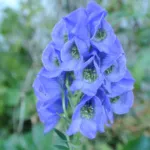 Azure Monkshood (Aconitum carmichaelii) care guideAconitum carmichaelii
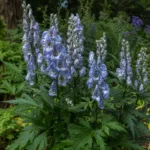 Monkshood (Aconitum ‘Stainless Steel’)Aconitum 'Stainless Steel'
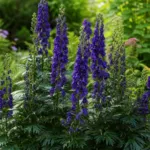 Monkshood (Aconitum ‘Bressingham Spire’)Aconitum 'Bressingham Spire'
 Golden full moon maple (Acer shirasawanum ‘Aureum’)Acer shirasawanum 'Aureum'
 Globosum (Acer platanoides ‘Globosum’)Acer platanoides 'Globosum'
 Striped maple (Acer pensylvanicum) care guideAcer pensylvanicum