
 Source:
 Viridis (Acer palmatum ‘Viridis’) short overview
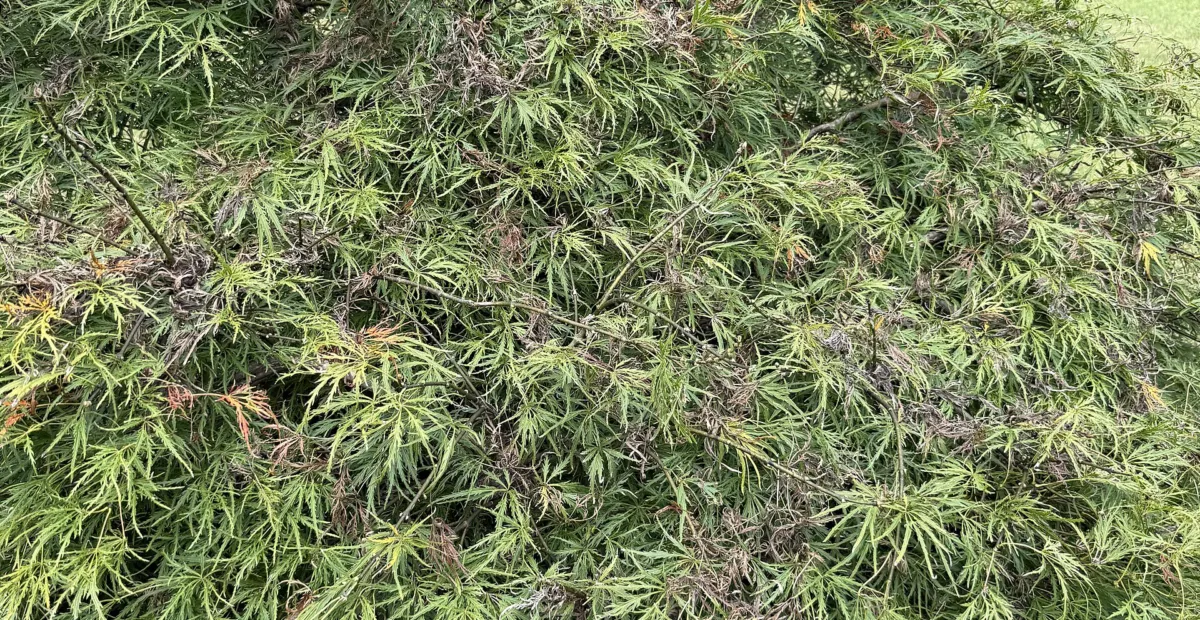
Acer palmatum 'Viridis' is a green laceleaf Japanese maple valued for its finely divided foliage and elegant, spreading form. The leaves remain green through spring and summer before developing yellow, orange, or mixed autumn tones. This slow-growing woody perennial prefers morning sun or filtered light, protection from drying winds, and consistently moist but well-drained, acidic to neutral soil. It is suitable for specimen planting, patios, and containers.
Taxonomic classification
Viridis (Acer palmatum ‘Viridis’) care guide
Light and placement
Give morning sun with afternoon shade, bright filtered light, or partial shade. In cooler climates it can take more sun if roots remain cool and moist; in hot regions, protect it from intense afternoon exposure and reflected heat. Scorched brown margins suggest excessive heat, drought, or wind, while weak growth and sparse color can result from very deep shade.
Watering and humidity
Water deeply when the upper few inches of soil begin to dry, then allow excess water to drain. Keep moisture consistent during spring growth and summer heat, especially for container plants. Reduce frequency in cool weather but do not allow the root ball to dry completely. Mulch helps stabilize moisture and root temperature.
Soil and growing medium
Use a moisture-retentive but well-drained loam amended with compost or fine organic matter. Slightly acidic to neutral soil is suitable; avoid persistently waterlogged sites and highly alkaline conditions, which can contribute to chlorosis. Mulch the root zone, keeping mulch away from the trunk, to moderate temperature and conserve moisture.
Feeding
Apply a balanced, slow-release fertilizer in early spring only if growth is weak or soil fertility is low. A thin annual mulch of finished compost is usually sufficient for established plants. Avoid high-nitrogen feeding after midsummer, which can encourage soft late growth and reduce winter readiness.
Growth and habit
This is a slow-growing, long-lived maple with a low, spreading to cascading habit. Branches may become layered or multi-stemmed with age. Stable moisture, shelter, and avoidance of root disturbance help maintain its refined form; harsh exposure can cause leaf scorch and tip dieback.
Planting and repotting
Plant in spring or fall while the tree is dormant, setting the root flare level with or slightly above the surrounding soil. Allow room for the mature spreading canopy and water deeply during establishment. A sheltered east- or north-facing position, or morning sun with afternoon protection, is especially useful in hot climates.
Repot container-grown specimens in early spring before bud break, moving up only one pot size. Refresh part of the growing medium without aggressively disturbing the root ball. Ensure generous drainage holes and protect the container from overheating and repeated freeze-thaw cycles.
Propagation and pruning
Propagation
Usually propagated by grafting selected scion wood onto compatible maple rootstock. Softwood cuttings may root under controlled nursery conditions but are less dependable. Seed does not reproduce the named cultivar true to type.
Pruning
Prune sparingly in late winter or during the dormant season, removing dead, crossing, or poorly placed branches. Avoid topping and heavy shearing, which spoil the natural layered form. Remove rootstock shoots below the graft promptly because they will not retain the cultivar's foliage character.
Overwintering
In the ground, protect young trees from drying winter winds and keep a stable mulch layer over the root zone. Container plants are more vulnerable to freezing; move them to a sheltered unheated location or insulate the pot while maintaining modest moisture. Do not bring the tree into a warm living room for extended winter growth.
Uses
Primarily an ornamental specimen for Japanese-style, woodland, rock, patio, and container gardens. Its fine foliage is especially effective near dark bark, stone, or contrasting green and yellow plants. It has no well-supported culinary or medicinal use for this named cultivar.
Appearance
The leaves are deeply divided into narrow, lace-like lobes and remain green through the growing season. Young stems and branches form a fine-textured framework, while older plants often develop layered, cascading branches. The combination of green dissected leaves and seasonal yellow-orange color helps distinguish this selection from red-leaved laceleaf cultivars.
Flowering
Small reddish flowers appear in spring before or around leaf emergence. They are visually secondary to the foliage and are followed by paired winged samaras. Flowering can be inconspicuous on young or heavily shaded plants.
Pollination and visitors
The small spring flowers may be visited by bees, hoverflies, and other small insects, but this cultivar is grown for foliage rather than substantial nectar display. Visitor activity is likely limited compared with plants selected specifically for pollinator gardens.
Acer palmatum 'Viridis' photos
Click any photo for a larger view. Source, author and license are shown separately.
Diseases and pests
Diseases
Watch for Verticillium wilt, anthracnose, cankers, and root problems caused by poor drainage. Reduce stress with correct planting depth, steady moisture, clean pruning tools, and good air circulation. Remove affected debris; consult local extension guidance before treating suspected wilt, since severely affected plants may not recover.
Pests
Common problems include aphids, scale, Japanese beetles, and spider mites during hot, dry weather. Inspect new growth and leaf undersides regularly. Improve plant vigor before using controls; wash off light infestations, encourage beneficial insects, and use targeted treatments only when damage is substantial.
Toxicity and pollen
Acer palmatum is generally regarded as non-toxic to dogs and cats by commonly used veterinary poison-control references. Normal garden contact is not considered hazardous, but sap, plant material, or samaras may cause mild gastrointestinal upset if eaten in quantity. Prevent pets and children from consuming large amounts of any ornamental plant.
- Typical season
- Spring
- Pollination / pollen
- Spring insect-dispersed pollen
As an insect-pollinated deciduous maple, it is not generally considered a major airborne pollen source. Flowering pollen is produced in spring, but cultivar-specific aeroallergen measurements are not well established. People with strong seasonal sensitivities should rely on personal symptoms and local pollen reporting.
Native habitat
The species is associated with temperate woodland margins and mountain habitats of Japan, Korea, China, eastern Mongolia, and southeastern Russia. It favors cool, moist, well-drained soils and protection from severe heat, drying wind, and abrupt moisture loss.
Interesting fact
The cultivar is commonly associated with the green-leaved Dissectum group of Japanese maples. Its extremely divided leaves can appear almost threadlike from a distance. Autumn color may range from yellow to orange and can vary with light, temperature, and plant stress.
Frequently asked questions (FAQ)
The most relevant questions about this plant, with short and direct answers.
🌱Quick care
How do you care for Acer palmatum 'Viridis'?⌄
Grow Acer palmatum 'Viridis' in morning sun or filtered light, evenly moist well-drained soil, and a sheltered site. Protect it from hot afternoon sun, drying winds, and standing water.
Is Acer palmatum 'Viridis' easy to grow?⌄
Acer palmatum 'Viridis' is moderately easy to grow when moisture and light are managed carefully. It can struggle with drought, reflected heat, poor drainage, or sudden exposure to intense sun.
🌤️Environment and placement
How much sun does Acer palmatum 'Viridis' need?⌄
Give it morning sun or filtered light, especially in hot climates. More sun may improve fall color, but strong afternoon sun can scorch the finely divided leaves.
Can Acer palmatum 'Viridis' grow in full sun?⌄
It can tolerate some full sun in mild, humid climates when the soil stays evenly moist, but partial shade is safer. Provide afternoon protection in hot or dry regions.
Where should I plant Acer palmatum 'Viridis'?⌄
Plant it in a sheltered location with morning light, afternoon shade, and protection from drying wind. A woodland-style bed, patio edge, or spot beneath taller open-branched trees is suitable.
What USDA zones are suitable for Acer palmatum 'Viridis'?⌄
Acer palmatum 'Viridis' is generally suited to USDA Zones 5 through 8, although local exposure and winter protection affect its performance. Container plants need additional root protection in cold climates.
Can Acer palmatum 'Viridis' grow in a container?⌄
Yes, it can grow well in a container with excellent drainage and consistent moisture. Container plants dry out faster than those in the ground and need protection from winter root freezing.
How large does Acer palmatum 'Viridis' get?⌄
Acer palmatum 'Viridis' is a slow-growing, spreading or weeping Japanese maple that commonly reaches about 6 to 12 feet tall and wide. Final size varies with graft, pruning, climate, and growing conditions.
💧Care and problems
How often should I water Acer palmatum 'Viridis'?⌄
Water whenever the upper soil begins to dry, giving enough water to moisten the root zone thoroughly. During hot or windy weather, check it more often, especially in a container.
Does Acer palmatum 'Viridis' need consistently moist soil?⌄
Yes, it performs best when the soil remains evenly moist but never waterlogged. Do not allow the root ball to become completely dry, particularly during establishment or summer heat.
Why are the leaves on my Acer palmatum 'Viridis' turning brown?⌄
Brown leaf edges or tips usually result from heat, drought, wind, salt, or sun scorch. Improve moisture consistency and afternoon protection, but damaged leaves will not turn green again.
Why is my Acer palmatum 'Viridis' wilting even though the soil is wet?⌄
Wilting in wet soil can indicate root stress from poor drainage, overwatering, heat, or transplant shock. Check that excess water drains freely and avoid watering again until the surface begins to dry.
Does Acer palmatum 'Viridis' need fertilizer?⌄
It usually needs little fertilizer if planted in fertile soil. Apply a light, balanced fertilizer in early spring only when growth is weak, and avoid high-nitrogen feeding that can produce soft, scorch-prone growth.
What soil is best for Acer palmatum 'Viridis'?⌄
Use moist, well-drained loam enriched with organic matter. Avoid compacted clay, very sandy soil that dries rapidly, and locations where water remains around the roots.
🪴Planting and repotting
When is the best time to plant Acer palmatum 'Viridis'?⌄
Plant it in spring or fall when temperatures are moderate and the soil is workable. Fall planting allows root establishment before summer, while spring planting is useful in areas with severe winter conditions.
How do I plant Acer palmatum 'Viridis' in the ground?⌄
Set it at the same depth it was growing in its nursery container, then backfill with native soil and water deeply. Mulch the root zone with 2 to 3 inches of organic mulch, keeping mulch away from the trunk.
Can Acer palmatum 'Viridis' be grown in a pot?⌄
Yes, use a container with drainage holes and a well-drained potting mix, leaving room for several years of root growth. Repot only when roots fill the container or water runs through too quickly.
How do I protect potted Acer palmatum 'Viridis' in winter?⌄
Move the container to a sheltered location after dormancy, protecting the pot from repeated freezing and thawing. Do not bring it into a heated room, because the tree needs winter dormancy.
✂️Propagation and pruning
How is Acer palmatum 'Viridis' propagated?⌄
Named plants are most reliably propagated by grafting, while cuttings can be difficult and inconsistent. Seed will not reliably reproduce the exact 'Viridis' characteristics.
When should I prune Acer palmatum 'Viridis'?⌄
Prune lightly in late winter or during the dormant season to remove dead, damaged, crossing, or poorly placed branches. Avoid heavy pruning because it can spoil the natural cascading form and encourage stress.
How do I prune a weeping Acer palmatum 'Viridis'?⌄
Preserve the main cascading structure and remove only branches that cross, rub, grow inward, or touch the ground undesirably. If the tree is grafted, remove any shoots emerging from below the graft.
⚠️Toxicity and safety
Is Acer palmatum 'Viridis' toxic to dogs and cats?⌄
Acer palmatum 'Viridis' is generally considered non-toxic to dogs and cats. Ingestion of any plant material can still cause mild stomach upset, so contact a veterinarian if symptoms occur.
🌸Flowering and special interest
Does Acer palmatum 'Viridis' flower?⌄
Yes, it produces small, inconspicuous reddish flowers in spring, followed by paired winged samaras. The flowers are ornamental but much less noticeable than the finely cut green foliage.
What fall color does Acer palmatum 'Viridis' have?⌄
Its green foliage can turn yellow, orange, or red in fall, with the color varying by weather, light, and plant stress. Cooler nights and adequate moisture generally support better autumn display.
Similar plants
 Nicholsonii (Acer palmatum ‘Nicholsonii’)Acer palmatum 'Nicholsonii'
 Seiryu (Acer palmatum ‘Seiryu’)Acer palmatum 'Seiryu'
 Bigleaf maple (Acer macrophyllum) care guideAcer macrophyllum
 Lion’s head maple (Acer palmatum ‘Shishigashira’)Acer palmatum 'Shishigashira'
 Red Snakebark Maple (Acer capillipes) care guideAcer capillipes
 Sango Kaku (Acer palmatum ‘Sango Kaku’)Acer palmatum 'Sango Kaku'