
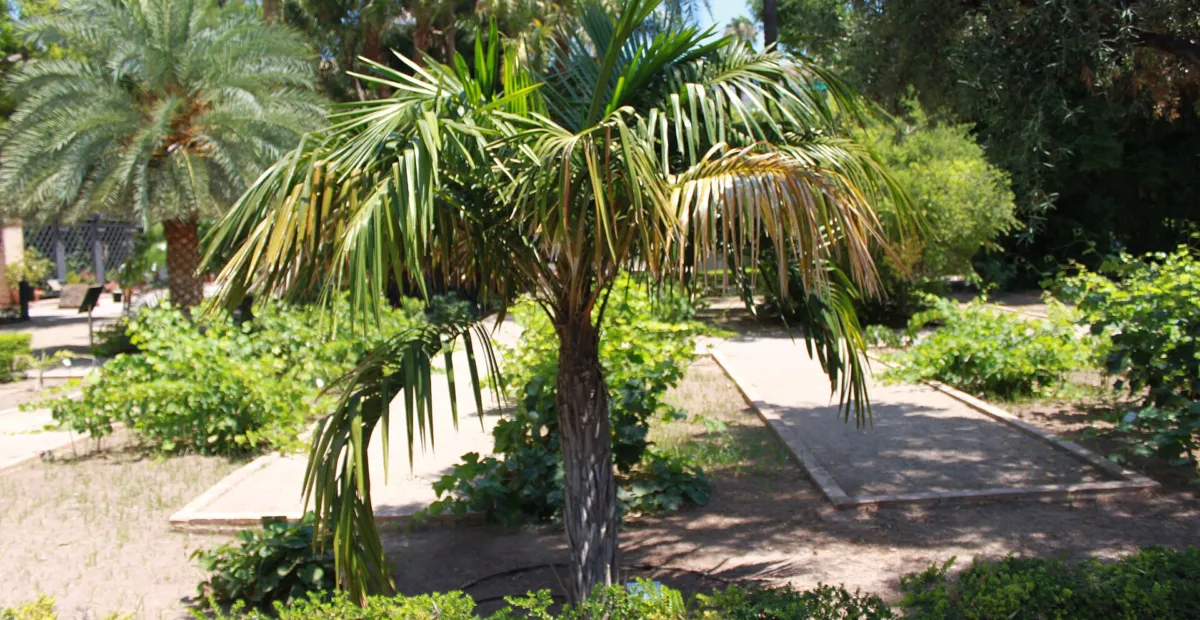
 Source:
Arikury Palm (Syagrus schizophylla) short overview
Arikury Palm is a distinctive Brazilian palm with arching pinnate fronds, a solitary trunk, cream to yellow flowers, and orange drupes. It grows slowly into a compact architectural specimen and can tolerate drought, sandy soil, salt spray, and coastal exposure once established. In the United States, it is best suited to warm frost-free landscapes or containers that can be protected during cold weather.
Taxonomic classification
Arikury Palm (Syagrus schizophylla) care guide
Light and placement
Give full sun for the strongest growth and best crown form, with partial afternoon shade in very hot, dry sites or during container acclimation. A south- or west-facing position is appropriate where winters are mild. Pale, stretched fronds suggest insufficient light; bleached or scorched leaflets indicate excessive reflected heat, drought, or abrupt sun exposure.
Watering and humidity
Water deeply when the upper portion of the root zone has begun to dry, then allow excess water to drain fully. Keep newly planted palms more evenly moist during establishment. Reduce irrigation in cool weather and under winter protection, but do not let container media remain bone-dry for prolonged periods. Humidity is helpful but not a substitute for drainage.
Soil and growing medium
Use a fertile but sharply draining mix or soil containing sand, loam, and organic matter. Sandy coastal soils are acceptable when the root zone is enriched and irrigation is available during establishment. Avoid persistently waterlogged ground. Published horticultural guidance ranges from slightly acidic to alkaline conditions, so a near-neutral, well-drained medium is a practical target.
Feeding
Feed during active growth with a complete palm fertilizer containing micronutrients, following the product label at the lower recommended rate for container plants. Apply after the root zone is moist and water in thoroughly. Do not fertilize during cold, dark winter conditions or when the plant is drought-stressed or newly transplanted.
Growth and habit
This is a slow-growing, evergreen, usually solitary palm with a fountain-like crown. Mature plants remain relatively compact compared with many landscape palms. Allow room for the arching fronds, keep the crown clear of frequent contact, and avoid damaging the trunk or leaf bases during maintenance.
Planting and repotting
Plant after the danger of frost has passed, preferably in spring or early summer, at the same depth as the original root ball. Allow roughly 8–12 feet of clearance for a mature specimen, accounting for fronds and access. Water deeply during establishment, then extend the interval as roots develop.
Repot container plants only when roots have filled the pot or drainage has declined. Move up one container size in spring or early summer, disturb the root ball as little as possible, and use a fast-draining palm mix. Avoid oversized pots that stay wet for long periods.
Propagation and pruning
Propagation
Propagate from fresh seed. Clean the fruit, sow in a warm, airy, well-drained medium, and maintain steady moisture without saturation. Germination is commonly reported in about two to four months, though fresh seed and warm temperatures improve consistency.
Pruning
Remove only fully dead, damaged, or hazardous fronds using clean tools. Do not cut green fronds for cosmetic shaping, strip persistent leaf bases, or injure the crownshaft area. Prune in warm weather so wounds dry quickly.
Overwintering
Protect from temperatures near freezing and from prolonged cold, especially when young or container-grown. Move pots into a bright, cool greenhouse or conservatory before frost, reduce watering in winter, and return outdoors gradually in spring. In marginal outdoor zones, use a sheltered microclimate and frost cloth during brief cold events.
Uses
Use as a specimen palm in warm coastal landscapes, tropical gardens, courtyards, and large containers. Its compact scale, arching fronds, drought tolerance after establishment, and tolerance of salt spray make it useful for protected seaside plantings. Fruit is reported botanically, but do not promote consumption without verified preparation and safety information.
Appearance
The palm has a compact fountain-like crown of long, feather-shaped pinnate fronds that arch outward and may twist slightly. Leaf bases and fibers can remain attached to the trunk, and the lower leaf bases may bear spines. The trunk is generally solitary, with a rugged texture from persistent bases and leaf scars.
Flowering
This monoecious palm produces branched inflorescences with separate male and female flowers on the same plant. Flowers are cream to yellow or golden and are described as free-flowering in cultivation. Fruit develops as fleshy orange drupes after flowering. Exact flowering timing varies with climate and is not firmly standardized for the United States.
Pollination and visitors
The flowers are functionally suitable for animal visitation, but a reliable species-specific record of the main pollinator or visitor group was not located. No pollinator code is assigned rather than inferring one from general palm biology.
Syagrus schizophylla photos
Click any photo for a larger view. Source, author and license are shown separately.
Diseases and pests
Diseases
Maintain airflow, avoid chronically wet soil, and remove only clearly dead or diseased material with sterilized tools. Watch for trunk or crown decline associated with poor drainage and for leaf-spot symptoms during persistently humid weather. No species-specific disease profile was found that supports a more detailed treatment.
Pests
Inspect fronds and leaf bases for scale, mealybugs, mites, and caterpillar damage, especially on container plants under cover. Improve airflow, isolate infested specimens, and use horticultural oil or insecticidal soap only according to the product label. Avoid stressing roots with drought followed by saturation.
Toxicity and pollen
Reliable authoritative evidence confirming human or companion-animal toxicity for Syagrus schizophylla was not located. Do not assume that the fruits or other plant parts are edible merely because some palm species have edible fruit. Prevent children and pets from chewing unfamiliar plant material, and seek professional advice after ingestion.
- Pollination / pollen
- Pollen from male flowers; airborne relevance not established
As a flowering palm, the species produces pollen, but reliable species-specific measurements of airborne pollen abundance and U.S. allergy relevance were not located. Insect pollination does not by itself prove zero allergy risk. People with pollen sensitivity should monitor symptoms during flowering and limit direct exposure if needed.
Native habitat
The species is native to eastern Brazil, from Pernambuco to Espírito Santo, where it occurs in wet tropical and coastal-forest settings. It is associated with warm conditions, well-drained soils, and exposure to coastal influences. In cultivation it can also tolerate sandy soil, drought after establishment, and salt spray.
Interesting fact
The species is native to coastal and wet tropical regions of eastern Brazil.
It is accepted in current Kew taxonomic databases.
The palm is usually solitary but may occasionally form clusters.
Its mature fruit is described as an orange fleshy drupe.
Fresh seeds may take two to four months to germinate.
Frequently asked questions (FAQ)
The most relevant questions about this plant, with short and direct answers.
🌱Quick care
What is the Arikury Palm?⌄
The Arikury Palm is the accepted common name for Syagrus schizophylla, a small, solitary feather-leaf palm native to coastal Brazil. It is valued for its upright form, evergreen foliage, orange fruit, and distinctive spiny leaf bases.
How big does an Arikury Palm get?⌄
An Arikury Palm commonly reaches about 12 to 15 feet tall and 6 to 12 feet wide in cultivation. Growth is slow, although plants in warm tropical or subtropical climates may eventually become larger.
Is Syagrus schizophylla fast-growing?⌄
No, Syagrus schizophylla is generally a slow-growing palm. Consistent warmth, adequate moisture, good drainage, and balanced palm nutrition can improve growth, but it will not develop as quickly as many common landscape palms.
🌤️Environment and placement
How much sun does an Arikury Palm need?⌄
An Arikury Palm grows well in full sun to partial shade. Full sun encourages a compact, upright crown, while partial shade is also suitable and may produce somewhat longer fronds.
Can an Arikury Palm grow in shade?⌄
Yes, an Arikury Palm can grow in partial shade, especially beneath taller trees or palms. Avoid dense shade, which can reduce vigor and produce a more open, stretched appearance.
What USDA hardiness zone is best for Syagrus schizophylla?⌄
Syagrus schizophylla is best suited to warm USDA Zones 10a through 11, with some reports of survival in protected parts of Zone 9b. In cooler areas, grow it in a container or protect it from freezes.
Can an Arikury Palm tolerate cold?⌄
An Arikury Palm tolerates brief light freezes better than many tropical palms, but it is not reliably frost-hardy. Protect it when temperatures approach freezing, particularly when the palm is young or recently planted.
Is an Arikury Palm drought-tolerant?⌄
Yes, an established Arikury Palm has good drought tolerance once its root system is developed. Water it during prolonged dry periods, especially in sandy soil or during its first year after planting.
Can Syagrus schizophylla tolerate salt spray?⌄
Yes, Syagrus schizophylla has moderate to good tolerance of coastal conditions and salt spray. Even so, protect it from intense direct exposure where possible and rinse foliage with fresh water during extended drought.
What soil is best for an Arikury Palm?⌄
Plant an Arikury Palm in well-drained sandy loam or another porous soil. It tolerates a range of soils, but heavy, persistently waterlogged soil can increase the risk of root problems.
💧Care and problems
How often should I water an Arikury Palm?⌄
Water an Arikury Palm deeply when the upper few inches of soil become dry, then allow excess water to drain. Established palms need less frequent irrigation, while newly planted specimens require more regular watering until rooted.
What fertilizer does an Arikury Palm need?⌄
Use a complete slow-release palm fertilizer that supplies potassium, magnesium, and micronutrients. This species is particularly susceptible to potassium deficiency, which can cause poor-quality or discolored older fronds.
Why are the leaves on my Arikury Palm turning yellow?⌄
Yellowing leaves may result from overwatering, poor drainage, nutrient deficiency, cold stress, or naturally aging fronds. Check soil moisture and drainage first, then consider a palm fertilizer if symptoms affect several healthy leaves.
Does an Arikury Palm have thorns?⌄
Yes, the petiole bases and leaf stalks have sharp, recurved spines. Wear gloves and protective clothing when planting, pruning, or handling the palm, and avoid placing it beside narrow walkways or play areas.
How much maintenance does an Arikury Palm need?⌄
An Arikury Palm is generally low-maintenance after establishment. Remove only dead or hazardous fronds, keep irrigation moderate, and fertilize periodically rather than pruning healthy green foliage.
🪴Planting and repotting
Where should I plant an Arikury Palm?⌄
Plant it in a warm, well-drained location with full sun to partial shade and enough room for its spiny leaf bases. It works well as a specimen, entry accent, pool-area planting, or understory palm away from foot traffic.
Can I grow an Arikury Palm in a container?⌄
Yes, a young Arikury Palm can be grown in a large container with drainage holes and a coarse, well-drained potting mix. Container plants need protection from cold and should be repotted only when roots have filled the current container.
When is the best time to plant an Arikury Palm?⌄
Plant an Arikury Palm during the warm growing season, after the threat of frost has passed. Warm soil helps new roots establish before cooler weather or winter drought arrives.
✂️Propagation and pruning
How do you propagate Syagrus schizophylla?⌄
Syagrus schizophylla is normally propagated from fresh seed. Clean the seed, sow it in a warm, well-drained medium, and keep it evenly moist; germination commonly takes about two to four months.
Can an Arikury Palm be grown from cuttings?⌄
No, an Arikury Palm is not normally propagated from stem or leaf cuttings. Seed propagation is the practical method because the species generally grows as a solitary palm rather than producing dependable offsets.
Can one Arikury Palm produce viable seeds?⌄
Yes, one Arikury Palm can produce viable seed because the species is monoecious, with male and female flowers on the same plant. Fruit production still depends on the palm reaching reproductive maturity and receiving suitable growing conditions.
Should I prune an Arikury Palm?⌄
Prune only completely dead, damaged, or hazardous fronds. Avoid cutting green fronds or removing persistent leaf bases unnecessarily, and use extra caution because the petioles are armed with sharp spines.
⚠️Toxicity and safety
Is the Arikury Palm toxic to people or pets?⌄
The toxicity of Syagrus schizophylla is not well established in commonly available references, so its safety for people and pets should be treated as uncertain. The plant’s documented physical hazard is its sharp, recurved spines.
Are Arikury Palm fruits edible?⌄
Some botanical references report that the ripe orange fruits have sweet, edible pulp, but reliable safety information for routine human or pet consumption is limited. Do not allow children or animals to eat unidentified fruit, and verify local expert guidance before consuming it.
Is an Arikury Palm safe to plant near a walkway?⌄
It is usually a poor choice directly beside a walkway because the leaf stalks and bases carry sharp spines. Set the palm back from paths, patios, play areas, and other places where people may brush against it.
🌸Flowering and special interest
Does an Arikury Palm flower?⌄
Yes, an Arikury Palm produces small white to cream-colored flowers from branched inflorescences among the leaf bases. A mature plant may flower repeatedly in warm conditions.
When does Syagrus schizophylla bloom?⌄
Blooming can occur during warm-weather periods, with references variously describing spring, summer, or extended flowering in tropical climates. Timing depends on climate, plant maturity, and growing conditions.
What color are Arikury Palm fruits?⌄
The fruits develop from green to yellow-orange or orange-red as they mature. They are small, rounded drupes that follow the flowers and can add ornamental color beneath the crown.
Why is my Arikury Palm not producing fruit?⌄
A young palm may simply not be mature enough to reproduce, while low light, cold stress, drought, nutrient problems, or poor overall vigor can also reduce flowering and fruiting. Give the palm warmth, suitable light, steady moisture, and balanced nutrition.
Similar plants
 He Macarthur palm (Ptychosperma macarthurii) care guidePtychosperma macarthurii
 Broadleaf lady palm or bamboo palm (Rhapis excelsa) care guideRhapis excelsa
 Rio Grande palmetto (Sabal mexicana) care guideSabal mexicana
 He Bermuda palmetto or bibby-tree (Sabal bermudana) care guideSabal bermudana
 He royal palm (Roystonea regia) care guideRoystonea regia
 He Florida thatch palm (Thrinax radiata) care guideThrinax radiata