
 Source:
He Bermuda palmetto or bibby-tree (Sabal bermudana) short overview
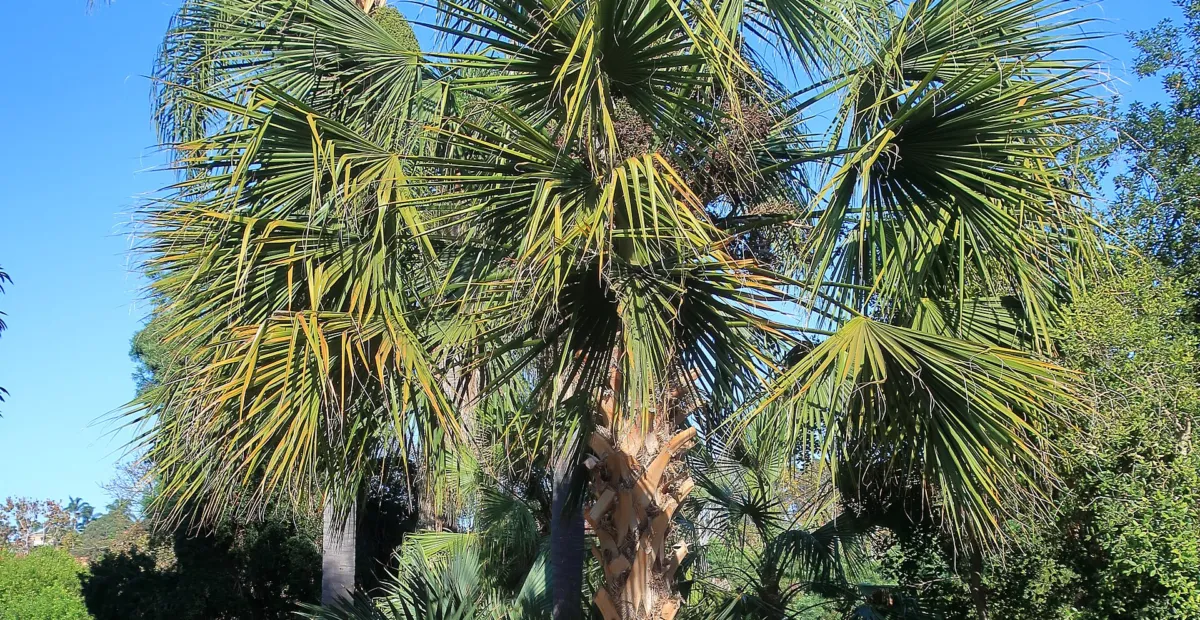
Sabal bermudana, the Bermuda palmetto or bibby-tree, is an evergreen fan palm endemic to Bermuda. It forms a stout gray trunk, a rounded crown of firm costapalmate leaves, fragrant cream-white flower panicles, and black pear-shaped fruits. Grow it in full sun, sharply drained soil, and a warm protected site; young plants establish slowly and need winter protection in much of the United States. Sabal bermudana is a slow-growing, evergreen fan palm endemic to Bermuda. It develops a stout gray trunk, firm dark green costapalmate leaves, fragrant cream-white flower panicles, and black pear-shaped fruits.
Taxonomic classification
He Bermuda palmetto or bibby-tree (Sabal bermudana) care guide
Light and placement
Give full sun for the strongest growth, ideally with southern or southeastern exposure and shelter from cold north winds. Light partial shade is tolerated, especially in hot inland climates. Too little light produces a thin crown and slower growth; harsh reflected heat combined with drought can scorch leaflets.
Watering and humidity
Water deeply and allow the surface to dry slightly between waterings once established. Keep young palms evenly moist during their first growing seasons, but never leave container roots standing in water. Reduce watering in cool weather and increase it during hot, dry periods; humidity is helpful but not a substitute for drainage.
Soil and growing medium
Use a porous, well-drained palm mix or sandy loam. The species tolerates seasonally moist sites in nature but should not remain waterlogged in containers. Neutral to slightly alkaline soil is suitable; avoid compacted clay and chronically stagnant roots.
Feeding
Feed actively growing landscape palms in spring and again during the growing season with a controlled-release palm fertilizer containing potassium, magnesium, and micronutrients. Do not overfertilize dry or newly transplanted plants. Container palms benefit from a lighter, balanced palm feed during active growth and little or none in winter.
Growth and habit
A solitary, evergreen palm with a slow growth rate and a stout trunk once mature. Young plants may remain small for years before developing a substantial stem. Avoid unnecessary root disturbance and retain healthy green fronds, which continue supporting growth.
Planting and repotting
Plant in spring after cold weather has passed, setting the root flare level with the surrounding soil. Allow generous clearance for the mature crown and place the palm where buildings or walls provide wind and winter protection. Water deeply during establishment, then reduce frequency as roots spread.
Repot container plants only when roots have filled the pot, preferably in spring or early summer. Move up one pot size, preserve the root ball, and use a fast-draining palm substrate. Because growth is slow, frequent repotting is unnecessary.
Propagation and pruning
Propagation
Propagate from fresh seed after removing fruit pulp. Sow shallowly in a sterile, freely draining medium and keep evenly warm and moist. Germination and establishment are slow; transplant seedlings carefully because palms dislike root disturbance.
Pruning
Remove only dead, broken, or hazardous fronds and spent inflorescences when necessary. Do not strip healthy green leaves or routinely cut off naturally retained leaf bases; excessive pruning weakens the palm and reduces habitat value.
Overwintering
In USDA Zone 8b or exposed sites, protect young palms with mulch over the root zone, breathable frost fabric during freezes, and shelter from drying wind. Container plants should overwinter in a bright, cool, frost-free space; water sparingly and do not fertilize while dormant.
Uses
Use as a specimen, architectural accent, or warm-climate street and courtyard palm. It suits coastal and subtropical landscapes where salt exposure is not extreme. Container culture is practical when winter protection is needed. Do not harvest the growing point: removing a palm heart kills the stem.
Appearance
The palm has a stout gray trunk and a rounded crown of firm, dark green fan leaves. Leaf blades are costapalmate, with the central stalk extending into the blade and dividing it about halfway. A bright yellow area may occur around the mid-leaf stalk, and the unarmed leaf stalk helps distinguish it from spiny relatives.
Flowering
Mature palms produce branched panicles approximately comparable in length to the leaf stalks. The small, fragrant, cream-white flowers are borne in large sprays and are followed by black, pear-shaped fruits. Flowering is generally concentrated from late spring into summer in warm climates.
Pollination and visitors
The fragrant flowers are described as insect-pollinated. Small bees and other flower-visiting insects are the most defensible visitor groups, but a species-specific pollinator has not been reliably documented in the sources reviewed.
Sabal bermudana photos
Click any photo for a larger view. Source, author and license are shown separately.
Diseases and pests
Diseases
Exact species-specific disease data are limited. Avoid planting into saturated soil and prevent trunk or crown injuries. Watch stressed palms for bud or crown rot symptoms such as collapsing central leaves, foul tissue, or a failing spear; remove severely affected material and seek local palm-disease advice.
Pests
Stressed or recently transplanted palms may attract palmetto weevils, which tunnel into leaf bases and can damage the growing point. Inspect the crown and leaf bases, avoid unnecessary transplant shock, maintain even establishment watering, and follow local extension guidance before using insecticides.
Toxicity and pollen
No reliable species-specific evidence was found establishing significant toxicity to people or pets. Avoid allowing children or animals to chew unfamiliar plant material, and do not treat the fruits as food without authoritative identification and preparation guidance.
- Typical season
- Late spring through summer in warm US climates
- Pollination / pollen
- Insect-carried, relatively heavy pollen
This is an insect-pollinated palm, so its pollen is generally less readily dispersed through the air than pollen from wind-pollinated plants. Species-specific allergy studies were not located; sensitive people may still react during flowering, especially with close contact.
Native habitat
Native only to Bermuda, where it occurs in upland and coastal forests as well as freshwater marsh habitats. It tolerates a range of situations but performs poorly in the most saline sites. Natural settings are warm, seasonally dry, and generally well drained or intermittently moist.
Interesting fact
It is the only palm species indigenous to Bermuda.
The leaf stalk extends partway into the blade in a V-shaped costapalmate form.
Its leaf stalks lack the spines found on some related fan palms.
Black pear-shaped fruits develop in large clusters after flowering.
Frequently asked questions (FAQ)
The most relevant questions about this plant, with short and direct answers.
🌱Quick care
What is he Bermuda palmetto or bibby-tree?⌄
He Bermuda palmetto or bibby-tree is the palm species Sabal bermudana, an accepted species in the palmetto genus Sabal and the palm family Arecaceae. It is native to Bermuda and develops a solitary trunk with fan-shaped, gray-green leaves.
How much sun does Sabal bermudana need?⌄
Sabal bermudana grows best in full sun but can tolerate partial shade. More light generally supports a fuller crown and stronger growth, provided the soil drains well.
How often should I water Sabal bermudana?⌄
Water Sabal bermudana regularly to maintain even moisture while it is establishing, then allow the surface soil to dry somewhat between thorough waterings. Avoid keeping the root zone constantly soggy.
Is Sabal bermudana easy to grow?⌄
Sabal bermudana can be relatively low-maintenance once established in a suitable warm, bright location. Establishment, cold exposure, poor drainage, and transplanting large palms are the main challenges.
🌤️Environment and placement
Where can Sabal bermudana grow in the United States?⌄
In the United States, Sabal bermudana is best treated as a warm-climate palm for protected coastal or subtropical landscapes. Its performance outside mild regions is uncertain, so local winter temperatures and microclimate should be considered carefully.
Can Sabal bermudana grow in containers?⌄
Sabal bermudana can be grown in a container when young, using a fast-draining palm or cactus-style mix and a pot with drainage holes. Container culture becomes increasingly difficult as the palm develops a large root system and tall trunk.
Can Sabal bermudana tolerate wind?⌄
Sabal bermudana is regarded as a wind-tolerant palm in Bermuda. Newly planted specimens still benefit from temporary protection until their root systems are established.
What type of soil does Sabal bermudana need?⌄
Sabal bermudana prefers sandy or loamy, well-drained soil. It may tolerate poorer soils after establishment, but compacted or persistently waterlogged ground can cause root problems.
Can Sabal bermudana tolerate salt spray?⌄
Sabal bermudana is associated with Bermuda’s coastal environment and may handle exposed conditions, but the exact salt-spray tolerance of this species is not well documented. Rinse foliage with fresh water when salt accumulation is visible.
How cold hardy is Sabal bermudana?⌄
Sabal bermudana should be grown in a protected location where hard freezes are uncommon. A definitive species-specific minimum temperature is not well established in the available sources, so do not assume that it has the same hardiness as every other Sabal.
💧Care and problems
Why are Sabal bermudana leaves turning brown?⌄
Brown leaves on Sabal bermudana can result from drought, transplant stress, cold damage, salt exposure, nutrient problems, or naturally aging fronds. Check soil moisture and the growing point before removing leaves, because green tissue is still useful to the palm.
Should I fertilize Sabal bermudana?⌄
Fertilize Sabal bermudana only when growth is weak or a nutrient deficiency is suspected, using a complete palm fertilizer according to its label. Avoid heavy applications, especially in dry soil or immediately after planting.
Why is my Sabal bermudana not growing?⌄
Slow growth in Sabal bermudana may be normal, especially during cool weather, after transplanting, or in partial shade. Poor drainage, root disturbance, inadequate moisture during establishment, and nutrient deficiencies can also suppress growth.
How do I protect Sabal bermudana from frost?⌄
Protect Sabal bermudana from frost by placing it in a sheltered microclimate and covering the crown during brief cold events when practical. Do not remove partially green fronds after cold damage, because they may continue photosynthesis while the palm recovers.
🪴Planting and repotting
When is the best time to plant Sabal bermudana?⌄
Plant Sabal bermudana during the warm growing season, after the risk of hard freezes has passed. Warm soil helps the palm establish roots before cooler weather returns.
How do I plant Sabal bermudana in the ground?⌄
Plant Sabal bermudana at the same depth it was growing in its container or root ball, in well-drained soil and full sun to partial shade. Water thoroughly after planting and maintain even moisture during the establishment period.
Can I transplant a mature Sabal bermudana?⌄
Transplanting a mature Sabal bermudana is possible but risky and is best handled by an experienced palm professional. Large Sabal palms can suffer severe root loss during digging, so careful timing, root-ball handling, and aftercare are essential.
✂️Propagation and pruning
How do you propagate Sabal bermudana?⌄
Sabal bermudana is generally propagated from seed, because palms have a single growing point and do not normally produce removable shoots. Clean fresh seed and warm, evenly moist, well-drained propagation conditions give the best chance of germination.
How long does Sabal bermudana take to grow from seed?⌄
Sabal bermudana seedlings typically require patience because palms establish slowly compared with many annual or herbaceous plants. Germination and early growth depend on seed freshness, warmth, moisture, and consistent care, and a precise species-specific timetable is not well documented.
How should I prune Sabal bermudana?⌄
Prune Sabal bermudana conservatively by removing only completely dead, damaged, or hazardous fronds. Do not cut the central spear or remove green fronds unnecessarily, because the palm has a single vital growing point and over-pruning can weaken it.
⚠️Toxicity and safety
Is Sabal bermudana toxic to people or pets?⌄
The toxicity of Sabal bermudana is not well documented, and no confirmed significant toxicity was located in the available research. Keep children and pets from chewing unfamiliar plant material, and contact a medical or veterinary professional if ingestion causes symptoms.
🌸Flowering and special interest
Does Sabal bermudana produce flowers?⌄
Yes, Sabal bermudana produces sprays of small flowers among the leaves, generally during summer. Flowering is followed by rounded fruits that develop from green to black as they ripen.
Does Sabal bermudana need another palm to produce fruit?⌄
Sabal bermudana is dioecious, meaning individual palms are typically male or female. A female palm generally needs pollen from a compatible male flowering palm nearby to produce viable fruit and seed.
Are Sabal bermudana fruits edible?⌄
Sabal bermudana fruits are small, rounded berries that turn black when ripe, but their safety and culinary use should not be assumed without species-specific confirmation. Treat them as ornamental or wildlife food rather than eating them casually.
Similar plants
 Nibong palm is an Asian species of palm tree in the family Arecaceae (Oncosperma tigillarium) care guideOncosperma tigillarium
 Date Palm (Phoenix dactylifera) care guidePhoenix dactylifera
 He Macarthur palm (Ptychosperma macarthurii) care guidePtychosperma macarthurii
 Reclining Date Palm (Phoenix reclinata) care guidePhoenix reclinata
 Pritchardia pacifica care guidePritchardia pacifica
 Nikau (Rhopalostylis sapida) care guideRhopalostylis sapida