
 Source:
Nibong palm is an Asian species of palm tree in the family Arecaceae (Oncosperma tigillarium) short overview
The Nibong palm is an Asian species of palm tree in the family Arecaceae, Oncosperma tigillarium, is a tall, evergreen Southeast Asian palm that forms dense clumps of slender, fiercely spiny trunks. Its arching, feather-like fronds and yellow branched inflorescences suit humid tropical landscapes, especially coastal and wetland settings. It needs strong light, warmth and consistently moist soil, making it a specialized choice for tropical gardens, conservatories and large containers rather than ordinary outdoor landscapes in most of the United States.
Taxonomic classification
Nibong palm is an Asian species of palm tree in the family Arecaceae (Oncosperma tigillarium) care guide
Light and placement
Give full sun in tropical climates, ideally with an unobstructed eastern, southern or western exposure. Strong light supports dense foliage and sturdy growth; excessive shade can produce weak, stretched fronds and a less robust clump. In very hot, dry interiors, afternoon protection may reduce scorch, but the plant should not be moved into deep shade.
Watering and humidity
Keep the root zone consistently moist, reflecting the species’ swampy and wet coastal habitats. Water deeply whenever the upper surface begins to dry, and reduce frequency only during cool or low-light periods. Do not allow a container to sit in stagnant water unless the growing system is specifically designed for aquatic or bog conditions. High humidity is beneficial, especially indoors.
Soil and growing medium
Use a moisture-retentive but aerated soil with reliable drainage. Sandy or loamy substrates enriched with organic matter suit its wetland origin, while compacted stagnant soil can reduce root health. A slightly acidic to neutral reaction is a reasonable cultivation target, but species-specific pH limits are not well documented.
Feeding
Feed during active warm-season growth with a complete palm fertilizer containing magnesium and micronutrients, following the product label. A slow-release formulation is practical for containers and landscapes. Do not fertilize cold, recently transplanted or seriously stressed plants, and avoid heavy applications that can damage roots in saturated soil.
Growth and habit
This is a tall, evergreen, cespitose palm that develops multiple slender stems from the base and can eventually create a substantial clump. Growth is moderate in warm, humid conditions but becomes weak or stops with cool temperatures, drought or poor light. Its armed structure makes routine access and maintenance planning important.
Planting and repotting
Plant in warm weather after cold nights have ended, placing the root ball at its original depth. Provide generous room for clump development and keep the root zone evenly moist during establishment. Avoid locations beside paths, seating areas or play spaces because the trunks and leaf bases are spiny.
Repot only when actively growing and only when roots have filled the container. Use a heavy, stable pot and a coarse, moisture-retentive palm mix. Handle the plant with substantial protection because trunks, leaf bases and foliage can be armed with sharp spines.
Propagation and pruning
Propagation
Propagate from fresh seed or basal suckers. Fresh seed loses viability quickly, so sow promptly in a warm, humid medium. Germination may take roughly three to six months. Suckers can be separated when sufficiently rooted, but division is physically difficult and hazardous because of the spines.
Pruning
Remove only dead, damaged or hazardous fronds with clean tools. Do not cut healthy green fronds unnecessarily. Work cautiously because trunks, leaf bases and frond structures may carry sharp spines; use protective clothing and professional equipment for mature specimens.
Overwintering
Protect from all frost and prolonged cold. In the United States, grow outdoors only in genuinely tropical frost-free areas; elsewhere overwinter in a bright, warm conservatory or greenhouse. Keep watering moderate but regular in winter and avoid cold, saturated potting mix.
Uses
Primarily an ornamental and botanical-collection palm for tropical landscapes, conservatories and large protected containers. It is useful in wet coastal or swamp-edge plantings where its scale and spiny architecture are appropriate. Regional sources also document durable wood used for fishing structures and stakes; this is not a recommendation for harvesting wild plants.
Appearance
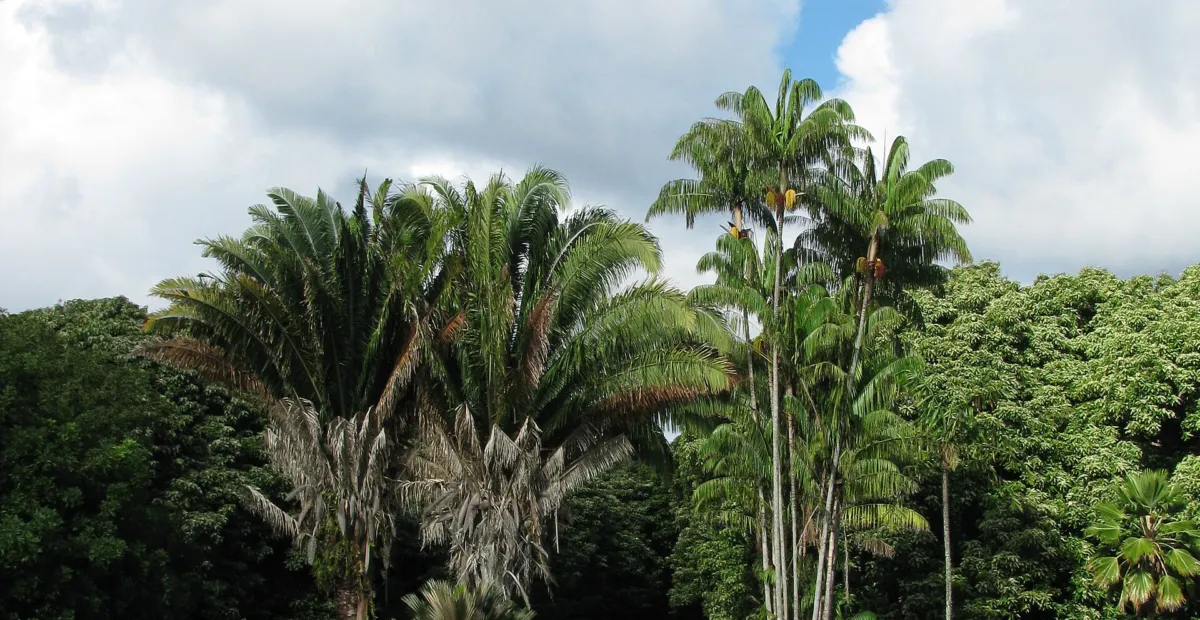
The palm forms a conspicuous tuft of slender, ring-scarred trunks, often densely clustered. Trunks and the crownshaft are armed with scattered black spines. The pinnate fronds are dark to bright green, arching and sometimes pendulous, giving mature clumps a graceful appearance despite their defensive armament.
Flowering
Yellow, branched inflorescences emerge below the crown among the leaf bases. Flowers are arranged in groups containing two male flowers and one female flower. Reliable flowering months for the United States are not established; timing varies with tropical conditions and plant maturity.
Pollination and visitors
The species bears separate male and female flowers within branched inflorescences, but a specific animal pollinator or visitor group was not reliably documented in the sources reviewed. Do not infer pollinator attraction from flower presence alone.
Oncosperma tigillarium photos
Click any photo for a larger view. Source, author and license are shown separately.
Diseases and pests
Diseases
The main preventive measures are excellent drainage, clean tools and avoidance of chronic root stagnation. Watch for general palm problems such as leaf-spot diseases and basal or root rots when plants are stressed, overwatered in poorly aerated soil or kept too cool. Remove badly affected tissue and correct the cultural cause before considering a labeled treatment.
Pests
Inspect for scale insects, mealybugs and mites, especially on stressed container plants. Maintain airflow, avoid water stress and examine leaf bases regularly. Remove localized infestations manually where practical; use only products labeled for palms and follow the label, particularly in enclosed conservatories.
Toxicity and pollen
Species-specific human and companion-animal toxicity information was not located in authoritative sources reviewed. Do not treat the plant as confirmed edible or harmless. The clearly documented physical hazard is its numerous sharp trunk, crownshaft and foliage spines.
- Pollination / pollen
- Unknown; palm pollen is produced in the inflorescences
As a flowering palm, it produces pollen, but species-specific airborne dispersal, pollen counts and allergy reports were not found. Its inflorescences are described botanically, yet the practical allergy relevance for United States gardeners remains uncertain.
Native habitat
Native from southern Indochina through western Malesia, where it grows in wet tropical lowlands, including swampy vegetation and inland or coastal areas near mangrove margins. It is associated with warm, humid conditions and soils that remain regularly moist, sometimes seasonally waterlogged.
Interesting fact
The species can form dense clumps with many trunks.
Trunks may carry numerous black spines several inches long.
Its wood is notably hard and resistant to decay.
Fresh seeds can lose viability rapidly after collection.
Historic Singapore specimens have formed exceptionally large clumps.
Frequently asked questions (FAQ)
The most relevant questions about this plant, with short and direct answers.
🌱Quick care
What is Nibong palm (*Oncosperma tigillarium*)?⌄
Nibong palm is an Asian, clump-forming palm in the Arecaceae family. It is recognized by tall slender trunks, arching pinnate fronds, and numerous sharp black spines.
How much light does Nibong palm need?⌄
Nibong palm needs full sun for strong growth. Young plants may tolerate some shade, but mature specimens perform best in a bright, open location.
How much water does Nibong palm need?⌄
Nibong palm needs consistently high moisture and should not be allowed to dry out for long periods. It tolerates wet or seasonally flooded conditions better than drought.
Is Nibong palm cold hardy?⌄
Nibong palm is frost tender and is best grown outdoors only in warm, frost-free climates. In colder parts of the United States, grow it in a protected conservatory or container that can be sheltered during freezes.
🌤️Environment and placement
Where does Nibong palm grow naturally?⌄
Nibong palm naturally grows in lowland Southeast Asia, especially near coastal swamps, mangrove margins, wet forests, and other humid habitats. It is adapted to warm conditions and persistently moist soil.
Can Nibong palm grow in a container?⌄
Nibong palm can be grown in a container while young, but its rapid growth, large mature size, clustering habit, and spiny stems eventually require substantial space. Container culture also demands frequent watering and protection from cold.
Can Nibong palm tolerate standing water?⌄
Nibong palm can tolerate waterlogged or seasonally flooded soil when the root zone remains oxygenated enough for healthy growth. Constantly stagnant, foul-smelling soil is still undesirable and may cause root problems.
Is Nibong palm suitable for a small yard?⌄
Nibong palm is generally unsuitable for a small yard because it can become a very tall, spreading clump with dangerous spines. It is better suited to spacious landscapes, botanical collections, or large tropical gardens.
Can Nibong palm grow near the coast?⌄
Nibong palm is well adapted to coastal environments and can tolerate humid, wet conditions and some salinity. A sheltered site with full sun and moisture-retentive soil is preferable to an exposed, drought-prone location.
💧Care and problems
What soil is best for Nibong palm?⌄
Use moisture-retentive but aerated sandy or loamy soil. The plant accepts wet coastal soils, but extremely dry, shallow, compacted, or sharply draining soil can make it difficult to maintain adequate moisture.
How often should I water Nibong palm?⌄
Water Nibong palm whenever the upper soil begins to dry, adjusting for heat, wind, container size, and rainfall. During hot weather, container plants may need watering very frequently to keep the root zone evenly moist.
Why are the leaves of my Nibong palm turning brown?⌄
Brown leaf tips or margins usually indicate drought stress, low humidity, salt buildup, or root damage. Check soil moisture and drainage, flush container soil occasionally with clean water, and protect the palm from cold and drying winds.
Does Nibong palm grow quickly?⌄
Nibong palm can grow moderately quickly under warm, sunny, consistently moist conditions. Growth is much slower when the plant is cold, shaded, drought-stressed, or restricted by a small container.
Should I fertilize Nibong palm?⌄
Fertilize Nibong palm during active warm-season growth with a balanced palm fertilizer used according to the label. Avoid heavy fertilization in cold weather or when the roots are waterlogged and stressed.
🪴Planting and repotting
How do I plant Nibong palm in the ground?⌄
Plant Nibong palm in full sun with ample room for its eventual height and clump spread, then water it thoroughly and keep the soil consistently moist. Do not plant it where people must regularly pass close to the spiny trunks.
When is the best time to plant Nibong palm?⌄
Plant Nibong palm during the warmest part of the growing season after cold weather has passed. Warm soil and active root growth help it establish before cooler conditions return.
Does Nibong palm need repotting?⌄
Repot a container-grown Nibong palm when roots densely fill the container or water runs through too quickly. Move it into only the next practical pot size, because an oversized pot can remain excessively wet around the roots.
How much space does Nibong palm need?⌄
Allow generous vertical and horizontal space because Nibong palm can reach roughly 80 to 100 feet in favorable tropical conditions and forms clumps of armed trunks. Keep it well away from buildings, paths, play areas, and utility lines.
✂️Propagation and pruning
How is Nibong palm propagated?⌄
Nibong palm is propagated from fresh seeds or by separating basal suckers. Seed is useful for raising new plants, while suckers can preserve the clumping growth habit when separation is performed carefully.
How do I germinate Nibong palm seeds?⌄
Clean and sow fresh Nibong palm seeds promptly in a warm, shaded, consistently humid medium. Germination is slow and irregular, commonly taking about one to six months, and stored seed loses viability quickly.
Can Nibong palm be propagated from suckers?⌄
Yes, Nibong palm can be propagated from healthy basal suckers with their own roots. Separate them carefully during warm, active growth and keep the new divisions humid and evenly watered while they establish.
Can I prune Nibong palm?⌄
Prune only dead, damaged, or severely declining fronds and remove them with extreme caution. Do not cut the central growing point, and wear heavy protective equipment because the trunk, leaf bases, and sometimes inflorescences are spiny.
⚠️Toxicity and safety
Is Nibong palm poisonous to people or pets?⌄
The toxicity of Nibong palm has not been clearly established, so it should not be considered safe to eat or use medicinally without authoritative guidance. Its well-documented physical hazard is its numerous sharp spines.
Are Nibong palm spines dangerous?⌄
Yes, Nibong palm has numerous sharp black spines on its trunks, crownshaft, leaf structures, and sometimes flowering structures. Keep children and pets away, use puncture-resistant gloves and protective clothing, and avoid planting it beside walkways.
How should I handle or prune Nibong palm safely?⌄
Handle Nibong palm only with thick gloves, eye protection, long sleeves, and tools that keep your hands away from the spines. For tall or mature clumps, use a qualified palm professional rather than attempting ladder work.
🌸Flowering and special interest
Does Nibong palm flower?⌄
Yes, Nibong palm produces branched yellow inflorescences that emerge below the fronds. The flowers include both male and female flowers on the same plant.
What do Nibong palm fruits look like?⌄
Nibong palm produces small, round fruits that mature from green to purple or nearly black. Each fruit contains a single seed, and fresh mature seed should be sown promptly because viability declines during storage.
When does Nibong palm flower and fruit?⌄
In parts of Southeast Asia, Nibong palm commonly flowers from about June through August and fruits later in the year, often from November through December. Timing can vary with climate and growing conditions.
Why is my Nibong palm not flowering?⌄
A young, container-grown, shaded, cold-stressed, or drought-stressed Nibong palm may not flower. Mature plants generally need strong sunlight, sustained warmth, adequate moisture, and enough space to reach reproductive size.
Similar plants
 Latanier de l’Ile Ronde and latanier de Maurice (Latania loddigesii) care guideLatania loddigesii
 Nipa Palm (Nypa fruticans) care guideNypa fruticans
 He Queensland fan palm or Australian fan palm (Licuala ramsayi) care guideLicuala ramsayi
 Yellow latan palm (Latania verschaffeltii) care guideLatania verschaffeltii
 Carnarvon Fan Palm (Livistona nitida) care guideLivistona nitida
 Ribbon Fan Palm (Livistona decora) care guideLivistona decora