
 Source:
Cabbage Palm (Sabal palmetto) short overview
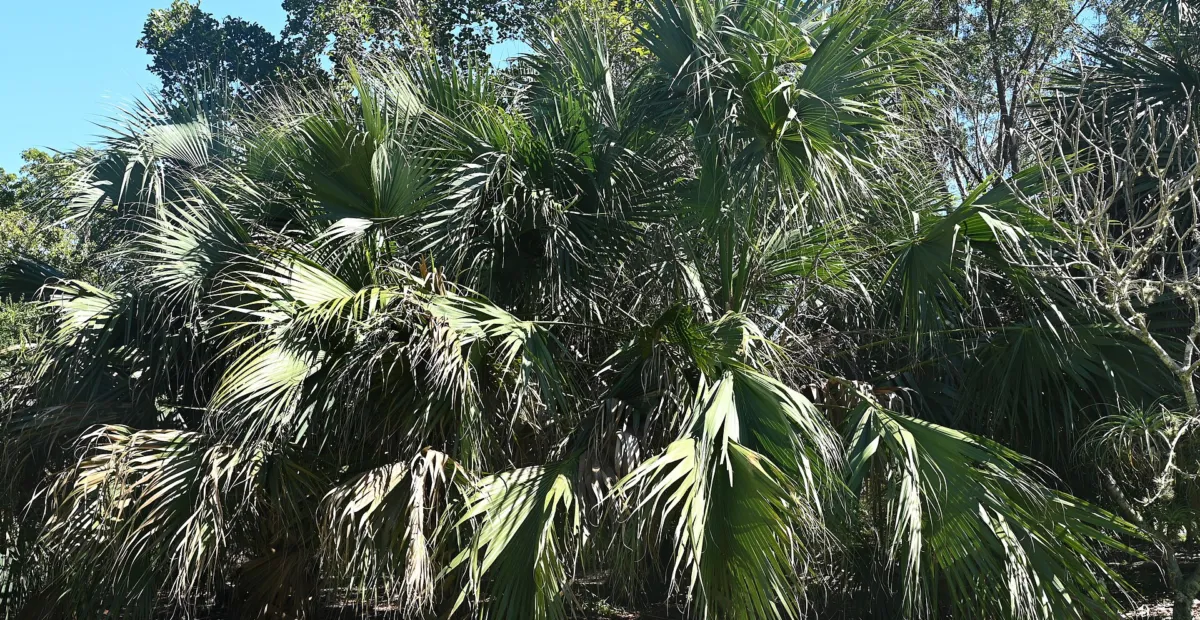
Cabbage Palm (Sabal palmetto) is a long-lived evergreen fan palm native to the southeastern United States, especially coastal Florida, Georgia, and the Carolinas. Its solitary trunk supports a rounded crown of arching, costapalmate leaves. Exceptionally tolerant of heat, wind, salt spray, drought, flooding, and varied soils, it is a durable landscape palm for warm regions. Cream-white flowers feed bees and mature into black fruits eaten by wildlife.
Taxonomic classification
Cabbage Palm (Sabal palmetto) care guide
Light and placement
Plant in full sun for the strongest growth and most symmetrical crown; part shade is tolerated, especially by juveniles. An open southern or southeastern exposure is useful in marginal climates. Stretching, sparse foliage, or slow crown development can indicate inadequate light, while scorched leaflets usually reflect drought, transplant stress, or nutrient imbalance rather than excessive sun alone.
Watering and humidity
Water deeply and regularly during the establishment period, especially after transplanting, because cut roots die back and replacement roots develop slowly from the trunk base. Once established, water when prolonged drought causes soil to dry deeply; the palm tolerates both dry periods and occasional flooding. Do not keep the trunk constantly wet or irrigate against it.
Soil and growing medium
Use a sandy, loamy, or calcareous soil with good drainage, although established plants tolerate clay, occasional flooding, and a broad pH range. Neutral to alkaline soils with available calcium are especially suitable. Avoid chronic saltwater inundation and improve drainage where roots remain permanently saturated.
Feeding
Feed three times yearly in warm climates with a controlled-release palm fertilizer formulated for palms, commonly similar to an 8-2-12 analysis with magnesium and micronutrients. Apply during active growth and follow the product label. Do not overfertilize drought-stressed or newly disturbed roots; correct potassium, magnesium, manganese, or iron deficiencies based on symptoms or soil testing.
Growth and habit
This is a solitary, tree-form palm with a long-lived evergreen crown. Juveniles may remain trunkless for many years before entering rapid vertical development after reaching suitable light conditions. Once established, the palm is highly durable, but the root system of transplanted specimens needs prolonged irrigation while new adventitious roots regenerate.
Planting and repotting
Plant in spring or early summer when soil is warm. Set the palm at exactly the original depth; deep planting can suffocate roots and cause decline. Water regularly during establishment. Space landscape specimens about 10–15 feet apart where a full crown is desired, allowing more room for large mature palms.
Container-grown plants can be shifted into a larger container when roots fill the pot, but this species ultimately becomes a large landscape palm. Handle the root ball carefully and avoid burying the trunk or planting deeper than its original level.
Propagation and pruning
Propagation
Propagate from fresh seed cleaned of fruit pulp. Sow promptly in a warm, well-drained medium; germination is generally reliable, but seedlings may remain trunkless for years. Mature field-transplanted palms can establish successfully when handled and irrigated correctly, while trunkless juveniles are difficult to transplant.
Pruning
Remove only dead, broken, or hazardous fronds, cutting close to the trunk without damaging living tissue. Do not routinely strip green fronds or climb the trunk with spikes. Old leaf bases may be retained for a rough texture or removed carefully by trained professionals; avoid wounds that could invite disease.
Overwintering
In Zones 8b and warmer, established palms usually overwinter outdoors. Protect young or newly planted palms from severe freezes with frost cloth and sheltered placement. In colder regions, container plants require a bright, frost-free structure, but mature specimens are generally too large for practical indoor culture.
Uses
Use as a specimen, avenue, street, coastal, native, rain-garden, or wildlife palm. Its flowers support insect visitors and its black fruits feed birds and mammals. Historical uses include thatching, shelter materials, fiber, and the edible terminal bud; harvesting the bud kills the palm and is not a routine landscape practice.
Appearance
The palm has a stout solitary trunk that may be smooth or retain old leaf bases, topped by a rounded crown of arching, costapalmate fan leaves. Mature leaf blades are usually about 3–4 feet long, with long petioles and fine filaments between segments. The trunkless juvenile stage can resemble other palmettos, but S. palmetto eventually develops a clear aboveground trunk.
Flowering
Mature palms produce branched, arching flower clusters that commonly extend beyond the crown. The flowers are numerous, tiny, cream-white, fragrant, and bisexual. Flowering is generally concentrated from late spring into summer, with timing varying by latitude; black fruits mature later in the season.
Pollination and visitors
Fragrant flowers are documented as bee-pollinated and are also visited by flies, beetles, and wasps. The fruits are eaten and dispersed by birds and mammals. The species also serves as a larval host for the Monk Skipper butterfly.
Sabal palmetto photos
Click any photo for a larger view. Source, author and license are shown separately.
Diseases and pests
Diseases
Generally resilient, but Ganoderma butt rot and lethal bronzing disease can be serious or fatal. Prevent trunk and root injuries, avoid piling mulch against the trunk, remove severely infected palms, and consult local Extension guidance when bronzing symptoms appear.
Pests
Palmetto weevil is a major concern in stressed or recently transplanted palms. Scale insects and cabbage palm caterpillar may occur. Inspect leaf bases and the crown, avoid unnecessary wounds, maintain appropriate irrigation during establishment, and use targeted treatment only when damage is confirmed.
Toxicity and pollen
No strong evidence indicates that Sabal palmetto is a poisonous landscape plant for people or pets. The immature terminal bud is historically edible, but harvesting kills the palm, and plant material should not be consumed unless correctly identified and prepared. Avoid allowing children or animals to chew unfamiliar plant parts.
- Typical season
- Typically late spring through summer in the southeastern United States; local timing varies.
- Pollination / pollen
- Insect-dispersed pollen
Sabal palmetto is insect-pollinated, so its pollen is not generally dispersed as broadly as wind-pollinated tree pollen. However, flowering palms still release pollen, and sensitive individuals may react to local exposure. Species-specific U.S. allergy data are limited; avoid assuming zero risk during flowering.
Native habitat
Native habitats include coastal dunes, maritime forests, pine flatwoods, hammocks, floodplain margins, river edges, freshwater wetlands, and periodically flooded lowlands. It tolerates heat, drought, occasional flooding, wind, and salt spray, but prolonged saltwater inundation can be damaging.
Interesting fact
The species is the state tree of both Florida and South Carolina. Its trunkless juvenile phase can last for a decade or more. The edible terminal bud gave rise to the common name Cabbage Palm, but removing it kills the palm. The species is notably resistant to hurricane winds once established.
Frequently asked questions (FAQ)
The most relevant questions about this plant, with short and direct answers.
🌱Quick care
What is Sabal palmetto commonly called?⌄
Sabal palmetto is commonly called Cabbage Palm. It is a native southeastern U.S. palm in the Palms group and the Arecaceae family.
How much sun does a Cabbage Palm need?⌄
Cabbage Palm grows best in full sun but tolerates part shade. Young plants can handle more shade, but strong light is needed for a sturdy trunk and attractive mature growth.
How often should you water Sabal palmetto?⌄
Water Cabbage Palm moderately while it establishes, then reduce irrigation once it is rooted. Established plants are drought tolerant but grow best with occasional deep watering during prolonged dry weather.
Is Cabbage Palm cold hardy?⌄
Established Cabbage Palm is hardy to about 15°F, generally corresponding to USDA Zone 8b in suitable conditions. Young or recently transplanted palms can suffer damage at warmer temperatures.
How tall does Sabal palmetto get?⌄
Sabal palmetto commonly reaches about 30–50 feet in landscapes and can grow taller in favorable sites. Mature plants usually form a single, unbranched trunk with a broad crown of fan-shaped leaves.
🌤️Environment and placement
Where does Cabbage Palm grow naturally?⌄
Cabbage Palm is native to coastal and near-coastal areas of the southeastern United States, from southeastern North Carolina through Florida. It commonly occurs near sandy soils, marsh edges, and maritime forests.
Can Sabal palmetto grow near the coast?⌄
Yes, Cabbage Palm is highly tolerant of salt spray, coastal winds, and many seaside conditions. Good drainage and adequate space are still important, especially in compacted urban sites.
What type of soil does Cabbage Palm need?⌄
Cabbage Palm tolerates sandy, loamy, calcareous, acidic, alkaline, well-drained, and seasonally wet soils. Avoid constantly stagnant conditions around the trunk and plant at the original soil depth.
Can Sabal palmetto grow in wet soil?⌄
Yes, Cabbage Palm can tolerate seasonally wet soil and occasional flooding once established. It performs best when excess water can eventually drain and the planting site does not remain stagnant around the trunk.
Can Cabbage Palm grow in partial shade?⌄
Yes, Cabbage Palm tolerates partial shade, particularly when young. Full sun is preferable for mature specimens because heavy shade can slow trunk development and reduce vigor.
Is Sabal palmetto drought tolerant?⌄
Yes, established Sabal palmetto is highly drought tolerant. Water newly planted palms regularly until roots recover, because transplant stress greatly increases their need for consistent moisture.
💧Care and problems
How do you fertilize a Cabbage Palm?⌄
Use a controlled-release palm fertilizer formulated with potassium, magnesium, and micronutrients during the active growing season. Follow the product label and avoid relying on high-nitrogen lawn fertilizer alone.
Why are the leaves on my Cabbage Palm turning yellow?⌄
Yellowing can result from nutrient deficiencies, cold injury, drought stress, root problems, or disease. Look for patterns such as yellow bands on older leaves, declining new growth, trunk damage, or prolonged wet soil before treating.
Should you remove brown leaves from Sabal palmetto?⌄
Remove only completely dead or broken leaves when necessary, and leave green leaves attached. Removing healthy fronds can weaken the palm, slow growth, and increase stress.
Why should you not over-prune a Cabbage Palm?⌄
Over-pruning removes photosynthetic tissue that the palm needs for growth and recovery. It can also make the crown more vulnerable to nutrient deficiencies, cold damage, and pests.
What pests affect Sabal palmetto?⌄
Cabbage Palm can be affected by palmetto weevils, scales, palm caterpillars, and leaf-skeletonizing insects. Many foliage pests are mainly cosmetic, but weevils are a serious risk to stressed or recently transplanted palms.
What diseases affect Cabbage Palm?⌄
Important diseases include Ganoderma butt rot, lethal bronzing, Texas Phoenix palm decline, and bud or leaf diseases. Ganoderma butt rot has no effective cure, so preventing trunk and root injuries is important.
🪴Planting and repotting
When is the best time to plant Sabal palmetto?⌄
Plant Cabbage Palm during warm weather when roots can establish quickly, typically in spring or early summer. Avoid planting immediately before freezes or during extreme heat unless irrigation is reliable.
How deep should you plant a Cabbage Palm?⌄
Plant Cabbage Palm at the same depth at which it was previously growing, with the root initiation zone kept at or slightly above surrounding soil. Planting too deeply can suffocate roots and cause decline.
Can you transplant a mature Sabal palmetto?⌄
Yes, mature Cabbage Palms are commonly transplanted, but success depends on proper digging, handling, depth, irrigation, and establishment care. Young trunkless specimens are much harder to transplant successfully because they lack a developed root initiation zone.
How long does a transplanted Cabbage Palm take to establish?⌄
A field-transplanted Cabbage Palm may take eight months or longer to rebuild its root system. Maintain consistent moisture during this period without keeping the soil continuously waterlogged.
✂️Propagation and pruning
How do you propagate Sabal palmetto?⌄
Propagate Cabbage Palm from mature seeds rather than cuttings or divisions. Fresh seeds generally germinate readily when cleaned, kept warm, and planted in a well-drained medium.
Can you grow a Cabbage Palm from a seed?⌄
Yes, Cabbage Palm grows readily from seed. Remove the fruit pulp, sow the seed in a warm moist medium, and protect the emerging seedling from drying out.
Does Sabal palmetto produce seedlings in the landscape?⌄
Yes, fallen fruits can produce volunteer seedlings beneath or near the parent palm. Remove unwanted seedlings while they are small because established palms become increasingly difficult to relocate.
Can you grow Cabbage Palm from a trunk cutting?⌄
No, Cabbage Palm is not normally propagated from trunk cuttings because its single growing point is located in the crown. Seed propagation is the practical method for producing new plants.
⚠️Toxicity and safety
Is Sabal palmetto toxic to people or pets?⌄
No specific toxicity is documented for Cabbage Palm. However, ornamental plant material and large seeds can still cause choking or gastrointestinal problems if eaten, so prevent pets and children from ingesting them.
Are Cabbage Palm berries edible?⌄
The small black fruits are primarily wildlife food, and their safety as a household food is not well established. Do not treat the berries as a recommended human food without species-specific preparation and food-safety guidance.
Is the heart of Cabbage Palm edible?⌄
The terminal bud is edible and is sometimes called palm cabbage or swamp cabbage, but removing it kills the palm. Harvesting the bud is therefore not compatible with preserving the tree.
🌸Flowering and special interest
When does Sabal palmetto flower?⌄
Cabbage Palm usually flowers in late spring through summer, producing branched clusters of small fragrant white or yellowish-white flowers. Bloom timing varies with climate and growing conditions.
Do Cabbage Palm flowers attract pollinators?⌄
Yes, the fragrant flowers attract bees and other pollinators. The later-forming fruits also provide food for birds and mammals.
Does Sabal palmetto produce fruit?⌄
Yes, it produces small black fruits that mature after flowering, often in fall or early winter. The fruits are eaten by birds and mammals and can produce volunteer seedlings.
Why is my Cabbage Palm not flowering?⌄
A young palm may simply be immature, while insufficient light, severe stress, cold damage, or poor nutrition can also reduce flowering. Mature palms generally flower best in full sun with adequate moisture and nutrition.
Similar plants
 Puerto Rican Royal Palm (Roystonea borinquena) care guideRoystonea borinquena
 Loulu (Pritchardia glabrata) care guidePritchardia glabrata
 He royal palm (Roystonea regia) care guideRoystonea regia
 Dwarf Palmetto (Sabal minor) care guideSabal minor
 He Macarthur palm (Ptychosperma macarthurii) care guidePtychosperma macarthurii
 Majesty Palm (Ravenea rivularis) care guideRavenea rivularis