
 Source:
Saw palmetto (Serenoa repens) short overview
Saw palmetto is a slow-growing, evergreen palm native to the southeastern United States. Its creeping stems form broad, dense clumps of stiff, fan-shaped leaves in green, blue-green, or silvery tones. Branched clusters of small white flowers appear from spring into summer and develop into dark blue-black fruits valued by wildlife. This drought-tolerant, salt-tolerant plant suits sunny coastal gardens, naturalistic borders, and groundcover plantings, but its sharp petiole teeth require thoughtful placement.
Taxonomic classification
Saw palmetto (Serenoa repens) care guide
Light and placement
Grow in full sun for the strongest foliage color and densest habit, or in bright open partial shade. South- or west-facing sites are suitable where summer heat is tolerated. Too little light can produce looser growth and greener foliage; harsh reflected heat combined with drought can scorch leaflets. Keep the plant away from paths because the spiny petioles extend outward.
Watering and humidity
Water deeply and thoroughly after planting, then allow the upper soil to dry somewhat before watering again. Reduce irrigation after roots establish; mature plants tolerate drought but grow faster with occasional deep water during prolonged heat. Avoid constantly saturated soil, especially in containers. Humidity is not usually a care issue outdoors in its native climate.
Soil and growing medium
Use sharply drained sandy or gritty soil where possible. Saw palmetto tolerates infertile soils and a broad pH range from acidic to alkaline, but it performs poorly when young roots remain saturated. Coastal sand, sandy loam, and lean well-drained native soil are suitable.
Feeding
Fertilize lightly in spring with a slow-release palm fertilizer if growth is weak or the soil is extremely infertile. Avoid heavy nitrogen feeding, which can produce lush but less resilient growth. Do not fertilize newly transplanted plants until they show signs of active recovery, and stop feeding in late summer.
Growth and habit
This palm forms a dense, clonal clump from creeping horizontal stems and underground rhizomes. Growth is slow, especially during establishment, but mature plants can spread steadily and may become difficult to relocate. It resprouts after fire in its native range and needs little routine maintenance once established.
Planting and repotting
Plant in spring or early summer after severe frost risk has passed. Set the root ball at the same depth as in its nursery container; do not bury the creeping stem. Space plants about 4–8 feet apart for a clump or groundcover effect, farther apart for individual specimens. Water deeply until established.
Container-grown plants should be moved only when necessary because established saw palmetto is difficult to transplant. Choose a deep, sturdy container, disturb the root ball as little as possible, and transplant during warm weather. Provide excellent drainage and water consistently during recovery.
Propagation and pruning
Propagation
Propagate primarily from fresh seed taken from ripe fruit. Clean the seed promptly and keep it warm and evenly moist. Germination may be delayed by the hard seed coverings; scarification or removal of the cap can accelerate emergence. Seedlings establish slowly. Vegetative spread also occurs naturally from horizontal stems and rhizomes, but it is not the usual nursery method.
Pruning
Remove dead or badly damaged fronds and old flower or fruit stalks as needed. Wear heavy gloves, eye protection, and long sleeves because the petioles are sharply toothed. Avoid unnecessary cutting into living stems, and do not position routine maintenance where falling or cut fronds create a hazard.
Overwintering
In USDA Zones 8a and warmer, established plants generally overwinter outdoors. Protect young plants from severe freezes with mulch over the root zone and temporary frost covering. In colder regions, container specimens require a bright, cool protected space, but their large size and spiny foliage make indoor culture impractical long term.
Uses
Use as a specimen, low screen, mass planting, naturalistic groundcover, coastal planting, or wildlife habitat plant. It is salt tolerant, drought tolerant after establishment, and useful in native landscapes. Ripe fruits have culinary and commercial history, but medicinal use should not be treated as a substitute for professional medical advice.
Appearance
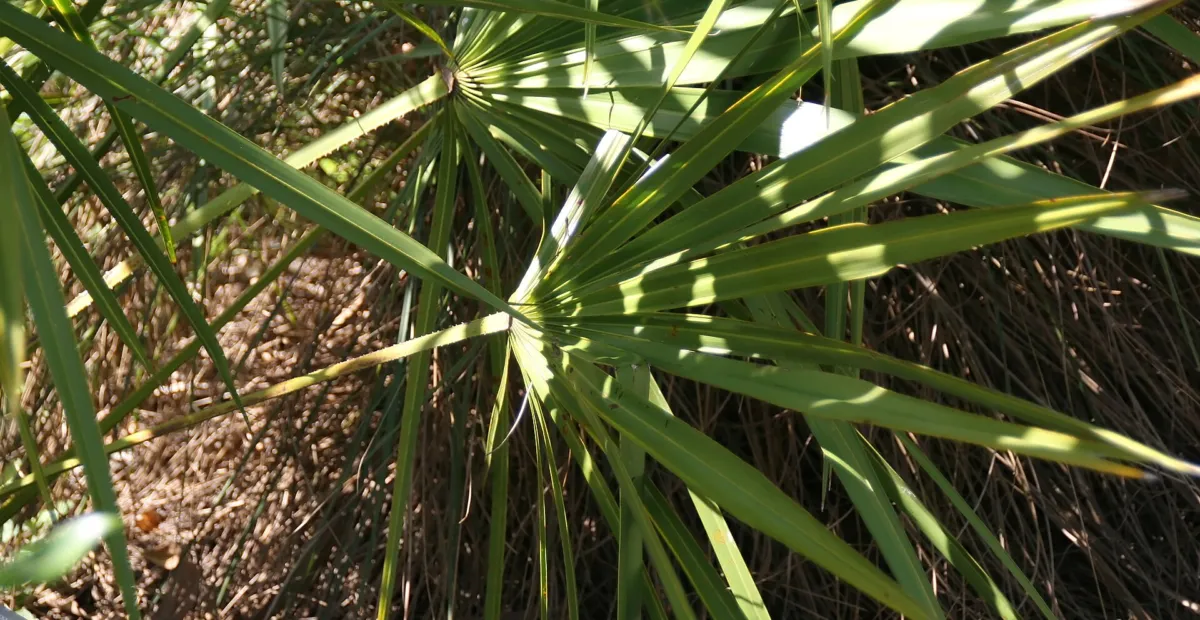
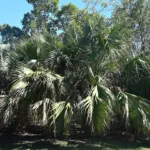
The plant has stiff, deeply divided, fan-shaped leaves on long petioles armed with backward-pointing teeth. Stems usually creep along or just below the ground, although some become upright. Leaf color ranges from yellow-green to blue-green and silver, and mature plants form dense, multi-stemmed thickets.
Flowering
Small white to yellow-white flowers are produced on long, branched stalks emerging among the leaves. Flowering generally occurs from spring through summer, especially after warm weather and, in natural habitat, sometimes after fire. Fruits mature later in the year and turn blue-black when ripe.
Pollination and visitors
The small flowers are insect-pollinated and visited by bees, syrphid flies, and other insects; butterflies are also reported around flowering plants. The flowers can provide a significant nectar resource, while the later fruits feed wildlife.
Serenoa repens photos
Click any photo for a larger view. Source, author and license are shown separately.
Diseases and pests
Diseases
Usually trouble-free in suitable sites. Poor drainage can encourage root decline, while wet, humid conditions may contribute to fungal problems on inflorescences or fruit. Improve drainage, avoid chronic overwatering, remove badly affected material, and sanitize pruning tools.
Pests
Generally resistant to serious pest damage. Monitor stressed or container-grown plants for scale insects, mites, and chewing insects. Maintain air movement, avoid excess nitrogen, and address drought or poor drainage rather than relying on routine pesticide use.
Toxicity and pollen
Reliable plant-specific toxicity evidence for humans and pets is limited. The main documented physical hazard is injury from sharp petiole teeth rather than a known poisoning syndrome. Avoid allowing children or animals to chew large quantities of plant material, and seek professional advice after ingestion or if symptoms occur.
- Typical season
- Primarily spring through summer in the United States
- Pollination / pollen
- Insect-carried pollen; limited airborne dispersal expected
Saw palmetto is insect-pollinated, so its pollen is not typically released in large windborne clouds. However, reliable species-specific airborne-allergy data are limited; sensitive gardeners should still monitor personal symptoms during flowering and avoid handling flowering material when symptomatic.
Native habitat
Native to the southeastern United States, especially Florida and the coastal plain from South Carolina to Louisiana. It occurs in coastal dunes, sandhills, pine flatwoods, scrub, hammocks, and open woodlands, usually in sandy, nutrient-poor, well-drained soils. It tolerates salt, drought, periodic flooding, and fire-adapted landscapes.
Interesting fact
The species epithet repens means creeping, referring to its horizontal stems. Some natural clones may persist and expand for centuries or longer. Fire can remove the foliage while living underground stems resprout. Its flowers contribute to honey production, and its fruit supports many wildlife species.
Frequently asked questions (FAQ)
The most relevant questions about this plant, with short and direct answers.
🌱Quick care
What is saw palmetto?⌄
Saw palmetto is a slow-growing, evergreen fan palm and shrub native to the southeastern United States. Its creeping stems form clumps or dense thickets, usually 4–8 feet tall in landscapes.
How much sun does saw palmetto need?⌄
Saw palmetto grows best in full sun to partial shade. Full sun generally produces denser growth and stronger green or silvery foliage, while established plants also tolerate light shade.
How often should I water saw palmetto?⌄
Water saw palmetto regularly while it establishes, then reduce watering because mature plants are drought tolerant. Allow the soil to dry between waterings, especially in winter or in naturally sandy sites.
Is saw palmetto easy to grow?⌄
Yes, saw palmetto is generally a low-maintenance landscape plant once established. It tolerates drought, heat, poor sandy soil, salt exposure, and occasional flooding, provided drainage is adequate.
🌤️Environment and placement
What USDA hardiness zone is saw palmetto suited to?⌄
Saw palmetto is generally suited to USDA Zones 8a through 11b, with hardiness to roughly 11–15°F depending on exposure and plant condition. Young plants and newly transplanted specimens are more cold-sensitive.
Where should I plant saw palmetto?⌄
Plant saw palmetto in a sunny, open location with sandy or gritty, well-drained soil and ample room to spread. It works well in coastal gardens, drought-tolerant landscapes, naturalistic plantings, and wildlife gardens.
Can saw palmetto grow in coastal conditions?⌄
Yes, saw palmetto is moderately salt tolerant and is well adapted to coastal conditions. Avoid permanently waterlogged soil, even though established plants can tolerate brief periods of flooding.
How large does saw palmetto get?⌄
In typical landscapes, saw palmetto commonly reaches about 4–8 feet tall and 4–6 feet wide, but mature clumps can spread much farther through creeping stems. Protected plants may eventually become taller.
Does saw palmetto spread?⌄
Yes, saw palmetto spreads slowly through horizontal stems and rhizomes, forming clumps that can cover a large area over time. Give it at least 6–12 feet of available planting space where expansion is acceptable.
💧Care and problems
What type of soil is best for saw palmetto?⌄
Use sandy, gritty, infertile-to-moderately fertile soil with good drainage. Saw palmetto tolerates a broad soil range, but heavy soil that remains saturated can hinder establishment and root development.
Does saw palmetto need fertilizer?⌄
Saw palmetto usually needs little fertilizer when planted in reasonably fertile soil. If growth is weak in very poor soil, use a palm fertilizer according to the label rather than applying heavy amounts of nitrogen.
Why are saw palmetto leaves turning brown?⌄
Brown leaves can result from drought stress, cold damage, transplant shock, or natural aging of older fronds. Check soil moisture and drainage first, and do not remove green tissue unless it is clearly dead.
Does saw palmetto have serious pests or diseases?⌄
Saw palmetto generally has few serious pest or disease problems in suitable conditions. Poor drainage, severe transplant stress, and physical damage are more common causes of decline than a specific disease.
Can saw palmetto survive fire?⌄
Established saw palmetto commonly survives wildfire because its underground stems and root crowns can resprout after foliage is burned. Do not use fire as a home-garden maintenance method because the foliage is highly flammable and burning is hazardous.
🪴Planting and repotting
When is the best time to plant saw palmetto?⌄
Plant saw palmetto during mild weather, preferably in spring or early summer when roots can establish before cold weather. In hot regions, fall planting can also work if the plant receives adequate establishment water.
How do I plant saw palmetto?⌄
Dig a hole no deeper than the root ball and several times wider, set the plant at its original soil level, backfill with the native soil, and water thoroughly. Mulch lightly while keeping mulch away from the stem base.
Does saw palmetto transplant well?⌄
Saw palmetto can be difficult to transplant, especially when large or long-established. Small nursery plants have better prospects, and all transplants should be watered consistently until new root growth is established.
Can saw palmetto grow in a container?⌄
Saw palmetto can be grown temporarily in a large container with a coarse, fast-draining potting mix. Long-term container culture is less practical because its creeping stems and expanding root system eventually require substantial space.
✂️Propagation and pruning
How do you propagate saw palmetto?⌄
Saw palmetto is propagated mainly from cleaned seed, and it can also be increased from suitable root or stem divisions. Seedlings establish slowly, so nursery-grown plants are usually the simplest option for landscaping.
How long does saw palmetto seed take to germinate?⌄
Saw palmetto seed may germinate in roughly 11–60 days after cleaning and preparation, although dormancy and variable seed quality can make timing inconsistent. Fresh seed generally performs better than dried or poorly stored seed.
Can you grow saw palmetto from a berry?⌄
Yes, viable saw palmetto seed can be collected from ripe berries after the fleshy fruit layer is removed. Wear gloves during handling, clean the seed promptly, and expect slow early seedling growth.
How fast does saw palmetto grow?⌄
Saw palmetto is slow growing, particularly during its early years. Growth improves with warmth, moisture, and nutrients, but seedlings may require several years to become well established.
Should saw palmetto be pruned?⌄
Prune saw palmetto only to remove dead, damaged, or hazardous fronds and unwanted flower or fruit clusters. Wear heavy gloves and protective clothing because the leaf stalks have sharp, saw-like teeth.
Can I cut back saw palmetto to the ground?⌄
You can remove severely damaged foliage, but routine cutting to the ground is unnecessary and can expose the plant to additional stress. If foliage is burned or cut, healthy established plants may resprout from underground stems.
⚠️Toxicity and safety
Is saw palmetto poisonous to people or pets?⌄
Species-specific toxicity information for saw palmetto is limited, so its safety if eaten by people or pets should not be assumed. The ripe fruits are edible but reportedly foul-tasting, and supplements made from the fruit should not be confused with casual garden consumption.
Are saw palmetto spines dangerous?⌄
Yes, the leaf stalks have sharp, recurved teeth that can scratch skin and tear clothing. Plant saw palmetto away from paths, play areas, and frequently handled garden spaces, and use eye and hand protection when pruning.
🌸Flowering and special interest
When does saw palmetto bloom?⌄
Saw palmetto usually blooms from spring into summer, with timing varying by location; flowering may begin as early as February in southern Florida and continue into July in some areas. Creamy-white flowers appear in branched panicles.
Why is my saw palmetto not flowering?⌄
Young saw palmetto may not flower until it reaches substantial size, and shade, transplant stress, drought, or recent disturbance can delay blooming. Established plants often flower more reliably in warm conditions with adequate light.
Does saw palmetto produce berries?⌄
Yes, saw palmetto produces yellowish or green drupes that mature to bluish-black or black, usually from late summer into fall. The fruits provide food for wildlife and are produced after successful flowering and pollination.
Does saw palmetto attract pollinators and wildlife?⌄
Yes, its flowers attract bees and other pollinators, while its fruits and dense foliage provide food, cover, and habitat for many animals. It is especially valuable in southeastern U.S. native and wildlife plantings.
Similar plants
 Majesty Palm (Ravenea rivularis) care guideRavenea rivularis
 Ivory Cane Palm (Pinanga coronata) care guidePinanga coronata
 Loulu (Pritchardia glabrata) care guidePritchardia glabrata
 He Florida cherry palm or buccaneer palm (Pseudophoenix sargentii) care guidePseudophoenix sargentii
 Chaguaramo (Roystonea oleracea) care guideRoystonea oleracea
 Cabbage Palm (Sabal palmetto) care guideSabal palmetto