
 Source:
Jelly palm (Butia capitata) short overview
Jelly palm is a slow-growing, evergreen South American palm valued for its cold tolerance and distinctive blue-gray, arching fronds. Butia capitata forms a stout solitary trunk and a rounded crown, followed by fragrant flower clusters and orange-yellow fruits that can be eaten fresh or cooked into jelly. In the United States it performs best in full sun, sharply drained soil, and USDA Zone 8 or warmer, with protection in colder areas.
Taxonomic classification
Jelly palm (Butia capitata) care guide
Light and placement
Grow in full sun for the densest crown and best fruiting, although established plants tolerate partial shade. A south- or west-facing position is suitable in much of the United States. Excessive shade produces longer, more open fronds and weaker growth; intense reflected heat combined with drought can scorch leaflets.
Watering and humidity
Water deeply and thoroughly when the upper soil begins to dry during the first one to two growing seasons. Once established, irrigate during prolonged drought but allow the root zone to drain between waterings. Reduce watering in cool weather and avoid keeping the crown or soil constantly wet.
Soil and growing medium
Use sandy or loamy soil with excellent drainage. The plant tolerates a range of soil textures, including some clay, but persistent winter wetness can damage roots. Slightly acidic to slightly alkaline soil is generally suitable; avoid compacted sites and improve drainage before planting.
Feeding
Feed established landscape plants in spring and again in early summer with a controlled-release palm fertilizer containing potassium and magnesium. Apply according to the label and water it in thoroughly. Do not fertilize drought-stressed, freshly transplanted, or dormant plants, and avoid heavy late-season feeding before cold weather.
Growth and habit
This is a slow-growing, single-trunked palm that gradually develops a broad, rounded crown. It is generally low-maintenance after establishment, but old leaf bases and fruit stalks may require occasional cleanup. Growth is faster in warm, sunny conditions with adequate summer moisture and slower after cold injury.
Planting and repotting
Plant in spring after the threat of hard frost has passed, setting the root ball at the same depth as it grew in the nursery container. Allow about 10–15 feet of clearance for the crown and fruit drop. Water deeply during the establishment period, then reduce irrigation as the root system expands.
Repot container plants only when roots have filled the pot, preferably in spring. Use a deep, heavy container and a sharply draining palm mix. Avoid excessive root disturbance, and move the plant gradually back into full outdoor sun after repotting.
Propagation and pruning
Propagation
Propagate primarily from fresh seed. Remove fruit pulp, clean the seed, and sow in a warm, well-drained medium. Germination can be slow and uneven, often requiring patience and steady warmth. Seed-grown plants may vary in growth rate and fruiting performance.
Pruning
Remove only completely dead, broken, or hazardous fronds and spent flower or fruit stalks. Use clean tools and avoid cutting green fronds or climbing spikes into the trunk. Do not strip persistent leaf bases aggressively, since unnecessary trunk wounds can increase stress and disease risk.
Overwintering
In Zone 8 and colder, protect young plants from hard freezes with trunk wrapping, frost cloth over the crown, and a dry mulch layer kept away from the trunk. Container plants can be moved to a bright, cool, frost-free location. Resume normal watering gradually after winter damage is assessed.
Uses
Use as a specimen, avenue, lawn, courtyard, or large-container palm in warm-temperate landscapes. The ripe fruit is edible and commonly cooked into jelly, preserves, or beverages. Harvest only fully identified, ripe fruit and remove fallen fruit promptly where it could attract pests or create slippery surfaces.
Appearance
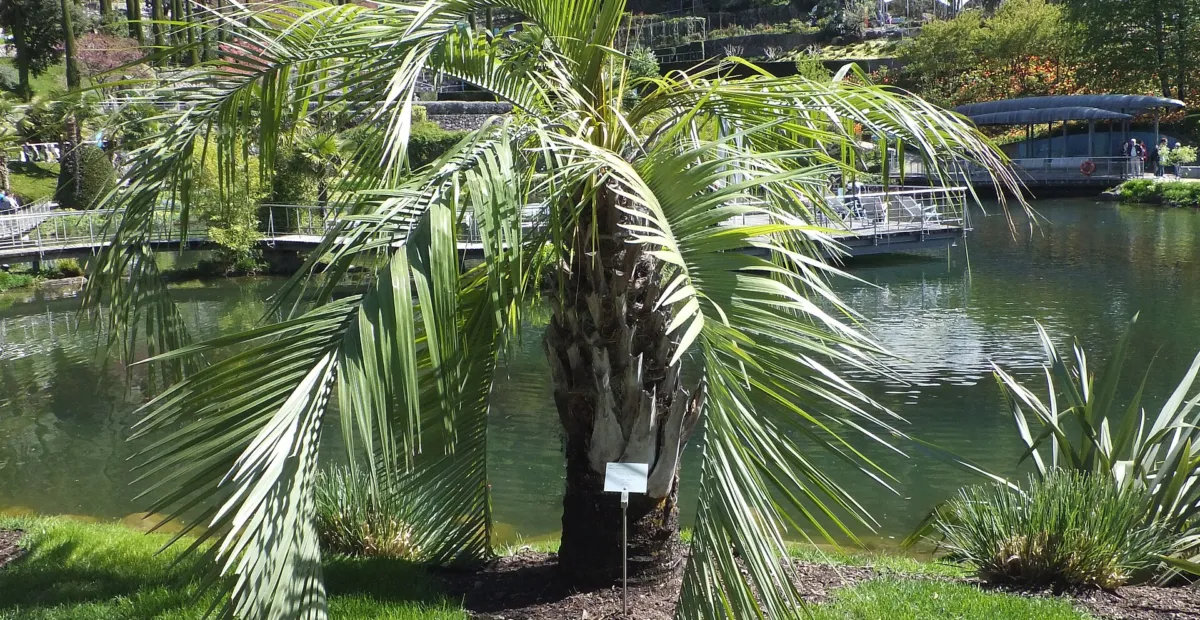
The palm has a thick, solitary trunk often marked by persistent leaf bases and a rounded crown of strongly arching, blue-gray pinnate leaves. Leaflets are arranged along a pronounced V-shaped rachis, and petioles may bear small spines. Orange-yellow fruit clusters are conspicuous when ripe.
Flowering
Mature plants produce branched clusters of small yellowish to cream flowers on an inflorescence emerging among the leaves. Male and female flowers occur on the same plant. Flowering is generally seasonal in late spring and summer, followed by fleshy fruits that ripen later in the warm season.
Pollination and visitors
The flowers are reported to receive both insect visitors and wind-borne pollen. Small flower-visiting insects, including bees and other insects, may visit the branched inflorescences, but a single consistently documented pollinator species is not established here.
Butia capitata photos
Click any photo for a larger view. Source, author and license are shown separately.
Diseases and pests
Diseases
Prevent problems by planting in well-drained soil, avoiding chronic overwatering, and removing severely damaged tissue with clean tools. Root and trunk rots are most likely where drainage is poor. Monitor stressed plants for fungal leaf spots and decline, but avoid routine fungicide use without a confirmed diagnosis.
Pests
Inspect for scale insects, mites, and palm-feeding caterpillars, especially on stressed or container-grown plants. Improve irrigation and airflow before using controls. Remove heavily infested material and use horticultural oil or an appropriate labeled treatment when necessary, following the product label.
Toxicity and pollen
Reliable extension and botanical references do not establish a significant toxic effect for ordinary contact with this species, but species-specific clinical toxicity evidence is limited. Do not assume that all plant parts are harmless; prevent children and pets from chewing leaves, seeds, or unfamiliar fruit, and seek professional advice after ingestion or unusual symptoms.
- Typical season
- Late spring through summer where plants flower outdoors
- Pollination / pollen
- Seasonal palm pollen; dispersal may involve wind and flower visitors
This palm produces pollen during flowering, but reliable species-specific airborne-allergy ratings are limited. The inflorescences are also associated with insect visitation, so pollen exposure may vary with local conditions. People with known pollen sensitivity should avoid handling flowering structures and monitor their own response.
Native habitat
The species is native to seasonally dry tropical regions of Brazil, including parts of Bahia, Goiás, and Minas Gerais. It occurs in open vegetation and savanna-like environments where soils may be sandy or otherwise well drained, with a pronounced seasonal moisture pattern.
Interesting fact
The species is one of the more cold-tolerant pinnate-leaved palms grown in the United States. Its fruit has a pineapple-like or apricot-like flavor and is traditionally used for jelly and preserves. Mature plants can hybridize with queen palm, producing mule palms.
Frequently asked questions (FAQ)
The most relevant questions about this plant, with short and direct answers.
🌱Quick care
What is Butia capitata commonly called?⌄
Butia capitata is commonly called jelly palm in the United States. It is also often sold or described as pindo palm, although plant names may vary among nurseries and references.
How much sun does a jelly palm need?⌄
Jelly palm grows best in full sun but tolerates partial shade. More sun generally supports a fuller crown, stronger growth, and better flowering and fruiting.
How often should you water Butia capitata?⌄
Water jelly palm moderately while it establishes, then reduce watering once it develops a strong root system. Allow excess water to drain, because persistently wet soil can damage the roots.
How fast does Butia capitata grow?⌄
Butia capitata is a slow-growing palm, especially when young. Growth is usually faster with full sun, warm temperatures, adequate moisture, and good nutrition.
How tall does a jelly palm get?⌄
A jelly palm commonly reaches about 15 to 20 feet tall in the landscape, although size varies with climate, soil, and growing conditions. Its mature crown can spread broadly, so allow substantial clearance.
🌤️Environment and placement
What USDA zone is Butia capitata hardy in?⌄
Established Butia capitata is generally suited to USDA Zone 8 and warmer, with hardiness near 10°F in favorable conditions. Young palms, exposed sites, prolonged freezes, and wet winter soil require additional protection.
Can jelly palm survive freezing temperatures?⌄
Yes, established jelly palm can tolerate brief freezes and temperatures near 10°F, but cold damage becomes more likely below that point. Protect young plants and cover the crown during unusually severe freezes.
Can Butia capitata grow in partial shade?⌄
Butia capitata can grow in partial shade, but full sun is preferable for compact growth and reliable flowering. Dense shade may produce a thinner crown and reduce fruit production.
Is jelly palm suitable for coastal gardens?⌄
Jelly palm can tolerate heat and some dry conditions, but it is not a dependable choice for sites exposed to salt spray. Plant it inland from direct ocean spray and provide sharply drained soil.
What soil is best for Butia capitata?⌄
The best soil for Butia capitata is sandy or loamy soil that drains sharply. It can tolerate ordinary landscape soil if drainage is good, but heavy, waterlogged soil increases the risk of root problems.
Can jelly palm grow in a container?⌄
Jelly palm can be grown in a large container while young, especially where winters are colder than its hardiness range. Use a free-draining palm mix and expect its slow growth to continue as the root system fills the pot.
💧Care and problems
How do you fertilize Butia capitata?⌄
Fertilize jelly palm with a controlled-release palm fertilizer during active growth, following the product label. A palm-specific formula helps supply potassium and other nutrients that palms commonly lack in poor soils.
Why are jelly palm leaves turning yellow?⌄
Yellowing leaves may result from nutrient deficiency, poor drainage, drought stress, or natural aging of older fronds. Check irrigation and drainage first, then consider a palm fertilizer if symptoms affect newer growth.
Why does Butia capitata have brown or damaged fronds after winter?⌄
Brown or scorched fronds after winter usually indicate cold or wind damage. Leave partially green fronds in place, and remove badly damaged tissue only after the danger of further freezing has passed.
Should you remove brown fronds from a jelly palm?⌄
Remove fully brown, dead fronds and spent flower stalks, but do not remove green fronds merely because they look slightly damaged. Excessive pruning can stress the palm and reduce its ability to recover.
How much maintenance does Butia capitata need?⌄
Butia capitata is relatively low maintenance after establishment. Routine care consists mainly of deep watering during prolonged drought, occasional palm fertilization, winter protection in marginal climates, and selective pruning.
🪴Planting and repotting
When is the best time to plant a jelly palm?⌄
The best time to plant jelly palm is during the warm growing season, after the risk of hard freezes has passed. Warm soil helps the palm establish roots before its first winter.
How far from a house should you plant Butia capitata?⌄
Plant Butia capitata far enough from buildings, walks, patios, and driveways to accommodate its broad crown and falling fruit. A clearance of about 10 feet from hardscape is a practical starting point.
Can you plant a jelly palm under power lines?⌄
Jelly palm is relatively slow-growing and moderate in height, so it may fit beneath some power lines. Confirm the mature height and required utility clearance before planting, because local restrictions and site conditions vary.
How do you transplant Butia capitata?⌄
Transplant jelly palm during warm weather, preserve as much of the root ball as possible, and stake the palm firmly to prevent movement. Water it consistently during establishment, but avoid keeping the soil saturated.
✂️Propagation and pruning
How do you grow Butia capitata from seed?⌄
Grow Butia capitata from fresh, fully mature seed by removing the fruit pulp and sowing the cleaned seed in a warm, well-drained medium. Germination is slow and may take several months.
How long does jelly palm seed take to germinate?⌄
Jelly palm seed commonly takes about six to eight months to germinate, although timing varies with seed freshness and temperature. Warm conditions around 80–90°F and a clean seed coat can improve results.
Can you propagate Butia capitata from cuttings?⌄
Butia capitata is normally propagated from seed rather than stem cuttings. A solitary palm does not usually provide the offsets or division material used to produce easy vegetative divisions.
⚠️Toxicity and safety
Is Butia capitata poisonous to dogs or cats?⌄
There is no established species-specific toxicity classification for Butia capitata. Prevent pets from eating large amounts of fruit, seeds, or unfamiliar plant material, and contact a veterinarian if illness follows ingestion.
Can you eat jelly palm fruit?⌄
Jelly palm fruit is traditionally eaten fresh or used to make jelly and other preserved products. The fruit is fibrous and contains a large hard seed, so separate the pulp carefully and avoid eating unidentified palm fruit.
Does Butia capitata have sharp leaves or spines?⌄
Butia capitata has stiff, narrow leaflets and firm leaf stalks that can scratch or puncture skin. Place it away from narrow paths and wear gloves and eye protection when pruning.
🌸Flowering and special interest
When does Butia capitata flower?⌄
Jelly palm generally flowers during warm weather, often in summer once the plant is mature. Flowering may be delayed by shade, cold injury, drought, nutrient stress, or container growth.
Does a jelly palm produce edible fruit?⌄
Yes, mature jelly palm produces sweet, fibrous yellow to orange fruit that can be eaten fresh or processed into jelly, jam, or beverages. Remove the large seed and use fruit only when the plant has been positively identified.
Why is my Butia capitata not producing fruit?⌄
A young or shaded jelly palm may not fruit because it has not reached reproductive maturity or lacks suitable growing conditions. Cold damage, drought, poor nutrition, and insufficient flowering can also reduce or prevent fruit production.
Is jelly palm fruit messy?⌄
Yes, ripe jelly palm fruit can drop in clusters and become messy on sidewalks, patios, and driveways. Plant the palm away from high-traffic hardscape or remove fruit stalks before the fruit ripens.
Similar plants
 Normanbya normanbyi care guideNormanbya normanbyi
 Nibong palm is an Asian species of palm tree in the family Arecaceae (Oncosperma tigillarium) care guideOncosperma tigillarium
 Doum palm (Hyphaene thebaica) care guideHyphaene thebaica
 Cabbage Tree Palm (Livistona australis) care guideLivistona australis
 Livistona chinensis care guideLivistona chinensis
 Round-leaved licuala palm (Licuala grandis) care guideLicuala grandis