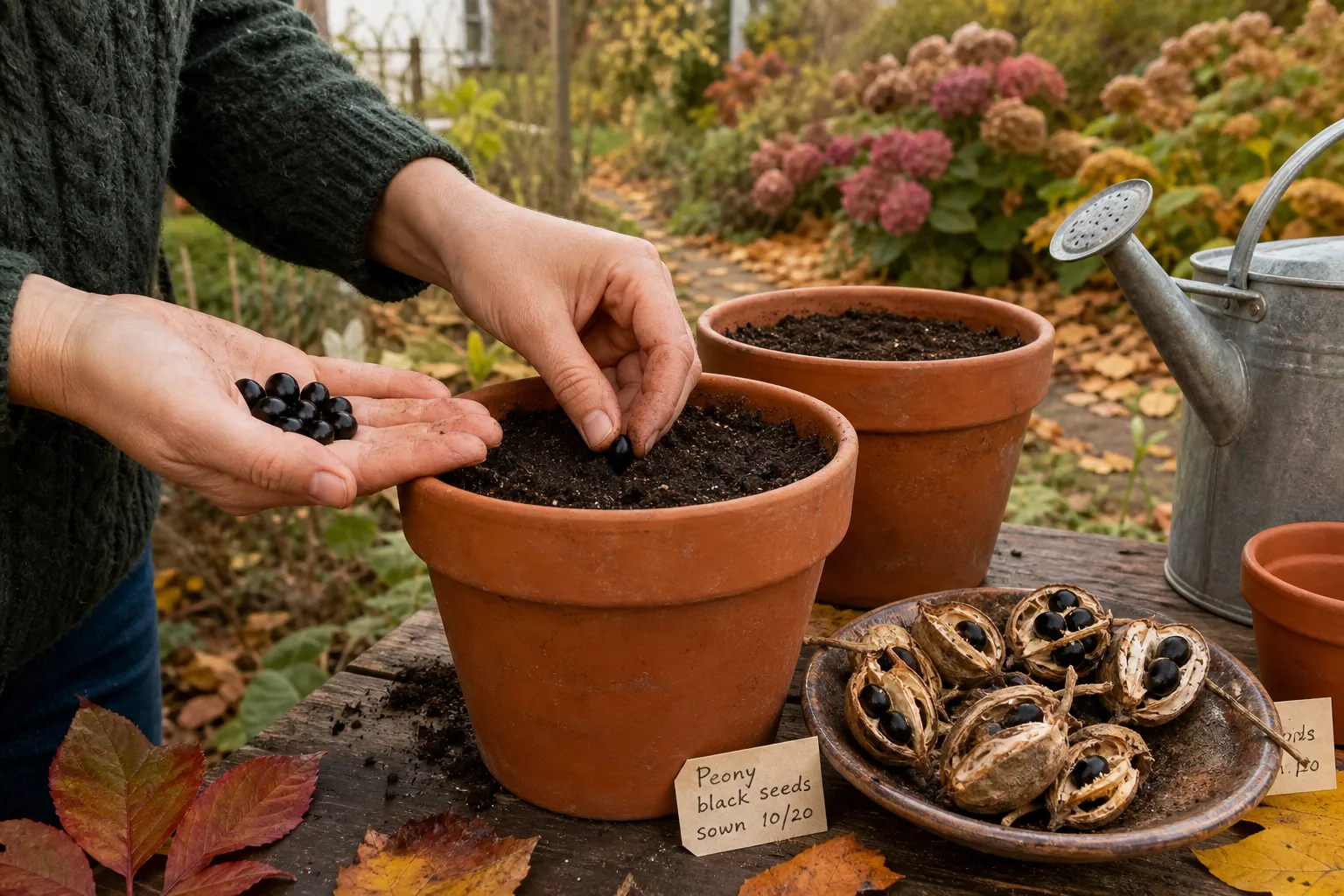
Growing peonies from seed is a slow-burn gardening project, but it can also be one of the most rewarding. Instead of planting a ready-made clone, you raise a completely new plant—one that may eventually produce flowers unlike any peony in your garden. The trade-off is patience: peony seeds have built-in dormancy, seedlings develop gradually, and the first bloom may be several years away.
For the best chance of success, think of peony seed as a long-term experiment rather than a quick propagation shortcut. With fresh seed, careful moisture control, and a little understanding of the seasons, even a beginner can grow healthy young plants.
What to expect when growing peonies from seed
Most garden peonies are hybrids. Their seedlings usually do not come true to the parent plant, so a seed collected from a large pink double flower may produce a plant with a different color, flower form, height, or bloom time. That unpredictability is part of the fun—but it also means seed is not the right method if you want an exact copy of a treasured cultivar.
To reproduce a named peony precisely, gardeners normally use division or another vegetative method. Seed is better suited to gardeners who enjoy surprises, want to raise a number of plants economically, or hope to make their own crosses.
A realistic timeline
- Late summer or early fall: collect ripe seed and sow it, or begin a controlled stratification process.
- First season: the seed may produce a root but no visible shoot.
- Second growing season: leaves commonly appear after the seed experiences another winter.
- Years three to five or later: seedlings may reach flowering size, although some take longer.
Growing conditions, parentage, winter temperatures, and the individual seed all influence the schedule. Do not discard a pot simply because nothing appears during the first year.
When and how to collect peony seeds
Peony seed pods develop after flowering. As summer fades into early fall, the pods swell and gradually turn brown. They are ready when they begin to split open and reveal firm, dark seeds.
Watch the pods closely. Once they open, seeds can fall to the ground, disappear into mulch, or be carried away by animals. If you want to collect them cleanly, place a small mesh bag or piece of breathable fabric over the pod before it splits. Avoid sealing the pod in airtight plastic, which can trap moisture and encourage mold.
Choose mature, viable seeds
Healthy peony seeds are generally plump and dark—often black or deep brown. Bright red seeds are commonly immature or unfertilized and are much less likely to germinate, so separate them from the darker seeds.
Collect from healthy plants and label every batch. Write down the parent plant, flower color, location, and collection date. If you know which plants grew nearby, record those too; bees and other pollinators may have transferred pollen from a different peony.
Keep freshly collected seeds slightly moist rather than allowing them to shrivel completely. Place them in a labeled paper envelope for short-term handling, but do not leave moist seeds sealed in the envelope for weeks. If you cannot sow immediately, use a breathable container with a little barely damp vermiculite, peat, or clean sand.
Why peony seeds need two seasons of treatment
Peony seeds show what gardeners call double dormancy. In simple terms, the seed usually needs two different seasonal signals before it can produce a normal seedling.
The first warm, moist period encourages the root to develop. After that, the seed needs a cold, moist period—similar to winter—to release the shoot from dormancy. This explains one of the most confusing features of peony propagation: a seed may be alive and actively forming a root even though no leaf appears above the soil.
In nature, this sequence happens outdoors. In a home garden, you can copy it by sowing outdoors in fall or by using a controlled indoor method with a warm period followed by refrigeration.
Method 1: Sow peony seeds outdoors in fall
For many home gardeners, direct outdoor sowing is the simplest approach. The changing temperatures provide a natural version of the warm-and-cold cycle, and you avoid handling delicate emerging roots.
Step-by-step outdoor sowing
- Choose a container or nursery bed. A deep container with drainage holes works well because young peonies develop substantial roots. You can also use a protected, well-drained garden bed.
- Fill with a loose seed-starting mix. Use a commercial seed-starting medium or a light mixture that drains freely while holding some moisture. Avoid heavy garden soil in small containers.
- Sow the seeds about 1 inch deep. This depth helps prevent drying and gives the developing root room to grow. Space seeds a few inches apart if possible.
- Cover the surface lightly. A thin layer of coarse grit can reduce surface crusting and make the container less attractive to rodents.
- Water thoroughly once. Moisten the entire container, then allow excess water to drain.
- Protect the container. Place it outdoors in a sheltered spot, such as beside a north- or east-facing wall, or set it in a cold frame. Protect it from squirrels, mice, and repeated freeze-thaw heaving.
- Check moisture regularly. The mix should remain slightly damp, never waterlogged and never bone dry.
In much of the United States, fall sowing works well because it lets the seeds experience natural temperature changes. Gardeners in mild-winter areas may need to provide a more deliberate cold period, while gardeners in very warm regions should not assume that a brief cool spell will replace winter conditions.
Method 2: Use a controlled warm-and-cold treatment
A refrigerator-based method gives you more control, especially if you have limited outdoor space or live where winters are unusually mild. The key is to keep the seeds moist, not wet, and to avoid confusing the treatment with simple dry seed storage.
A practical home setup
- Place seeds in a small labeled bag or container with barely damp vermiculite, peat, or clean sand.
- Keep the seeds warm and moist for several weeks—roughly 70 to 75°F is a reasonable household target.
- Check periodically for root development. Handle any emerging root gently and avoid breaking it.
- Move the seeds to a refrigerator held around 35 to 40°F for a prolonged cold period.
- After the cold treatment, pot up seeds that have developed roots, placing them carefully with the root downward.
Exact timing can vary among peony species and hybrids, so do not treat one calendar schedule as a guarantee. Some seeds may root during the warm phase but wait until after cold treatment to send up leaves. If a seed remains firm and healthy, continued patience is often wiser than throwing it away.
How to water peony seeds and seedlings
Moisture control is one of the most important parts of the project. Seeds need consistent moisture to complete dormancy cycles, but saturated media deprives roots of air and encourages decay.
Instead of watering by guesswork, try a simple measurement routine during a home trial. Water a 1-gallon container slowly until a little drains from the bottom, then record how much water you used. Depending on the dryness of the mix, this may be around 1 to 2 quarts, but the exact amount is less important than watering thoroughly and allowing drainage.
Check the container every two or three days by pressing a finger about 1 inch into the surface. If the mix feels cool and slightly moist, wait. If it feels dry at that depth, water again until the mix is evenly moistened. In winter, outdoor containers may need little additional water; in a sunny spring location, they may dry much faster.
Do not let a tray sit in water. Empty saucers after irrigation, and use containers with open drainage holes. Once seedlings emerge, water at the soil line in the morning when practical, keeping the foliage as dry as you can.
Comparing peony types and what their seeds may produce
Seedlings from different peony groups can vary considerably. Herbaceous peonies die back to the ground in winter and are widely grown in colder parts of the United States. Tree peonies develop woody stems and behave differently. Intersectional peonies combine traits from herbaceous and tree peonies, but their seed may be less predictable and is not always readily available.
Flower form also matters. Peonies may have single, Japanese, anemone, semi-double, bomb, or double flowers. A seedling from a double-flowered parent is not guaranteed to produce a double bloom. If you are collecting seed for breeding, grow several seedlings so you can compare them rather than judging the entire project by one plant.
A simple seedling comparison project
To make the process more informative, grow at least six to ten seedlings from clearly labeled parent plants. Give each plant a permanent number and record:
- date of sowing and date of emergence
- number of leaves during the first full season
- growth habit and foliage shape
- height and bloom date once mature
- flower color, form, fragrance, and stem strength
- performance in sun, rain, and summer heat
This kind of record turns a slow project into a useful garden experiment. It also helps you identify the seedlings worth keeping if they eventually show unusual or especially attractive qualities.
Transplanting young peonies
Once seedlings have several healthy leaves and a well-developed root system, move them into individual pots if they are crowded. Use containers that are deeper than standard annual-cell packs, and disturb the roots as little as possible.
Grow the plants in bright light with protection from intense afternoon heat during their first season. Keep the potting mix evenly moist, but allow the surface to dry slightly between waterings. A light layer of mulch around an outdoor seedling can help moderate moisture, but keep mulch away from the crown.
When planting into the garden, choose full sun and well-drained soil. Most garden peonies perform best where they receive at least six hours of direct sunlight and do not compete heavily with tree roots. In colder areas, a site with good air circulation helps foliage dry quickly after rain.
Plant herbaceous peony seedlings so the crown sits close to the soil surface. Planting too deeply is a common reason peonies produce leaves but few flowers. Because young plants may need several years before blooming, mark their location clearly so they are not disturbed during seasonal cleanup.
Common problems and how to avoid them
No leaves appear
This is often normal during the first year. The seed may be developing a root underground. Continue to maintain moderate moisture and protect the container from pests.
The seed turns soft or develops mold
Excess water, poor air circulation, or contaminated material may be responsible. Remove damaged seeds, improve drainage, and replace wet media. Healthy seeds should remain firm.
Seedlings collapse after emerging
Sudden collapse can follow overly wet conditions, crowded seedlings, or poor air movement. Water carefully at the base, provide bright light, and avoid keeping the surface constantly saturated.
The plant grows but does not bloom
Young peonies often need several years to mature. Excess shade, deep planting, root competition, and heavy nitrogen fertilization can also reduce flowering. Give the plant time before deciding that it has failed.
Is growing peonies from seed worth it?
If you want a guaranteed flower color next spring, buy a mature plant or divide a known cultivar. If you enjoy the anticipation of raising something new, peony seed is absolutely worth trying.
Start with more seeds than you need, label everything, and accept that the first visible progress may be a root rather than a leaf. Keep your containers evenly moist, provide the seasonal temperature changes the seeds require, and resist the urge to give up too soon.
Every seedling carries a little mystery. With patience, your small fall sowing may eventually become a long-lived peony that returns each spring—and perhaps produces a flower no one in your garden has seen before.