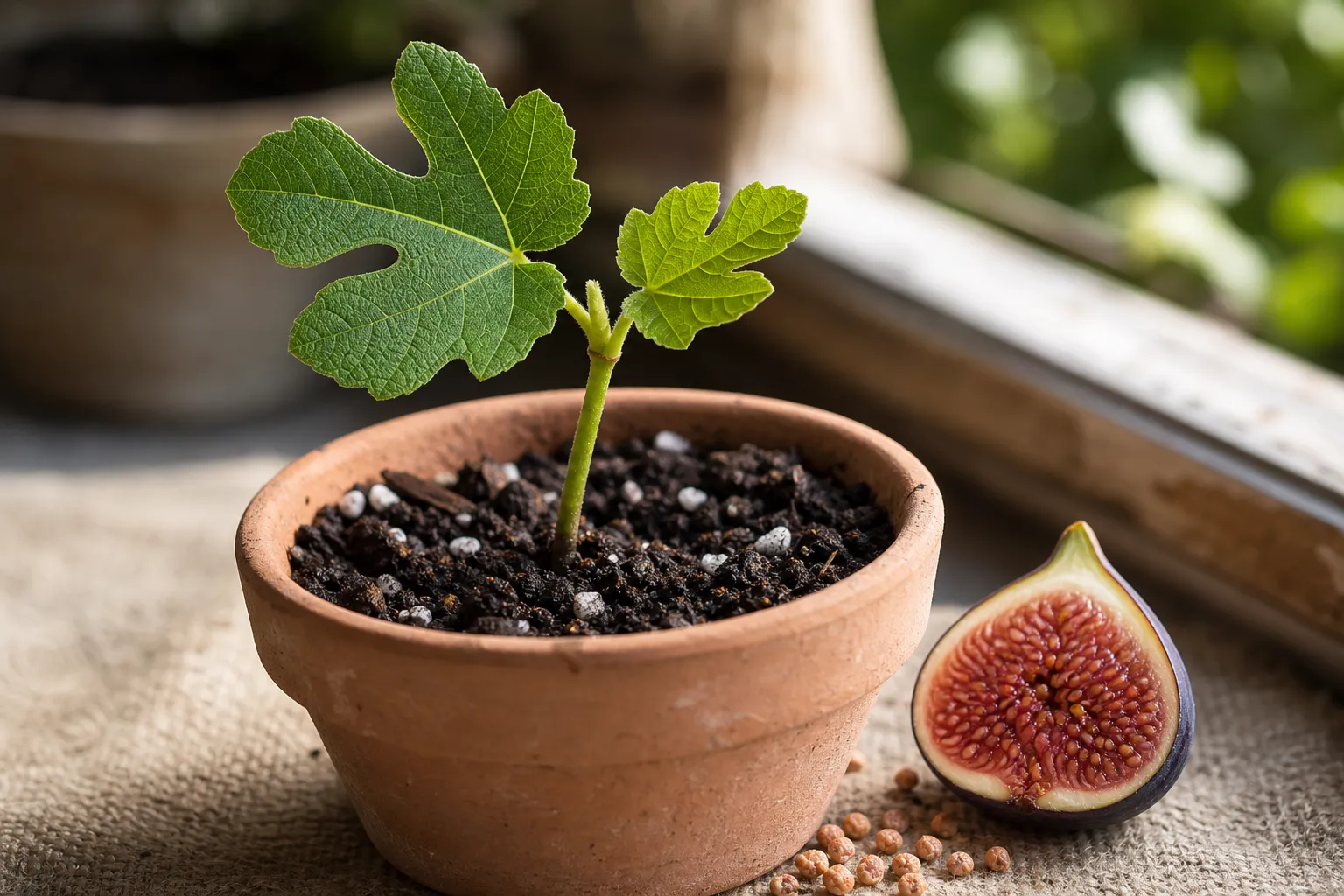
Growing a fig tree from seed is a small gardening experiment with a big payoff: a handful of tiny seeds can become a handsome, broad-leaved tree with a personality all its own. It is also a lesson in patience. Seed-grown figs are genetically variable, so your future tree may not produce fruit identical to the fig it came from—and it may take several years to fruit. That uncertainty is part of the fun.
If you want a known variety such as ‘Brown Turkey’ or ‘Black Mission,’ a rooted cutting is usually the better choice. But if you enjoy raising unusual plants, comparing seedlings and watching a tree develop from its earliest stage, starting from seed is well worth trying.
Before you sow: know what to expect
The edible fig, Ficus carica, is not usually grown from seed commercially because cuttings preserve the exact characteristics of a named variety. A seedling is the result of sexual reproduction, so its growth habit, cold tolerance, fruit color, flavor and productivity can differ from the parent tree.
There is another complication: not every edible fig contains fully developed, viable seed. Many common figs grown in the United States ripen without pollination, producing fruit that may contain small, empty seed structures. Figs that have been pollinated can produce viable seeds, but the pollination system depends on the fig type and local conditions. For that reason, sow several seeds rather than relying on one or two.
Think of this project as raising a potential new seedling, not cloning a favorite tree. If your goal is dependable fruit from a particular cultivar, buy a named plant or root a cutting. If your goal is discovery, start with fresh, ripe fruit and keep good notes.
Choose the best seeds
Fresh seeds from a fully ripe fig are the simplest starting point. You can use a fig from your own tree, a farmers market or a grocery store, but the source may not tell you the cultivar or whether the seeds are viable. Dried figs can also contain seeds, although they may germinate less consistently depending on how they were processed and stored.
How to collect and clean fig seeds
- Cut open a soft, ripe fig and scrape a small amount of the interior onto a fine-mesh strainer.
- Rinse gently under cool water, rubbing very lightly to remove most of the sticky fruit pulp.
- Spread the seeds on a coffee filter or paper towel for a day or two in a warm, shaded room.
- Discard seeds that are obviously damaged, pale and hollow-looking or covered in mold.
Some gardeners soak seeds in plain water for about 24 hours before sowing. This can soften remaining pulp and fully hydrate the seed, but it is not a guarantee of viability. A simple float test is only a rough guide: some seeds that sink may germinate, while some floating seeds may still be alive. Sowing extra seeds is more reliable than trying to predict the future from buoyancy.
When to sow fig seeds
For most of the United States, sow indoors in late winter or spring, when you can provide warmth and bright light. A protected indoor start gives seedlings time to develop before summer heat, dry wind or sudden cold arrives.
In warm regions where winter temperatures stay mild, you can sow outdoors in spring. In colder areas, avoid planting tiny seedlings directly in the garden during the first season. Young figs are much more vulnerable to freezing than established trees, and a container makes it easier to protect them.
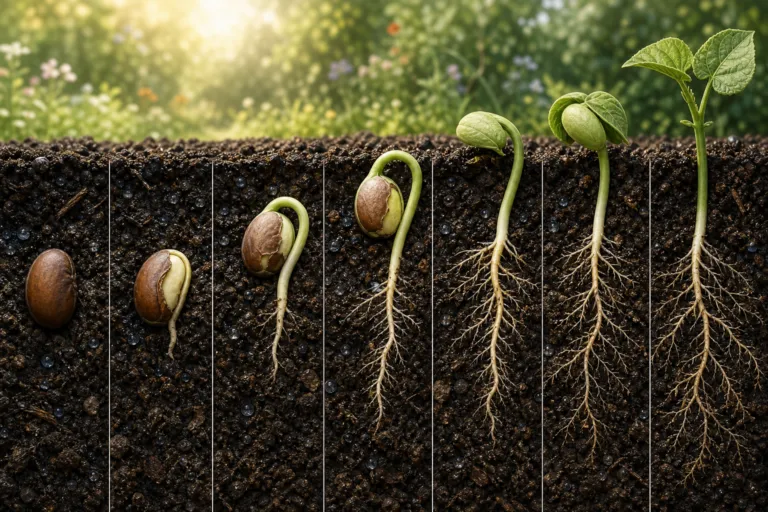
Fig seeds generally respond best to steady warmth rather than cold, damp conditions. Aim for a growing-medium temperature around 70–80°F. Germination may begin in roughly two to six weeks, but timing varies with seed quality, temperature, moisture and light. Some seeds may take longer, so continue caring for the pot until you are confident nothing else will emerge.
A simple sowing method that works
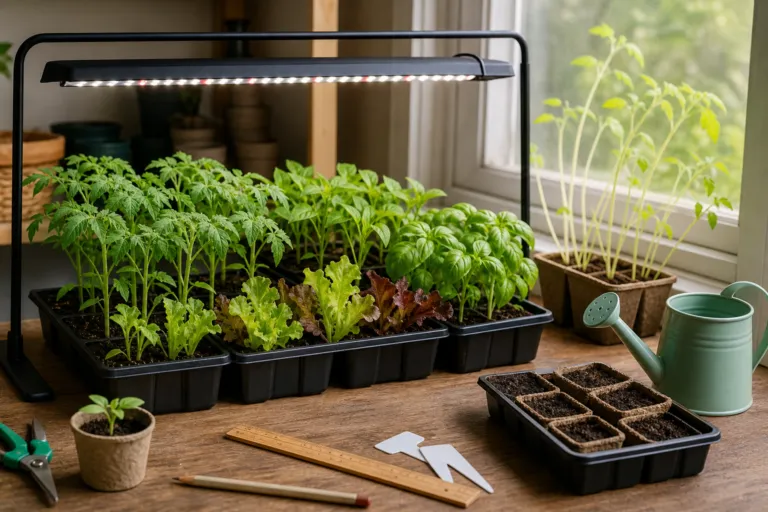
Use a clean seed-starting tray, a small nursery pot or a recycled container with drainage holes. A fresh, fine-textured seed-starting mix is preferable to garden soil because it drains evenly and is less likely to form hard clumps around the delicate roots.
Step-by-step sowing
- Moisten the seed-starting mix before filling the container. It should feel evenly damp, not muddy.
- Scatter the seeds over the surface. Leave a little space between them if possible.
- Cover with a very thin layer of mix—about 1/8 inch—or press them gently into the surface and dust lightly with vermiculite.
- Label the container with the date and seed source.
- Cover the container with a clear humidity dome or a loose clear plastic bag.
- Place it in a bright, warm location out of harsh direct sun.
Fig seeds are small, so deep planting is a common mistake. If you bury them too deeply, the emerging seedlings may run out of energy before reaching the surface. Keep the mix moist enough to prevent drying, but never leave the container sitting in water.
Germination: warmth, light and restraint
Check the container every day or two. If the surface begins to dry, mist it or water gently from below. Avoid a strong stream from a watering can, which can wash seeds into a pile or bury them unevenly.
Once you see green shoots, move the container to the brightest light you can provide. A sunny window may work, but seedlings can become tall and weak during short winter days. If growth looks stretched or leans strongly toward the glass, use a grow light positioned according to the manufacturer’s directions for about 12–16 hours daily.
Remove the humidity cover gradually after germination. Prop it open for a few days, then take it off completely. This reduces excessive humidity and helps the young plants adjust to normal indoor air. Good air circulation matters, especially when the surface remains damp.
What if nothing sprouts?
Do not assume failure too quickly. Wait at least six weeks while maintaining warmth and even moisture. If the mix smells sour, develops a fuzzy coating or stays constantly saturated, start again with fresh mix and a clean container.
The most likely causes of poor germination are nonviable seed, fruit pulp left on the seed, cold conditions, overly wet soil or planting too deeply. Because viable seed can be unpredictable in figs, the most practical strategy is to sow a generous batch and expect to select the strongest seedlings later.
Early care after the first leaves appear
Fig seedlings often begin with a pair of simple seed leaves, followed by the lobed true leaves that make the plant recognizable. Wait until a seedling has several true leaves and a visible root system before transplanting it.
Give young plants bright light, warmth and steady—but not excessive—moisture. Let the surface dry slightly between waterings, then water thoroughly until a little drains from the bottom. Empty any saucer so the roots do not remain waterlogged.
How much water does a young fig need?
Rather than watering by the calendar, measure the moisture in the pot. Insert your finger about 1 inch into the mix. If that layer feels dry, water slowly until roughly 10–20 percent of the water drains from the bottom. For a 4-inch pot, this may be around 1/2 to 1 cup of water, but the exact amount depends on the mix and container.
Check every two or three days indoors, and daily during hot weather outdoors. Small pots can dry quickly, while cool, dim rooms may require much less frequent watering. The goal is an evenly moist root zone with good drainage—not a permanently wet pot.
Transplanting seedlings without damaging them
When the seedlings have several true leaves, separate them carefully. Water the tray a few hours beforehand so the mix holds together. Lift each plant by a leaf, never by the delicate stem, and tease the roots apart with a pencil or plant label.
Move each seedling into a 4-inch pot filled with quality potting mix. Set it at the same depth it was growing before. Firm the mix gently around the roots, water thoroughly and keep the plant in bright, indirect light for several days while it recovers.
After the roots fill the small container, shift the plant into a 1-gallon nursery pot. A pot that is too large can hold excess moisture around a small root system, so increase container size gradually. Make sure every pot has drainage holes.
Feeding and light during the first year
Fresh potting mix usually contains enough nutrients for the first several weeks. After that, use a balanced liquid fertilizer at half the label rate every three to four weeks during active growth. Avoid heavy feeding; excessive nitrogen can produce soft, leafy growth that is more difficult to harden before winter.
Give the seedling as much direct sun as it can tolerate once it has adjusted. Outdoors, begin with a few hours of morning sun and increase exposure over seven to ten days. This gradual hardening-off period helps prevent leaf scorch and wind damage.
Moving a young fig outdoors
Wait until the danger of hard frost has passed and nighttime temperatures are reliably mild. Place the pot in a sheltered spot with full sun, good air movement and protection from strong afternoon wind. Figs grow best with at least 8 hours of direct sun, although local heat and humidity influence performance.
In USDA Zones 8–10, a well-established young plant may eventually grow outdoors year-round, depending on the cultivar and local winter conditions. In colder zones, keep the seedling in a container for its first few years so you can move it into an unheated garage, greenhouse or other protected space during severe freezes. Do not place a dormant plant in a warm room unless you are prepared to provide strong light; premature growth can be weak and difficult to manage.
Before planting in the ground, choose a site with excellent drainage and plenty of room. Mature figs can become large shrubs or small trees, and their roots can extend widely. A sunny position near a heat-reflecting wall can help in marginal climates, but do not crowd the plant against a foundation or under utility lines.
Comparing seedlings and named varieties
A seed-grown fig is an experiment in variation. One seedling may grow upright, another may form a spreading bush, and their eventual fruit may differ in size, color and sweetness. By contrast, named cultivars are selected and propagated for known traits.
- Seedling: inexpensive, surprising and useful for breeding or experimentation, but unpredictable.
- Rooted cutting: genetically identical to the parent plant and usually the fastest route to a known fruiting type.
- Named nursery tree: easier to match to a climate, container size or expected fruit color.
If you raise several seedlings, label each one separately. Record the parent fruit, sowing date, germination date, growth rate and winter performance. A small notebook can reveal which plants handle your conditions best.
When will a seed-grown fig produce fruit?
There is no dependable schedule for a seedling. Some may begin fruiting after a few years, while others take longer or produce disappointing fruit. Good sunlight, a long warm growing season and protection from winter injury all improve the odds, but they cannot guarantee early fruiting.
In the meantime, enjoy the plant for its foliage and structure. The large, lobed leaves make a young fig attractive even before it becomes productive. If the tree eventually produces excellent fruit, you have a particularly rewarding home-grown selection.
Common mistakes to avoid
- Planting seeds too deeply.
- Keeping the mix saturated instead of evenly moist.
- Leaving a humidity cover on after seedlings emerge.
- Growing seedlings in weak light, which causes thin, floppy stems.
- Moving young plants straight from indoors into intense sun.
- Fertilizing heavily while the plant is small.
- Assuming a seedling will reproduce the parent fig exactly.
- Planting outdoors before the root system and stem have strengthened.
Enjoy the experiment
Growing a fig tree from seed rewards curiosity more than speed. Start with plenty of seeds, provide warmth and careful moisture, then give the seedlings strong light and room to develop. The first year is mainly about building a healthy root system and sturdy framework.
Some seedlings may remain ornamental curiosities, while others could become productive trees with fruit unlike anything you have grown before. Keep your best plants, protect them through their early winters and stay patient. Every mature fig began as a much smaller plant—and yours can begin in a kitchen fig, a small pot and a little space on a sunny windowsill.