Late autumn is a tempting time to tidy the garden, but some plants should stay firmly on your “wait” list. Lilacs, forsythias, bigleaf hydrangeas, many roses and ornamental grasses can all suffer from poorly timed cutting – or simply lose the flower buds, winter protection and wildlife value you hoped to preserve.
The safest rule is simple: before you reach for the pruners, identify whether the plant flowers on old wood, new wood or both. “Old wood” means stems that grew during a previous season and already carry next year’s flower buds. Remove those stems in November or December, and you may be cutting off spring’s display before it has even formed.
Late autumn also brings shorter days, cold nights and fluctuating temperatures. A hard trim can encourage tender new growth, expose woody stems to winter damage or remove natural shelter that helps a plant cope with wind and freezing weather. Instead of giving every plant the same haircut, use the season to observe, protect and plan your spring pruning.
Why late-autumn pruning can backfire
Plants do not all enter dormancy at the same speed. A shrub may look finished above ground while it is still moving stored resources into its roots. In much of the United States, the best time for structural pruning is late winter, when the plant is fully dormant but severe cold is beginning to ease.
Late-autumn pruning can create several problems:
- Lost flowers: Spring-flowering shrubs often set their flower buds months before they open.
- Winter injury: A flush of growth after pruning may not harden before a freeze.
- Less cold protection: Stems and old foliage can shield crowns and lower branches from wind and temperature swings.
- Weaker winter structure: Seed heads and grass plumes provide valuable habitat and visual interest.
- Unnecessary stress: Removing healthy growth is rarely urgent when the plant is not diseased or hazardous.
There are exceptions. You can remove dead, broken or clearly diseased branches when needed, provided you cut back to healthy wood and use clean, sharp tools. If a branch threatens a walkway, roof or power line, safety comes first; for large trees, call a qualified arborist.
1. Lilac
Syringa shrubs are classic spring bloomers, and most common lilacs flower on old wood. That means the buds for next spring usually develop soon after the current season’s flowers fade. A late-autumn trim can remove those buds and leave you with a healthy-looking shrub that produces very few flowers.
What to do instead
Wait until the lilac finishes flowering in spring, then prune promptly. Remove spent flower clusters and any dead, crossing or weak stems. For an older, overgrown shrub, thin out some of the oldest stems at ground level rather than shearing the entire plant into a rounded ball.
Try to keep the shrub’s natural vase-like form. Lilacs need good sunlight and air movement through the canopy, so selective thinning is usually more useful than shortening every branch. A full-sun position – roughly six or more hours of direct light – also supports better flowering than a shaded corner.
One useful distinction: reblooming lilacs, such as some cultivars sold under the Bloomerang name, behave differently from traditional spring-only lilacs. Even so, late autumn is not the ideal time for major shaping. Check the plant label or cultivar information before making substantial cuts.
2. Forsythia
Forsythia’s bright yellow flowers are one of the earliest signs that winter is ending. Those flowers form on last year’s stems, so pruning in late autumn can remove much of the coming spring show.
Forsythia is also a shrub that responds best to renewal pruning rather than constant shearing. If you cut every stem to the same height, the plant may produce a dense thicket of shoots at the ends. The result can look tidy for a short time but become congested and unruly later.
The better pruning window
Prune forsythia immediately after flowering. Start by removing a few of the oldest, thickest stems at the base. Then shorten or remove branches that cross, rub or grow into the center. This approach opens the shrub while preserving its graceful arching shape.
If your forsythia has outgrown its space, avoid trying to solve the whole problem in one late-autumn session. Remove up to about one-third of the oldest growth after flowering, then repeat the process over the next few years. Gradual renovation is less shocking and gives the shrub time to produce strong replacement stems.
3. Bigleaf hydrangea
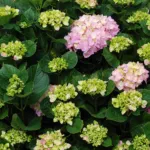
Bigleaf hydrangeas, including many mophead and lacecap types, deserve special caution. Traditional forms of Hydrangea macrophylla commonly flower on old wood, so their next season’s buds may already be sitting along the stems by late summer and fall.
A hard autumn cut can therefore remove the flower buds you have been waiting for. In colder regions, those buds may also suffer winter damage even when the shrub itself survives. This is one reason a plant can grow vigorously yet bloom poorly the following summer.
How varieties differ
- Traditional bigleaf hydrangeas: Usually protect the stems and prune only after flowering, if pruning is necessary.
- Reblooming cultivars: Some flower on both old and new wood, so they are more forgiving, but a late-autumn hard cut is still unnecessary.
- Smooth hydrangeas: These flower on new wood and are generally pruned in late winter or early spring rather than fall.
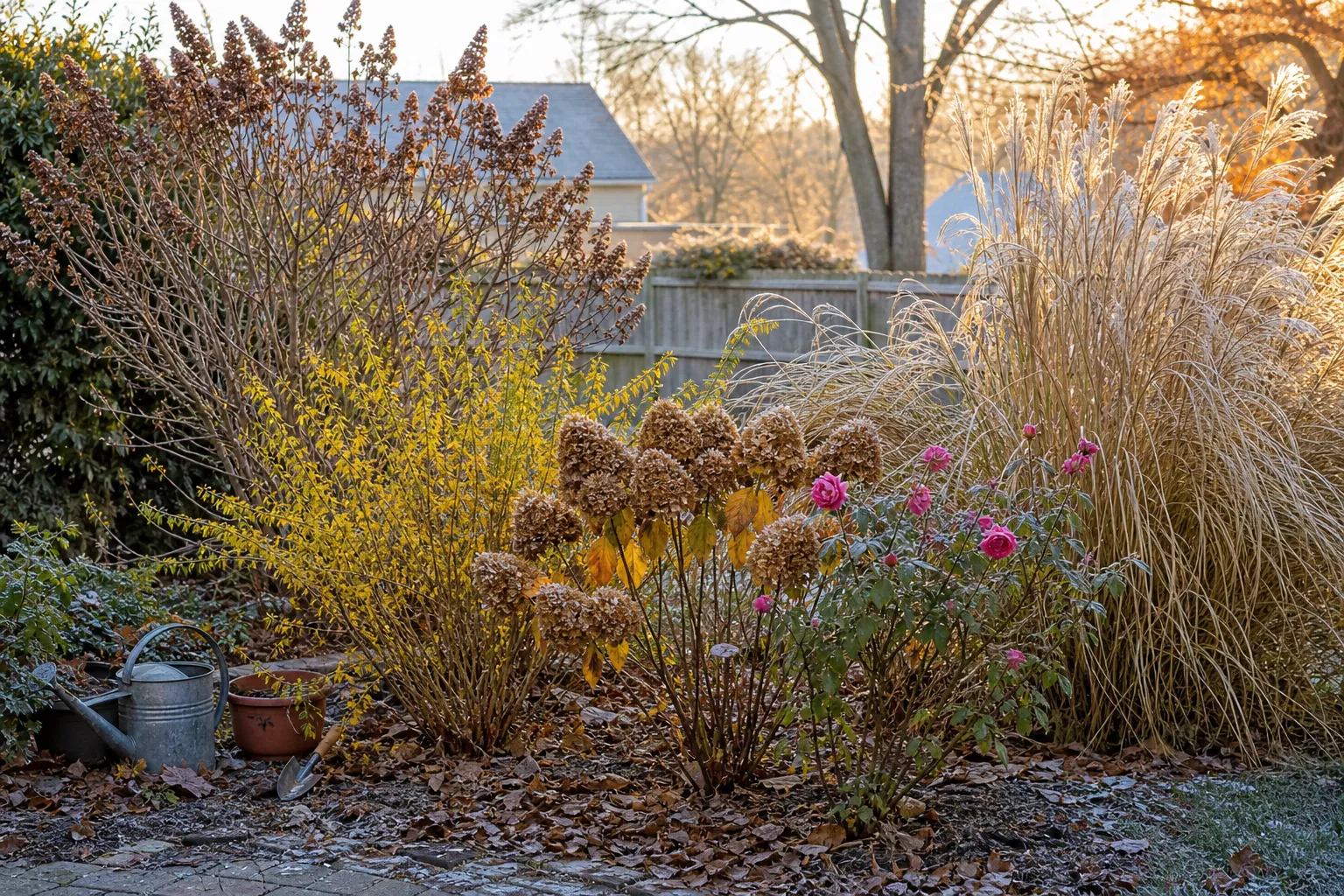
- Panicle hydrangeas: These also flower on new wood and can be pruned during dormancy, although leaving their dried flower heads through winter adds structure.
Because hydrangeas vary so much, identify the species and cultivar before pruning. In USDA Zones 5 and colder, you may get better results by leaving sturdy stems in place and protecting the base with a loose layer of mulch after the ground cools. Keep mulch a few inches away from the crown to reduce the risk of excessive moisture around the stems.
4. Many garden roses
Roses are not all pruned in exactly the same way, but late autumn is generally a poor time for major cutting. A substantial trim can stimulate soft new shoots just as freezing weather arrives. Those shoots may not harden properly, and the plant loses some of its natural structure before winter.
Modern repeat-blooming shrub roses and many hybrid teas are usually pruned more heavily in late winter or early spring, depending on the local climate. Spring-flowering or once-blooming roses may follow a different schedule, especially if they flower on older canes. Climbing roses also require their own approach.
What is safe before winter?
In late autumn, focus on light cleanup rather than shaping:
- Remove dead or diseased material.
- Cut out branches that are broken or rubbing dangerously against one another.
- Pick up fallen leaves if the plant had serious leaf disease, and dispose of them rather than adding them to home compost.
- Secure long canes that could whip in strong wind.
- Wait until late winter for the main size and shape adjustment.
Do not confuse pruning with winter protection. Depending on your region and rose type, protection might include extra soil or mulch around the base, a breathable cover or a sheltered position. Avoid piling wet mulch directly against the canes, and do not wrap a plant so tightly that air cannot circulate.
5. Ornamental grasses
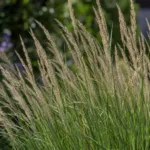
Ornamental grasses are often the most obvious plants to leave standing. Their tan blades and feathery seed heads catch frost, snow and low winter sunlight, creating structure when many beds look bare. They also provide cover for small wildlife and leave visible markers for plants that emerge late in spring.
Popular examples include switchgrass, feather reed grass and maiden grass. Some remain upright through winter, while others flop under heavy snow. Either way, cutting them down in November is rarely urgent unless they are diseased, damaged or blocking a path.
When to cut grasses back
Cut warm-season grasses back in late winter or early spring, before new shoots begin pushing through the old clump. Leaving 6 to 12 inches of stubble can make it easier to avoid damaging new growth, particularly with grasses that emerge slowly.
Use gloves and long sleeves: dried grass blades can be surprisingly sharp. Tie tall clumps together before cutting to make cleanup easier, and use hand pruners for smaller plants or a hedge trimmer for large, dense clumps.

A practical late-autumn pruning checklist
Before cutting any shrub, take a few minutes to inspect the plant and its growing conditions. The most useful autumn “pruning tool” is often a careful observation.
- Check the light: A plant struggling in deep shade may not improve through pruning alone. Many flowering shrubs need several hours of direct sun.
- Inspect drainage: Wet, compacted soil can cause more winter trouble than a few untidy stems. Improve drainage rather than compensating with aggressive cutting.
- Water thoughtfully: Water newly planted shrubs deeply when the soil is dry and unfrozen, then allow excess water to drain. Avoid frequent shallow watering and do not keep dormant plants constantly soggy.
- Look for hazards: Remove branches that are broken, hanging or likely to fall, but leave routine shaping for the correct season.
- Identify the flowering habit: Old wood, new wood and repeat bloomers need different schedules.
- Mark late-emerging plants: A short visible stem or plant marker can prevent accidental digging in spring.
If you want to compare how your own plants respond, make a simple garden record. Note the cultivar, location, hours of sun, soil moisture and flowering time. For watering, you can use a rain gauge or a straight-sided container to track rainfall, then check the soil several inches below the surface before adding supplemental water. This small experiment often reveals that a shaded, poorly drained bed – not a lack of pruning – is the real reason a shrub performs poorly.
What you can prune in late autumn
Late autumn is not a no-pruning season; it is a selective-pruning season. Once a deciduous tree or shrub is fully dormant, some structural work may be appropriate, especially where you can clearly see the branch framework. However, timing varies by species and region.
Good candidates for limited attention may include:
- Dead, broken or diseased branches.
- Water sprouts or suckers that are easy to identify and remove cleanly.
- Branches that threaten buildings, paths or visibility.
- Summer-flowering shrubs that are best pruned during dormancy, if local guidance supports it.
Always avoid topping trees or leaving long stubs. Make cuts just outside the branch collar – the slightly swollen area where a branch joins a larger one – and keep tools sharp and clean. For mature trees, large limbs or work near utility lines, hire a certified arborist instead of climbing with a saw.
Let the garden rest before you cut
Late autumn rewards restraint. Lilacs and forsythias are already preparing their spring flowers, bigleaf hydrangeas may be carrying next year’s buds, roses need time to harden before winter, and ornamental grasses still have a job to do in the landscape.
Leave healthy growth in place, remove only what is genuinely necessary and use the dormant months to plan. When late winter or spring arrives, you will have a clearer view of the plant’s structure – and a much better chance of getting the flowers, form and healthy new growth you want.