
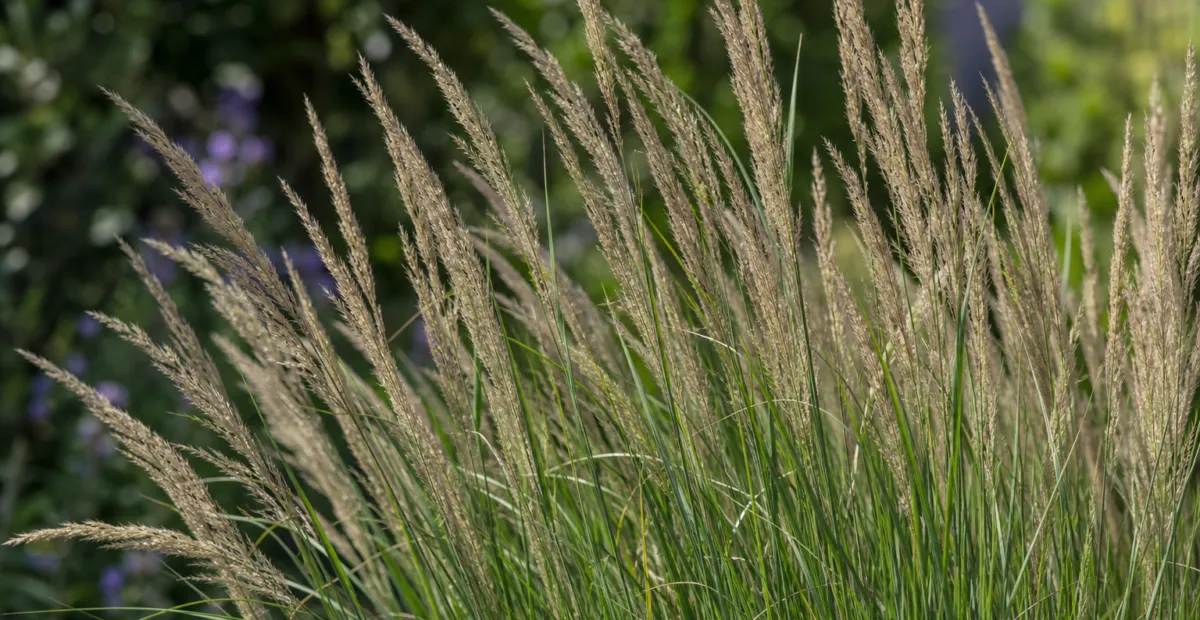
 AI-generated illustration
Feather reed grass (Calamagrostis acutiflora) short overview
Feather reed grass is a cool-season, clump-forming ornamental grass valued for its narrow upright habit, early summer plumes, and strong winter structure. It performs best in sun to light afternoon shade with evenly moist, well-drained soil, but it adapts to clay and short dry periods once established. The species name is widely used in horticulture for a hybrid taxon, especially in cultivars such as ‘Karl Foerster’.
Taxonomic classification
Feather reed grass (Calamagrostis acutiflora) care guide
Light and placement
Plant in full sun for the firmest stems and strongest flowering, or give light afternoon shade in hot-summer regions. An east-facing or southeast-facing position can reduce heat stress while preserving good light. Pale, weak growth and sparse plumes suggest insufficient light; scorched leaf tips or premature summer dormancy usually indicate excessive heat, drought, or reflected sun rather than simple light shortage.
Watering and humidity
Water deeply when the upper few inches of soil begin to dry, keeping the root zone moderately and consistently moist during establishment and while flower stems develop. Reduce frequency in cool fall weather, but do not allow newly planted divisions to dry out. Established plants tolerate brief dry periods, although drought can shorten the season and reduce plume quality. Average outdoor humidity is sufficient.
Soil and growing medium
Use fertile loam or amend compact clay with organic matter to improve structure and drainage. The plant tolerates heavier clay and a range of ordinary garden soils, but persistent stagnant water can weaken roots. A moderately moisture-retentive soil supports better summer performance than very dry sand. Slightly acidic through slightly alkaline conditions are generally suitable; routine pH correction is usually unnecessary.
Feeding
Apply a thin layer of compost or a balanced slow-release fertilizer in early spring as new growth begins. Use the label rate rather than repeated heavy applications; excessive nitrogen can produce lush, floppy growth and reduce structural quality. Do not fertilize during drought, immediately after severe heat stress, or late in the season when new growth would be vulnerable to winter damage.
Growth and habit
This cool-season grass begins growth early, flowers before many warm-season grasses, and may slow or partially go dormant during hot, dry midsummer weather. Its dense basal clump sends up rigid flowering stems with limited spreading in typical garden settings. Good air circulation and moderate moisture help keep the narrow vertical form upright.
Planting and repotting
Plant after the soil is workable in spring, or several weeks before the ground freezes in early fall. Set the crown level with the surrounding soil rather than burying it. Water thoroughly after planting and maintain regular moisture through the first growing season. Space plants according to the desired screen density, allowing airflow around mature clumps.
Container-grown plants need a large, stable pot with drainage holes and a moisture-retentive but free-draining mix. Repot or divide when roots fill the container, preferably in spring. Refresh the mix and water thoroughly after transplanting. Containers are more exposed to winter cold and drying than garden soil, so use a suitably hardy selection and protect the pot if needed.
Propagation and pruning
Propagation
Divide established clumps in spring as new growth begins, or in early fall where winters are not severe. Lift the clump, separate vigorous sections with roots and shoots, and replant promptly at the original depth. Division is the most dependable method for maintaining named cultivars; seed is not appropriate for preserving cultivar traits.
Pruning
Cut the entire clump back to about 6 inches in late winter or very early spring before new shoots emerge. Removing old stems at that time clears the crown without sacrificing winter display. Avoid cutting deeply into newly emerging shoots, and wear gloves because dry grass blades can be sharp.
Overwintering
Leave the dry stems standing through winter for structure and cut them back in late winter before new growth starts. In cold climates, mulch lightly around—but not over—the crown after the ground freezes. Container plants need extra protection because roots experience colder temperatures than plants in the ground; move pots to a sheltered location and prevent prolonged waterlogging.
Uses
Useful in mixed borders, foundation plantings, rain-garden margins, modern mass plantings, containers, and narrow vertical screens. Flowering stems can be cut fresh or dried for arrangements. It provides winter structure and some cover for small garden wildlife, but it is primarily an ornamental grass rather than a documented food or medicinal plant.
Appearance
The plant forms a tight basal clump of narrow, flat, green leaves. Upright stems carry slender, loosely feathered panicles that emerge purplish or purple-flushed and mature to buff or tan. The persistent vertical seed heads provide winter texture. The combination of rigid columns, narrow foliage, and early plumes helps distinguish it from broader, arching ornamental grasses.
Flowering
The inflorescences appear in early summer, often with a purplish cast when fresh. As the season advances, the panicles become narrower and buff-colored while remaining upright. Individual florets are inconspicuous; the ornamental effect comes from the airy panicle and its persistent vertical silhouette rather than showy petals.
Pollination and visitors
The flowers are adapted primarily to wind pollination, with exposed grass florets and airborne pollen. No specific animal pollinator or characteristic insect visitor is reliably documented for this hybrid taxon; it should not be marketed as a nectar plant.
Calamagrostis acutiflora photos
Click any photo for a larger view. Source, author and license are shown separately.
Diseases and pests
Diseases
Generally trouble-free when planted with adequate airflow and drainage. Root or crown problems are most likely in persistently wet soil. Improve drainage, avoid chronic overwatering, remove badly damaged material, and disinfect cutting tools between plants. Dense, stressed growth can also develop unattractive leaf spotting; reduce overhead irrigation and improve circulation.
Pests
Serious pest problems are uncommon. Inspect stressed plants for aphids, mites, or chewing insects, especially during hot, dry weather. Start with strong water spray or hand removal where practical, conserve beneficial insects, and use a labeled low-impact treatment only if damage is persistent and significant.
Related diseases and pests
Only Plant Doctor profiles whose host data indicate this plant may be affected are shown here.



Toxicity and pollen
Reliable extension and horticultural references commonly describe this plant as an ornamental grass but do not establish a definitive human or pet toxicity profile for the taxon. Do not eat it. Handle dry foliage with gloves to reduce cuts and irritation, keep children and pets from chewing plant material, and contact a poison-control or veterinary service if ingestion causes symptoms.
- Typical season
- Typically late spring through summer in the United States
- Pollination / pollen
- Light, wind-dispersed grass pollen released from exposed inflorescences
As a grass, it releases airborne pollen during flowering, and the wind-pollinated inflorescences can contribute to local exposure. The specific allergenicity of Calamagrostis acutiflora is not well characterized, so a precise risk level cannot be assigned. People with grass-pollen sensitivity should avoid handling flowering clumps on windy days and consider gloves and a mask when cutting them back.
Native habitat
The horticultural taxon is associated with temperate Eurasian grassland and woodland-edge parentage and is most successful in open, cool-season conditions. In cultivation it favors sunny to lightly shaded sites with moderate moisture, fertile soil, and good drainage. It can tolerate clay and short dry periods, but prolonged drought or waterlogging reduces vigor.
Interesting fact
The cultivated plant is widely treated as a hybrid derived from Calamagrostis arundinacea and C. epigejos. The famous ‘Karl Foerster’ selection was noticed in Hamburg Botanical Garden in the 1930s and later became a major landscape plant. Its seed heads remain upright and decorative through much of winter.
Frequently asked questions (FAQ)
The most relevant questions about this plant, with short and direct answers.
🌱Quick care
How do you care for feather reed grass (Calamagrostis acutiflora)?⌄
Grow feather reed grass in full sun to light shade, fertile well-drained soil, and evenly moist conditions. It is generally low maintenance once established, especially when planted where the soil does not regularly dry out.
Is feather reed grass perennial?⌄
Yes, feather reed grass is a cold-hardy perennial ornamental grass. Its foliage may become dormant or brown in winter, then new shoots emerge in spring.
How big does feather reed grass get?⌄
Feather reed grass typically grows about 3 to 5 feet tall and 1 to 2 feet wide, although cultivars can differ. Flowering stems may rise higher than the foliage.
🌤️Environment and placement
What USDA hardiness zones are suitable for feather reed grass?⌄
Feather reed grass is commonly grown in USDA Zones 5 through 9, with some cultivars tolerating colder or warmer conditions. Check the hardiness range of the specific cultivar before planting.
Does feather reed grass need full sun?⌄
Feather reed grass performs best in full sun but tolerates light or partial shade. Too much shade can reduce flowering and make the foliage less upright, particularly in humid or hot conditions.
Can feather reed grass grow in wet soil?⌄
Yes, feather reed grass tolerates evenly moist to wet soil and can be useful near rain gardens, pond edges, or other moist areas. Avoid permanently stagnant water or poorly drained conditions that prevent healthy roots.
Does feather reed grass spread or become invasive?⌄
The commonly grown hybrid feather reed grass is generally clump-forming and does not spread aggressively by viable seed. It can gradually enlarge, but it is usually controlled by digging and dividing the clump.
Can feather reed grass be used in a rain garden?⌄
Yes, feather reed grass is suitable for moist landscape areas and rain gardens that drain between rainfall events. It provides a strong vertical accent but should not be planted where roots remain submerged continuously.
Is feather reed grass native to the United States?⌄
The commonly cultivated feather reed grass hybrid is derived from European and Asian reed grasses rather than being a native U.S. plant. It is primarily used in American landscapes as an ornamental accent or mass planting.
💧Care and problems
Can feather reed grass tolerate drought?⌄
Established feather reed grass has some drought tolerance, but it grows best with consistent moisture. Water it during extended hot, dry periods, especially during its first growing season.
How often should you water feather reed grass?⌄
Water feather reed grass whenever the upper soil begins to dry, aiming for evenly moist soil rather than constantly saturated soil. Newly planted clumps need more frequent watering until their roots become established.
Does feather reed grass need fertilizer?⌄
Feather reed grass usually needs little fertilizer when grown in reasonably fertile soil. If growth is weak or the soil is poor, apply a light, balanced fertilizer in spring according to the product label.
Why is my feather reed grass falling over?⌄
Feather reed grass may flop because of excessive shade, overly rich soft growth, drought stress, or heavy rain and wind. Move or divide the plant if needed, improve light and moisture conditions, and avoid overfertilizing.
What problems affect feather reed grass?⌄
Feather reed grass has few serious pest or disease problems. Rust can occasionally develop, especially after prolonged rainy weather, so improve air circulation and remove badly affected foliage during cleanup.
🪴Planting and repotting
What type of soil is best for feather reed grass?⌄
Use fertile, well-drained soil that retains moderate moisture. Feather reed grass can tolerate clay and a range of soil types, but growth and flowering are usually strongest when the soil does not dry out completely.
When should you plant feather reed grass?⌄
Plant feather reed grass in spring or early fall when temperatures are moderate and soil moisture is dependable. Spring planting gives the roots a long season to establish before winter.
How far apart should feather reed grass be planted?⌄
Space feather reed grass about 18 to 30 inches apart for a dense planting, using wider spacing for more distinct clumps. Allow extra room around larger cultivars that can spread beyond 2 feet wide.
Can feather reed grass be grown in containers?⌄
Yes, feather reed grass can be grown in a large container with drainage holes and moisture-retentive potting mix. Container plants dry out and freeze more quickly than plants in the ground, so monitor watering and winter protection carefully.
✂️Propagation and pruning
How do you divide feather reed grass?⌄
Propagate feather reed grass by dividing established clumps in early spring or fall. Dig up the clump, separate sections with healthy roots and shoots, and replant the divisions promptly at their original depth.
Can you grow feather reed grass from seed?⌄
Usually not, because the commonly cultivated hybrid feather reed grass produces little or no viable seed. Division is the dependable method for reproducing a plant with the same characteristics.
When should you cut back feather reed grass?⌄
Cut feather reed grass back to about 6 inches above the ground in late winter or very early spring, before new growth begins. Leaving the dry flower stems over winter provides useful structure and seasonal interest.
⚠️Toxicity and safety
Is feather reed grass deer resistant?⌄
Feather reed grass is generally considered resistant to deer browsing, although no plant is completely deer-proof. Hungry deer may still sample it when preferred food is scarce.
Is feather reed grass toxic to dogs and cats?⌄
No well-established toxicity classification is available for the species, and commonly sold feather reed grass cultivars are generally regarded as non-toxic to pets. Prevent pets from chewing large quantities of any ornamental grass and contact a veterinarian if illness occurs.
Is feather reed grass safe for people?⌄
Feather reed grass has no well-established toxicity classification and is grown as an ornamental plant rather than a food crop. Do not ingest it, and handle the foliage carefully because grass blades can be sharp.
🌸Flowering and special interest
When does feather reed grass bloom?⌄
Feather reed grass usually begins flowering in early summer, producing narrow upright plumes that develop from green or purplish tones into buff or tan. The flower heads often remain attractive through fall and winter.
Does feather reed grass provide winter interest?⌄
Yes, its upright tan flower plumes and dried stems can remain attractive through winter. Leave the foliage standing until late winter unless snow, ice, or storm damage makes an earlier cleanup necessary.
Why is my feather reed grass not flowering?⌄
Insufficient sunlight is a common reason feather reed grass fails to flower, although young transplants may also need time to establish. Excessive shade, drought, or heavy nitrogen fertilizer can reduce flowering as well.
Can feather reed grass be used as a privacy screen?⌄
Yes, feather reed grass can create a narrow seasonal screen or vertical backdrop because its flowering stems are tall and upright. It is not an evergreen screen, and individual plants should be spaced according to the mature width of the cultivar.
Similar plants
 Azure Monkshood (Aconitum carmichaelii) care guideAconitum carmichaelii
 Monkshood (Aconitum ‘Stainless Steel’)Aconitum 'Stainless Steel'
 Monkshood (Aconitum ‘Bressingham Spire’)Aconitum 'Bressingham Spire'
 Golden full moon maple (Acer shirasawanum ‘Aureum’)Acer shirasawanum 'Aureum'
 Globosum (Acer platanoides ‘Globosum’)Acer platanoides 'Globosum'
 Striped maple (Acer pensylvanicum) care guideAcer pensylvanicum