
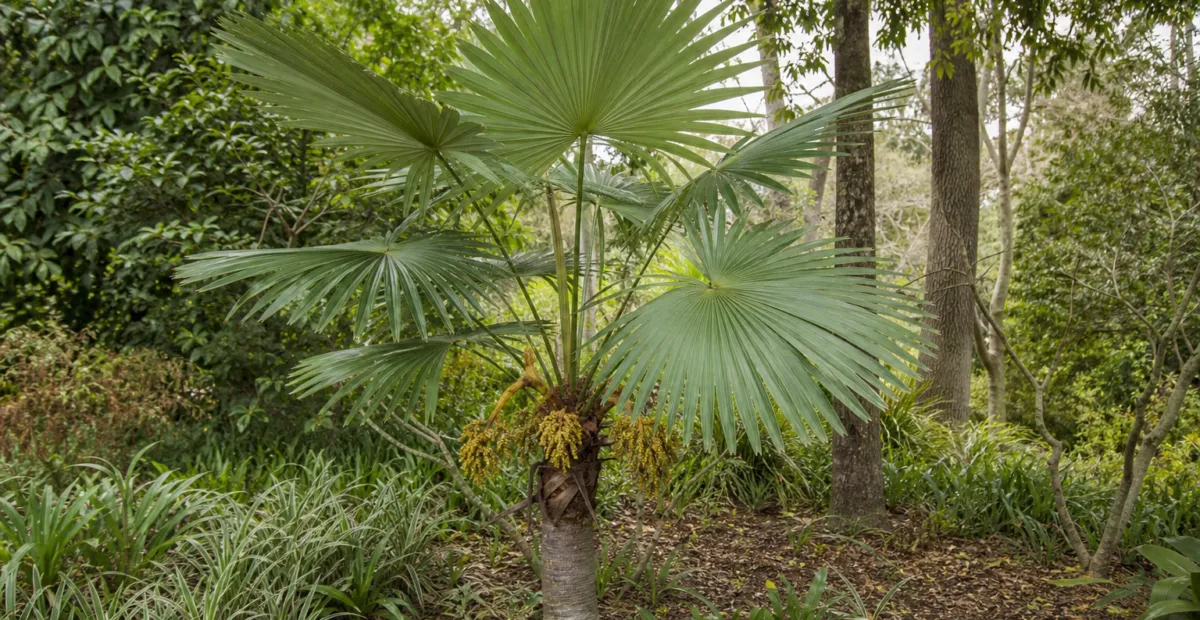
 AI-generated illustration
Trachycarpus latisectus short overview
Trachycarpus latisectus is a rare evergreen fan palm from Sikkim and the Darjeeling region of the eastern Himalayas. It forms a solitary, slender gray trunk topped with large rounded leaves whose unusually broad segments create a lush, tropical appearance. In the United States it is best grown in a sheltered Zone 9 setting or as a container specimen, with protection from freezing temperatures and drying wind.
Taxonomic classification
Trachycarpus latisectus care guide
Light and placement
Grow in full sun to partial shade, ideally with morning or filtered afternoon light in hot inland climates. A south- or west-facing sheltered position can work where summer heat is moderate, while afternoon shade reduces leaf stress in hotter areas. Too little light produces weak, stretched growth; harsh exposure combined with drought can scorch leaf segments.
Watering and humidity
Water deeply when the upper few inches of soil begin to dry, then allow excess water to drain fully. Keep newly planted palms evenly moist through establishment and reduce irrigation during cool winter weather. Container plants may need more frequent watering in summer, but the root ball should never remain saturated. Humidity is helpful but good drainage is more important.
Soil and growing medium
Use fertile, moisture-retentive but freely draining soil. A loam-based mix with added organic matter and coarse material suits containers and beds. The species is reported to tolerate acidic, neutral, and alkaline conditions, but avoid stagnant wetness and compacted soil. In containers, use a chunky palm or loam-based mix with generous drainage holes.
Feeding
Feed in spring and summer with a balanced palm fertilizer containing micronutrients, following the product label and avoiding excessive rates. Container plants benefit from regular light feeding during active growth. Do not fertilize drought-stressed, newly transplanted, or dormant plants; water the root zone first if the medium is dry.
Growth and habit
A solitary, upright palm that gradually develops a clean, slender trunk and a compact crown. It is generally slower than many warm-climate palms but can establish well where summers are long and roots remain evenly supplied with moisture. Protect the growing point from cold and mechanical injury because palms do not branch from old trunk tissue.
Planting and repotting
Plant in spring after the danger of hard freezes has passed. Set the palm at the same depth at which it was growing, never burying the trunk base. Allow approximately 6–8 feet of clearance for a mature specimen, and water consistently during the first growing seasons while roots establish.
Repot container plants in spring when roots fill the pot, moving up only one container size. Handle the root ball carefully and keep the trunk at its original depth. Large specimens are better top-dressed than repeatedly disturbed.
Propagation and pruning
Propagation
Propagate from fresh seed, the standard documented method. Clean and soak seed before sowing in a warm, evenly moist, well-drained medium. Germination may be slow and irregular, taking several weeks to months. Division is not appropriate for this normally solitary-stemmed palm unless naturally separate rooted growth is present.
Pruning
Little pruning is required. Remove only completely dead or damaged fronds with clean tools, leaving green fronds intact. Do not cut the central spear or excessively strip old leaf bases, as damage to the growing point can be fatal.
Overwintering
In Zone 9a, plant only in a protected microclimate and shield young palms from hard freezes, cold wind, and prolonged wetness. Use frost cloth during brief cold events without sealing foliage against damp air. In colder regions, grow in a container and overwinter in a bright, cool, frost-free space; water sparingly while growth slows.
Uses
Use as a specimen palm in sheltered subtropical landscapes, courtyards, patios, conservatories, and large containers. Its broad fan leaves provide a more luxuriant texture than many windmill palms. In colder US regions, container culture allows seasonal protection. No culinary or medicinal use is established here.
Appearance
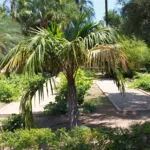
The crown consists of large, rounded palmate leaves divided into unusually broad segments, giving the plant a distinctly lush appearance. The trunk is solitary, slender, gray, and often comparatively smooth as old leaf bases are shed. The broad leaflets and tapered crown distinguish it from the more familiar narrow-segmented windmill palm.
Flowering
This is a dioecious palm, so male and female flowers occur on separate plants. Small flowers are produced in branched, pendulous inflorescences beneath the crown; female plants can develop rounded fruits after successful pollination. Exact flowering months for US climates are not reliably documented.
Pollination and visitors
Species-specific visitor records are limited. The palm is dioecious and requires compatible male and female plants for seed production; no specific animal pollinator can be assigned confidently from the available evidence.
Diseases and pests
Diseases
Generally reported as disease-free in cultivation, but stressed palms can suffer from root problems in poorly drained soil. Prevent issues with excellent drainage, clean tools, careful irrigation, and avoidance of trunk or spear damage. Remove severely diseased tissue only when necessary and correct the underlying moisture or cultural problem.
Pests
Scale insects and glasshouse red spider mites may occur, especially on stressed or container-grown plants. Inspect leaf undersides and petioles regularly. Improve airflow and plant vigor first; use targeted horticultural treatments only when pests are confirmed.
Toxicity and pollen
No reliable species-specific toxicology evidence was located for humans, dogs, cats, or children. Do not treat the plant as edible. Prevent chewing or ingestion of leaves, flowers, fruits, and seeds, and seek professional advice if exposure occurs.
- Pollination / pollen
- Pollen from male flowers; dispersal mode not established for this species
Species-specific airborne-pollen and allergy studies were not located. As a flowering palm, it produces pollen, but its release pattern and practical allergy importance for this species are uncertain. Avoid making an allergy-safety assumption solely from the lack of reports.
Native habitat
Native to the eastern Himalayas, particularly Sikkim and the Darjeeling region, where it grows in a subtropical mountain environment. The natural range is restricted, and plants experience a seasonal climate rather than uniformly tropical conditions. In cultivation, rich, well-drained soil and shelter from desiccating exposure are important.
Interesting fact
The species name latisectus refers to its broad leaf segments. Its leaves look more tropical than those of many other Trachycarpus palms. Mature plants may shed old leaf bases and develop a relatively clean trunk. The species is native to a restricted Himalayan range and is uncommon in cultivation.
Frequently asked questions (FAQ)
The most relevant questions about this plant, with short and direct answers.
🌱Quick care
What is Trachycarpus latisectus?⌄
Trachycarpus latisectus is an evergreen, solitary fan palm in the Arecaceae family, native to the eastern Himalayas from Sikkim to Darjeeling. It is valued for broad, lush leaf segments and a relatively smooth trunk as it matures.
How much light does Trachycarpus latisectus need?⌄
Trachycarpus latisectus grows best in full sun to partial shade. Protect young palms from intense afternoon sun until they are established, especially in hot, dry regions.
How often should I water Trachycarpus latisectus?⌄
Water Trachycarpus latisectus regularly enough to keep the root zone evenly moist but never waterlogged. Established plants may tolerate short dry periods, but prolonged drought can cause leaf browning and reduced growth.
Is Trachycarpus latisectus cold hardy?⌄
Trachycarpus latisectus has useful cool tolerance but should be grown in a protected location rather than treated as a reliably hardy palm everywhere. In the United States, winter protection is prudent outside mild coastal or warm sheltered microclimates.
How fast does Trachycarpus latisectus grow?⌄
Trachycarpus latisectus is generally slow to moderate growing, although favorable warm, moist conditions can produce faster growth. Growth is usually much slower when the plant is young, root-restricted, drought-stressed, or exposed to cold.
🌤️Environment and placement
Where should I plant Trachycarpus latisectus outdoors?⌄
Plant Trachycarpus latisectus in a sheltered spot with full sun to partial shade and protection from cold, drying winds. A warm courtyard, coastal garden, or protected south- or west-facing site is preferable in marginal climates.
What USDA hardiness zone is Trachycarpus latisectus suitable for?⌄
Trachycarpus latisectus is best regarded as a protected, borderline outdoor palm rather than assigned a universally dependable USDA zone. Its survival depends on winter duration, wind exposure, plant size, drainage, and local microclimate.
Can Trachycarpus latisectus grow in a container?⌄
Yes, Trachycarpus latisectus can grow in a container while young or where outdoor winters are too cold. Use a heavy, well-drained pot, avoid chronically saturated soil, and move or protect the container before hard freezes.
Can Trachycarpus latisectus grow indoors?⌄
Trachycarpus latisectus is primarily an outdoor palm and is not an ideal permanent houseplant. It may be overwintered temporarily in a bright, cool, well-ventilated space, but low light and dry indoor air can cause decline.
Does Trachycarpus latisectus tolerate wind?⌄
Trachycarpus latisectus performs best with protection from strong or drying winds. Wind can shred its broad fan leaves, increase moisture loss, and worsen cold injury.
💧Care and problems
What soil is best for Trachycarpus latisectus?⌄
Use fertile loam or sandy loam that drains freely while retaining moderate moisture. Improve heavy or compacted ground with organic matter and coarse mineral material rather than planting the palm in a permanently wet site.
Should Trachycarpus latisectus soil dry out between waterings?⌄
Allow only the surface to dry slightly between waterings; do not let the entire root ball dry out for extended periods. Consistent moisture is particularly important during establishment, hot weather, and active growth.
What fertilizer does Trachycarpus latisectus need?⌄
Feed Trachycarpus latisectus during active growth with a balanced palm fertilizer according to the product label. Avoid excessive fertilizer in dry soil, because concentrated salts can damage palm roots.
Why are the leaves of Trachycarpus latisectus turning brown?⌄
Brown leaves or tips commonly result from drought, low humidity, salt buildup, wind damage, cold injury, or root problems. Check soil moisture and drainage first, then review recent weather, fertilizer use, and exposure.
What pests affect Trachycarpus latisectus?⌄
Trachycarpus latisectus is generally regarded as relatively trouble-free, but scale insects and spider mites can be problems, especially under glass or in dry conditions. Inspect leaf undersides and treat infestations promptly with a locally approved method.
Does Trachycarpus latisectus need pruning?⌄
Trachycarpus latisectus generally needs little pruning. Remove only fully dead or badly damaged fronds with clean tools, and avoid cutting green leaves or damaging the growing point.
🪴Planting and repotting
When is the best time to plant Trachycarpus latisectus?⌄
Plant Trachycarpus latisectus in spring or early summer after the risk of hard frost has passed. Warm soil and a long growing season help the palm establish roots before winter.
How do I plant Trachycarpus latisectus in the ground?⌄
Set the palm at the same depth at which it was growing in its container, then backfill with fertile, well-drained soil and water thoroughly. Mulch the root zone without piling mulch against the trunk, and provide protection during the first winters.
How should I repot Trachycarpus latisectus?⌄
Repot Trachycarpus latisectus when roots have substantially filled the container, moving it into a pot only modestly larger. Use a porous, well-drained mix and disturb the root ball as little as possible.
✂️Propagation and pruning
How do you propagate Trachycarpus latisectus?⌄
Trachycarpus latisectus is propagated primarily from seed. Sow fresh, cleaned seed in a moist, airy medium and maintain warm conditions; germination may be uneven and can take several months.
Should Trachycarpus latisectus seeds be soaked before sowing?⌄
Soaking Trachycarpus latisectus seeds in clean, warm water for about 12 hours before sowing can help hydrate them. Keep the seed medium warm and evenly moist but not saturated, and do not allow it to dry out.
How long do Trachycarpus latisectus seeds take to germinate?⌄
Trachycarpus latisectus seeds may germinate in roughly two to ten months, depending on freshness, temperature, moisture, and seed quality. Continue caring for the sowing after the first seedlings appear because germination is often staggered.
⚠️Toxicity and safety
Is Trachycarpus latisectus toxic to cats or dogs?⌄
The species-specific toxicity of Trachycarpus latisectus is not reliably classified, so it should not be described as definitively pet-safe. Keep pets from chewing the plant and contact a veterinarian or animal poison service if ingestion causes symptoms.
Is Trachycarpus latisectus the same as a sago palm?⌄
No, Trachycarpus latisectus is a true palm in the genus Trachycarpus, whereas the commonly sold sago palm is Cycas revoluta, a different and highly toxic plant. Do not use sago-palm toxicity information to classify Trachycarpus latisectus.
🌸Flowering and special interest
Does Trachycarpus latisectus flower?⌄
Yes, mature Trachycarpus latisectus plants produce branched clusters of small flowers. As with other Trachycarpus palms, the species is dioecious, so individual plants are generally male or female.
Can one Trachycarpus latisectus produce seeds by itself?⌄
Usually not, because Trachycarpus latisectus plants are generally male or female and seed production normally requires pollen from a compatible male plant. A female may flower without producing viable seed if no male is nearby.
What does Trachycarpus latisectus look like when mature?⌄
A mature Trachycarpus latisectus develops a solitary, slender gray trunk topped by large, bright green, fan-shaped leaves with unusually broad segments. Older plants may present a cleaner trunk as older leaf bases and fibers shed.
Similar plants
 Majesty Palm (Ravenea rivularis) care guideRavenea rivularis
 Needle palm (Rhapidophyllum hystrix) care guideRhapidophyllum hystrix
 Nikau (Rhopalostylis sapida) care guideRhopalostylis sapida
 Broadleaf lady palm or bamboo palm (Rhapis excelsa) care guideRhapis excelsa
 Chaguaramo (Roystonea oleracea) care guideRoystonea oleracea
 Arikury Palm (Syagrus schizophylla) care guideSyagrus schizophylla