
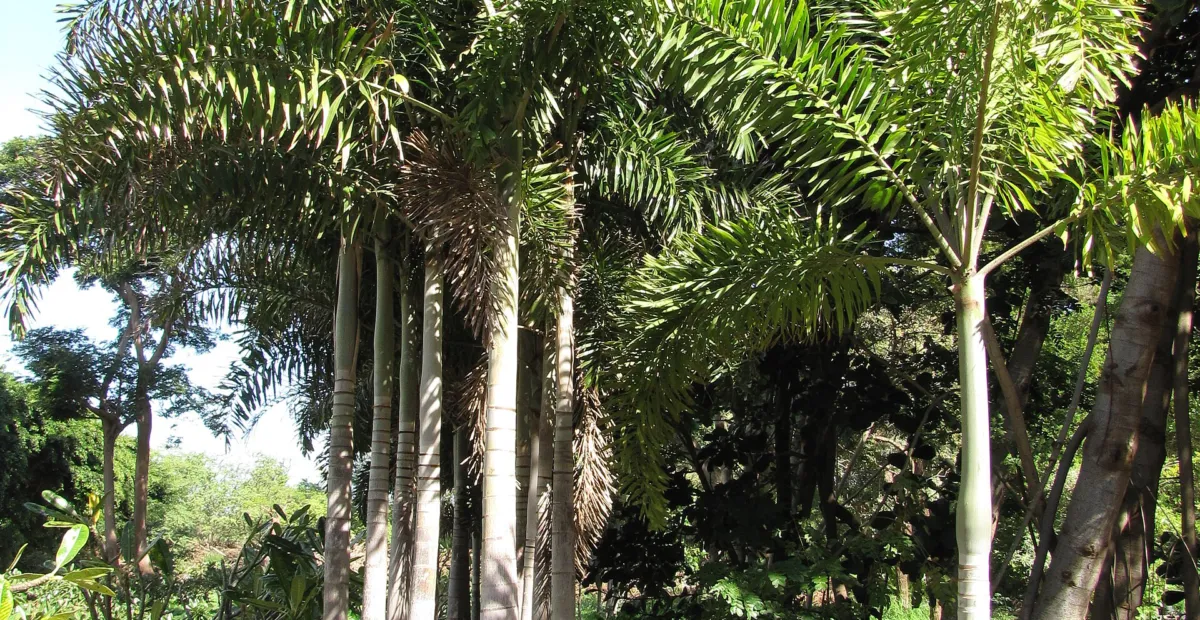
 Source:
Foxtail Palm (Wodyetia bifurcata) short overview
Foxtail Palm is a tropical Australian palm recognized by its luxuriant, plumose fronds that resemble a fox’s tail. Wodyetia bifurcata forms a solitary, smooth gray trunk and may produce branching flower clusters followed by orange-red fruits. It grows best in full sun, sharply drained soil, and warm, frost-free conditions; in most of the United States, it is grown outdoors only in the warmest regions or overwintered in a container.
Taxonomic classification
Foxtail Palm (Wodyetia bifurcata) care guide
Light and placement
Give full sun for the strongest growth and best crown form, with partial shade acceptable in hot climates or during indoor culture. An east-, south-, or west-facing position is suitable when grown in a container. Too little light produces stretched growth and sparse fronds; abrupt movement from shade to intense sun can scorch foliage, so acclimate gradually.
Watering and humidity
Water deeply when the upper few inches of soil begin to dry, then allow excess water to drain fully. Keep newly planted palms evenly moist while establishing; reduce frequency in cool weather and increase it during hot, dry periods. Although established palms tolerate drought, regular deep irrigation produces better growth than repeated shallow watering.
Soil and growing medium
Use a loose, sharply drained palm mix or sandy loam amended with organic matter. Avoid persistently waterlogged soil. A slightly acidic to neutral substrate is suitable, although established plants tolerate a broader pH range if drainage and nutrient availability are good.
Feeding
Feed during active warm-season growth with a slow-release palm fertilizer containing magnesium and micronutrients such as manganese, iron, and boron. Follow the product label and water it in. Do not fertilize drought-stressed, recently transplanted, or cold-damaged plants until they resume active growth.
Growth and habit
A solitary, upright palm that develops a smooth trunk and a dense crown of arching, feather-like fronds. Growth is strongest with warmth, regular moisture, adequate nutrition, and good drainage. Cold, poor light, root restriction, and nutrient shortages can slow development and damage the crown.
Planting and repotting
Plant after the danger of cold weather has passed, setting the palm at the same depth as in its nursery container. Allow ample clearance for the mature crown and keep mulch away from the trunk. Water deeply during establishment, then extend the interval as roots spread.
Repot container plants only when roots have filled the pot, preferably during warm active growth. Move up one pot size and disturb the root ball as little as possible. Use a heavy, free-draining container because the tall crown can make the plant top-heavy.
Propagation and pruning
Propagation
Propagate from fresh seed. Clean away fruit pulp, sow in a warm, well-drained medium, and maintain steady moisture without saturation. Germination timing is variable and may be prolonged; seedlings need warmth, bright light, and careful watering.
Pruning
Remove only fully dead or hazardous fronds, cutting close to the crownshaft without damaging living tissue. Do not routinely remove green fronds or climb the trunk with spikes. Remove old fruit stalks when necessary for clearance, using clean tools.
Overwintering
Protect from frost and freezing wind. Container plants should be moved indoors or into a bright, warm greenhouse before temperatures approach 30°F. Water less in winter but do not allow the root ball to remain bone dry for long periods. Avoid placing the plant beside heaters or in a dark room.
Uses
Used primarily as an ornamental specimen, street, patio, poolside, or container palm in warm climates. Its architectural trunk and dense plumose crown suit tropical and subtropical landscapes. It is not documented here as a food or medicinal plant, so avoid unsupported edible or therapeutic claims.
Appearance
The species has a solitary, smooth gray trunk, a green crownshaft, and long pinnate fronds whose numerous leaflets radiate in a full, bottlebrush-like arrangement. The crown gives the palm its foxtail appearance. Branched flower stalks emerge below the crownshaft, and mature plants can carry conspicuous orange-red fruit clusters.
Flowering
The palm produces branched inflorescences beneath the crownshaft. Small, inconspicuous flowers are followed by fleshy orange-red fruits. Reliable month-by-month flowering data for the United States is not established because flowering varies with climate and cultivation conditions.
Pollination and visitors
The flowers are small and inconspicuous, but reliable species-specific records identifying the principal animal pollinator were not found in the reviewed sources. Avoid assigning a bee, butterfly, or other visitor group without stronger documentation.
Wodyetia bifurcata photos
Click any photo for a larger view. Source, author and license are shown separately.
Diseases and pests
Diseases
Prevent trunk and root problems by avoiding chronic saturation, planting too deeply, and injuring the trunk. Watch for nutrient-related frizzle or chlorosis, especially in alkaline soils. Remove severely affected material with clean tools and correct the cultural cause before considering treatments.
Pests
Inspect for scale insects, mealybugs, mites, and palm-feeding caterpillars, particularly on stressed container plants. Improve light and airflow, remove heavily infested material, and use horticultural oil or another labeled treatment only when needed and according to its directions.
Toxicity and pollen
No authoritative species-specific evidence establishing significant toxicity to people, dogs, or cats was located in the reviewed botanical and extension sources. Do not treat that absence as proof of safety: prevent children and pets from chewing unfamiliar plant material, and avoid ingestion of fruit or other parts.
- Pollination / pollen
- Pollen from small palm flowers; airborne-allergy importance undocumented
As a flowering palm, it produces pollen, but reliable species-specific airborne-pollen measurements and clinical allergen data were not located. The inflorescences are not documented here as a major United States seasonal allergy source. Sensitive individuals should still avoid prolonged contact with flowering material if symptoms occur.
Native habitat
Native to rocky scrublands of the Melville Range in northeastern Queensland, Australia, where it occurs in a wet tropical climate. The natural setting is warm and seasonally moist, with well-drained rocky or sandy substrates rather than persistently flooded ground.
Interesting fact
Wodyetia bifurcata is endemic to northeastern Queensland, Australia. Its genus honors Wodyeti, an Aboriginal man associated with botanical knowledge of the Cape Melville region. The species name bifurcata refers to divided structures associated with the fruit. The foxtail common name comes from the unusually full, plumose fronds.
Frequently asked questions (FAQ)
The most relevant questions about this plant, with short and direct answers.
🌱Quick care
What is a Foxtail Palm?⌄
Foxtail Palm is the common name for Wodyetia bifurcata, a fast-growing, solitary palm with densely plumose fronds that resemble a fox’s tail. It is native to northeastern Australia and is widely grown as a tropical and subtropical landscape palm.
How much sun does a Foxtail Palm need?⌄
Foxtail Palm grows best in full sun but tolerates partial shade. Plants usually develop faster and produce a fuller crown with several hours of direct sunlight each day.
How often should I water a Foxtail Palm?⌄
Water a Foxtail Palm regularly while it establishes, then allow the upper soil to dry slightly between thorough waterings. Established palms tolerate drought, but consistent moisture supports better growth, especially during hot, dry weather.
Is Foxtail Palm easy to grow?⌄
Foxtail Palm is relatively easy to grow in warm climates with sun, well-drained soil, and adequate nutrition. Its main limitations are cold sensitivity, poor tolerance of prolonged waterlogging, and susceptibility to nutrient deficiencies.
🌤️Environment and placement
What USDA hardiness zone is best for Foxtail Palm?⌄
Foxtail Palm is best suited to USDA Zones 10 and 11, with some sheltered Zone 9b sites providing marginal conditions. It can be damaged or killed by prolonged temperatures near or below 30°F.
Can Foxtail Palm survive frost?⌄
Foxtail Palm is frost tender and should be protected when temperatures approach 30°F. Young palms are especially vulnerable, and even established trees may suffer severe frond or crown damage after freezing weather.
Can I grow a Foxtail Palm indoors?⌄
A young Foxtail Palm can be grown indoors temporarily in a very bright, spacious location, but it is not an ideal long-term houseplant. Provide strong light, excellent drainage, moderate watering, and enough room for its large fronds.
Can Foxtail Palm grow in a container?⌄
Foxtail Palm can grow in a container while young, provided the pot has drainage holes and a well-drained palm mix. Repot only when rootbound, and expect the plant eventually to require outdoor space because mature palms become large.
How large does a Foxtail Palm get?⌄
A mature Foxtail Palm commonly reaches about 30 to 40 feet tall in suitable landscapes, with a relatively narrow trunk and a broad crown. Its final size depends on climate, soil, irrigation, nutrition, and available growing space.
How much space does a Foxtail Palm need?⌄
Give a Foxtail Palm enough clearance for its arching fronds and falling leaf material, generally keeping it well away from buildings, overhead wires, and narrow walkways. Avoid crowding the trunk with dense plantings or hardscape.
Is Foxtail Palm tolerant of salt or coastal conditions?⌄
Foxtail Palm has moderate salt tolerance and can perform in many coastal landscapes. Even near the coast, plant it in well-drained soil and provide irrigation during establishment because waterlogged roots remain a concern.
💧Care and problems
What type of soil is best for Foxtail Palm?⌄
Foxtail Palm prefers well-drained sandy loam or a quality palm mix, ideally with a slightly acidic to near-neutral reaction. Improve drainage rather than adding heavy organic amendments to poorly drained native soil.
How do I fertilize a Foxtail Palm?⌄
Feed Foxtail Palm with a controlled-release palm fertilizer that supplies potassium, magnesium, manganese, and micronutrients, following the product label. Regular palm fertilization is especially important in sandy or alkaline soils.
Why are my Foxtail Palm leaves turning yellow?⌄
Yellow leaves may indicate nutrient deficiencies, especially potassium, magnesium, manganese, iron, or nitrogen, although overwatering and cold injury can also contribute. Use a palm-specific fertilizer and check drainage, irrigation, and soil conditions before treating.
Why does my Foxtail Palm have brown spots on its leaves?⌄
Brown or black leaf spots can result from fungal leaf-spot diseases, nutrient stress, cold damage, sunburn, or water stress. Improve air circulation and watering practices, avoid wetting the foliage, and correct nutritional problems before using a fungicide.
Why is my Foxtail Palm not growing?⌄
Slow growth can follow transplanting, deep planting, cold damage, drought, poor drainage, or nutrient deficiency. Some palms establish slowly during the first year or two, but new leaves should increase once roots recover and growing conditions improve.
Does Foxtail Palm need pruning?⌄
Foxtail Palm usually needs little pruning because older fronds become self-cleaning and eventually fall. Remove only fully dead or hazardous fronds with clean tools, and never cut the central spear or healthy green leaves unnecessarily.
Can I cut off the brown fronds on a Foxtail Palm?⌄
You can remove completely brown, dead fronds, but leave partly green fronds because they still contribute energy to the palm. Do not remove green fronds solely for cosmetic reasons, and avoid damaging the crownshaft or trunk.
🪴Planting and repotting
When is the best time to plant a Foxtail Palm?⌄
Plant Foxtail Palm during the warm growing season when soil temperatures are rising and frost risk has passed. Warm weather allows roots to establish before the plant faces winter cold or drought.
How do I plant a Foxtail Palm in the ground?⌄
Plant the palm with the root ball at the same depth it was growing in its container, in a hole at least twice as wide as the root ball. Backfill with the excavated soil, water thoroughly to settle it, and keep mulch several inches away from the trunk.
Can Foxtail Palm grow in clay soil?⌄
Foxtail Palm can grow in clay soil only when drainage is managed well. Planting on a raised mound or improving the planting site’s drainage is safer than placing the palm in compacted clay that remains wet.
How often should I water a newly planted Foxtail Palm?⌄
Water a newly planted Foxtail Palm deeply whenever the root ball begins to dry, often several times weekly during hot weather. Gradually reduce frequency as roots spread, but do not allow the original root ball to become chronically dry during establishment.
✂️Propagation and pruning
How do you propagate Foxtail Palm?⌄
Foxtail Palm is propagated primarily from fresh seeds collected from ripe orange-red fruits. Clean the seeds, sow them in a warm, well-drained medium, and keep the medium evenly moist while they germinate.
How long do Foxtail Palm seeds take to germinate?⌄
Foxtail Palm seeds commonly germinate in about two to six months, depending on seed freshness, warmth, moisture, and planting conditions. Fresh seed and consistently warm temperatures generally improve germination speed.
Can Foxtail Palm be grown from cuttings?⌄
Foxtail Palm cannot normally be propagated from stem or leaf cuttings because it is a solitary palm without the growth points needed to produce a new plant. Propagation is normally done from seed.
⚠️Toxicity and safety
Is Foxtail Palm poisonous to people or pets?⌄
No significant toxicity is well documented for Foxtail Palm, but species-specific safety evidence is limited. Keep children and pets from chewing the seeds or plant material, and contact a medical or veterinary professional if ingestion causes symptoms.
Are Foxtail Palm fruits edible?⌄
Foxtail Palm fruits are not generally grown or recommended as human food, even though the mature fruits are attractive orange-red drupes. Avoid eating them and remove fallen fruit if children or pets may handle or ingest it.
🌸Flowering and special interest
Does Foxtail Palm flower?⌄
Yes, mature Foxtail Palm produces branched white to cream flower clusters beneath the crownshaft. The species is monoecious, meaning male and female flowers occur on the same palm.
What do Foxtail Palm seeds look like?⌄
Foxtail Palm seeds develop inside egg-shaped fruits that mature from green to orange-red and are roughly 2 inches long. The fruits hang in clusters beneath the crown and contain a single seed.
How old does a Foxtail Palm have to be before it flowers?⌄
A Foxtail Palm generally needs to reach substantial maturity before flowering, but there is no single dependable age because climate, sunlight, nutrition, and growing conditions affect development. Container plants and stressed palms may flower much later than vigorous landscape specimens.
Similar plants
 Chaguaramo (Roystonea oleracea) care guideRoystonea oleracea
 Needle palm (Rhapidophyllum hystrix) care guideRhapidophyllum hystrix
 Syagrus romanzoffiana care guideSyagrus romanzoffiana
 He Bermuda palmetto or bibby-tree (Sabal bermudana) care guideSabal bermudana
 He Macarthur palm (Ptychosperma macarthurii) care guidePtychosperma macarthurii
 Majesty Palm (Ravenea rivularis) care guideRavenea rivularis