
 Source:
He Florida thatch palm (Thrinax radiata) short overview
he Florida thatch palm (Thrinax radiata) is a slow-growing, evergreen palm native to South Florida, the Florida Keys, the Caribbean, Mexico and Central America. Its solitary gray trunk supports a rounded crown of fan-shaped green leaves, while small white flowers and white fruits add seasonal interest. Give it full sun to partial shade, excellent drainage and warm, frost-free conditions. Thrinax radiata is a slow-growing, solitary evergreen palm with circular fan leaves, a slender gray trunk, small white flowers and white fruits. It is native to South Florida and the wider Caribbean and is particularly valuable for warm coastal landscapes.
Taxonomic classification
He Florida thatch palm (Thrinax radiata) care guide
Light and placement
Grow in full sun to partial shade, with morning or open overhead light preferred for dense, balanced growth. In very hot inland sites, light afternoon shade can reduce stress while maintaining adequate brightness. Too little light may produce a sparse crown and slower growth; harsh reflected heat combined with drought can scorch leaf tips.
Watering and humidity
Water deeply and regularly while newly planted, allowing the upper soil to dry slightly between irrigations. Once established, it tolerates short dry periods but performs best with moderate moisture and excellent drainage. Reduce irrigation during cool weather and never leave the root zone saturated. High humidity is helpful but not essential outdoors in warm climates.
Soil and growing medium
Use a sharply drained sandy, loamy or rocky substrate. The species is associated with calcareous soils and tolerates alkaline conditions; avoid persistently waterlogged ground. In containers, use a coarse palm mix with generous drainage material rather than dense, moisture-retentive potting soil.
Feeding
Feed in spring and summer with a slow-release palm fertilizer that supplies potassium, magnesium and micronutrients. Apply at label rates and water afterward. Avoid heavy nitrogen feeding, which can produce weak, overly lush growth, and do not fertilize drought-stressed, newly transplanted or cold-damaged palms until they recover.
Growth and habit
This is a solitary, slow-growing palm that gradually forms a narrow trunk and a rounded crown. Old leaf bases and persistent fibers may remain near the crown, and the trunk can develop a swollen root base with age. Slow growth makes it relatively low maintenance but means recovery from severe damage is gradual.
Planting and repotting
Plant in spring or early summer after cold weather has passed. Set the root ball at the same depth it grew in its container, never burying the trunk. Water deeply during establishment, mulch lightly without touching the stem, and allow enough room for the mature crown and trunk.
Repot only when the container is clearly root-bound, preferably during warm active growth. Handle the root ball carefully, move to a pot only slightly larger, and ensure rapid drainage. Large specimens are best planted out rather than repeatedly shifted between containers.
Propagation and pruning
Propagation
Propagate from cleaned, fully mature seed. Sow fresh seed in a warm, sterile, well-drained medium and keep evenly moist but not saturated. Germination may be slow and irregular; protect seedlings from cold and transplant only after a strong root system has developed.
Pruning
Remove only dead, broken or clearly diseased fronds, cutting cleanly without injuring the trunk. Do not remove green fronds merely for appearance, and avoid climbing damage to the crown. Disinfect cutting tools between plants when disease is suspected.
Overwintering
Protect from freezes with frost cloth and a sheltered microclimate; do not wrap the crown tightly in plastic. Container plants should be moved before freezing weather to a bright, warm location and watered sparingly in winter. Cold-damaged fronds can be removed after the danger of further frost has passed.
Uses
Use as a specimen, accent or grouped palm in warm residential landscapes, medians, roadsides, coastal plantings and large containers. Its salt-spray and wind tolerance are useful near the coast, while its wildlife value supports native-palm and pollinator-oriented gardens. Do not harvest wild Florida plants without checking current state protection rules.
Appearance
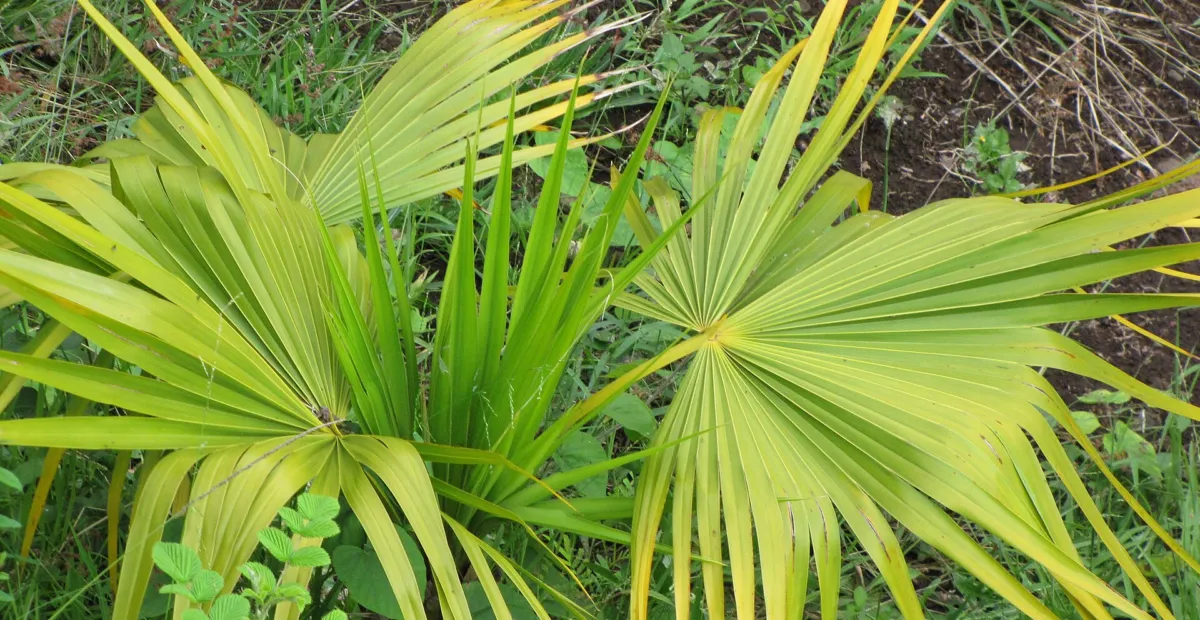
The palm has a solitary gray to brown trunk and a rounded crown of large, circular, fan-shaped leaves. Leaf segments split toward their tips and often droop, while the upper surface is green and the underside lighter yellowish green. Split leaf bases, a pointed hastula and conspicuous fruit stalks help distinguish it from similar thatch palms.
Flowering
Small white, bisexual flowers are borne on branched, arching inflorescences that emerge among the leaf bases. Flowering is commonly reported in spring, although warm South Florida plants may flower beyond spring. White spherical fruits develop after flowering and can persist or occur in abundance later in the year.
Pollination and visitors
Flowers are documented as attracting bees. The flowers are bisexual, but no reliably documented single pollinator species was identified in the reviewed sources. Birds use the palm for food or nesting habitat, but they are not assigned as floral pollinators here.
Thrinax radiata photos
Click any photo for a larger view. Source, author and license are shown separately.
Diseases and pests
Diseases
Usually has few serious disease problems in suitable sites. Prevent trunk and root problems by avoiding poor drainage, planting too deeply and excessive irrigation. Remove severely affected tissue with clean tools and improve airflow and drainage before considering treatment.
Pests
Occasional aphids and scale insects may occur. Inspect leaf bases and young foliage, especially on stressed or container-grown plants. Improve watering and airflow first; use a strong water spray for light infestations and horticultural oil or insecticidal soap only according to the product label and local guidance.
Toxicity and pollen
Authoritative species-specific toxicity evidence is limited. Available horticultural references report no known human hazard, but this should not be treated as proof of complete safety. Avoid consuming plant material, prevent children and pets from chewing leaves or fruits, and seek professional advice after a suspected ingestion.
- Typical season
- No reliable United States allergy season established for this species
- Pollination / pollen
- Pollen from insect-associated palm flowers; airborne relevance not well documented
This is a flowering palm with insect-associated flowers, but reliable species-specific measurements of airborne pollen production and allergy sensitization were not located. Do not assume zero allergy risk; people with serious pollen sensitivity should monitor personal symptoms during flowering and consult a clinician if needed.
Native habitat
Native habitats include coastal berms, maritime and tropical rockland hammocks, pine rocklands and other warm coastal sites on limestone or sandy substrates. It tolerates salt spray, strong wind and short dry periods, but does not suit sustained cold or permanently saturated soil.
Interesting fact
The palm is listed as endangered by the state of Florida.
Its leaves were historically used for thatching in the Florida Keys.
The species tolerates salt spray, strong winds and coastal exposure.
Aged trunks may develop a conspicuous swollen mass of exposed roots.
Frequently asked questions (FAQ)
The most relevant questions about this plant, with short and direct answers.
🌱Quick care
How do you care for he Florida thatch palm, Thrinax radiata?⌄
Grow he Florida thatch palm in full sun to partial shade, use sharply draining soil, and provide moderate water while it establishes. Once mature, it tolerates short dry periods, but it is frost tender and needs protection from freezing weather.
Is Thrinax radiata easy to grow?⌄
Thrinax radiata is relatively easy to grow in warm, frost-free landscapes because it tolerates sun, salt spray, wind, and drought after establishment. Its main limitations are slow growth, poor tolerance of freezing temperatures, and sensitivity to persistently wet soil.
How fast does he Florida thatch palm grow?⌄
He Florida thatch palm grows slowly, so a young specimen may take years to develop a substantial trunk. Warm temperatures, good drainage, adequate moisture during establishment, and balanced palm nutrition support steadier growth.
🌤️Environment and placement
What light does Thrinax radiata need?⌄
Thrinax radiata grows well in full sun to partial shade. More sun generally produces a compact, sturdy crown, while light shade can be useful in very hot inland locations or during establishment.
Can he Florida thatch palm grow indoors?⌄
He Florida thatch palm is primarily an outdoor landscape palm and is difficult to maintain indoors long term because it needs strong light, space, and excellent air circulation. A bright, warm conservatory or greenhouse is more suitable than a typical room.
What USDA zones are suitable for Thrinax radiata?⌄
Thrinax radiata is best suited to tropical and subtropical parts of the United States, especially USDA Zones 10A through 11. It can suffer leaf damage near freezing and should be protected whenever a freeze is forecast.
Can Thrinax radiata tolerate salt spray?⌄
Thrinax radiata tolerates significant salt spray and is well suited to many coastal landscapes. However, saltwater flooding or prolonged exposure to salty, waterlogged soil can still damage the roots.
Is he Florida thatch palm drought tolerant?⌄
He Florida thatch palm becomes drought tolerant after its root system is established. Water it regularly during the first growing season, then reduce irrigation while still providing deep watering during extended hot, dry periods.
What soil is best for Thrinax radiata?⌄
The best soil for Thrinax radiata is sandy, loamy, or rocky calcareous soil that drains quickly. It can tolerate alkaline conditions, but heavy clay or any site that stays saturated should be amended or avoided.
Can he Florida thatch palm grow near the coast?⌄
He Florida thatch palm is a strong coastal choice because it tolerates salt spray, wind, sandy soil, and bright sun. Do not plant it where storm tides or irrigation runoff will leave the root zone continuously flooded with salt water.
💧Care and problems
How often should you water Thrinax radiata?⌄
Water Thrinax radiata moderately, allowing the soil surface to dry somewhat between irrigations. Newly planted palms need more frequent deep watering, while established palms usually need supplemental water only during prolonged drought or extreme heat.
Why are the leaves of my Thrinax radiata turning yellow?⌄
Yellow leaves on Thrinax radiata can result from natural aging, overwatering, poor drainage, nutrient deficiency, or cold stress. Check the root-zone moisture first, avoid removing partly green fronds, and use a palm fertilizer only if nutrition is suspected.
What fertilizer does he Florida thatch palm need?⌄
He Florida thatch palm generally benefits from a controlled-release palm fertilizer containing potassium, magnesium, and micronutrients when grown in nutrient-poor soil. Apply it according to the product label and do not fertilize drought-stressed, newly transplanted, or cold-damaged palms.
Does Thrinax radiata have serious pests or diseases?⌄
Thrinax radiata is usually low maintenance, but palms can develop scale insects, aphids, nutrient deficiencies, or problems associated with damaged roots. Good drainage, proper nutrition, and avoiding trunk or crown injuries reduce the likelihood of serious problems.
How do you protect Thrinax radiata from frost?⌄
Protect Thrinax radiata from frost by covering the crown and trunk before temperatures approach freezing, keeping the covering dry and removing it after the danger passes. Container plants can be moved into a warm, bright shelter during cold weather.
Can he Florida thatch palm survive a freeze?⌄
He Florida thatch palm may survive a brief light freeze with leaf damage, but prolonged or hard freezing can kill the growing point. Do not prune cold-damaged foliage immediately; wait until new growth reveals which tissue remains viable.
🪴Planting and repotting
When is the best time to plant Thrinax radiata?⌄
The best time to plant Thrinax radiata is during the warm growing season, when soil temperatures support rapid root establishment. In frost-prone areas, plant early enough for the palm to establish before the first winter cold.
How do you plant he Florida thatch palm in the ground?⌄
Plant he Florida thatch palm at the same depth it occupied in its container, set it in well-drained soil, and water deeply to settle the roots. Keep mulch several inches away from the trunk and avoid burying the root initiation zone.
Can Thrinax radiata grow in a container?⌄
Thrinax radiata can grow in a container while young if the pot has large drainage holes and a coarse, fast-draining mix. Repot only when roots fill the container, and provide strong light, warmth, and careful watering to prevent root rot.
How much space does he Florida thatch palm need?⌄
He Florida thatch palm can eventually become a medium-sized, solitary palm, so provide open vertical and horizontal space for its crown and trunk. Allow extra room near buildings, driveways, and overhead utilities because growth is slow but long lived.
✂️Propagation and pruning
How do you propagate Thrinax radiata?⌄
Propagate Thrinax radiata from fresh, fully mature seed after removing the fruit pulp. Sow the cleaned seed in a warm, sterile, well-drained medium, keep it evenly moist, and expect germination and seedling growth to be slow or irregular.
Can he Florida thatch palm be grown from cuttings?⌄
He Florida thatch palm is not normally propagated from stem or leaf cuttings because palms generally lack the branching growth needed to root this way. Seed propagation is the standard method for producing new plants.
How long do Thrinax radiata seeds take to germinate?⌄
Thrinax radiata seeds may take several weeks to germinate, and some can take longer depending on freshness, temperature, and planting conditions. Consistent warmth, clean seed, steady moisture, and excellent drainage improve the chances of success.
How do you prune Thrinax radiata?⌄
Prune Thrinax radiata sparingly by removing only completely dead, broken, or hazardous fronds and unwanted fruit stalks. Do not remove healthy green fronds, cut into the trunk, or use climbing spikes, which can create wounds and spread disease.
Should you remove flower and fruit stalks from he Florida thatch palm?⌄
You may remove flower or fruit stalks from he Florida thatch palm when they become messy or obstructive, and doing so is not generally harmful. Leaving them in place supports pollinators and wildlife, while ripe fruits can add seasonal interest.
⚠️Toxicity and safety
Is he Florida thatch palm toxic to dogs or cats?⌄
There is no confirmed species-specific toxicity record for he Florida thatch palm, but evidence is limited. Prevent pets from chewing unfamiliar plant material, and contact a veterinarian or poison-control service if ingestion causes vomiting, lethargy, or other symptoms.
Does Thrinax radiata have thorns or sharp spines?⌄
Thrinax radiata is generally considered an unarmed palm without prominent trunk spines or thorny petioles. Its large fan leaves and stiff leaf stalks can still be awkward in tight walkways, so provide adequate clearance around paths.
🌸Flowering and special interest
Does Thrinax radiata flower?⌄
Thrinax radiata produces small white flowers on branched, arching inflorescences, often while the palm is still relatively young. The flowers are followed by small, rounded fruits that mature to white.
When does he Florida thatch palm bloom?⌄
He Florida thatch palm commonly flowers during the warm season, although timing varies with climate, plant age, and growing conditions. Warm South Florida landscapes may see flowering over an extended period rather than during one sharply defined month.
What fruit does Thrinax radiata produce?⌄
Thrinax radiata produces small, spherical fruits that mature white and appear on conspicuous branched stalks. The fruit can provide food for wildlife and may be collected for seed propagation once fully mature.
Is Thrinax radiata good for wildlife?⌄
Thrinax radiata supports wildlife by providing flowers for pollinators, fruit and shelter for birds, and habitat for some insects. Its flowers and fruits also make it useful in native or coastal wildlife-friendly landscapes.
Similar plants
 Puerto Rican Royal Palm (Roystonea borinquena) care guideRoystonea borinquena
 He royal palm (Roystonea regia) care guideRoystonea regia
 Walking palm (Socratea exorrhiza) care guideSocratea exorrhiza
 Syagrus romanzoffiana care guideSyagrus romanzoffiana
 Pritchardia thurstonii care guidePritchardia thurstonii
 Rio Grande palmetto (Sabal mexicana) care guideSabal mexicana