
 Source:
Walking palm (Socratea exorrhiza) short overview
Socratea exorrhiza, commonly called walking palm, is a tropical American palm recognized for its unusual branched stilt roots and elegant crown of feather-like leaves. It grows in warm, humid forests from Central America to tropical South America, where cream-colored flowers develop into yellowish fruits. In the United States, it is primarily a conservatory, greenhouse, or tropical-landscape specimen requiring warmth, moisture, space, and protection from frost.
Taxonomic classification
Walking palm (Socratea exorrhiza) care guide
Light and placement
Provide bright filtered light or partial shade, such as morning sun with afternoon protection or a bright conservatory position. Gentle direct sun can be tolerated when humidity and water are ample, but intense reflected heat may scorch leaflets. Stretching, sparse crowns, and weak new growth suggest inadequate light; bleached or crisp leaflets suggest excessive exposure or drought.
Watering and humidity
Keep the root zone evenly and consistently moist, watering thoroughly when the surface begins to dry rather than allowing the container to become bone-dry. Reduce frequency during cool, dim weather but do not allow prolonged drought. High humidity supports foliage quality; combine it with airflow to reduce fungal problems.
Soil and growing medium
Use a fertile, organic-rich medium that holds moisture without remaining stagnant. A loam-based mix amended with compost or fine bark and coarse material for drainage is suitable in containers. Natural populations occur on varied soils, but consistently waterlogged container media can damage roots. A slightly acidic to neutral reaction is a practical target.
Feeding
Feed during active warm-season growth with a complete palm fertilizer containing micronutrients, applied at label strength or slightly reduced for containers. Water the medium first and avoid fertilizing a chilled, drought-stressed, or recently transplanted plant. Reduce or stop feeding during cool, low-light periods.
Growth and habit
A single-stemmed, evergreen palm forms a narrow trunk and a crown of arching, plumose leaves. In nature it can become a tall canopy palm, while container specimens remain smaller but eventually need substantial headroom and root volume. The distinctive stilt roots should be treated as a permanent structural feature rather than buried or cut away.
Planting and repotting
Plant only after the site and soil are reliably warm, ideally in late spring or early summer in frost-free regions. Set the root ball at its original depth and leave developing stilt roots unobstructed. Give young palms protection from strong wind, steady moisture, and enough room for the mature root architecture.
Repot container plants in spring or early summer only when actively growing. Move up one pot size at a time, preserve the root ball, and provide a deep, stable container because the species develops substantial basal and stilt-like roots. Avoid aggressive root disturbance.
Propagation and pruning
Propagation
Propagate from fresh, fully mature seed. Clean away fruit pulp and sow promptly in a warm, moist, well-aerated medium. Germination commonly takes several weeks to several months, and fresh seed performs better than stored seed. Keep seedlings warm and shaded until established.
Pruning
Remove only dead, broken, or clearly diseased leaves with clean tools. Do not cut healthy green fronds for cosmetic shaping, and never damage the growing point. Avoid cutting or burying the exposed stilt roots.
Overwintering
Move container plants indoors or into a heated greenhouse before temperatures approach the low 50s°F. Maintain warmth, bright light, reduced but regular watering, and humidity through winter. Frost or prolonged chilling can cause severe damage, and ordinary outdoor frost protection is not reliable for established specimens.
Uses
Used primarily as an ornamental specimen in tropical landscapes, botanical collections, conservatories, and large heated greenhouses. Native communities have used parts of the palm for construction and other practical purposes, but local practices vary. Do not consume fruits or other parts without verified local preparation knowledge.
Appearance
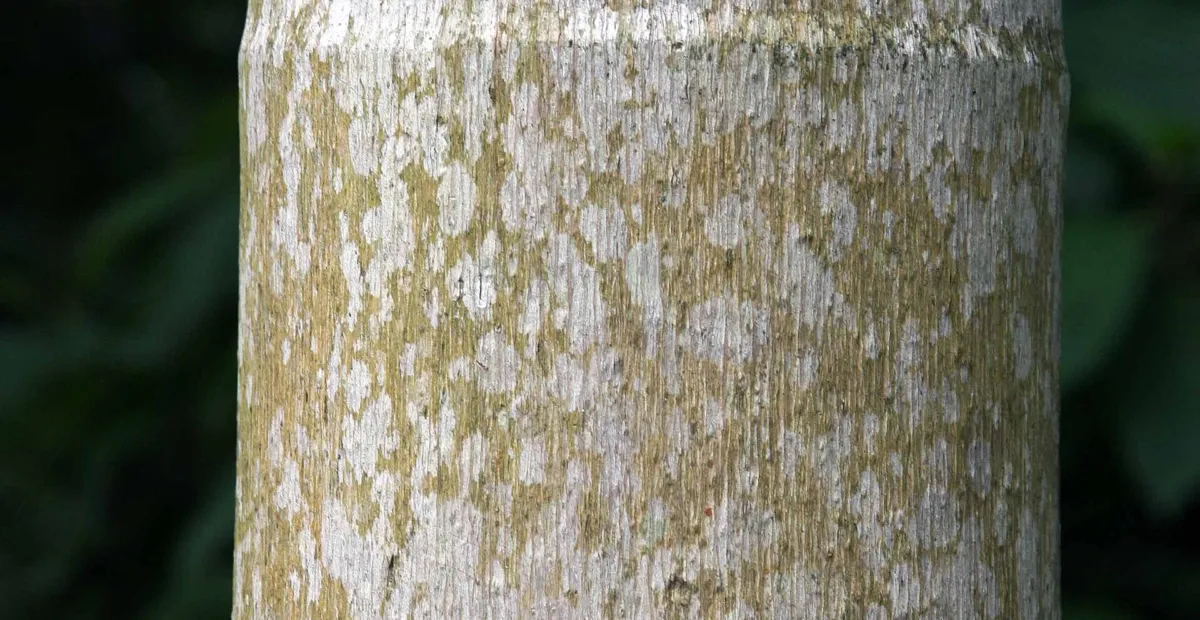
Identification is distinctive: a smooth gray trunk is supported by a loose cone of branched stilt roots, sometimes armed with small conical projections. The crown has a green to glaucous crownshaft and several long, arching pinnate leaves. Leaflets are arranged in a plumose pattern and may be entire or divided into unequal segments.
Flowering
This monoecious palm produces branched inflorescences below the crownshaft. The inflorescences are erect in bud and become pendulous at anthesis. Cream to creamy-white staminate and pistillate flowers occur together in crowded floral units, followed by ellipsoid yellowish-brown fruits. Flowering and fruiting are reported year-round in parts of its native range, while other field observations associate flowering with the dry season.
Pollination and visitors
Field research documents beetle pollination and records insect visitors including beetles; bees have also been reported among visitors in some regional observations. The evidence supports insect pollination, but no single pollinator species is sufficiently established here for a species-level label.
Socratea exorrhiza photos
Click any photo for a larger view. Source, author and license are shown separately.
Diseases and pests
Diseases
No species-specific disease profile is well established for ordinary cultivation. Prevent problems by using a clean, well-drained medium, avoiding chronically wet roots, disinfecting pruning tools, and providing air movement. Watch for general palm issues such as leaf-spotting or crown decline; remove badly affected tissue only after identifying the cause.
Pests
Check stressed plants for spider mites, scale insects, mealybugs, and palm-feeding caterpillars. Maintain humidity and air circulation, rinse foliage when appropriate, isolate affected containers, and use a labeled horticultural treatment only when monitoring confirms a damaging population.
Toxicity and pollen
No authoritative species-specific human or companion-animal toxicity assessment was located. Do not treat the plant as proven edible or proven safe solely because toxicity data are sparse. Prevent children and pets from chewing leaves, flowers, fruit, or seeds, and seek medical or veterinary advice after ingestion.
- Pollination / pollen
- Dry, spiny pollen associated with insect-mediated flower visitation
This is a flowering palm that produces pollen, but reliable U.S.-specific airborne pollen counts or clinical allergy assessments for this species were not located. Because the pollen is produced within tropical inflorescences and the allergy relevance is uncertain, avoid making a zero-risk claim.
Native habitat
Native from southeastern Nicaragua through Central America and tropical South America, including the Amazonian region. It occurs mainly in wet tropical forest, including seasonally flooded forest and sites with varied drainage. Populations are often scattered rather than forming dense stands.
Interesting fact
The species develops a conspicuous cone of branched stilt roots that can rise well above the soil surface. Its inflorescences hang at flowering, although they begin erect in bud. The palm is monoecious, with male and female flowers on the same plant. Its trunk and roots have important traditional uses in parts of its native range.
Frequently asked questions (FAQ)
The most relevant questions about this plant, with short and direct answers.
🌱Quick care
What is Socratea exorrhiza commonly called?⌄
Socratea exorrhiza is commonly called the walking palm. It is a tropical palm in the Arecaceae family, recognized for its unusual stilt roots.
How do you care for a walking palm?⌄
Give a walking palm bright filtered light, evenly moist fertile soil, high humidity, and reliable warmth. Protect it from frost, cold drafts, prolonged dryness, and waterlogged conditions.
Is Socratea exorrhiza a good houseplant?⌄
Socratea exorrhiza is usually a challenging houseplant because it is a fast-growing tropical palm that needs warmth, humidity, space, and consistently moist soil. It is better suited to a tropical greenhouse or frost-free outdoor garden.
🌤️Environment and placement
How much light does a walking palm need?⌄
A walking palm grows best in bright filtered light to partial shade. Young plants should be protected from harsh midday sun, while mature specimens may tolerate brighter conditions if their soil stays evenly moist.
Can Socratea exorrhiza grow in full sun?⌄
Socratea exorrhiza may tolerate brighter sun after gradual acclimation, but filtered light or partial shade is safer for cultivated plants. Intense unacclimated sun can scorch the foliage, especially when humidity or soil moisture is low.
What temperature does a walking palm need?⌄
A walking palm needs warm, frost-free conditions and should be protected whenever temperatures approach freezing. It is a frost-tender tropical species and is not reliably hardy in most of the United States.
Can you grow Socratea exorrhiza outdoors in the United States?⌄
Socratea exorrhiza can be grown outdoors year-round only in warm, frost-free parts of the United States, generally with tropical or near-tropical conditions. In colder areas, it requires a heated greenhouse or protected container culture.
What USDA hardiness zone is suitable for a walking palm?⌄
A walking palm is generally limited to the warmest frost-free USDA climates and should be treated as a greenhouse or container plant in colder zones. Even in suitable zones, protection from unusual cold is advisable.
Does Socratea exorrhiza need high humidity?⌄
Yes, Socratea exorrhiza grows best with high humidity, warm air, and steady moisture around its roots. Dry indoor air may cause browning, weak growth, or increased stress, particularly during winter.
💧Care and problems
How often should you water a walking palm?⌄
Water a walking palm whenever the surface of the soil begins to dry, keeping the root zone evenly moist. Do not allow the container or planting site to remain constantly saturated, because poor drainage can damage the roots.
What soil is best for Socratea exorrhiza?⌄
Use moisture-retentive, fertile, well-drained loam enriched with organic matter. The soil should hold consistent moisture while allowing excess water to drain freely around the roots.
Why are the leaves of my walking palm turning brown?⌄
Brown leaves on a walking palm are commonly associated with dry soil, low humidity, cold exposure, intense direct sun, or accumulated salt stress. Check moisture and drainage first, then protect the plant from drafts and harsh light.
Why is my Socratea exorrhiza losing leaves?⌄
Socratea exorrhiza may lose leaves after cold exposure, drought, transplant stress, root damage, or persistently waterlogged soil. Correct the underlying condition and avoid removing green fronds unless they are badly damaged.
Does a walking palm need fertilizer?⌄
A walking palm benefits from regular feeding during active growth with a balanced palm fertilizer that includes essential micronutrients. Apply it only to moist soil and reduce or stop feeding during cool, low-light periods.
How fast does Socratea exorrhiza grow?⌄
Socratea exorrhiza can grow quickly in warm, humid conditions with ample moisture and nutrition. Growth is much slower in containers, low light, dry air, or cool temperatures.
🪴Planting and repotting
How do you plant a walking palm?⌄
Plant a walking palm in fertile, moisture-retentive soil with excellent drainage and bright filtered light or partial shade. Leave ample room for its developing trunk and distinctive stilt-root system, and avoid planting it where frost can occur.
Can Socratea exorrhiza be grown in a container?⌄
Yes, Socratea exorrhiza can be grown in a container while young, provided the pot drains well and the soil remains evenly moist. Container growth eventually becomes restrictive because this species develops into a large tropical palm.
When should you repot a walking palm?⌄
Repot a walking palm when roots are tightly crowded, water runs through the pot unusually quickly, or growth has stalled during warm conditions. Move it into only a slightly larger container to reduce the risk of persistently wet soil.
✂️Propagation and pruning
How do you propagate Socratea exorrhiza?⌄
Socratea exorrhiza is primarily propagated from fresh seed. Clean and sow the seed in a warm, humid, well-drained medium, keeping it consistently moist while recognizing that germination timing can vary.
How long do walking palm seeds take to germinate?⌄
Walking palm seeds may germinate within several weeks to a few months under warm, humid conditions, but timing is variable. Fresh seed and stable warmth generally improve the chances of successful germination.
Can you propagate a walking palm from cuttings?⌄
No practical routine method for propagating a walking palm from stem or leaf cuttings is established. Seed propagation is the appropriate method for most growers.
Should you prune a walking palm?⌄
Prune only dead, damaged, or diseased fronds from a walking palm, cutting them cleanly without injuring the trunk or crown. Avoid removing healthy green fronds because palms use them for continued growth.
⚠️Toxicity and safety
Is Socratea exorrhiza toxic to cats or dogs?⌄
The toxicity of Socratea exorrhiza to cats and dogs is not well assessed, and species-specific safety data are limited. Prevent pets from chewing the plant and contact a veterinarian or animal poison service if ingestion causes symptoms.
Is a walking palm safe for children?⌄
A walking palm should be treated cautiously around children because its toxicity has not been thoroughly established and its mature stilt roots or fronds may create physical hazards. Keep plant material out of reach and do not allow chewing.
🌸Flowering and special interest
Does Socratea exorrhiza flower?⌄
Yes, Socratea exorrhiza produces branched inflorescences with small cream-colored flowers, but flowering is uncommon for young or container-grown plants. Mature specimens in warm tropical conditions are much more likely to flower.
What do walking palm flowers look like?⌄
Walking palm flowers are small and cream-colored, arranged on branched inflorescences that emerge below or among the crown leaves. They are followed by elongated fruits when pollination is successful.
Does the walking palm really walk?⌄
The walking palm does not literally walk across the ground in the ordinary sense. Its prominent stilt roots help support the trunk on unstable tropical soils, and claims that the entire palm regularly moves remain debated and should not be treated as established routine behavior.
Why does Socratea exorrhiza have stilt roots?⌄
Socratea exorrhiza develops stilt roots that help support and stabilize its tall trunk in shallow, wet, or uneven tropical soils. These roots are a defining feature of the species and need adequate space when the palm is planted.
Similar plants
 He scrub palmetto is a species of palm (Sabal etonia) care guideSabal etonia
 Ravenea glauca care guideRavenea glauca
 Pritchardia thurstonii care guidePritchardia thurstonii
 Chaguaramo (Roystonea oleracea) care guideRoystonea oleracea
 Rio Grande palmetto (Sabal mexicana) care guideSabal mexicana
 Miniature date palm (Phoenix roebelenii) care guidePhoenix roebelenii