
 Source:
Ravenea glauca short overview
Ravenea glauca is a slender, solitary palm native to south-central Madagascar, where it grows in seasonally dry tropical landscapes and rocky canyon habitats. Its graceful crown carries stiff, finely divided fronds with a distinctive powdery blue-green cast and pale undersides. In the United States it is best treated as a warm-climate landscape or container palm, requiring sharp drainage, regular moisture, and protection from freezing temperatures.
Taxonomic classification
Ravenea glauca care guide
Light and placement
Provide bright filtered light to full sun, adapting exposure to climate. In hot inland areas, morning sun or lightly filtered afternoon light can reduce leaf stress; in cooler, humid climates, more direct sun is suitable. Too little light may produce thin, weak growth and pale foliage, while abrupt exposure to intense sun can scorch leaves. Acclimate container plants gradually.
Watering and humidity
Water deeply when the upper layer of the medium begins to dry, then allow excess water to drain completely. Keep the root zone regularly supplied during hot active growth, but never leave the pot standing in water. Reduce frequency in cool weather while avoiding prolonged total dryness. Humidity is beneficial, especially indoors, but it cannot compensate for poor drainage.
Soil and growing medium
Use a sharply drained palm substrate containing mineral grit, coarse sand, or other porous material. The species is associated with rocky or sandy habitats, and heavy, persistently wet soil can encourage root problems. A mildly acidic to neutral reaction is a reasonable horticultural target, but a species-specific pH preference is not well documented.
Feeding
Feed during active warm-season growth with a complete palm fertilizer containing micronutrients, using the label rate or a reduced rate for container plants. Do not fertilize drought-stressed, newly transplanted, cold-damaged, or waterlogged palms. Pause feeding during cool winter conditions when growth is minimal.
Growth and habit
This is a solitary, evergreen palm with a slender trunk and a crown of arching pinnate leaves. Growth is generally slow to moderate and depends strongly on warmth, light, nutrition, and uninterrupted root health. Plants in brighter conditions tend to develop stronger, more substantial foliage, while deep shade can produce a thinner, more delicate appearance.
Planting and repotting
Plant outdoors only after danger of frost has passed and soil has warmed. Set the palm at the same depth at which it was growing; do not bury the trunk or crown. Establish it with regular deep watering, then maintain an evenly supplied but never waterlogged root zone. Space it where the crown can develop without abrasion.
Repot only when roots have substantially filled the container, preferably during warm active growth. Move it into a pot only modestly larger than the previous one and disturb the root ball as little as possible. Use a fast-draining palm or cactus-style mix and ensure the container has generous drainage holes.
Propagation and pruning
Propagation
Propagation is by seed. Sow fresh seed in a warm, clean, free-draining medium and keep it evenly moist but not saturated. Germination may take several weeks to a few months, and fresh seed is preferable because palm seed viability can decline during storage.
Pruning
Remove fully brown, dead fronds with clean tools. Do not cut green fronds merely to shape the crown, and never damage the central growing point. Remove old leaf bases only when they detach readily; avoid climbing or trunk injury on mature specimens.
Overwintering
Keep container plants above freezing in a bright, protected space and reduce watering during cool, low-light periods. Outdoor specimens in marginal climates need frost cloth, wind protection, and a warm microclimate; prolonged freezing can cause serious damage. Resume normal watering and feeding only after active growth returns.
Uses
Primarily an ornamental palm for warm-climate landscapes, protected courtyards, conservatories, and large containers. Its fine, glaucous foliage can provide a distinctive architectural accent. It is not documented here as a culinary, medicinal, or edible species, and traditional uses should not be inferred from uses reported for other palms.
Appearance
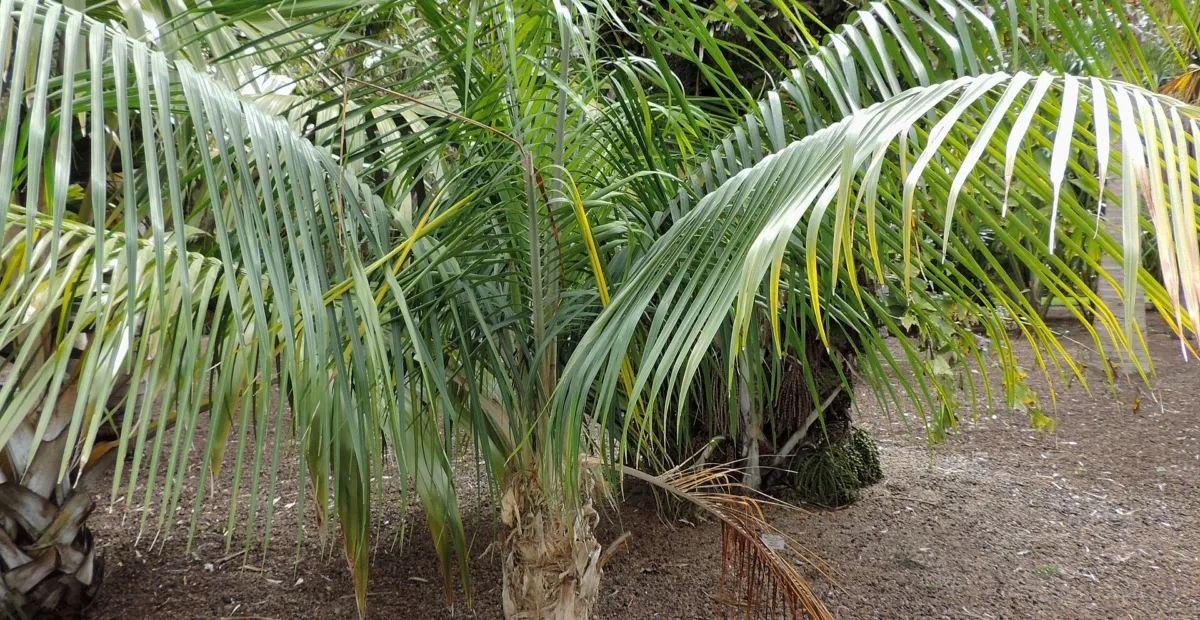
Ravenea glauca forms a slender, usually solitary trunk marked by ring-like leaf scars. The crown carries numerous regularly arranged pinnate leaves with stiff to partly pendulous leaflets. Fresh foliage may show a striking glaucous, powdery blue-green surface, while the undersides and young leaf structures can appear pale or whitish. The overall effect is airy, fine-textured, and architectural.
Flowering
Ravenea glauca is a flowering palm with separate male and female flowers on the same species, but detailed species-specific flowering schedules and floral measurements are not consistently documented. Inflorescences arise among the leaves, and mature plants may produce berry-like fruits after successful pollination.
Pollination and visitors
Species-specific pollinator observations were not located in the reviewed sources. As a dioecious palm, successful seed production would require pollen transfer between compatible male and female plants, but the responsible visitor group is not established here.
Diseases and pests
Diseases
No major species-specific disease profile is well established. The main practical risk is root or crown decline caused by saturated, poorly drained media. Prevent problems with porous soil, careful irrigation, clean containers, and good airflow. Remove only clearly dead material and avoid injuring the crown.
Pests
Inspect for scale insects, mealybugs, mites, and palm borers, especially on stressed container plants. Isolate infested specimens, wash foliage where practical, and use a labeled horticultural treatment according to its directions. Avoid chronic drought and root damage, which increase pest susceptibility.
Toxicity and pollen
Independent authoritative toxicity information specific to Ravenea glauca was not located. Do not treat the absence of reports as proof of safety. Prevent children and pets from chewing plant material, and seek medical or veterinary advice after ingestion or a concerning reaction.
- Pollination / pollen
- Pollen from palm flowers; airborne relevance not established
Ravenea glauca produces pollen as a flowering palm, but reliable species-specific information on airborne pollen abundance, dispersal, and clinical allergy relevance was not located. In enclosed collections, normal ventilation and routine hygiene are sensible precautions during flowering; do not assume either zero or high allergy risk.
Native habitat
The species is native to south-central Madagascar and grows primarily in a seasonally dry tropical biome. Horticultural accounts associate it with rocky ledges, gravelly crevices, steep canyons, and contrasting sun and shade exposures. These habitats explain its preference for excellent drainage and its tolerance of both bright and protected positions.
Interesting fact
The species is native to south-central Madagascar and is accepted by Kew’s current taxonomic backbone. Its leaflets can appear powdery blue-green because of a glaucous surface covering. Wild plants occur in seasonally dry tropical settings rather than uniformly wet rainforest. Two distinct habitat forms have been reported from Isalo landscapes, including shady canyon and exposed rocky forms.
Frequently asked questions (FAQ)
The most relevant questions about this plant, with short and direct answers.
🌱Quick care
What is Ravenea glauca?⌄
Ravenea glauca is a solitary, feather-leaved palm from Madagascar in the Arecaceae family. It is sometimes sold as a mini majesty palm, but common-name usage is inconsistent, so the scientific name is the safest identifier.
How fast does Ravenea glauca grow?⌄
Ravenea glauca is generally a slow to moderate grower, especially when young or grown indoors. Growth is faster with warmth, strong filtered light, regular moisture, and excellent drainage.
How big does Ravenea glauca get?⌄
Ravenea glauca can reach roughly 15–26 feet outdoors in favorable conditions, although cultivated plants are often smaller. Container-grown specimens remain substantially more compact.
🌤️Environment and placement
How much light does Ravenea glauca need?⌄
Ravenea glauca grows in full sun to shade, but filtered protection is best in hot climates. Plants grown in deep shade may become thinner and more delicate, while brighter light can produce sturdier growth and more blue-green foliage.
Can Ravenea glauca grow in full sun?⌄
Yes, Ravenea glauca can grow in full sun when acclimated and adequately watered. In very hot inland areas, protect it from intense afternoon exposure until it is established.
Can Ravenea glauca grow in shade?⌄
Yes, Ravenea glauca tolerates shade and naturally occurs in both exposed and sheltered habitats. Bright shade or filtered light usually gives a good balance of healthy foliage and reduced heat stress.
Is Ravenea glauca cold hardy?⌄
Ravenea glauca is frost-tender and should be protected from freezing weather. Some mature plants may tolerate brief temperatures near the upper 20s Fahrenheit, but prolonged cold can cause serious damage.
What USDA hardiness zones are suitable for Ravenea glauca?⌄
Ravenea glauca is best suited to frost-free parts of USDA Zones 10–11, with especially mild Zone 9 locations possible only with protection. Local exposure, plant maturity, and winter duration strongly affect survival.
Can Ravenea glauca be grown indoors?⌄
Ravenea glauca can be grown indoors temporarily or as a young container plant, but it is not an easy long-term houseplant. Provide the brightest available indirect light, good airflow, moderate humidity, and a fast-draining potting mix.
Where should I plant Ravenea glauca outdoors?⌄
Plant Ravenea glauca in a warm, sheltered location with excellent drainage and full sun to filtered shade. Avoid frost pockets, exposed windy sites, and areas where heavy soil stays wet after rain.
💧Care and problems
How often should I water Ravenea glauca?⌄
Water Ravenea glauca deeply whenever the upper layer of soil begins to dry, then allow excess water to drain away. It prefers regular moisture and should not remain bone-dry for long, but constantly wet soil can cause root problems.
Does Ravenea glauca tolerate drought?⌄
Ravenea glauca has some drought tolerance once established, but it performs best with moderate, regular moisture. Extended dryness can cause leaf browning, reduced growth, and general dehydration, particularly in hot weather.
Why are the leaves of my Ravenea glauca turning brown?⌄
Brown leaves on Ravenea glauca are commonly caused by underwatering, dry air, salt buildup, cold injury, or excessive sun after a sudden exposure change. Check root-zone moisture and drainage first, then protect the plant from harsh conditions.
Why are the leaves of my Ravenea glauca turning yellow?⌄
Yellowing can result from insufficient light, irregular watering, poor roots, nutrient deficiency, or normal aging of older fronds. If several leaves yellow at once, inspect the soil for either chronic dryness or poor drainage.
What causes root rot in Ravenea glauca?⌄
Root rot is usually caused by heavy, poorly drained soil combined with frequent watering. Use a porous palm or cactus-style mix, a drainage hole, and a watering schedule that allows excess water to escape.
Should I fertilize Ravenea glauca?⌄
Yes, feed Ravenea glauca during active growth with a controlled-release palm fertilizer or a balanced fertilizer that includes magnesium and micronutrients. Follow the product label and avoid fertilizing stressed, cold-damaged, or recently repotted plants.
Does Ravenea glauca need high humidity?⌄
Ravenea glauca benefits from moderate humidity, especially indoors, but it does not require tropical greenhouse conditions. Good watering, bright light, and airflow are usually more important than misting.
What pests affect Ravenea glauca?⌄
Ravenea glauca can be affected by common palm pests such as spider mites, scale, and mealybugs, particularly indoors or under drought stress. Inspect leaf undersides and treat infestations early with an appropriate labeled product.
🪴Planting and repotting
What soil is best for Ravenea glauca?⌄
Use a porous, sharply drained palm mix or rocky sandy soil for Ravenea glauca. Heavy clay should be amended carefully or avoided because water retention around the roots increases the risk of rot.
Can Ravenea glauca grow in a container?⌄
Yes, Ravenea glauca grows well in a container when the pot has drainage holes and the mix drains quickly. Choose a stable container, avoid oversized pots, and repot only when the roots have substantially filled the existing pot.
When is the best time to plant Ravenea glauca outdoors?⌄
The best time to plant Ravenea glauca outdoors is during the warm growing season after the threat of frost has passed. Planting in late spring or early summer gives the roots time to establish before cooler weather.
How should I transplant Ravenea glauca?⌄
Transplant Ravenea glauca with as much of the root ball intact as possible and set it at the same depth it was previously growing. Water thoroughly after planting, keep the soil moderately moist during establishment, and avoid unnecessary root disturbance.
✂️Propagation and pruning
How do you propagate Ravenea glauca?⌄
Ravenea glauca is propagated primarily from seed. Clean fresh seed, sow it shallowly in a sterile, well-drained medium, and keep it warm and evenly moist until germination.
Can Ravenea glauca be propagated from cuttings?⌄
No, Ravenea glauca is not normally propagated from leaf or stem cuttings. Because it has a single growing point, seed propagation is the dependable method.
How long do Ravenea glauca seeds take to germinate?⌄
Ravenea glauca seeds may germinate in roughly one to three months under warm, consistently moist conditions, although timing can be irregular. Fresh seed and bottom heat generally improve results.
Does Ravenea glauca need male and female plants to produce seed?⌄
Yes, Ravenea glauca is dioecious, meaning male and female flowers occur on separate plants. A female plant therefore needs pollen from a compatible male plant to produce viable seed.
Can Ravenea glauca be divided?⌄
Ravenea glauca is generally a solitary palm and is not normally divided. Division is appropriate only if a plant has genuinely produced multiple rooted stems, which is uncommon for this species.
Should I prune Ravenea glauca?⌄
Prune Ravenea glauca only to remove completely brown, dead, or damaged fronds. Do not cut green fronds or remove a frond prematurely, because the palm can still use nutrients from aging foliage.
⚠️Toxicity and safety
Is Ravenea glauca toxic to cats or dogs?⌄
Species-specific toxicity evidence for Ravenea glauca is insufficient, so it should not be assumed to be pet-safe. Keep it away from pets and contact a veterinarian or poison-control service if plant material is eaten.
Is Ravenea glauca poisonous to people?⌄
The human toxicity of Ravenea glauca is not well documented. Avoid consuming any part of the plant, and seek medical advice if ingestion causes symptoms.
🌸Flowering and special interest
Does Ravenea glauca flower?⌄
Yes, mature Ravenea glauca can produce branching flower clusters. Flowering is more likely when the palm is grown outdoors in warm, favorable conditions than when it is kept as a small indoor plant.
What do Ravenea glauca fruits look like?⌄
Ravenea glauca can produce hanging clusters of fruits that become brightly colored as they mature, although fruiting is uncommon without suitable flowering conditions and compatible pollination. Seed production requires a female plant and pollen from a male plant.
Why is my Ravenea glauca not flowering?⌄
A young or container-grown Ravenea glauca may not flower because it lacks sufficient maturity, warmth, light, or growing space. Even a healthy palm may remain vegetative for many years, and flowering also depends on whether the plant is male or female.
Similar plants
 Nibong palm is an Asian species of palm tree in the family Arecaceae (Oncosperma tigillarium) care guideOncosperma tigillarium
 Nannorrhops ritchiana care guideNannorrhops ritchiana
 Date Palm (Phoenix dactylifera) care guidePhoenix dactylifera
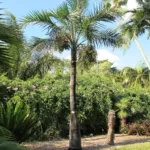 He Florida cherry palm or buccaneer palm (Pseudophoenix sargentii) care guidePseudophoenix sargentii
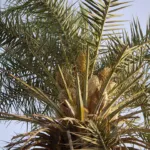 Sugar date palm (Phoenix sylvestris) care guidePhoenix sylvestris
 Baleares Island date palm (Phoenix canariensis) care guidePhoenix canariensis